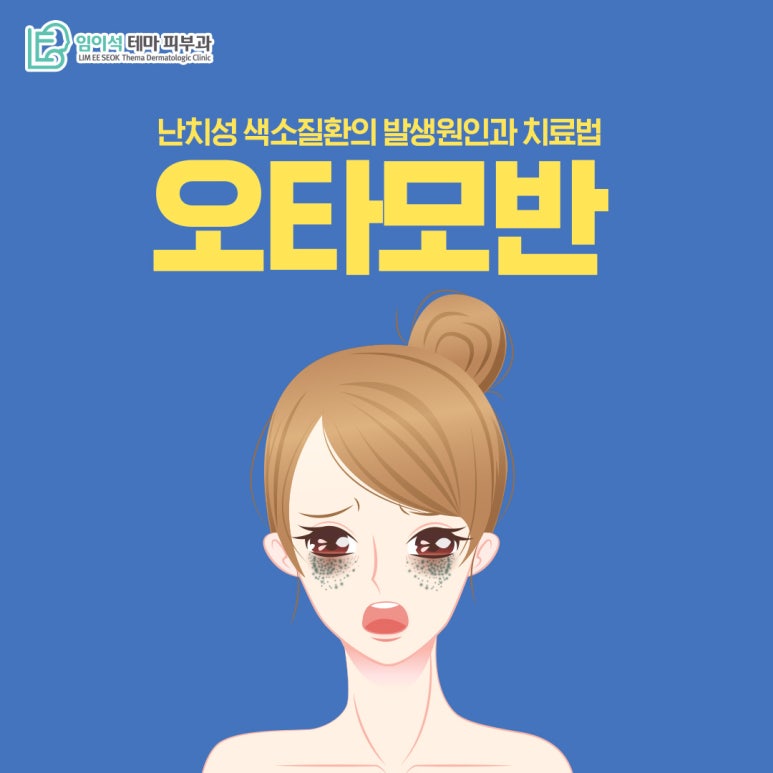
What is an Ota nevus?
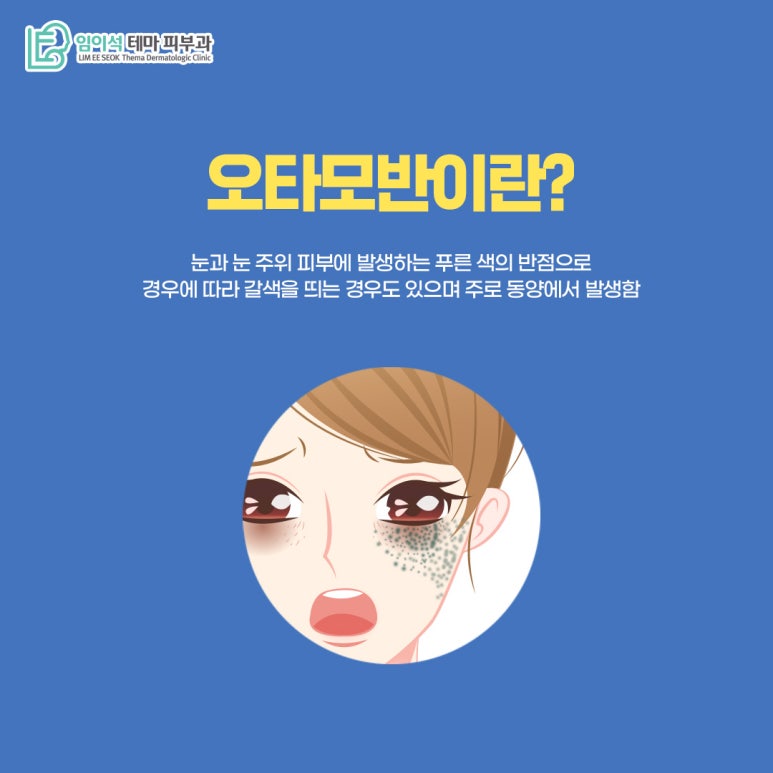
An Ota nevus is a blue-colored patch that occurs in the eye and the skin around the eye. In some cases, it may also appear brown. It mainly occurs in East Asia, including Korea and Japan, and is more common in women.
More than half of Ota nevi occur before 1 year of age, and most of the rest occur during the teenage years before adulthood. The exact cause of Ota nevus has not yet been clearly identified, but it is thought to be influenced by female hormones. It often occurs congenitally due to excess melanin pigment, and because it does not disappear naturally, early treatment is recommended.
Areas where Ota nevus occurs

Ota nevus can occur widely, including the eyes, mucous membranes, and the skin around the eyes, as well as the cheekbones, bridge of the nose, temples, and forehead. When Ota nevus appears around the eyes, pigment may be present in the eye and appear as a blue patch on the sclera, and it may also occur on the conjunctiva or cornea. In rare cases, it can also occur on the oral mucosa.
Classification of Ota nevus
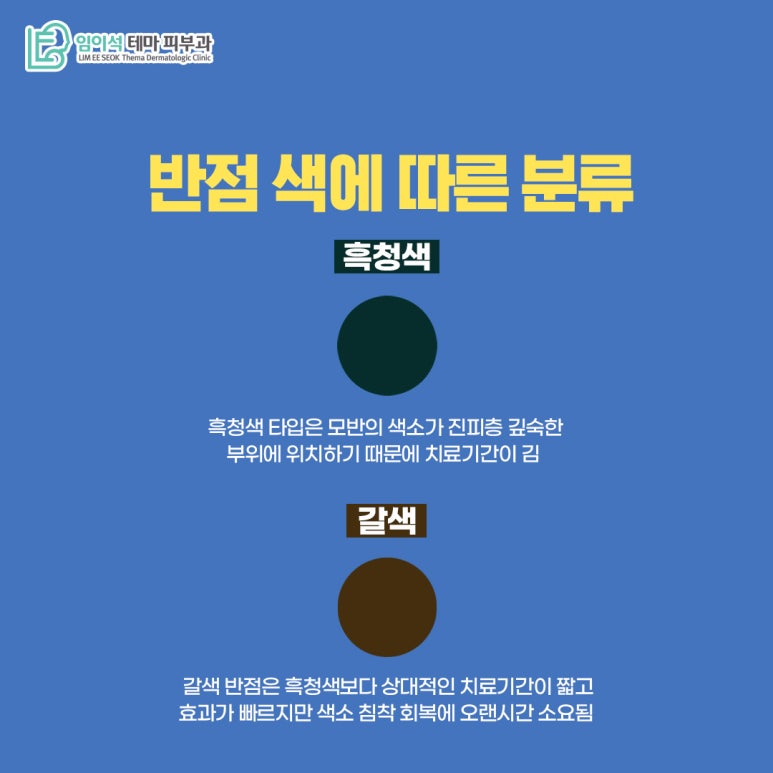
- Classification by patch color
The color of Ota nevus patches can be divided into brown and bluish-black.
- Brown / grayish brown
Brown patches have a relatively shorter treatment period and faster results than bluish-black ones. However, if the type is uniformly brown, the pigment layer tends to be shallower, so recovery from pigmentation takes longer.
- Bluish-black
The bluish-black type has pigment located deeper in the dermis, so the treatment period tends to be longer.
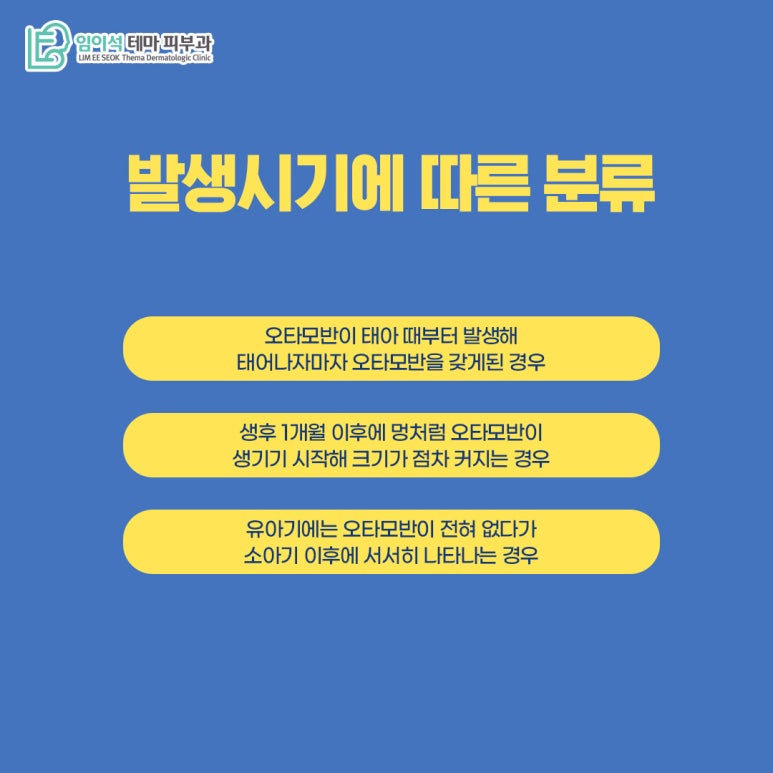
- Classification by time of onset
-
Cases in which Ota nevus develops during the fetal period and is present at birth
-
Cases in which Ota nevus begins to appear like a bruise after 1 month of age and gradually increases in size
-
Cases in which there is no Ota nevus at all during infancy, but it gradually appears after childhood
Treatment methods for Ota nevus
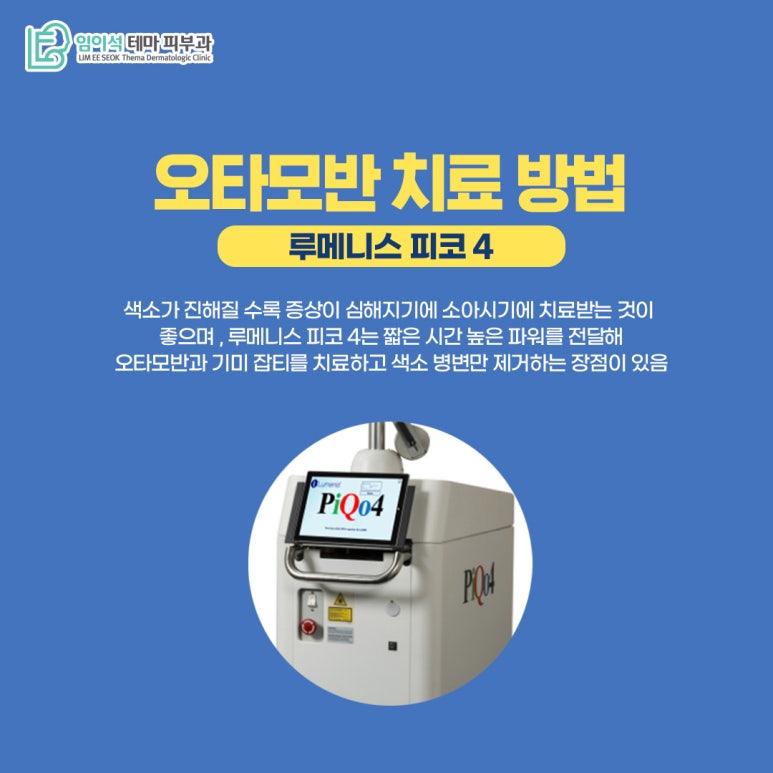
Ota nevus appears as melanin pigment develops in the dermis, and the darker the pigment becomes, the more severe the symptoms tend to be. For this reason, symptoms may worsen during periods of frequent UV exposure or when sex hormones become more active.
Therefore, treatment during childhood is more effective than treatment in adulthood, and it can be improved effectively through treatment that removes melanin pigment.
Because Ota nevus does not disappear naturally once it appears, we recommend consulting a specialist as soon as possible and improving it through appropriate treatment.
<Lumenis Pico4>
The Lumenis Pico4 is a laser device that delivers high power over a short period of time using a unit of one-trillionth of a second. It is mainly effective for Ota nevus as well as melasma and blemishes. By using pico and nano simultaneously, it delivers the strongest energy and can produce satisfying results with fewer treatment sessions. It also has the advantage of causing almost no damage to normal skin and selectively removing only pigment lesions.
Precautions after Ota nevus treatment
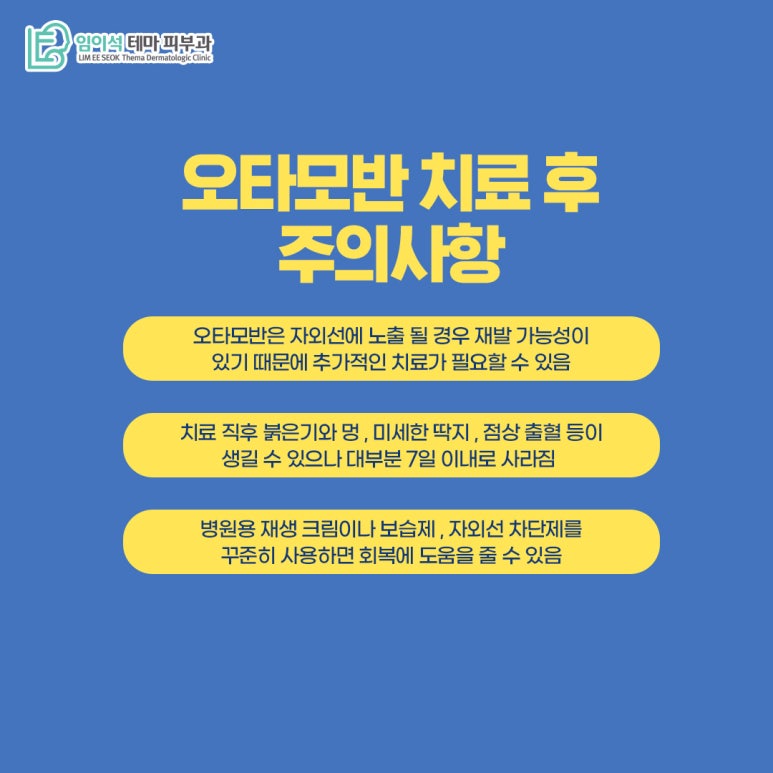
If Ota nevus is exposed to ultraviolet light, there is a possibility of recurrence, and additional treatment may be needed. Caution is also necessary because it may recur due to strong heat stimuli such as in bathhouses and saunas.
Immediately after treatment, redness, bruising, tiny scabs, and pinpoint bleeding may occur, but most of these naturally disappear within 7 days. If you want faster recovery, consistent use of a hospital-grade regenerating cream, moisturizer, and sunscreen may help recovery.
At Imiseok Dermatology, we provide one-on-one consultations to examine each patient’s skin condition and perform treatment suited to that condition. Rather than simply relieving symptoms in part, we consider the underlying skin problem and provide customized combination treatment based on the diagnosis of dermatology medical staff. For effective treatment, we continuously add and replace premium laser devices so that we can always show more effective treatment results.