▶Go to the original news article
YTN Radio (FM 94.5) [YTN News FM, Smart Radio Life]
□ Broadcast date and time: Monday, February 22, 2021
□ Host: Announcer Choi Hyung-jin
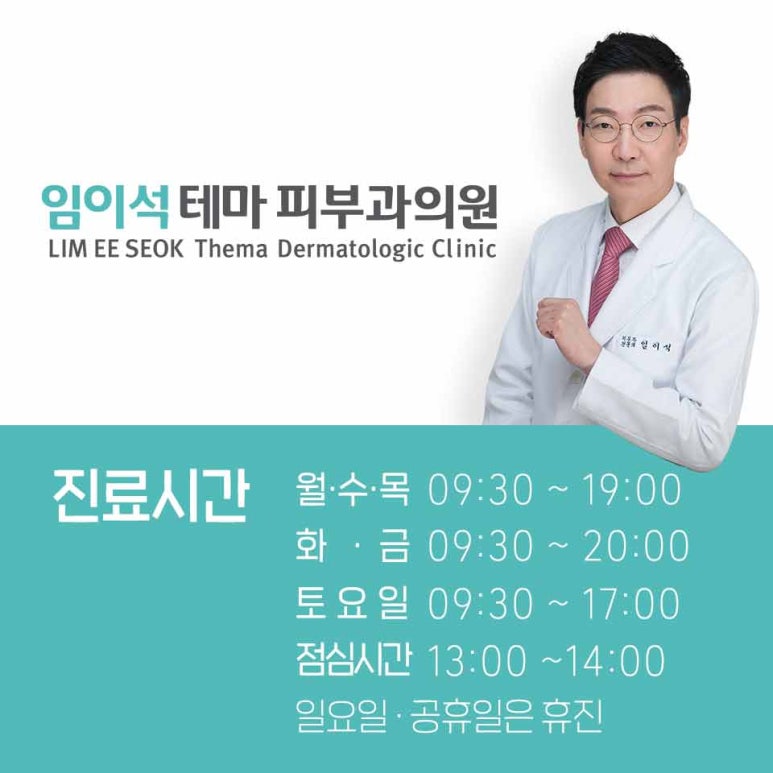
□ Guest: Im Euisek, Chairman of the Korean Hair Loss Treatment Society / Chief Director of Im Euisek Thema Dermatology Clinic
- The text below may differ from the actual broadcast content, so please check the broadcast for more accurate information.
◇ Choi Hyung-jin (hereafter Choi Hyung-jin): Smart Radio Life, Part 2 is the health consultation segment where we help solve health concerns. Many people worry about hair that falls out by the handful day after day, even when washing their hair. According to the National Health Insurance Service, the number of people with hair loss had already exceeded 10 million in 2017. However, many people reportedly use products such as shampoos to ease the condition rather than visiting a specialist clinic. How are you managing hair loss? What is the proper way to manage it? We’re going to look into everything about hair loss management. Let’s welcome today’s guest. We’re connected by phone with Director Im Euisek of Im Euisek Thema Dermatology Clinic, who is also the chairman of the Korean Hair Loss Treatment Society. Hello?
◆ Im Euisek, Chairman of the Korean Hair Loss Treatment Society / Chief Director of Im Euisek Thema Dermatology Clinic (hereafter Im Euisek): Yes, hello.
◇ Choi Hyung-jin: The Korean Hair Society conducted a survey of 390 hair loss patients in their 20s to 40s. While 86.9% of respondents said that hair loss is a condition requiring medical treatment, only about 26.9% said they had ever visited a hospital. Why do you think the hospital visit rate is low even though people recognize hair loss as a disease?
◆ Im Euisek: First, the perception is wrong. When people hear “hair loss,” they think it cannot be treated. But hair loss is also a disease, so it can be treated if you receive treatment. However, when hair loss occurs, people usually think, “I’ll just get a hair transplant later.” But if you treat it before a transplant, someone who had no hair—meaning if the hair roots are still alive—can have it grow back and look normal. That is why we say treatment should be started early. As with other diseases, hair loss needs to be treated very early, because once the hair roots or follicles are gone, it cannot be treated. Then hair transplantation is the only option. But if the hair roots are still alive, treatment can allow you to go about your daily life looking like anyone else. So it should be treated quickly. People often don’t know this and think hair loss is mostly genetic, so since it’s genetic, they believe their hair will fall out anyway and can simply be transplanted later. But transplantation also has issues: if it is done early, it is fine, but if it is done later, it is usually transplanted using hair from the back of the head. And then it cannot be transplanted again. If too much hair has fallen out, there are limits. So even if you are considering a hair transplant, you should first prevent the hair you still have from falling out, and then think about transplantation.
◇ Choi Hyung-jin: So hospital visits are important, and if hair loss symptoms appear early, it is important to go to the hospital right away.
◆ Im Euisek: That’s right. Because you need to find out why it is falling out. If you visit a dermatologist, get diagnosed right away, and start treatment, it can be treated very well.
◇ Choi Hyung-jin: I see. I, too, and people around me, often use shampoos said to be good for hair loss. Do they really work?
◆ Im Euisek: These days, SNS is very developed and there are home shopping channels and many other things, right? Shampoos that are used properly are really helpful. If you use shampoo incorrectly, it can cause hair to fall out, and if there are harmful ingredients in it, it can irritate the scalp and similar areas. But in fact, there is no shampoo that makes hair grow where there was none just by using it. It can help to some extent and ease shedding. However, these days some people advertise that after using a shampoo, hair that wasn’t there grows, or that hair roots suddenly form and grow, but properly selected shampoos are good. They can help to a certain extent. The problem is that when people think, “If I use this shampoo, my hair won’t fall out,” even though the hair is falling out due to genetic predisposition or some disease or cause, they start to treat the shampoo as if it were a treatment.
◇ Choi Hyung-jin: Ah, so people trust shampoo too much.
◆ Im Euisek: Right. Early treatment is important, but it’s wrong to think of that shampoo as if it were definitely a medicine, and that if you use it, your hair won’t fall out and will be maintained. So when using such shampoos, a dermatologist can tell you what the ingredients are. They can also tell you whether it is okay to use, so it would be good to bring it in and get a consultation. Proper use of shampoo is good, but it does not have the power to make hair grow where there was none, so it would be better to avoid blind faith in it and seek advice from a dermatologist.
◇ Choi Hyung-jin: But hair usually doesn’t suddenly fall out noticeably overnight. Is there a way to self-diagnose whether it is hair loss or not?
◆ Im Euisek: First, if you feel like more hair is falling out than usual, it is best to suspect hair loss. Also, both women and men wash their hair and then dry it. But there is a feeling that the hair is collapsing. There is no feeling that it is standing up. Since there is less hair, the crown area naturally feels flattened. And in women, even if they are not completely bald, those with hair loss symptoms can see the scalp. If the hair feels thinner, you should suspect hair loss. Also, while 50, 80, or up to 100 strands are said to be normal, if it feels like more is falling out than usual, it is good to check. To check how much is falling out, look at it while washing or drying your hair, and at what is left on your pillow and when combing your hair. Check it for about 30 days, average it out, and if around 80 to 100 strands or more are falling out, you should suspect hair loss. But in general, if more hair than usual is falling out, it is a good idea to suspect it.
◇ Choi Hyung-jin: Then you should go to the hospital right away. These days, during seasonal transitions, even people who do not have hair loss may lose more hair than usual. Can we distinguish between hair thinning due to seasonal changes and actual hair loss?
◆ Im Euisek: In fact, hair shedding due to seasonal changes is not that common. Among people who already have hair loss symptoms, there are cases where more hair falls out seasonally. During seasonal transitions, the scalp can become a little dry. People also say hair falls out more in the fall because summer sunlight exposure and UV radiation cause it, and there are also claims that fall is the season when more hair falls out because depression, and similarly in spring, can act as stressors and cause hair loss. So rather than thinking it is simply because of seasonal changes, if your hair is falling out in that situation, it is good to check whether you have some disease, genetic factor, or other cause. Do not assume it is just because of the season; it is very important to identify the cause.
◇ Choi Hyung-jin: In the past, when people thought of hair loss, they thought of men or hair loss due to aging. But these days, more children are worrying about hair loss too. Why is that?
◆ Im Euisek: Stress seems to play a role. In children, there is hair loss caused by stress called alopecia areata. In fact, it is an autoimmune disease, but when people are stressed, it can get worse, and some people lose hair in round, coin-shaped patches. So there is alopecia areata. Also, when stressed, some students keep touching their hair, rubbing it, and pulling at it while studying. This is called traction alopecia, and hair falls out when it is pulled. In women, we tell those with hair loss not to tie their hair too tightly when using hair ties. That is traction alopecia. Among students, when they are stressed, they keep touching, rubbing, twisting, and pulling their hair, and quite a few children are really losing hair that way. So stress is the main factor. In the past, many people said hair loss was genetic and there was no need to talk about it, but these days, with YouTube and changing awareness about hair loss, more people come in even at the early stages. That is probably why the number of younger patients with hair loss is increasing.
◇ Choi Hyung-jin: If someone visits the hospital because they suspect hair loss, what kind of examination will they receive?
◆ Im Euisek: First, we check the hair. Simply put, we use a magnifying lens to look at the scalp condition, the thickness of the hair, and the elasticity and strength of the hair. We also look at whether the scalp is red and whether there is a lot of dead skin. There is a device. Using this device, we can tell whether hair loss is progressing or not. In some cases, blood tests are also done, but since most diagnoses can be made with a magnifying lens, it is easy to tell whether it is hair loss, so it would be best to go to a hospital and get diagnosed if possible.
◇ Choi Hyung-jin: Understood. Let’s continue with listener questions. “When washing hair, is warm water better or cold water better?”
◆ Im Euisek: Water that is too hot is not good, and water that is too cold is not good either. Our skin temperature is usually around 31 to 32 degrees Celsius. Water around that temperature is best. Water that is too hot or too cold is not good, and lukewarm water is fine, right? Our body temperature is 36 or 37 degrees, but when it comes to skin temperature, 31 or 32 degrees is most common. So washing your hair with water around that temperature, warm water, would be best.
◇ Choi Hyung-jin: Yes. “When I wash my hair or comb it, handfuls of hair fall out. I’m a woman with long hair. But rather than all falling out, new hair grows back like a grass doll. Do I have hair loss?”
◆ Im Euisek: Yes, that is hair loss. But in cases like this, where hair suddenly falls out and then grows back, it could be one of the types of alopecia areata I mentioned earlier, where hair falls out all over at once. We should also check whether it is that form of alopecia areata. There are also cases where hair suddenly falls out and then grows back. This is also hair loss. It definitely needs treatment. Usually, it is said that 95% of alopecia areata resolves naturally. But even if the hair falls out and grows back, it still fell out, so you should definitely find out what the cause is. And I think it would be good to receive treatment as well.
◇ Choi Hyung-jin: Yes. “I heard that oral hair loss medication is bad for men. Is that true?”
◆ Im Euisek: First, there are two issues with oral hair loss medication. One is that in men, fewer than 2% of people say they feel something like erectile dysfunction. But in fact, that can be ignored. If such symptoms appear and you stop taking it, it gets better right away. It recovers. Also, it can disappear as you keep taking it, and that happens quite often. Since it is less than 2%, I do not think there is a need to avoid taking the medication out of fear of that. However, what is important for women is that if a woman takes or ingests it, it can cause birth defects if she has a child. Men can take it without major problems, but women can have such cases. So women of childbearing age, and those who may have children in the future, should avoid taking the medication and be treated without it. Other than that, for men, there is a feeling that the chest becomes slightly larger when taking the medication. There are also reports that depression worsens, but in fact, while I am currently treating patients, I have not seen people with depression. So these days, there are many reports, and if you look at any medication, the side effects are often described as very serious. Even common digestive medicines have strange side effects listed. Do not believe them too much. If something does happen, consult a doctor at the hospital. It is a relatively safe medication. However, women who can become pregnant should not take it, and they should not ingest it either.
◇ Choi Hyung-jin: Women of childbearing age absolutely should not take it, and men probably do not need to worry too much.
◆ Im Euisek: Yes, because it is less than 2%. Usually, if you have hair loss, you can take oral medication, and there are also injection treatments at hospitals. There is also magnetic field treatment, and there are various methods such as taking hair follicles and transplanting them. So if you truly cannot take the medication, those treatments can be used. But if you do not take the medication because of concerns about erectile dysfunction or similar reasons, I do not think there is a need to avoid it. Try taking it first, and if it is fine, keep taking it. If symptoms appear, you can simply stop.
◇ Choi Hyung-jin: Yes. Let’s continue with hair-loss-related questions. “Is there a way to prevent three-part hair loss?”
◆ Im Euisek: By three-part hair loss, I think you mean an M-shaped hairline. It usually happens a lot in men, where the front hairline recedes on both sides in an M shape. Of course, that improves with treatment. But if that area becomes too smooth or if the hair roots are truly gone, sometimes hair will not grow even with treatment. In such cases, we also recommend hair transplantation. But even after hair transplantation, we tell people to continue treatment. Why? Because when we see patients who had hair transplants and then come back two or three years later without continuing treatment, quite a few of them end up with hair only in the transplanted area while the rest has fallen out, so they look like they only have hair there. Since the M-shape has a genetic predisposition, it is good to get a hair transplant, but treatment must be done together.
◇ Choi Hyung-jin: Even after a hair transplant, can the transplanted hair fall out again?
◆ Im Euisek: Usually, after a hair transplant, about 90% to 95% becomes your own hair. So most of it does not fall out. The hair that is transplanted well is usually from the back and sides of the head, while the crown loses hair. That surrounding hair is taken and transplanted to the crown or front. Fortunately, that does not fall out. The problem is the remaining hair, which does fall out. So for people with a genetic predisposition or progressive hair loss, it is good to undergo a transplant so that part will not fall out, but only the transplanted hair will remain; the rest will still fall out. So treatment must be done in parallel to prevent the rest from falling out.
◇ Choi Hyung-jin: Yes. “I saw that some hair-loss clinics are dermatology clinics and others are Korean medicine clinics. If it is postpartum hair loss, where should I go?”
◆ Im Euisek: Each clinic has its own characteristics. It is fine to decide based on your own preference. But hair loss after childbirth usually recovers naturally in many cases. The problem is that sometimes after childbirth, hair loss occurs and the hair does not keep growing back. In that case, it would be good to visit a hospital and check it once. You should check what the situation is and why it is falling out, whether it is really due to childbirth. Hair loss has many types. There are pathological causes, genetic causes, stress-related causes, and many others. Finding the cause is extremely important.
◇ Choi Hyung-jin: Yes. “I sometimes tap my scalp with a comb because I heard it is good for hair loss. Is that true?”
◆ Im Euisek: Massage or stimulation that promotes blood circulation is good, but doing it too much is actually not good. It can damage the hair. If you use something sharp, scalp damage can cause flaking and clog the pores. So if you do it, I think it is best to use something blunt or gently massage with your hands. Rubbing with something sharp should be avoided.
◇ Choi Hyung-jin: Does gently tapping with something soft really help?
◆ Im Euisek: That should be fine. But it is better to avoid excessive stimulation.
◇ Choi Hyung-jin: Yes. “Is it okay to keep using topical hair loss medication without side effects?”
◆ Im Euisek: With topical medication, some people get itching or rashes after applying it. Also, with some products, there is an initial shedding effect called shedding, where hair falls out a little more during the first one or two months. That is the phenomenon where new hair pushes out the old hair as it grows in, so do not worry too much about that and keep applying it consistently. But depending on the medicine, some can be used while others should not be applied, so it would be good to visit a dermatologist for a consultation.
◇ Choi Hyung-jin: We’ll leave it there for today. Thank you. That was Im Euisek, the chief director of Im Euisek Thema Dermatology Clinic and chairman of the Korean Hair Loss Treatment Society.
Article source: YTN
Date written: 2021.02.22