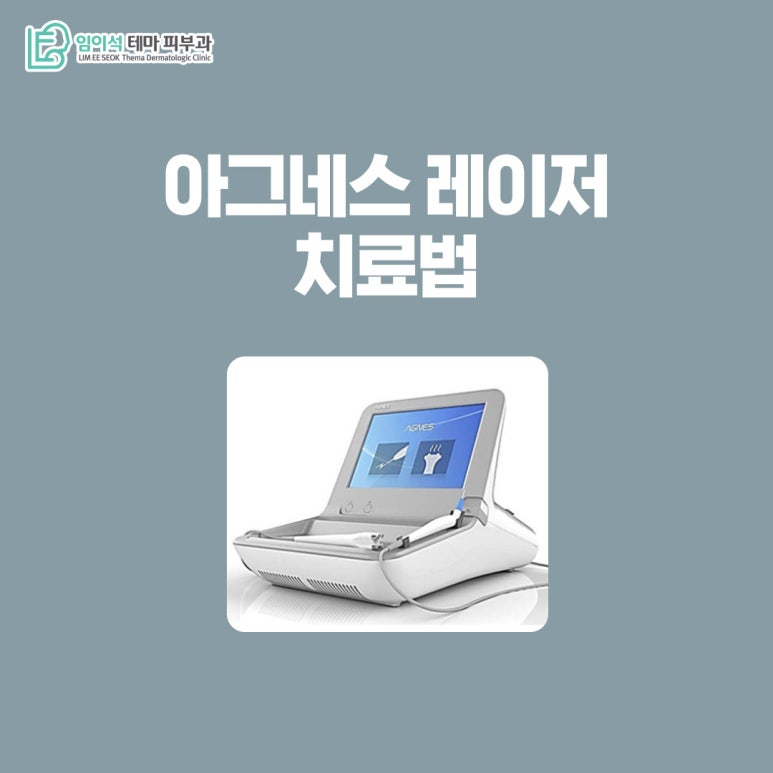
What Is the Agnes Laser?
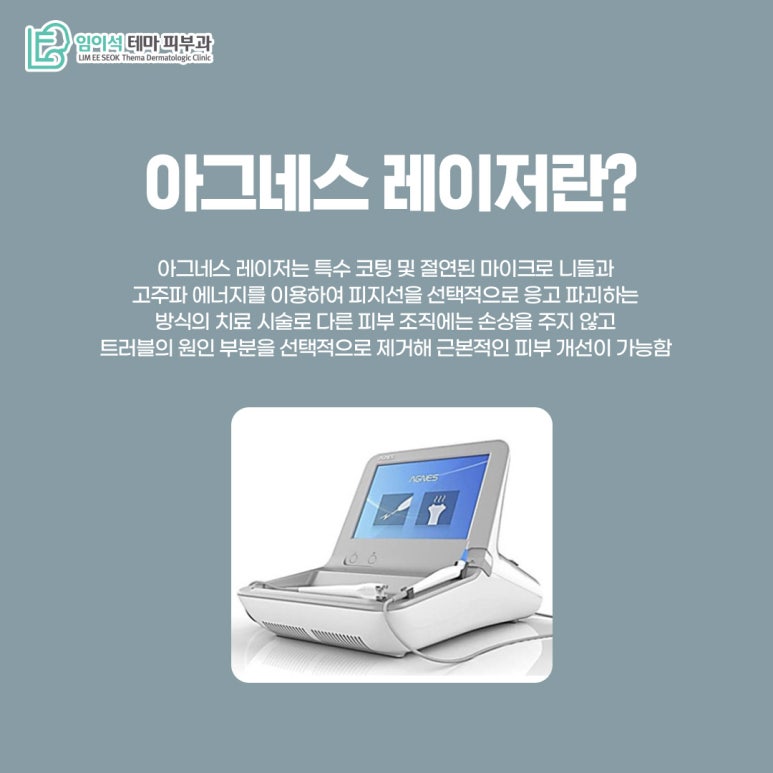
The Agnes laser is a procedure that treats by selectively coagulating and destroying sebaceous glands using special-coated, insulated micro needles (Micro-insulated Needle) and radiofrequency energy. It is also called acne ablation. It works by delivering heat to the depth of the lesion within the dermal layer, coagulating only that area.
Because Agnes uses insulated needles, it does not cause burns or damage to other skin tissues, including the epidermis. By safely and selectively removing the areas that cause skin problems, it can lead to fundamental improvement. As a result, acne recurrence is significantly lower than with other treatments, and the effects also last longer.
Skin Conditions That Can Be Treated with Agnes
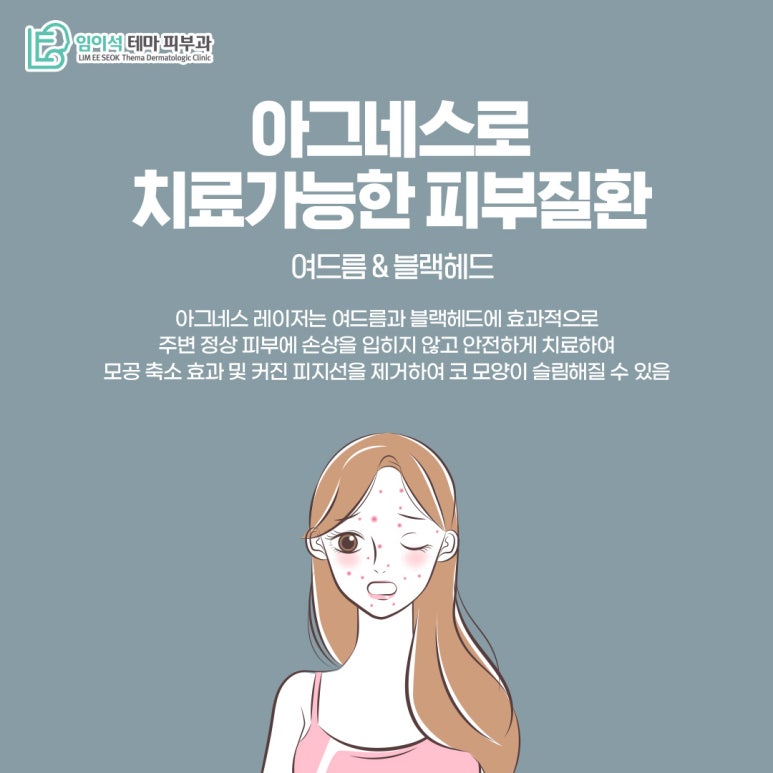
- Acne & Blackheads
The Agnes laser is effective for acne and blackheads because it permanently destroys sebaceous glands. With a special tip that does not damage the surrounding normal skin, it can be treated safely and reliably to prevent recurrence of acne and blackheads. This also provides a pore-reducing effect, and if enlarged sebaceous glands are removed, it can even make the nose look slimmer.
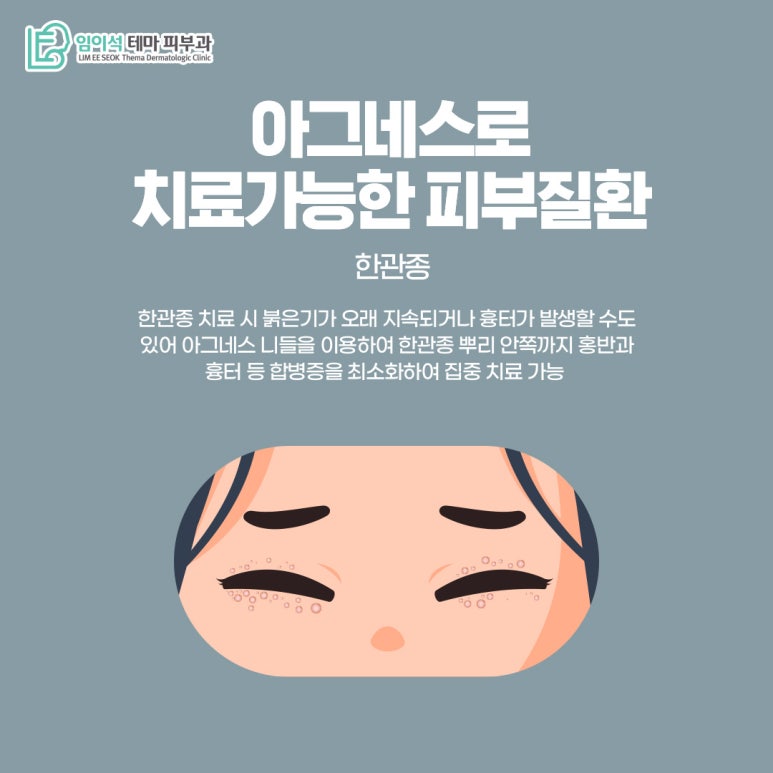
- Syringoma
Syringoma can be treated in various ways, but Agnes is often used because redness may persist for a long time or, in rare cases, scarring may occur. Using a needle designed specifically for syringoma, the treatment focuses deep into the root of the syringoma, and because there is little damage to the skin surface, complications such as erythema or scarring after treatment are minimal. The destroyed syringoma tissue is slowly broken down and absorbed within the skin, improving symptoms.
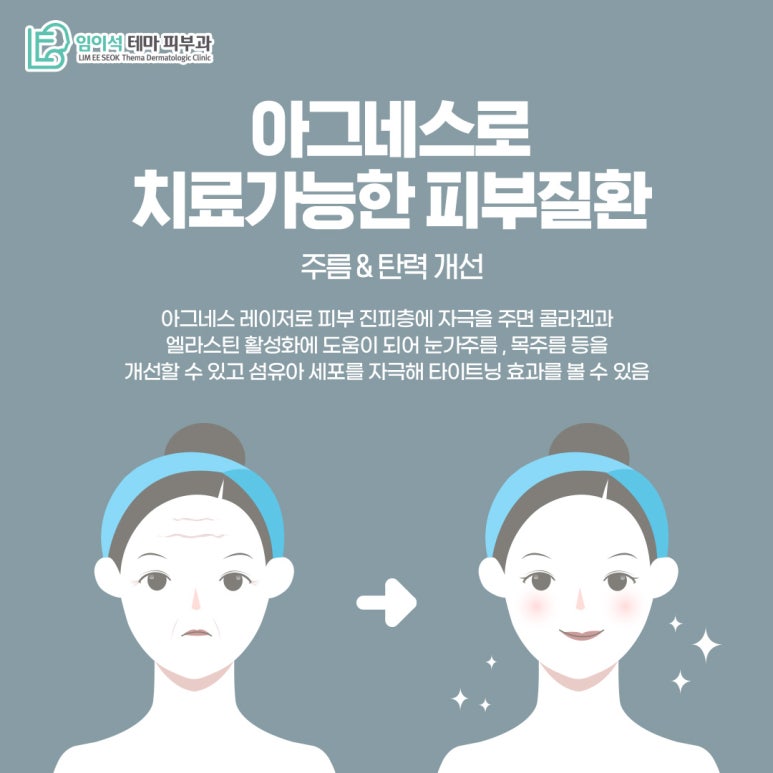
- Wrinkle & Elasticity Improvement
Stimulating the dermal layer of the skin with the Agnes laser helps activate collagen and elastin. Through this, it can improve wrinkles around the eyes and neck wrinkles. It can also improve skin elasticity by stimulating fibroblasts, allowing for a smoother facial line and a tightening effect.
Agnes Procedure Process
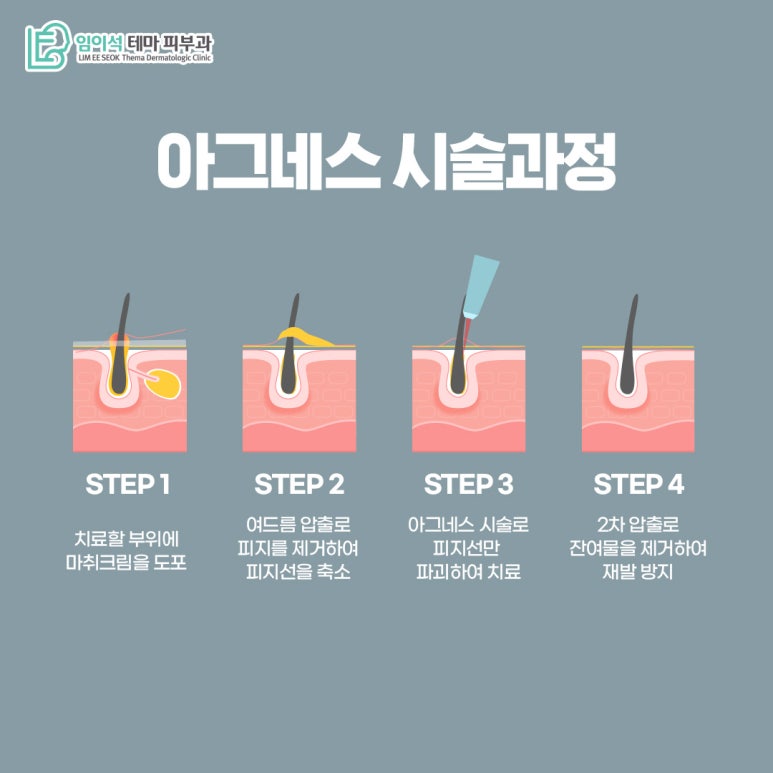
-
Apply anesthetic cream to the area to be treated.
-
Express the sebum.
-
Using Agnes, insert the micro-insulated needle deep into the sebaceous gland.
-
The day after the procedure, cleanly remove the remnants of the destroyed sebaceous glands.
Advantages of the Agnes Laser
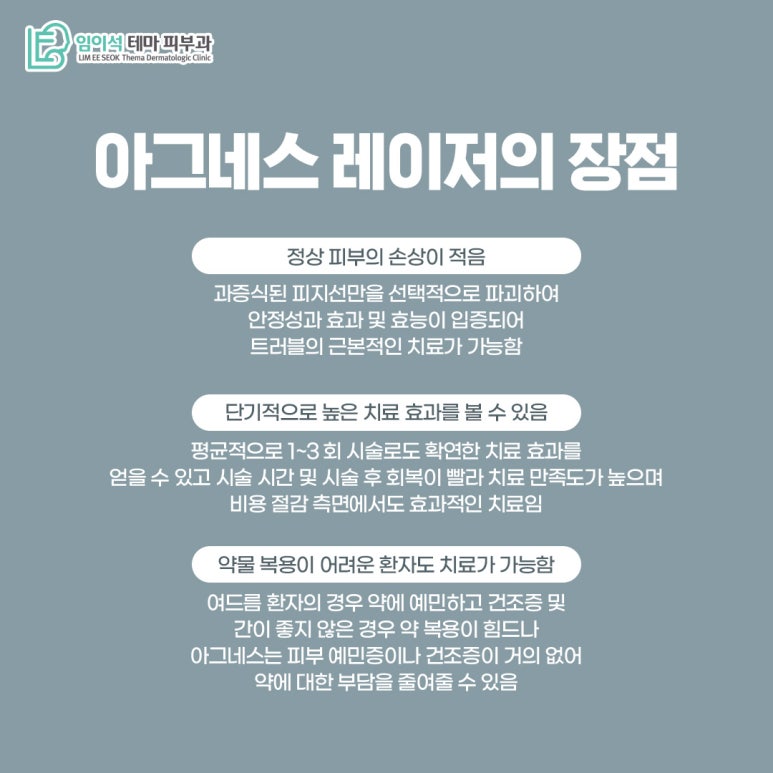
- It causes minimal damage to normal skin.
The Agnes laser selectively destroys only the overgrown sebaceous glands. It is a laser device that has received approval from the Korean Ministry of Food and Drug Safety (KFDA) and CE certification in Europe, with its safety, effectiveness, and efficacy proven. Because it causes few side effects and little damage, such as epidermal burns, it can provide fundamental treatment for skin problems.
- High short-term treatment effectiveness.
On average, the Agnes laser can produce clear treatment effects with just 1 to 3 sessions. Symptoms may improve after only one session, and because the procedure time is short and recovery after treatment is fast, satisfaction is high. Usually, a second treatment is performed 1 to 2 months after the first, and if recurrence occurs several months later, a third treatment is performed, making it an effective treatment in terms of saving time and cost.
- It can treat patients who have difficulty taking medication.
In the case of acne patients, some do not want to take medication, are sensitive to medication, have dryness, or have liver conditions that make taking medication difficult. Agnes rarely causes skin sensitivity or dryness, and because it uses laser treatment instead of medication, it can reduce concerns about drugs.
Things to Know Before Agnes Treatment
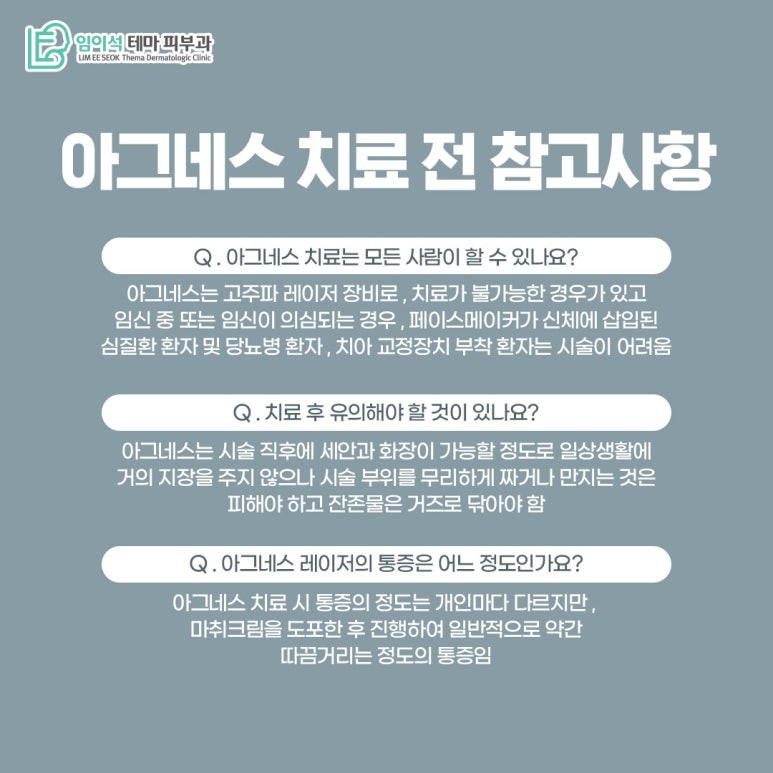
Q. Can everyone receive Agnes treatment?
Agnes is a radiofrequency laser device, so there are cases in which treatment is not possible. Agnes treatment cannot be performed during pregnancy or when pregnancy is suspected, or in patients with heart disease who have a pacemaker inserted into the body, or in patients with diabetes. In addition, if orthodontic appliances are attached to the teeth, the procedure may be difficult because radiofrequency may be transmitted to the metal and be dangerous.
Q. Are there any precautions after treatment?
Agnes causes almost no disruption to daily life, to the extent that you can wash your face and apply makeup immediately after the procedure. However, you should avoid forcefully squeezing or touching the treated area. Any remnants that naturally come up can be gently wiped away with gauze.
Q. How much pain does the Agnes laser cause?
The degree of pain during Agnes treatment varies from person to person, but because the procedure is performed after applying anesthetic cream, it is generally considered to feel like a slight stinging sensation.