Provided by: Im Eiseok Theme Dermatology Clinic
How to Improve Chicken Skin and Keratosis Pilaris
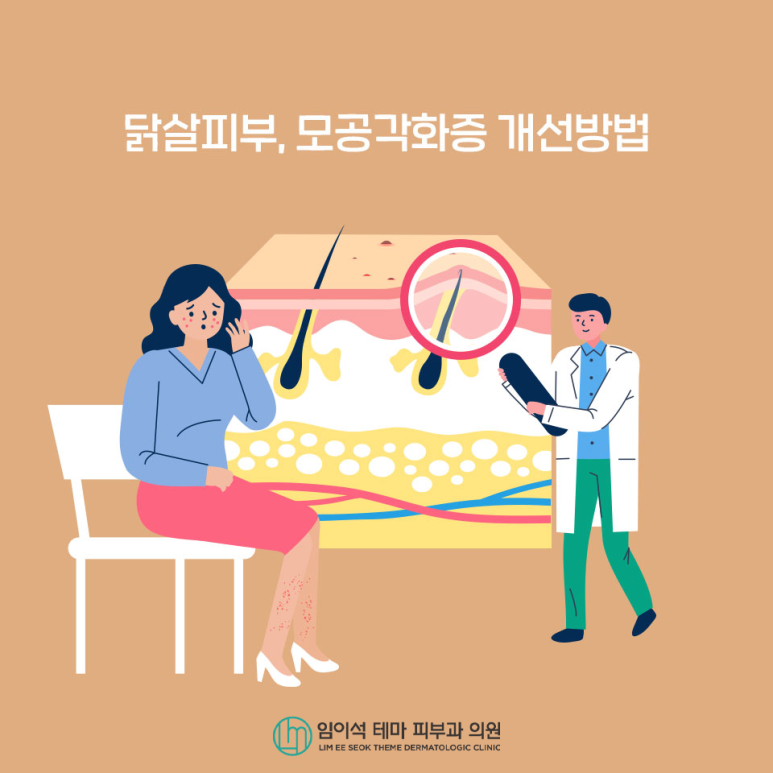
Keratosis pilaris, often called “chicken skin” because the skin looks similar to goosebumps, is one of the common skin conditions that appears as tiny bumps caused by an excessive buildup of dead skin cells at the openings of the hair follicles. Keratosis pilaris can appear on various parts of the body, such as the face, legs, and arms.
As unnecessary dead skin cells build up at the follicle openings, the skin becomes bumpy. This condition commonly occurs not only in adults but also in teenagers. Because the skin rises like chicken skin, scratching or picking at it can cause inflammation and worsen the symptoms. This can also lead to complications such as pigmentation, so it is best to visit a clinic and receive treatment when symptoms appear.
The temporary chicken skin phenomenon we experience when we feel fear, emotional changes, or cold, in which the tissue around the hairs briefly becomes raised and rounded, is different from keratosis pilaris. Temporary goosebumps disappear once the environmental trigger is gone, but keratosis pilaris develops in a specific area and does not go away, remaining persistent.
What causes keratosis pilaris?
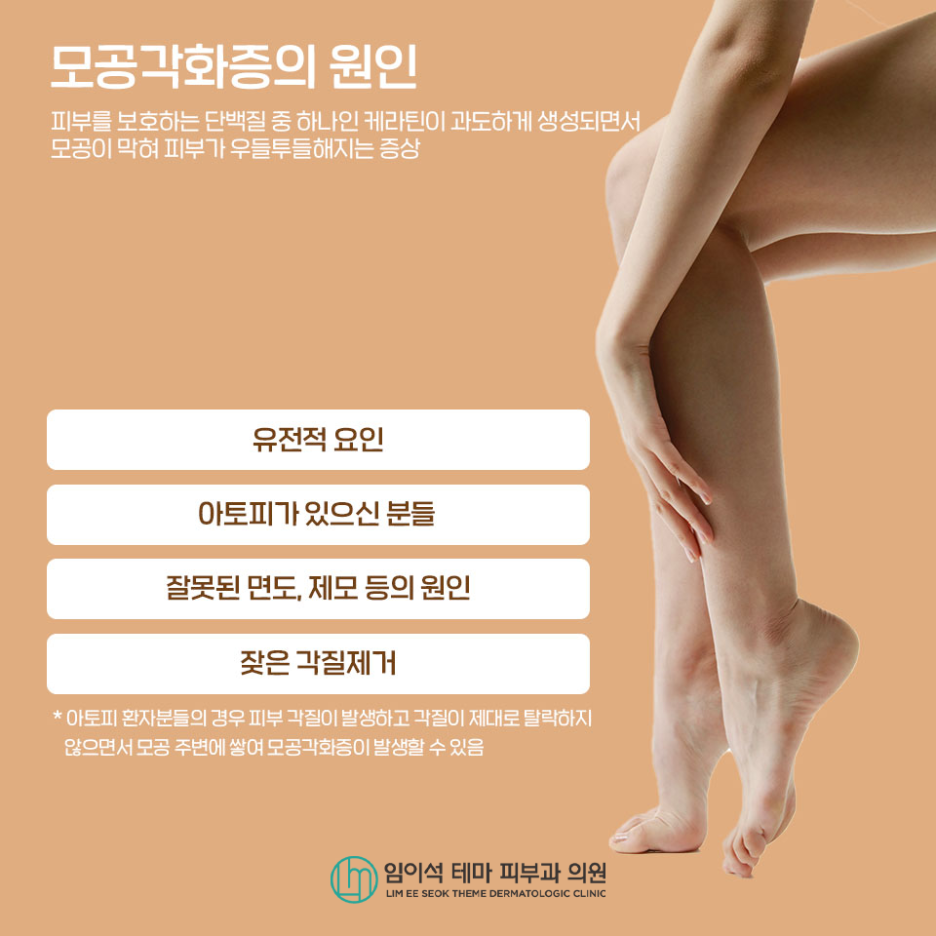
The exact cause of keratosis pilaris has not yet been clearly identified, but it tends to occur more often in people with genetic factors or atopic symptoms. In particular, patients with atopic dermatitis may develop skin scaling like dandruff falling from the scalp, and when the dead skin does not shed properly, it can accumulate around the follicles and lead to keratosis pilaris. Symptoms often worsen during winter weather because dry skin affects keratosis pilaris. Also, since people wear long and thick clothes in winter, many do not notice the symptoms until the weather gets warmer and they start wearing shorter clothing, at which point they visit a clinic.
Symptoms of keratosis pilaris
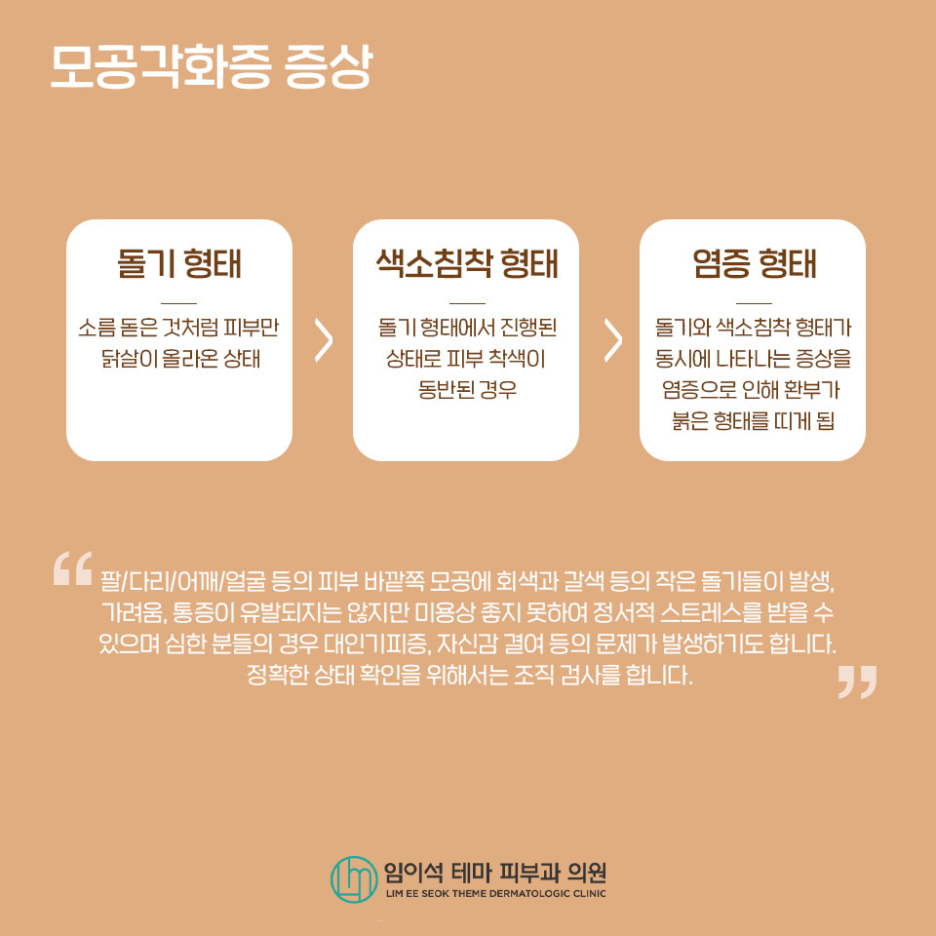
Small gray or brown bumps appear around the outer follicles on the arms, legs, shoulders, face, and other areas. It does not usually cause particular itching or pain, but it may be cosmetically unappealing and cause emotional stress. In severe cases, it can lead to problems such as social avoidance and reduced self-confidence. Because the symptoms are visible externally, diagnosis can be made by visual examination, but a biopsy is performed to confirm the exact condition.
Keratosis pilaris can be divided into three stages: bump type > pigmentation type > inflammation type. The “bump type” refers to a state where the skin is raised like goosebumps, with no additional symptoms. The “pigmentation type” is a more advanced stage than the bump type, in which discoloration of the skin is present. The “inflammation type” refers to symptoms in which bumps and pigmentation appear at the same time, and the affected area turns red due to inflammation.
How can keratosis pilaris be managed in daily life?
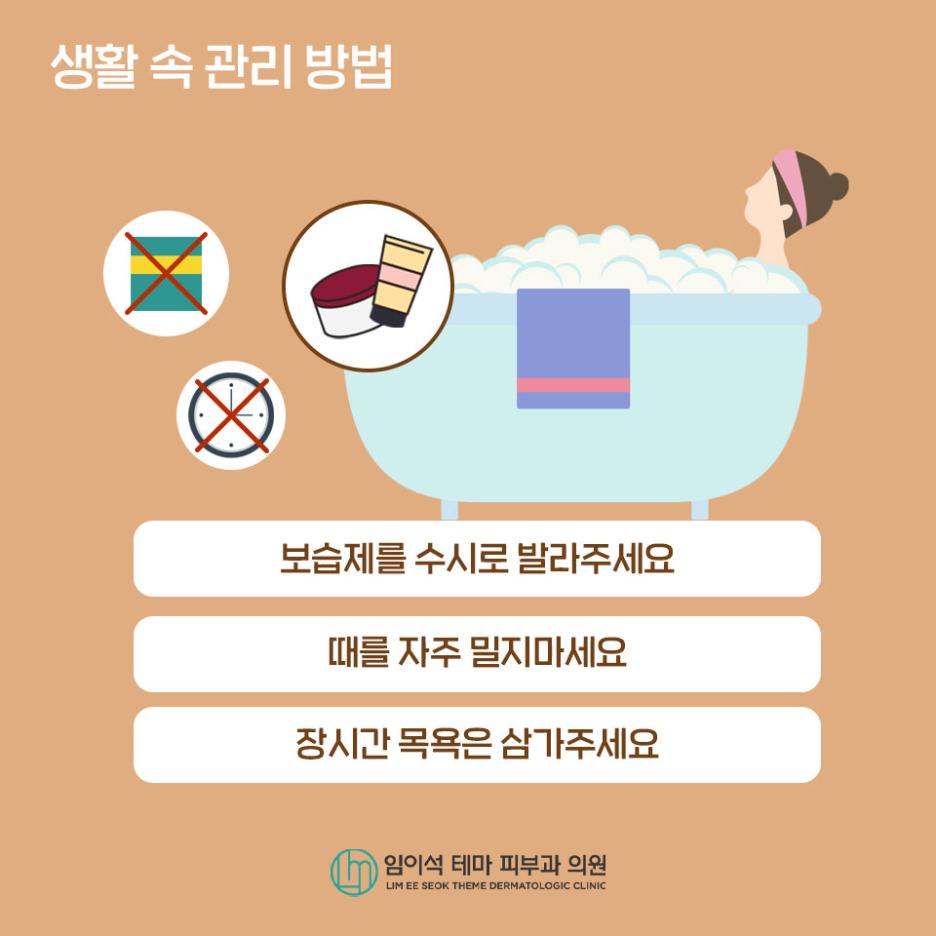
In patients with keratosis pilaris, sebum secretion is not smooth and the skin dries out easily, so it is good to apply moisturizer frequently. It is also better to use a moisturizer that contains therapeutic ingredients. In particular, cosmeceutical products are helpful for keratosis pilaris.
Rubbing off dead skin is a factor that worsens keratosis pilaris, so it is best to avoid it. Many people with keratosis pilaris have the habit of frequently rubbing off dead skin. Since rubbing off dead skin simply removes surface buildup, it may seem like it would help keratosis pilaris, but it can damage the skin and should be avoided. A normal cleansing method removes dead skin without damaging the skin barrier and can exfoliate much more safely than rubbing it off, so rather than rubbing the skin, it is better to use regular cleansing products or a gentle scrub that does not damage keratosis pilaris-affected skin. In addition, rubbing off dead skin can damage the skin barrier, which blocks external UV rays, bacteria, and dust, so not only patients with keratosis pilaris but also the general public should be careful.
Also, to prevent the skin from becoming dry, showering too often is not recommended, and the skin should be moisturized quickly after showering to prevent dryness.
Customized treatment for keratosis pilaris is important!
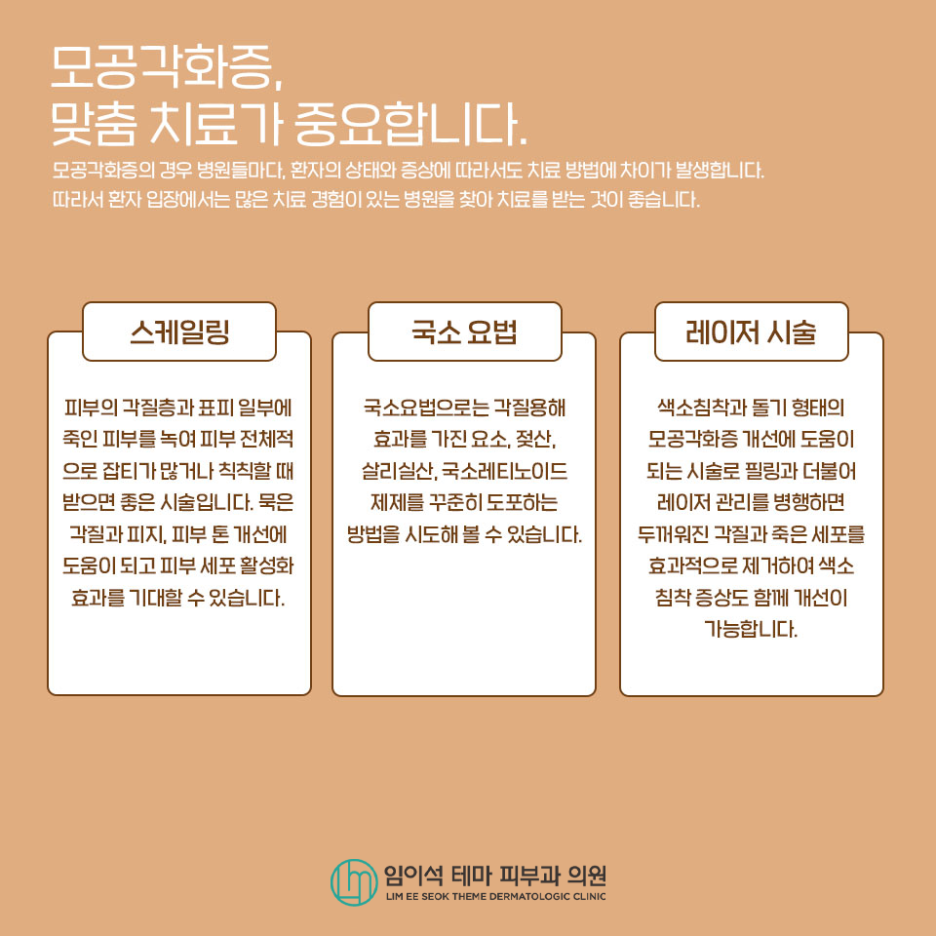
In the case of keratosis pilaris, unlike cancer treatment, there is no clearly established treatment process, so treatment methods differ from clinic to clinic, and they also vary depending on the patient’s condition and symptoms. Therefore, from the patient’s perspective, it is best to find a clinic with extensive treatment experience.
Scaling: This procedure is good for cases where the skin has many blemishes or looks dull overall, as it dissolves the stratum corneum and part of the epidermis. It helps improve old dead skin cells, sebum, and skin tone, and can also be expected to activate skin cells. However, because scaling can cause dryness after the procedure, it is better to receive it multiple times at a low intensity, and sufficient moisturizing and soothing care is needed after the procedure.
Topical therapy: As topical therapy, you can try consistently applying urea, lactic acid, salicylic acid, and topical retinoid preparations, which have keratolytic effects.
Laser treatment: Laser treatment can help improve pigmentation and the bump type of keratosis pilaris. When laser care is combined with scaling, thickened dead skin cells and dead cells can be effectively removed, and pigmentation symptoms can also be improved at the same time.
So far, we have discussed the causes, symptoms, and treatment methods for those who are struggling with keratosis pilaris. In fact, for skin conditions like this, prevention through daily skin care is best, and if the condition develops, self-care through improved daily habits and management may help. However, if there is no sign of improvement and it is difficult to manage, we recommend visiting our clinic for a consultation and receiving a treatment plan suited to you.
At Im Eiseok Theme Dermatology Clinic, based on more than 20 years of extensive clinical experience, we follow the principle of thorough individualized treatment. As a way to provide the best treatment services, we have about 60 different laser devices and medical equipment. We always place trust, confidence, and the highest level of medical service first in order to repay the many patients who visit our clinic. If you are currently struggling with keratosis pilaris, please feel free to contact Im Eiseok Dermatology Clinic at any time.