Provider: Lim Miseok Theme Dermatology Clinic
How to Remove Moles, Warts, and Syringomas on the Face
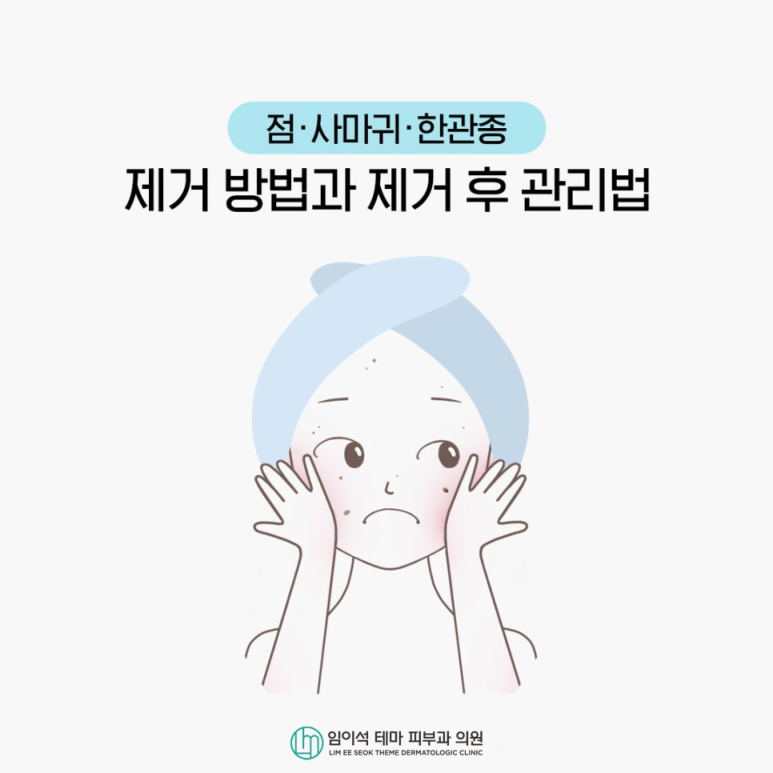
Recently, the large temperature difference between day and night has caused a decline in the body’s immunity, and many people have become interested in achieving clear, transparent skin. Among them, many visit dermatology clinics to remove moles, warts, and syringomas. Let’s take a look at what moles, warts, and syringomas are, and how they can be removed.
- What is a mole?
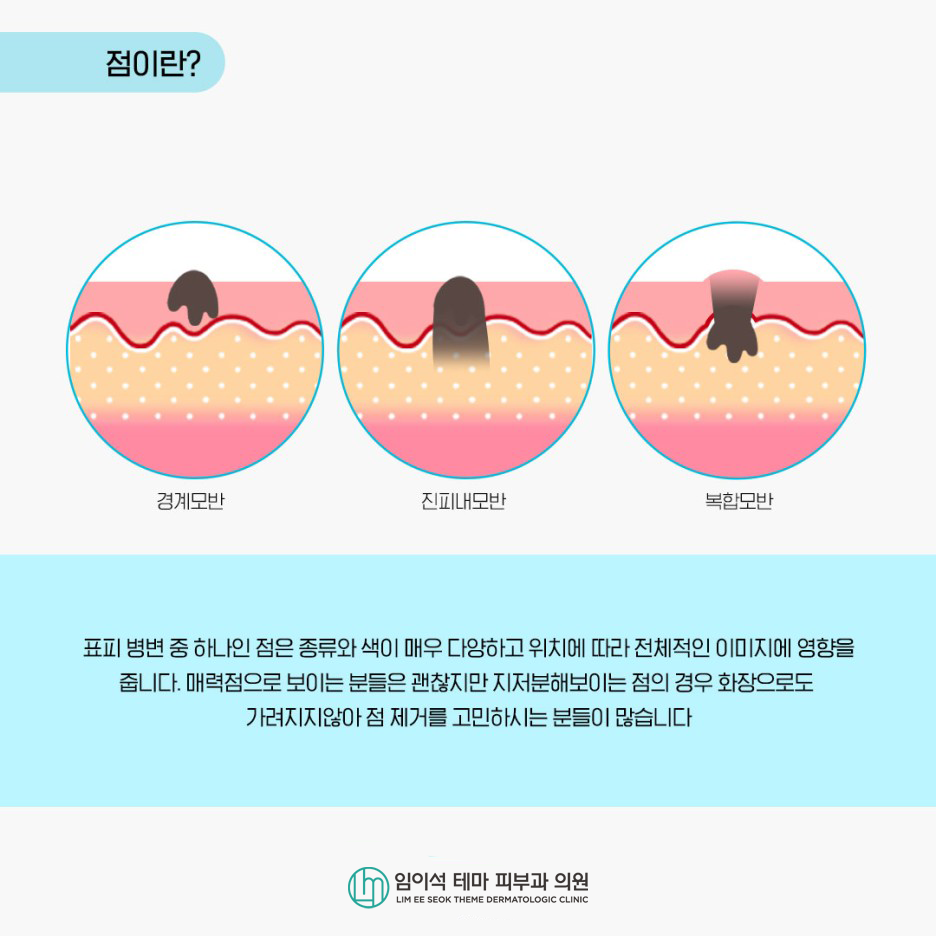
A mole is one type of epidermal lesion, and its type, size, and color vary widely. Depending on where it appears, it can affect one’s overall appearance, and because it is difficult to completely cover with makeup, many people consider removing it for a cleaner image.
In particular, raised moles or large moles are more likely to be melanocytic nevi with deep roots. In such cases, repeated laser treatments may be needed for complete removal. Since the cost of mole removal is relatively low compared with other procedures, many people choose treatment without much burden.
In fact, removing facial moles can make the skin look whiter and neater. Also, because the procedure is simple, there is less concern about scarring or recovery time. In particular, it is now possible to remove them with lasers without surgical procedures while minimizing skin damage, so as the cost burden of mole removal has decreased, men are also tending to approach it more easily.
- What is a wart?
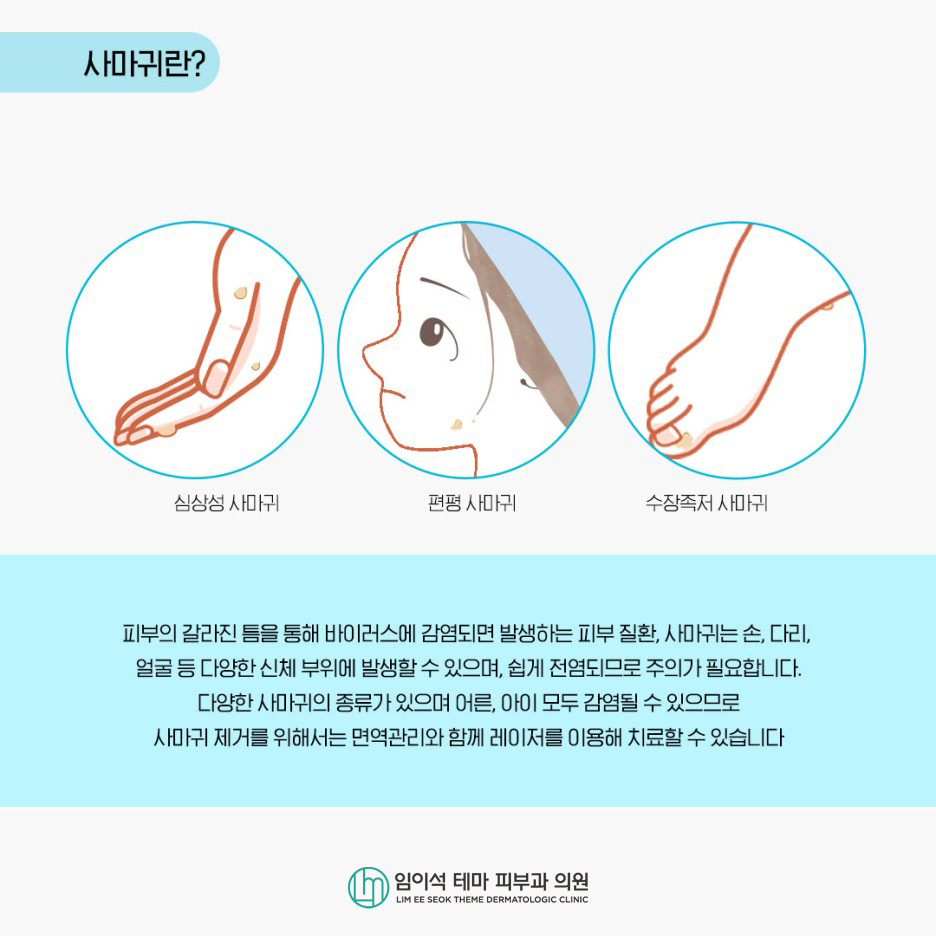
A wart is a skin condition that occurs when a virus infects the skin through cracks or fissures.
It can appear on various parts of the body, such as the hands, legs, and face, and caution is needed because it is easily contagious.
Warts are classified by the area where they occur. Examples include common warts that appear around the fingernails and toenails, plantar warts that appear on the soles of the feet, flat warts that appear around the face, and genital warts that appear around the genitals or anus.
The commonly known ordinary wart is the common wart, which appears as a small, bumpy, pea-sized papule. Because the surface is rough, it can be bothersome and easy to touch, but doing so may spread the virus to other areas, so caution is necessary.
Flat warts occur mainly on the face and are also called facial flat warts. Because they are so small that pores cannot be seen on the surface, you may not even realize they are there. Even if they are found by chance, some people mistake them for moles and leave them untreated. If they continue to spread, it is better to remove them through flat wart laser treatment. The way to get rid of warts is to receive wart treatment at a hospital. We recommend visiting a wart dermatology clinic or wart treatment hospital to receive treatment for facial warts.
In seasons like this, when the day-night temperature difference is large, many people become interested in removing molluscum contagiosum in infants and children, as well as treating molluscum contagiosum. Interest in dermatology treatment for warts, such as how to get rid of molluscum contagiosum, also grows.
Molluscum contagiosum is a skin condition that appears as round bumps on various parts of the body. It mainly infects children, and for removal, wart laser treatment along with immune management is a recommended treatment method.
- What is syringoma?
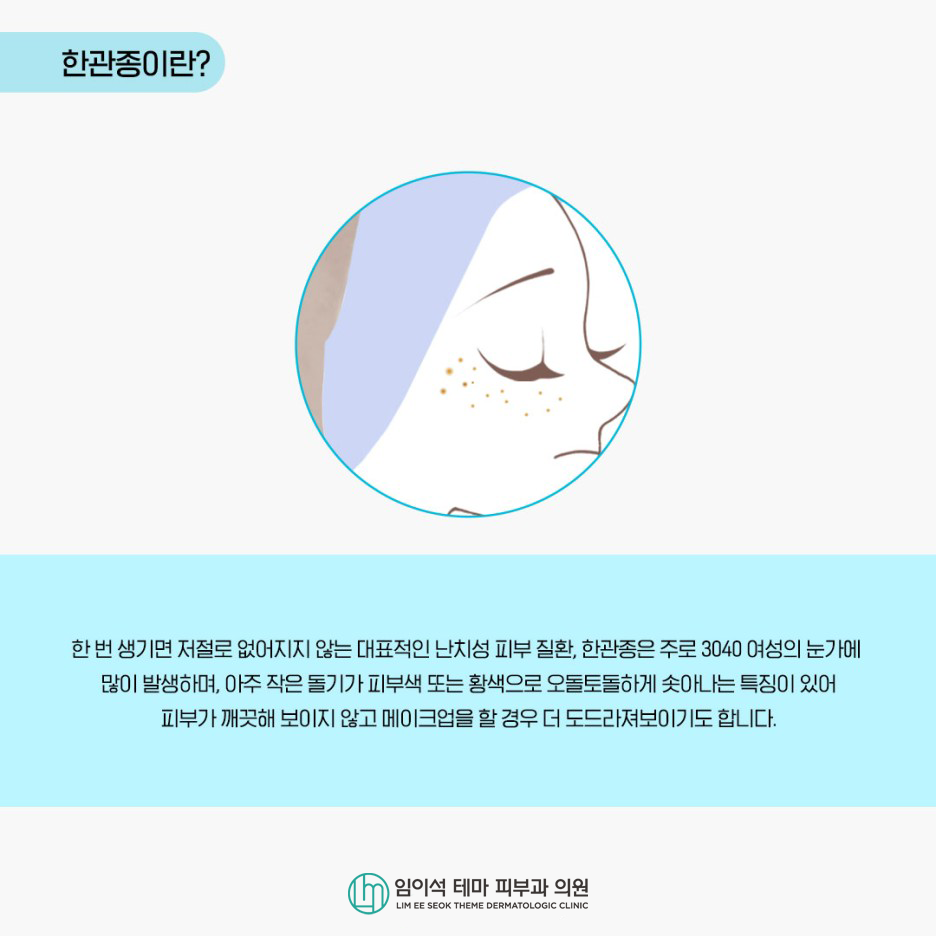
Syringoma is a representative intractable skin condition that does not go away on its own once it appears. It commonly occurs around the eyes in women in their 30s and 40s, and appears as multiple tiny bumps that are skin-colored or yellowish. If left untreated, it gradually spreads and increases in number and size, making it one of the skin conditions that requires repeated treatment.
Because it has the characteristic of forming small raised bumps under the eyes, the skin does not look clean, and it can stand out even more when makeup is applied.
Syringoma occurs due to abnormal proliferation of the sweat ducts. It is located deeper in the skin than what is visible, and if treatment is performed too aggressively, scars may remain. If it is removed too superficially, the chance of recurrence is high, so accurately removing the root is important for effective treatment.
Because skin conditions, including skin thickness, and the severity of symptoms vary from person to person, treatment using a combination of different lasers rather than just one laser may be more effective.
- How to remove moles, warts, and syringomas
Moles can be removed using the standard CO2 laser, or by a triple method that peels away pigment as if doing a fine peeling. There are also various mole removal methods, such as ice mole removal and tetra mole removal.
Treatment for wart removal differs depending on the area and cause. Treatment methods include electrocautery, cryotherapy, and immunotherapy. Electrocautery is a simple way to remove warts by burning them with electricity. However, because it may leave scars after treatment, it needs to be considered carefully. Cryotherapy is a method of freezing warts with liquid nitrogen and then removing them, and it is effective for warts around the nails. For warts that spread when touched, the most important thing is not to touch them. Since this condition has a very high chance of recurrence, it is advisable to maintain an active approach to treatment.
Syringoma can be treated in various ways, including carbon dioxide laser treatment, TCA application, and topical atropine application. However, because redness may persist for a long time or scars may occur in rare cases, treatment often uses Agnes, a treatment device that uses a high-frequency insulated needle. Agnes is a preferred laser treatment method because it can safely and precisely remove the sweat gland roots of syringoma located deep in the dermis.
- Types of removal lasers / care after removal
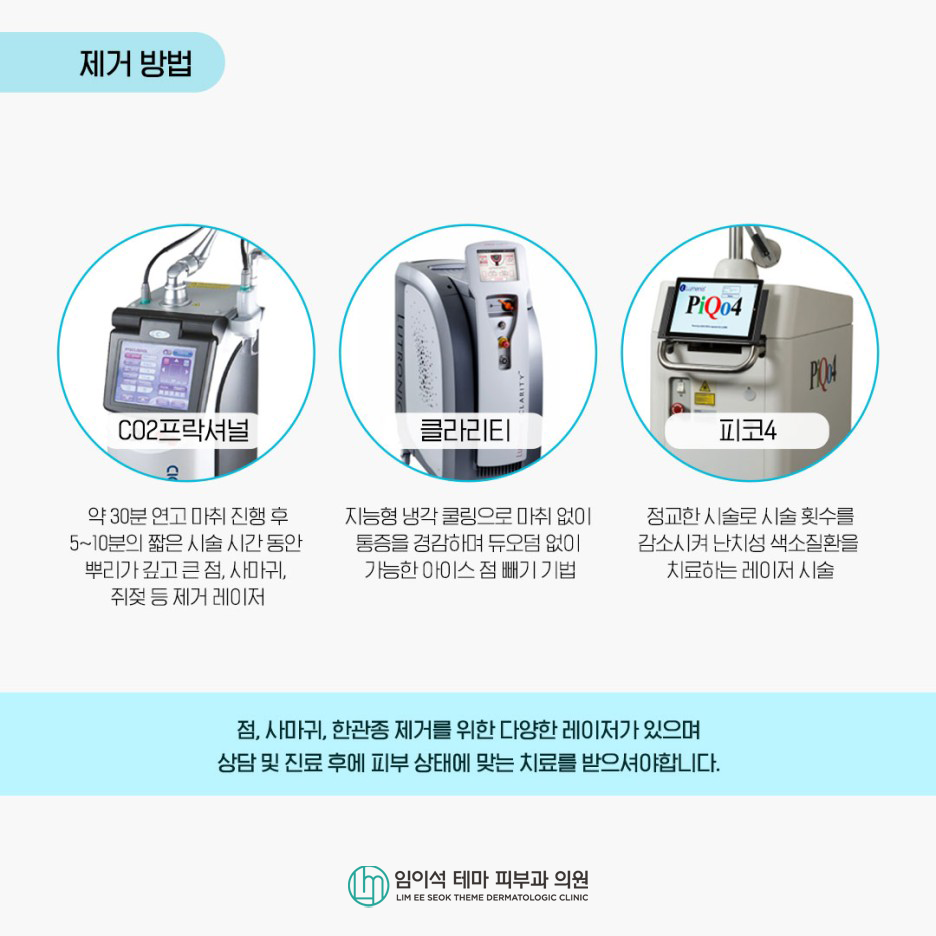
Moles, which are one type of epidermal lesion, warts caused by viral infection through cracks, and syringomas all interfere with clear skin, so treatment should be carried out according to the cause of the condition. There are various types of lasers for removing moles, warts, and syringomas, and representative treatments include CO2 fractional, Clarity, and Lumenis Pico4 lasers.
The CO2 fractional laser, which helps damaged skin tissue recover and regenerate quickly, involves almost no pain thanks to numbing ointment anesthesia, and with a short procedure time of 5 to 10 minutes, it is an effective laser for removing deep-rooted and large moles, warts, skin tags, and more.
The Clarity laser, which helps address various skin concerns, is a laser procedure that uses intelligent cooling to reduce pain without anesthesia and uses an ice mole removal technique that can be performed without DuoDerm.
The Lumenis Pico4 laser removes only pigment without damaging the skin, and it is a precise laser treatment that reduces the number of sessions needed to treat intractable pigment conditions.
After removing moles, warts, and syringomas, ongoing care is necessary. It is important to avoid touching the skin as much as possible after treatment, and especially important to manage it through lifestyle improvements such as sufficient moisturizing and balanced nutrition.
Lim Miseok Theme Dermatology Clinic has a variety of laser equipment for creating clear and healthy skin, and has established a one-stop service for effective treatment and care. Through personalized services, they provide comfortable and prompt care, so if you have skin concerns, please visit the Gangnam dermatology clinic or Sinsa dermatology clinic for a consultation.