Provider: Im Eui-seok Thema Dermatology Clinic
Treatments to Relieve the Symptoms of a Red Face, "Facial Flushing"
What Is Facial Flushing?

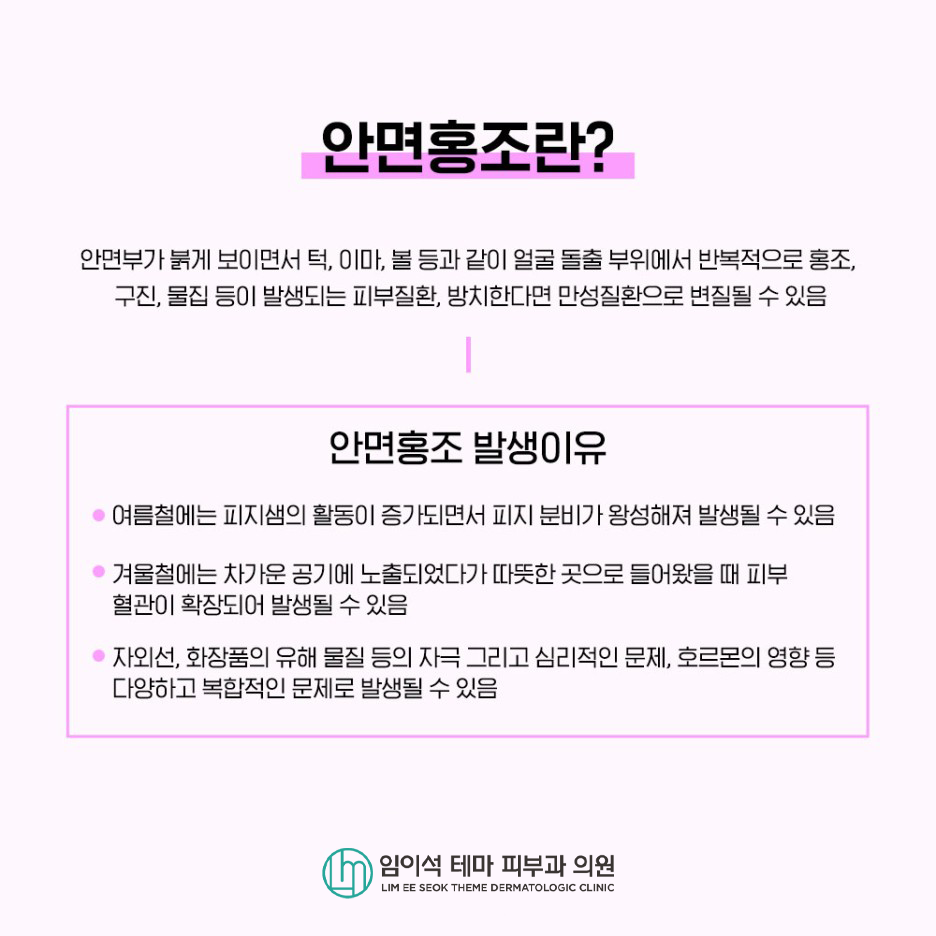
Facial flushing refers to a skin condition in which the face appears red, with repeated flushing, papules, and blisters occurring on protruding areas of the face such as the chin, forehead, and cheeks. During the hot summer season, increased activity of the sebaceous glands leads to more active sebum secretion, which can cause seborrheic dermatitis. However, in weather like these chilly days, facial flushing may occur when skin blood vessels dilate after being exposed to cold air and then entering a warm place.
In this way, skin conditions are greatly influenced by the weather, but they can also arise from a variety of complex factors such as irritation from ultraviolet rays and harmful substances in cosmetics, as well as psychological issues and hormonal influences. Sometimes facial flushing appears only temporarily, but if it occurs repeatedly and is left untreated, it can develop into a chronic condition. Therefore, it is advisable to seek treatment as early as possible.
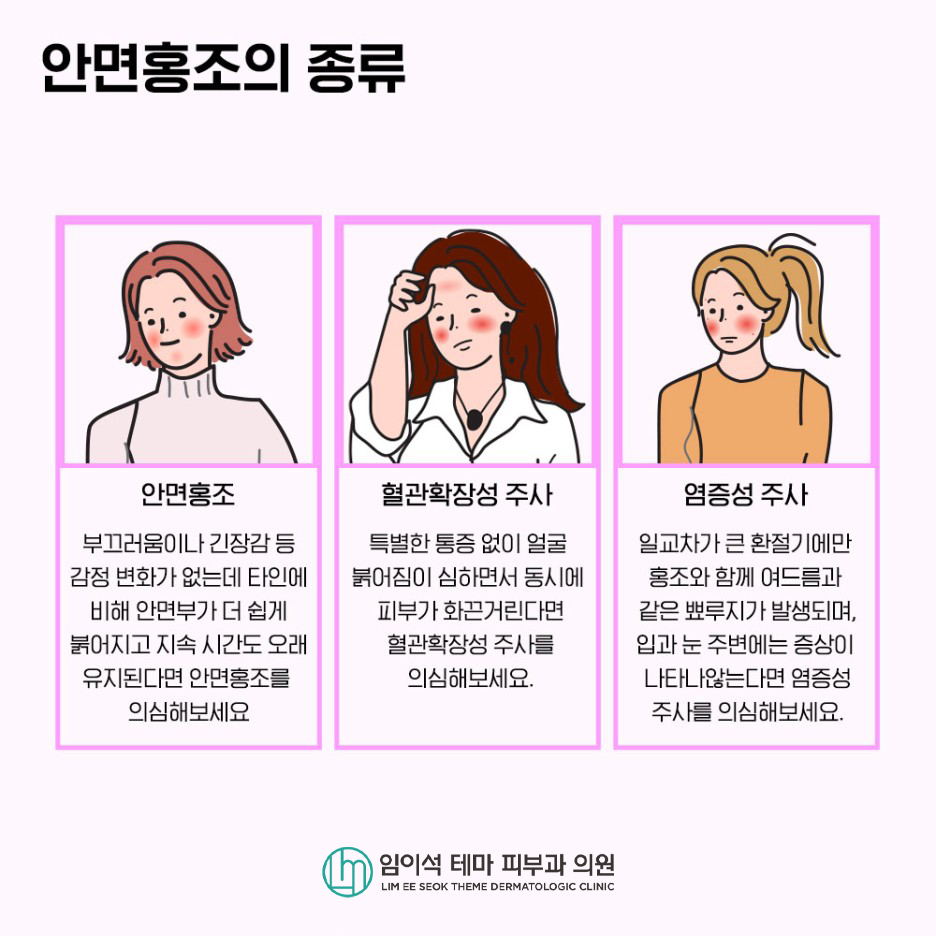
Types of Facial Flushing
■ Facial flushing: Unlike others, the face becomes red more easily and stays red for a longer time even without emotional changes such as embarrassment or tension.
■ Vascular rosacea: The face becomes severely red without any particular warning symptoms, and the skin feels hot at the same time.
■ Inflammatory rosacea: During seasonal transitions when the daily temperature range is large, acne-like bumps appear along with redness, but symptoms do not appear around the mouth or eyes.
In particular, if flushing symptoms persist, the condition is often diagnosed as rosacea, a disease in which papules, pus, and swelling accompany the flushed areas.
This disease can be classified into facial flushing, vascular rosacea, and inflammatory rosacea depending on the stage of progression. Because rosacea is a chronic, recurrent inflammatory disease, effective outcomes can only be achieved when comprehensive flushing treatment is carried out alongside facial flushing laser treatment, skin care, and medication, rather than relying on a single standardized treatment. Therefore, if flushing symptoms are detected early, early treatment is important. In the early stages, treatment is possible with ointments, medication, and laser therapy.
Facial Flushing/Rosacea Treatment Laser
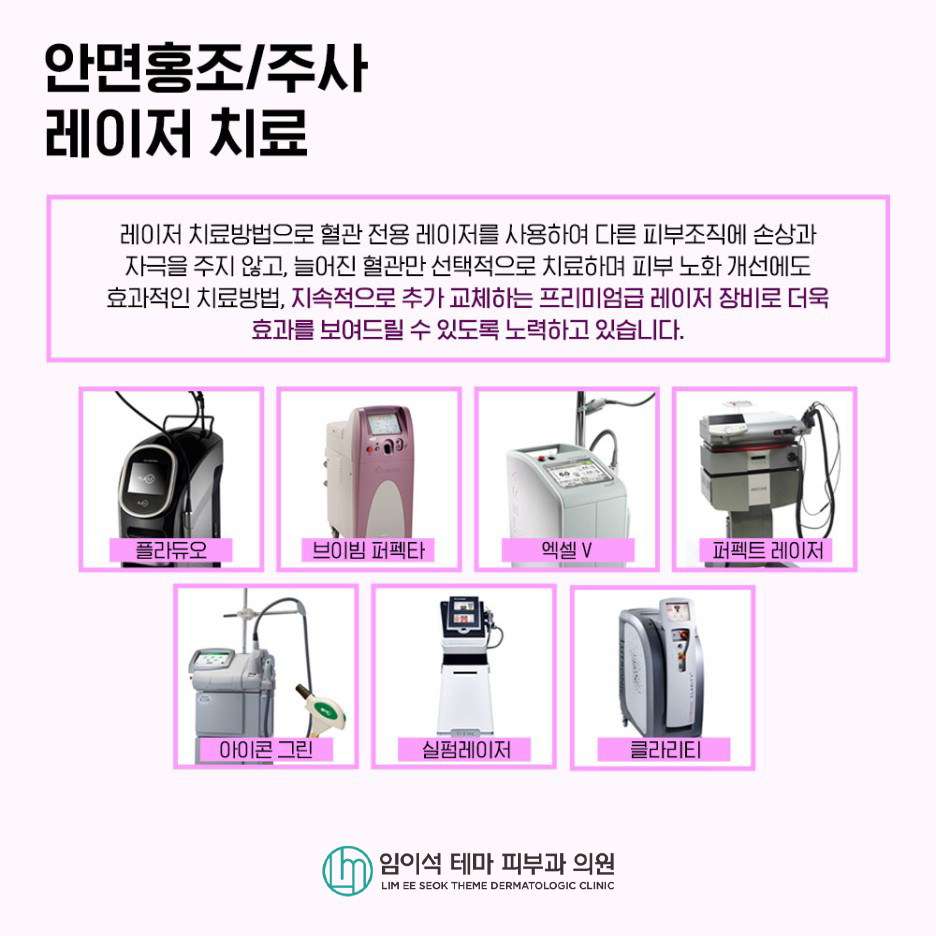
So, what are the effective treatments for facial flushing?
The most effective method is to address the underlying cause. Human blood vessels have the characteristic that once they lose their ability to constrict, they are difficult to recover. Therefore, it is best to avoid places with abrupt temperature changes as much as possible. In everyday life, prevention should come first, such as consistently applying sunscreen. If the condition has already progressed, it is wise to undergo a laser treatment dedicated to blood vessels, which can treat the blood vessels that are the source of facial flushing.
A vascular laser selectively treats only dilated blood vessels without damaging or irritating other skin tissue, and it is also an effective laser treatment method for improving skin aging. Lasers that can perform this treatment include Pladuo, Vbeam Perfecta, Excel V, Icon Green, and Clarity, which are used to treat facial flushing. These devices are vascular pigment lasers that selectively absorb vascular pigment, so they do not damage other skin tissues and have the advantage of relieving symptoms without any special discomfort after the procedure.
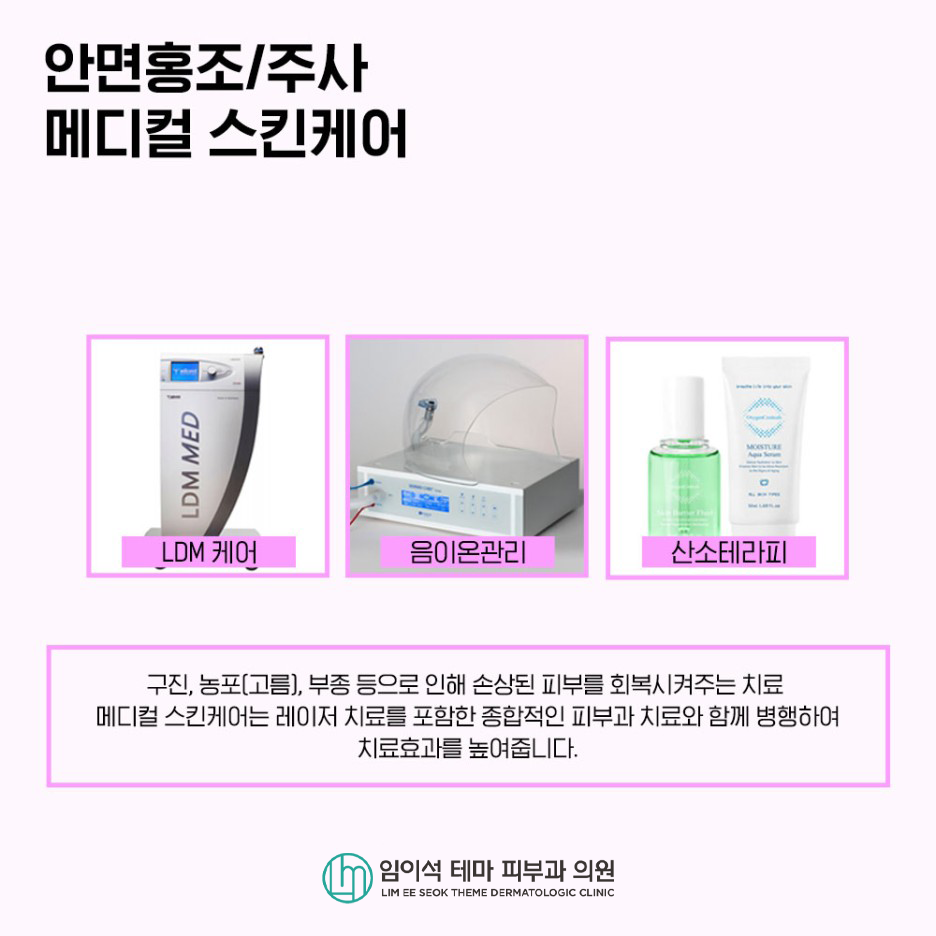
Medical skin care that works well when combined with treatment includes LDM care, ion management, and oxygen therapy, which help restore skin damaged by papules, pustules (pus), and swelling when performed together with laser treatment.
Principle of Laser Treatment
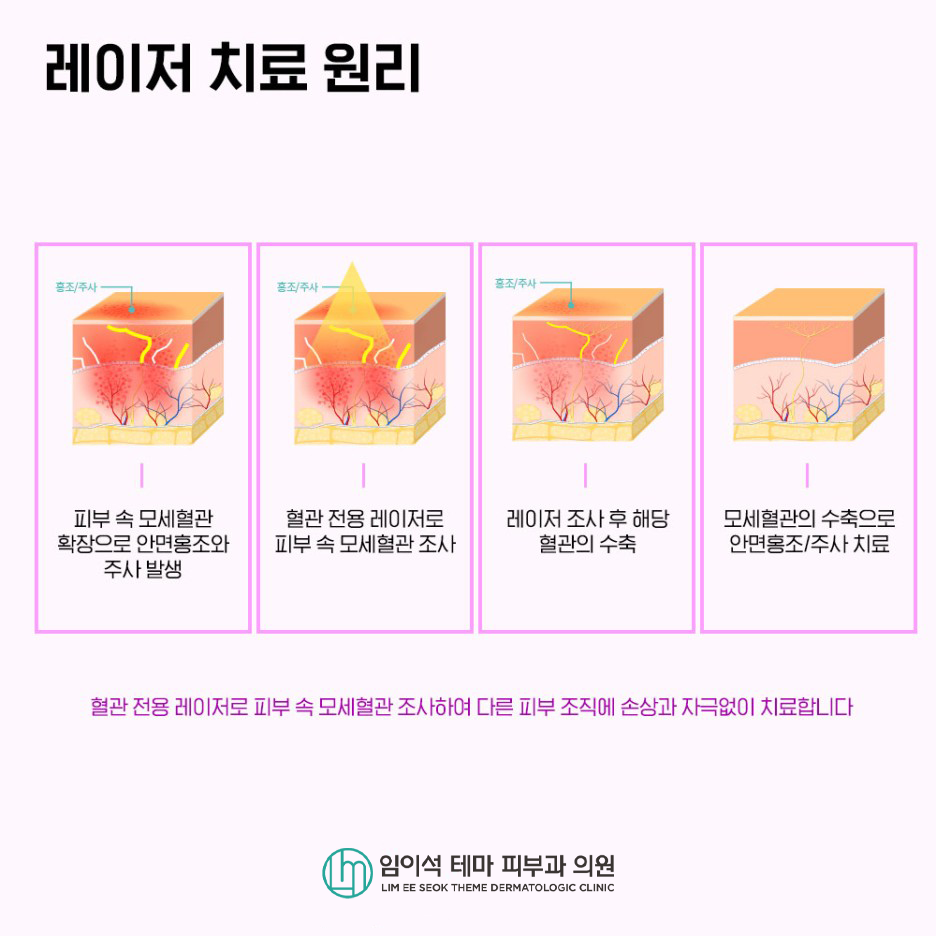
After confirming the occurrence of facial flushing/rosacea due to capillary dilation in the skin, a vascular laser is applied to the capillaries inside the skin. After laser exposure, the blood vessels contract. Capillary constriction treats the cause of facial flushing/rosacea.
Precautions Before and After Facial Flushing/Rosacea Skin Treatment
Facial flushing, a skin condition in which the face appears red, can make a person feel withdrawn and negatively affect their work, relationships, and social life. Therefore, it is especially important to improve one’s lifestyle habits, such as avoiding spicy foods and managing stress.
If the condition has already progressed, please remember that if any abnormal symptoms are detected, visiting a hospital immediately for early treatment is the wise course of action so that treatment is not delayed.
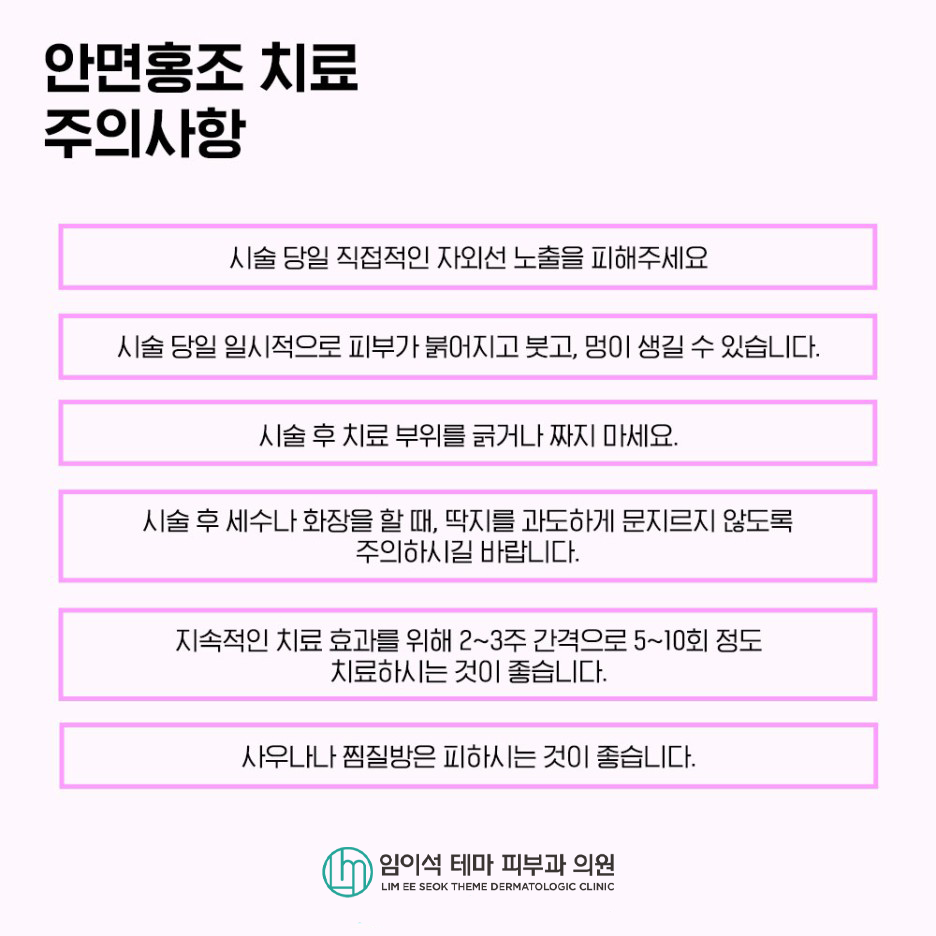
On the day of the procedure, avoid direct sun exposure, saunas, and jjimjilbangs, and temporary redness, swelling, or bruising may occur. After the procedure, do not scratch or squeeze the treated area, and continue to use moisturizer and sunscreen consistently. For sustained treatment effects, it is recommended to undergo treatment about 5 to 10 times at 2 to 3 week intervals.
Facial flushing, a skin condition in which the face appears red and repeated flushing, papules, and blisters occur on protruding areas of the face such as the forehead and cheeks, can also develop into a chronic condition if left untreated. If facial flushing is suspected, visit a dermatologist for an examination.
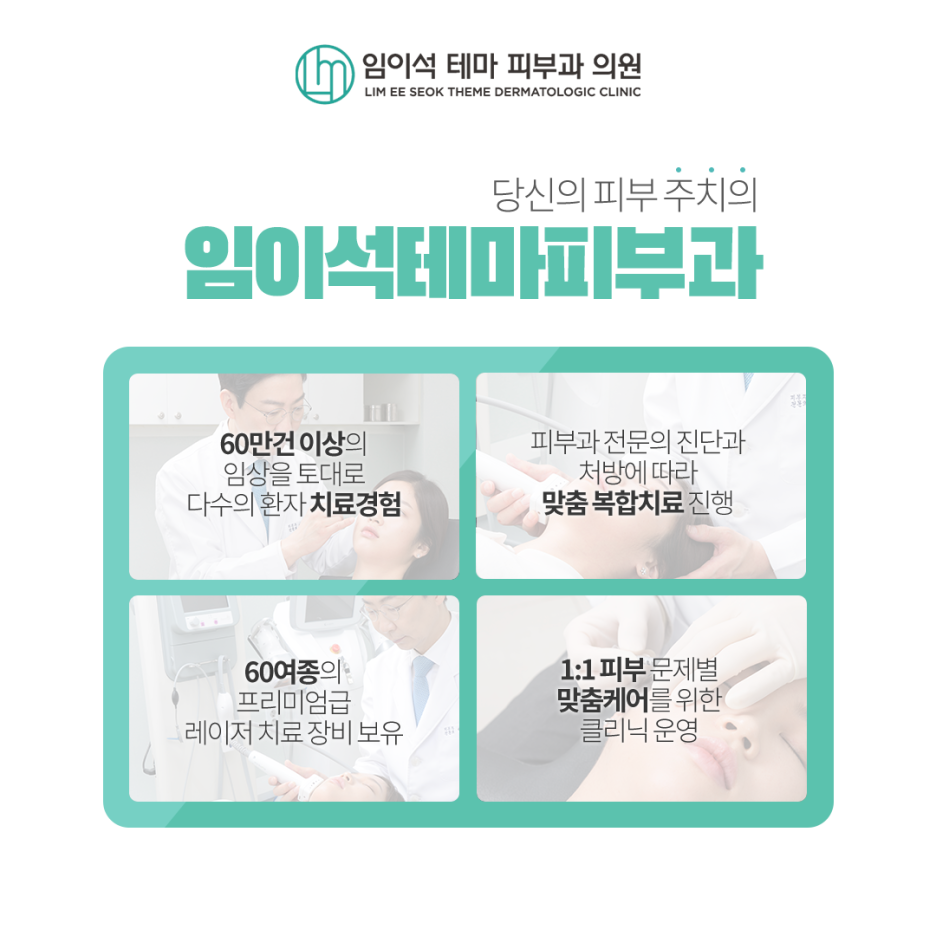
Im Eui-seok Thema Dermatology Clinic focuses on treating the root skin problem rather than merely easing symptoms in a limited way. With theme-based clinics and a wide range of laser devices, the medical team improves patient satisfaction based on diverse experience. The clinic has also established a ONE-STOP service for effective skin care, providing personalized services for each patient, and since coordinators are assigned to each area, including administration, follow-up care, and treatment, you can receive comfortable and prompt service.