�

Provider: Im Yiseok Thema Dermatology Clinic
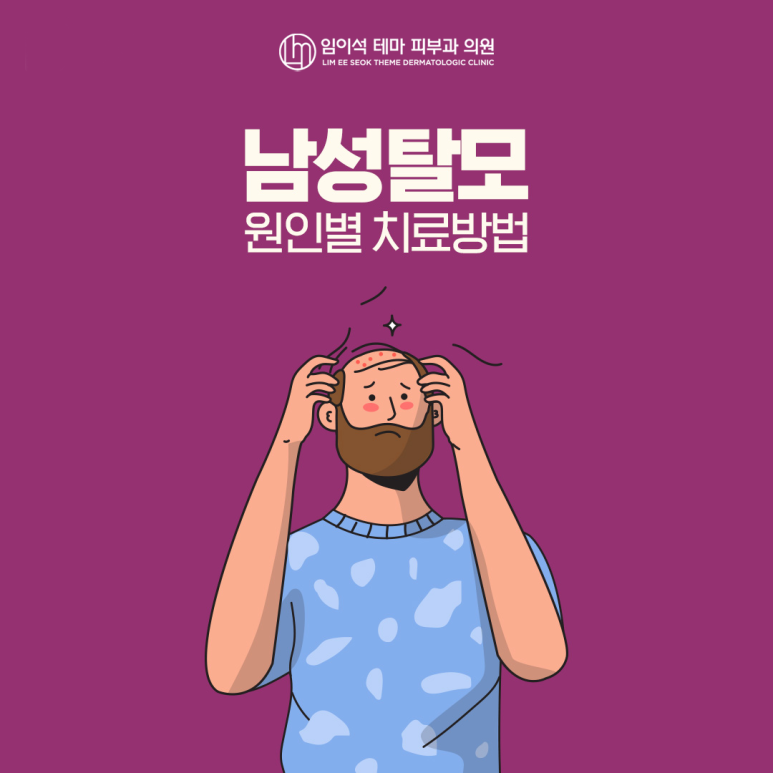
In the summer, strong ultraviolet rays and increased sebum secretion make the skin and even the scalp more sensitive. In winter, the skin and scalp also become more sensitive because cold winds blow outdoors, temperatures drop, and then the frequent use of heaters indoors suddenly raises the temperature and creates a dry environment. During these periods, you should be careful about hair loss.
According to data from the National Health Insurance Service in October 2020, the number of hair loss patients has increased by more than 11 percent over the past five years. (The number of people who visited a hospital and received treatment for alopecia was 1.09 million.) Beyond the overall increase in patients, it accounted for 43.8% of people in their 20s and 30s, and it has now become a common condition that can affect anyone, not just middle-aged or older adults. Therefore, if you notice symptoms of hair loss, it is best to visit a dermatology clinic or hair loss center quickly for consultation and treatment.
What causes male hair loss?
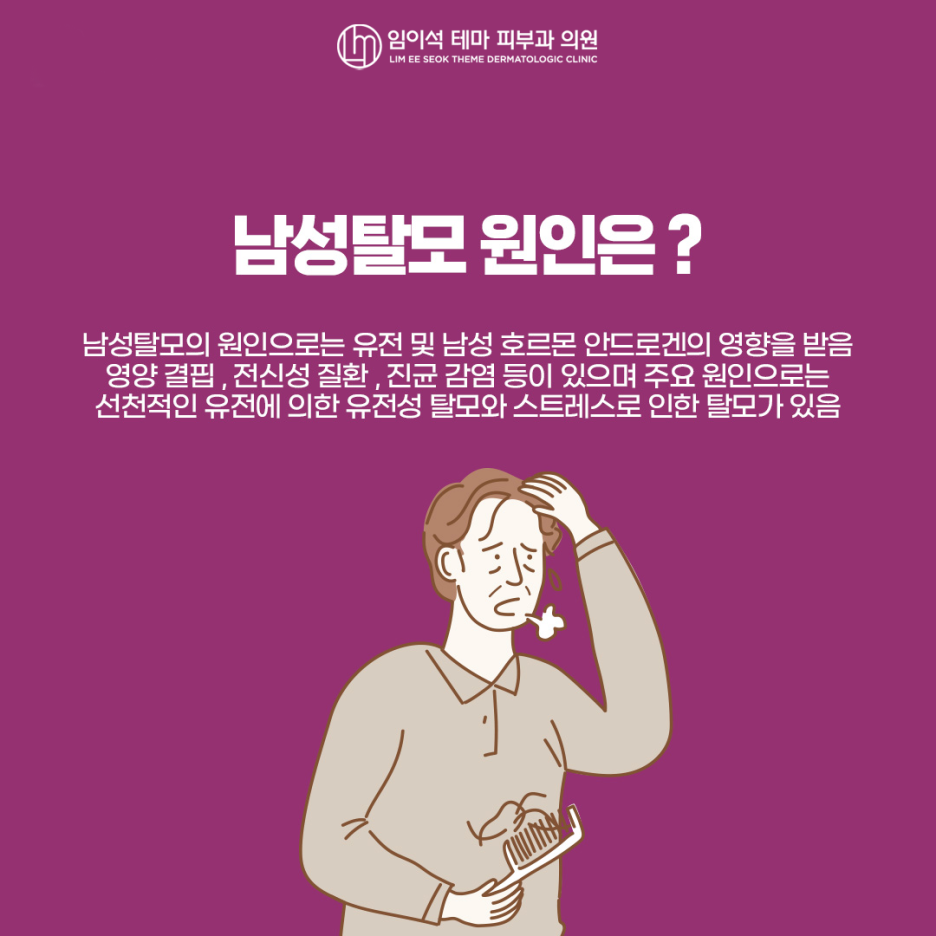
Causes of male hair loss include genetic factors and the influence of the male hormone androgen. It can also result from certain systemic diseases that cause nutritional deficiencies, fungal infections such as ringworm of the scalp, sudden weight loss, physical stress, hormonal disorders, and more.
The main causes of hair loss can be broadly divided into cases where both the father and mother are affected, in which case hereditary hair loss may occur with a high probability due to congenital inheritance. In people in their 20s and 30s, hair loss may also occur due to stress related to getting a job and working life.
Types of male hair loss
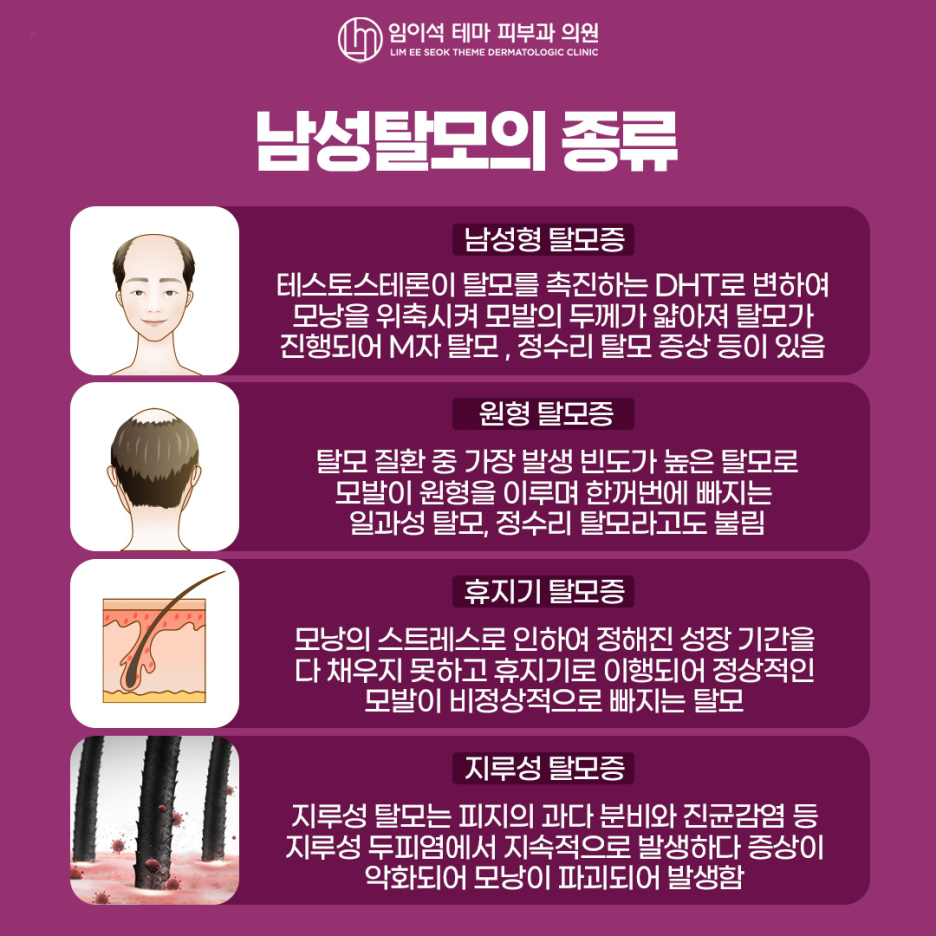
Male hair loss includes androgenetic alopecia, alopecia areata, telogen effluvium, and seborrheic alopecia.
Let’s look at the types of hair loss in more detail.
Androgenetic alopecia: Testosterone, one of the male hormones androgen, is converted into dihydrotestosterone (DHT), which promotes hair loss. This causes the hair follicles to shrink and the hair to become thinner, leading to hair loss. Androgenetic alopecia, which occurs as genetically influenced hormones are converted, can show symptoms ranging from a receding hairline that forms an M shape to hair loss starting from the crown.
Alopecia areata: Alopecia areata is the most common type of hair loss among hair loss disorders. It can occur due to stress and other factors, and it is also called temporary hair loss or crown hair loss, in which hair in one or several areas of the scalp falls out all at once in circular patches.
Telogen effluvium: Hair has a certain growth cycle. It goes through the growth phase, during which hair thickens and grows; the catagen phase, during which its shape is maintained; the telogen phase, during which hair weakens and falls out; and then the growth phase again. Telogen effluvium occurs when hair does not complete this growth period and enters the telogen phase, causing normal hair to fall out abnormally. Telogen effluvium is caused by acquired factors rather than genetics, such as stress, improper dieting, medication, and thyroid abnormalities.
Telogen effluvium summary: Telogen effluvium is hair loss in which the hair follicle, due to stress, does not complete its set growth period and enters the telogen phase, causing normal hair to fall out abnormally.
Seborrheic alopecia: Seborrheic alopecia can develop continuously from seborrheic dermatitis of the scalp, which is caused by excessive sebum secretion, fungal infection, stress, and other factors. As the symptoms of seborrheic dermatitis worsen, the hair follicles can be damaged, leading to hair loss. In particular, when the skin and scalp become dry, symptoms worsen, so you should manage them consistently.
Hair loss treatment methods
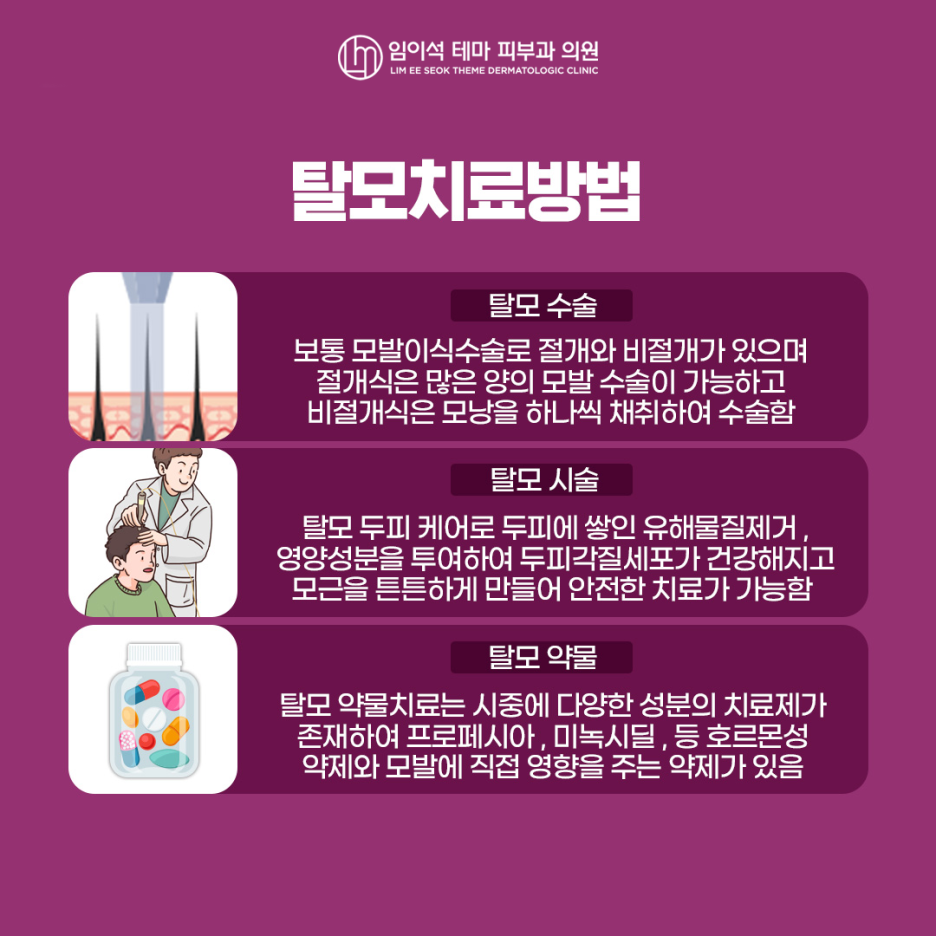
Hair loss treatment methods can generally be applied in three ways. They are selected according to the patient’s symptoms and condition: hair transplant surgery, hair loss procedures, and hair loss medication. We recommend visiting a hair loss center or dermatology clinic for an effective solution.
Hair loss surgery: Hair loss surgery is generally a hair transplant, and the methods include strip harvesting and follicular unit extraction. Strip harvesting has the advantage of leaving no noticeable marks on the back of the head, but it requires a long recovery period because of scarring and pain. On the other hand, follicular unit extraction individually harvests follicles one by one, with the advantages of less scarring and relatively faster recovery. In addition, if the hair loss area is extensive and a large amount of hair needs to be transplanted, the strip method is effective, and if the hair loss is still in the early stage or the area is not large, the follicular unit extraction method is effective. Since the two surgical methods each have different advantages and disadvantages, it is better to receive treatment that suits your condition rather than saying that one specific method is always better.
Hair loss procedures: Simply put, hair loss procedures are similar to scalp care for hair loss. They are methods that remove harmful substances accumulated on the scalp and, when nutrients are applied or administered, make the scalp’s keratinocytes healthier, eventually strengthening the hair roots and helping prevent and treat hair loss. Treatment methods include hematopoietic stem cell therapy, mesotherapy, and Haircell, and they are selected according to the patient’s condition and symptoms. In the case of procedures, internationally recognized treatments are applied so that patients can receive safe and healthy care.
Hair loss medication: There are various hair loss medications with different ingredients available on the market. The most well-known oral medication for hair loss treatment is Propecia, which contains finasteride, and there are many generic versions. There are also minoxidil and alfatradiol, which are not hormonal drugs but ingredients that affect hair. In addition, taking too much can be harmful, and you should take medication that suits the patient’s condition in order to see results. If medication and procedures are combined according to an accurate diagnosis by a specialist, good treatment outcomes can be expected.
Hair loss treatment / procedure programs
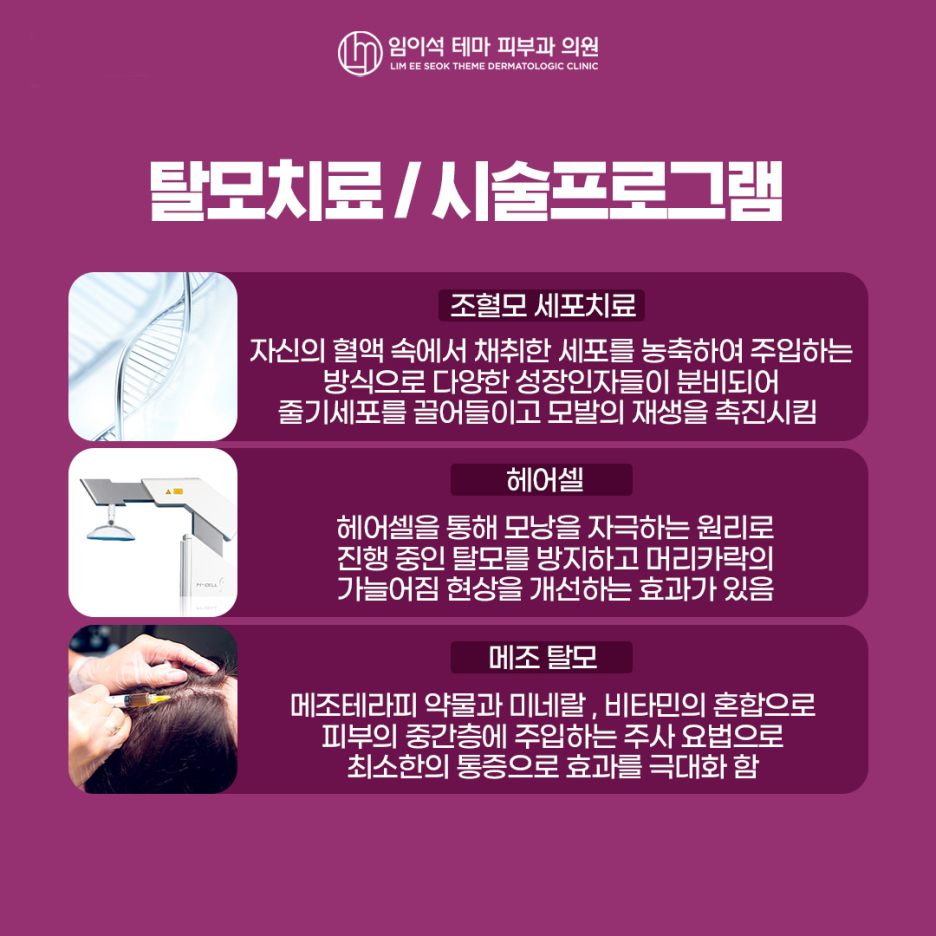
Hematopoietic stem cell therapy: This involves concentrating cells collected from the patient’s own blood and injecting them into the area of hair loss. Hematopoietic stem cell therapy refers to plasma containing a high concentration of platelets, also known as PRP (Platelet Rich Plasma). When stem cells are injected into the scalp, various growth factors are secreted, attracting stem cells, and collagen components are synthesized, strengthening the hair roots and promoting hair regeneration.
Haircell: This works by stimulating the hair follicles. A low-frequency magnetic field promotes the influx of calcium related to the hair follicle sheath and dermal papilla cells, thereby increasing the division of follicle cells. Using the Haircell S2 device for about 12 minutes a week helps prevent ongoing hair loss and improves thinning hair, an early sign of hair loss.
Meso hair loss treatment: Mesotherapy is an injection therapy that mixes proven medications with minerals, vitamins, and more, and injects them into the middle layer of the skin. Because the medication acts directly on the hair follicles, it can maximize effectiveness with minimal pain and minimize systemic side effects from the medication.
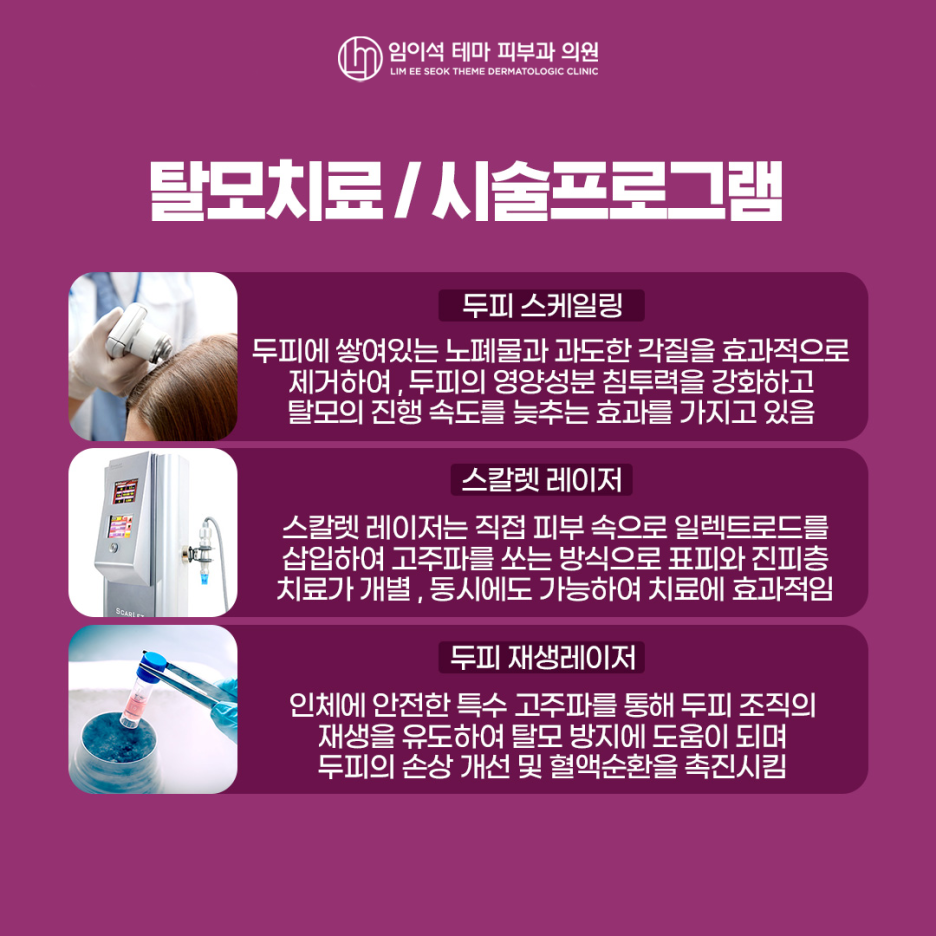
Scalp scaling: This effectively removes waste and excess dead skin accumulated on the scalp, enhances the penetration of nutrients into the scalp, and helps slow the progression of hair loss.
Scarlett laser: The Scarlett laser is a method that inserts electrodes directly into the skin and delivers radiofrequency. It can treat the epidermis and dermis in 0.1 mm increments, and because the epidermis and dermis can be treated separately or at the same time in one session, it is an effective laser treatment for hair loss.
Scalp regeneration laser: By using special radiofrequency that is safe for the human body, it induces regeneration of scalp tissue, helping prevent hair loss. It also improves scalp damage and promotes blood circulation, making it effective for supplying nutrients to the hair roots.
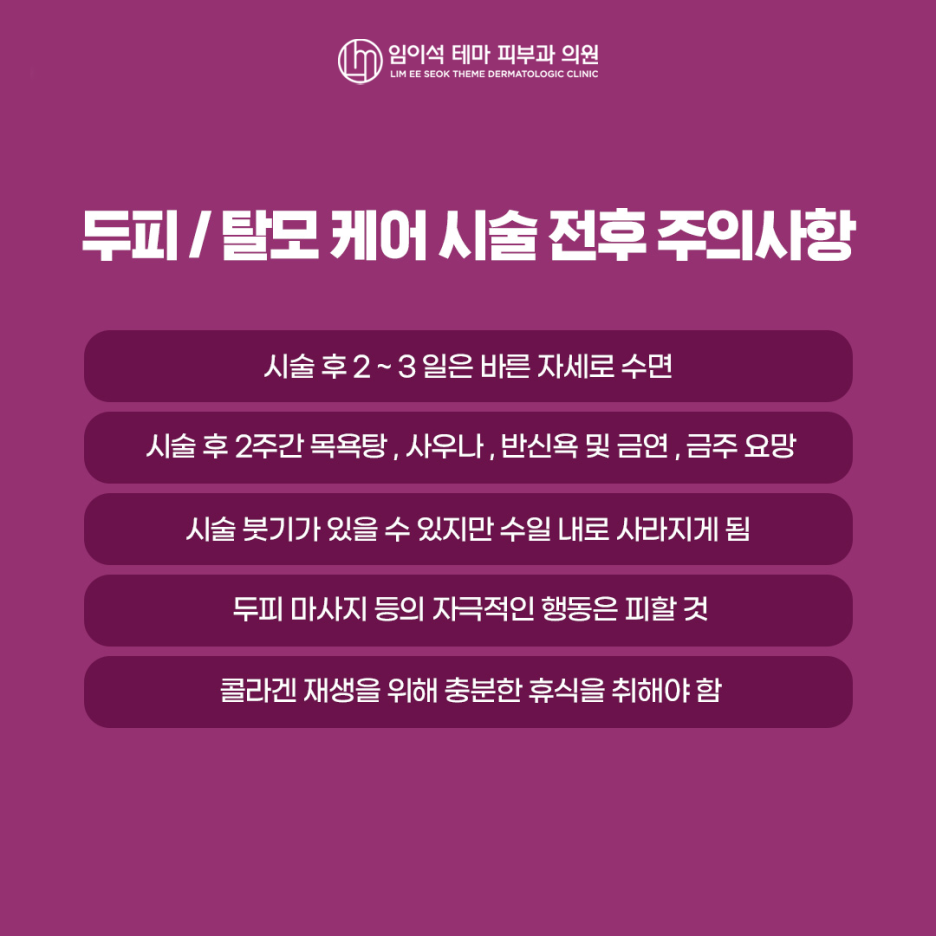
Precautions before and after scalp/hair loss care procedures
-
For 2 to 3 days after the procedure, you should sleep in the correct posture.
-
For about 2 weeks after the procedure, avoid baths, saunas, and half-body baths, and refrain from smoking and drinking.
-
Swelling may occur after the procedure, but it will disappear within a few days.
-
Stimulation such as scalp massage is best avoided.
-
It is best to get enough rest for collagen regeneration.
Male hair loss occurs due to various causes, so treatment should be carried out according to the cause, symptoms, and the speed at which the hair loss is progressing. Depending on the rate of progression, you can receive treatment through various methods such as hair transplantation, Haircell, and regenerative laser.
Even when a patient with severe hair loss visits our clinic, we do not proceed with immediate hair transplantation. This is because maintaining a healthy scalp increases the survival rate of the transplanted hair and helps prevent recurrence. In addition, improving the scalp’s condition may also improve alopecia.
Our clinic has long been providing systematic treatment for skin concerns and premium beauty care, and based on our extensive clinical experience, we propose customized treatments for patients. We also continuously add or replace premium laser equipment to minimize side effects and improve effectiveness. If you have any questions about our treatment methods or alopecia, please feel free to contact us at any time. Im Yiseok Thema Dermatology Clinic will always be with our patients.
Im Yiseok Thema Dermatology Clinic, located near Sinsa Station in Gangnam, provides high-quality treatment with a variety of equipment.
If you have concerns about skin problems, please feel free to make a consultation appointment through our KakaoTalk channel or website :-)