Provider: Im Eiseok Theme Dermatology Clinic

One day, you may notice that your hair has become unusually thin,
or that the early signs of M-shaped hair loss, where the forehead
is gradually receding, seem to be appearing,
or you may start to feel anxious as if hair loss is happening.
One of the reasons for male hair loss is the influence of hormones,
which causes hair to gradually thin and then disappear.
If your hair suddenly becomes thinner and your scalp starts to show,
it is worth suspecting hair loss.
Hair loss treatment is a fully possible approach,
and it is a condition that can improve when you receive a diagnosis at a hair loss care clinic and continue appropriate care consistently.
Today, Im Eiseok Theme Dermatology Clinic
will guide you through ways to overcome hair loss.
Types of male hair loss
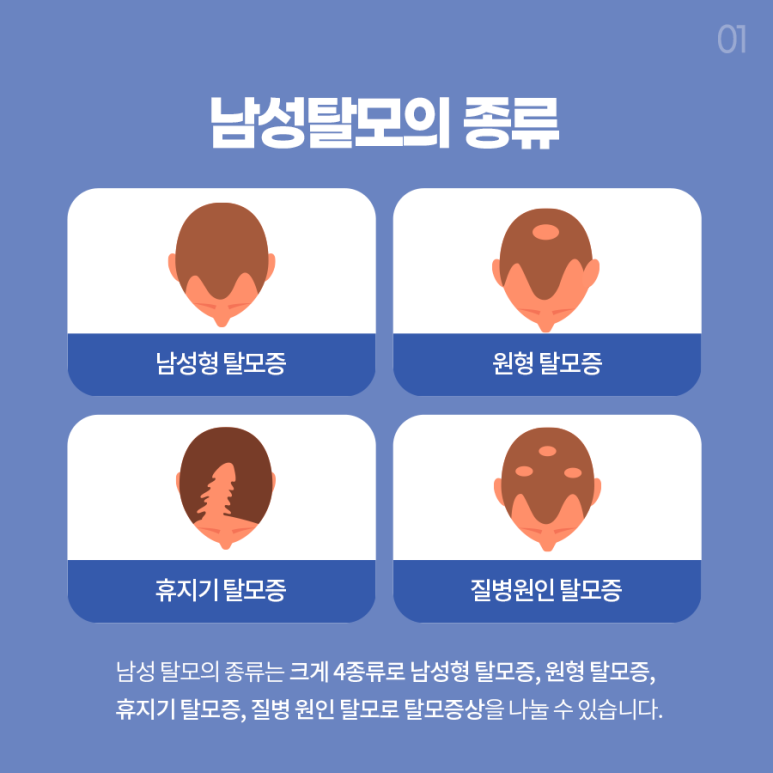
The types of male hair loss can be broadly divided into four categories: androgenetic alopecia,
alopecia areata, telogen effluvium, and hair loss caused by disease.
Androgenetic alopecia is hair loss caused by excessive
secretion of male hormones, genetic factors, and stress,
and it mainly refers to hair loss symptoms in the M-shaped pattern.
M-shaped hair loss is hair loss in which the forehead recedes into an M shape,
and it is the most common type of hair loss among men.
The next type is crown hair loss, and the causes of crown hair loss include stress, frequent hair treatments, scalp inflammation, and other factors that prevent nutrients from being delivered smoothly to the hair. This causes the hair in the early stage of crown hair loss to thin and fall out.
Alopecia areata is a temporary form of hair loss in which hair on one part of the scalp or multiple areas falls out all at once in a coin-shaped, round patch. The cause of alopecia areata is a change in the immune system of the hair follicle for some reason, causing immune cells to attack the hair follicles and trigger inflammation, resulting in hair loss. It is a type of autoimmune disease.
Telogen effluvium occurs when hair follicles normally go through a cycle of predetermined growth periods, then shed during the resting phase and new hair grows. In telogen effluvium, due to stress, the hair follicles are perceived as having entered the resting phase before completing their designated growth period, causing hair that should normally remain in place to fall out.
Hair loss caused by disease can occur after severe infectious diseases or major surgery, when the body’s immunity drops and hair may begin to fall out.
This problem may worsen or improve depending on recovery from the illness. In particular, anticancer drugs given to cancer patients are composed of strong toxic substances, and among them, chemotherapy-induced hair loss is the most common side effect. It is a good idea to check the condition again after recovery from cancer treatment.
How can hair loss be prevented?
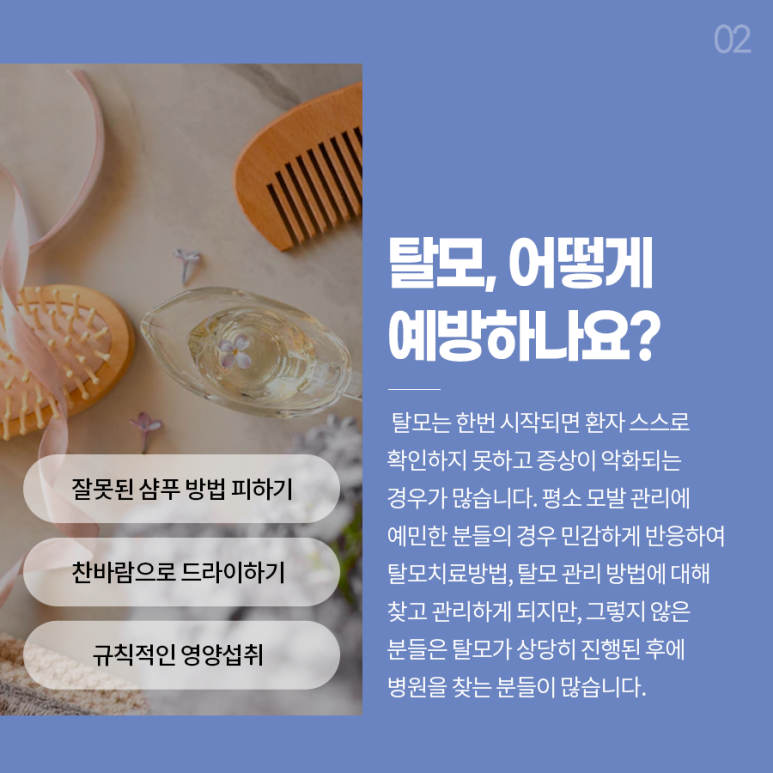
Once hair loss begins, patients often do not notice it themselves
and the symptoms worsen.
People who are usually sensitive about hair care tend to react sensitively, look for hair loss treatment methods and hair loss care methods, and manage them, but people who are not tend to visit a clinic only after hair loss has progressed considerably.
If you maintain consistent care in daily life, you can prevent symptoms from worsening, so Im Eiseok Theme Dermatology Clinic will tell you about simple hair loss prevention methods you can do at home.
It is best to avoid incorrect shampooing methods.
Do not use too much shampoo,
and instead of creating lather directly on the hair,
It is better to rub the shampoo between both hands to create enough foam before use. Also, when washing your hair, it is better to gently massage the scalp with your fingertips rather than刺激ing it with your fingernails while shampooing. If the scalp is stimulated with fingernails, the scalp can be damaged or wounded, leading to folliculitis and seborrheic hair loss.
When drying your hair after shampooing, it is better not to use the wrong drying method of hot air, but rather to use cool air or natural air to dry even the inside of the scalp. Using hot air raises the scalp temperature and irritates the hair follicles, which can trigger hair loss or dry out the scalp and disrupt the scalp balance. Also, if the inside of the scalp is not dried well, a moist environment that bacteria like is created, so it is better to follow the correct drying method after shampooing.
Rather than irregular nutrient intake, it is better to make sure you get the right nutrients consistently.
If proper nutrition is not supplied, hair and body hair may be deprioritized and lost. Male hair loss treatment is not only about proper prescriptions; improving one’s lifestyle habits is also a very important method and is a daily care approach recommended by male hair loss clinics. If you keep this in mind and practice it well, you can expect better treatment results.
Hair loss: treatment matched to the cause is important.
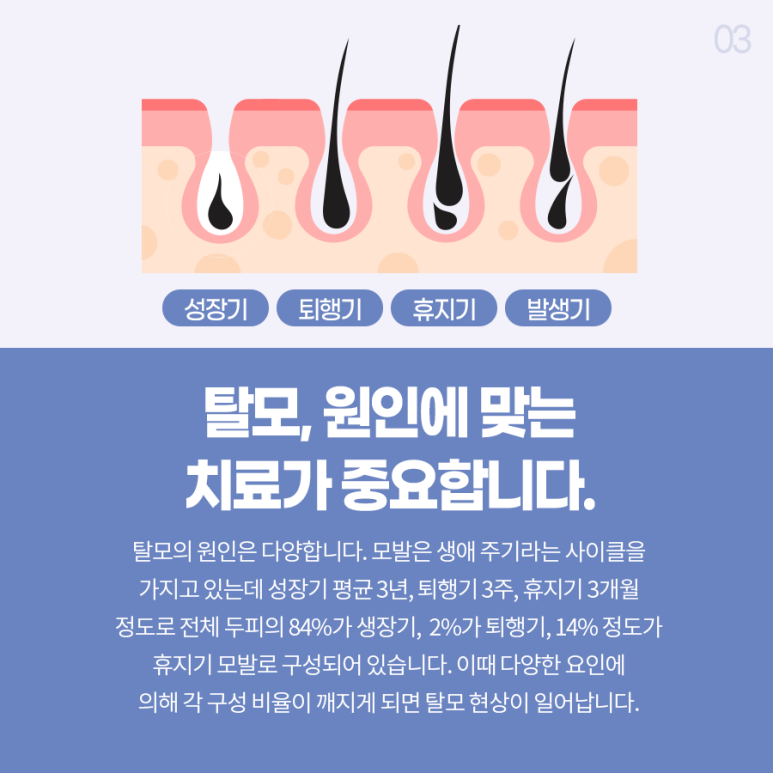
The causes of hair loss are diverse.
Hair has a life cycle: the growth phase lasts an average of 3 years, the regression phase 3 weeks, and the resting phase about 3 months. About 84% of the entire scalp is in the growth phase, 2% is in the regression phase, and about 14% is resting hair.
When the proportions of these components are disrupted by various factors, hair loss occurs, with more hair than usual falling out.
The causes can include irregular nutrient supply, hormonal imbalance, stress, and more. Normally, about 50 to 100 hairs fall out naturally each day on average. If it seems like more hair is falling out than usual, or if there is an unusually large amount of hair left in the drain after shampooing, or if the hair at the crown has suddenly started to thin, it is best to first identify the cause and then proceed with treatment tailored to that cause.
For common treatments for M-shaped hair loss, alopecia areata, and crown hair loss, it is important to closely check the early symptoms of hair loss, receive an appropriate diagnosis at a hair loss diagnosis clinic, and find a hair loss care clinic that can provide suitable management.
Hair loss treatment methods
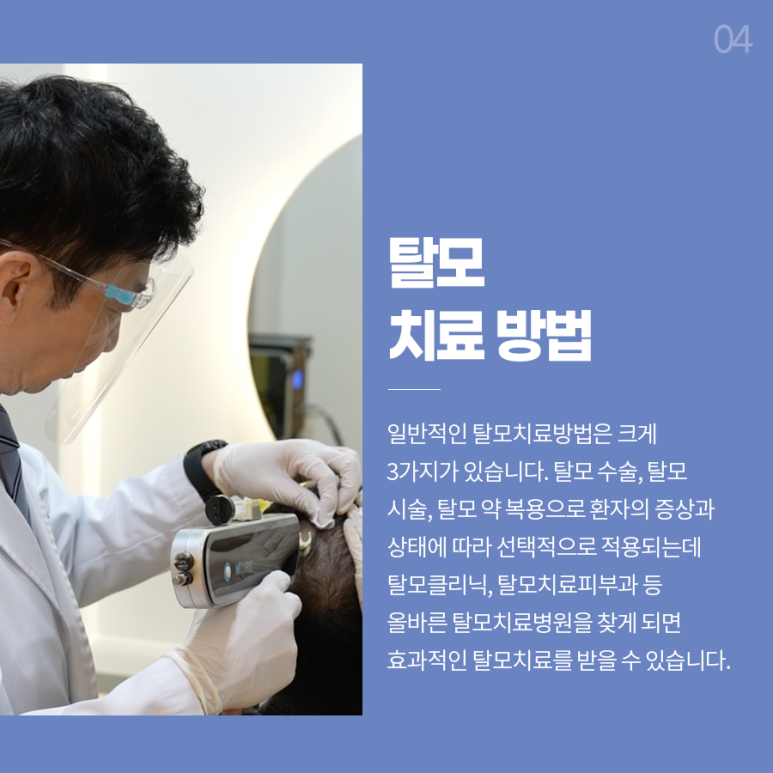
There are three main general hair loss treatment methods.
They are hair loss surgery, hair loss procedures, and hair loss medication, and they are selectively applied depending on the patient’s symptoms and condition. If you find the right hair loss treatment clinic, such as a hair loss clinic or a dermatology clinic for hair loss treatment, you can receive effective hair loss treatment.
Hair loss surgery is generally hair transplantation, and there are incision and non-incision methods.
When the hair loss area is extensive and only a small amount of hair needs to be implanted, the incision method is effective, and if it is still at an early stage of hair loss and the range is not large, the non-incision method is effective. Since the two surgical methods have different advantages and disadvantages, rather than saying that one particular method is always better, it is best to undergo hair transplantation after a hair loss consultation. Early M-shaped hair transplantation can bring good corrective results, so it is advisable to proceed after consultation at a hair loss clinic.
Hair loss procedures are, in simple terms, similar to scalp care for hair loss. There are treatment methods such as stem cell therapy, hair loss mesotherapy, and Haircell, and they are selectively performed according to the patient’s condition and symptoms. In the case of procedures, treatments certified worldwide are applied so that patients can receive safe and healthy care.
Hair loss medication treatment
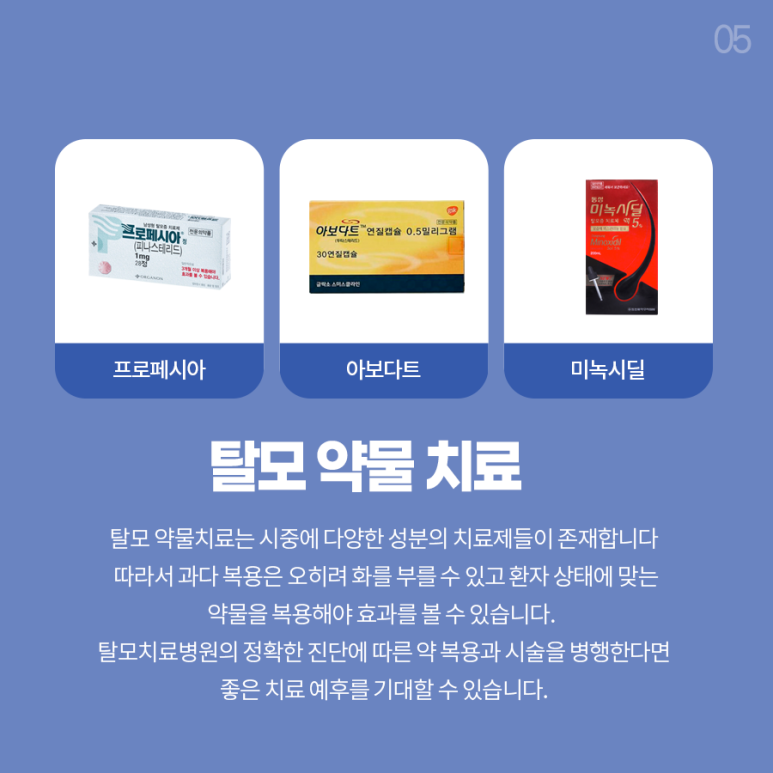
There are various hair loss medications with different ingredients available on the market. Therefore, taking too much can backfire, and you must take medication that matches the patient’s condition to see results.
If you combine medication and procedures based on an accurate diagnosis at a hair loss treatment clinic, you can expect a good treatment prognosis. Hair loss medications include various types such as Propecia, Avodart, and Minoxidil. They are prescribed according to the type of hair loss and then taken orally or applied topically.
Propecia is effective for patients in the early stages of hair loss, but if the hair follicle itself has already been damaged, its effect is limited, so it is mainly prescribed for early-stage patients. Avodart helps restore the thickness of the hair and is relatively effective for M-shaped hair loss.
Minoxidil is a topical medication that locally dilates blood vessels in the affected area, promotes blood circulation, and shows hair growth effects.
For hereditary hair loss treatment or alopecia areata treatment, it is better to appropriately combine hair loss procedures and medication treatment.
M-shaped hair transplantation can be performed right away after diagnosing the patient’s condition, but in the case of male crown hair loss, the cause should be treated first before proceeding with hair transplantation for better results.
Im Eiseok Theme Dermatology Clinic hair loss treatment program
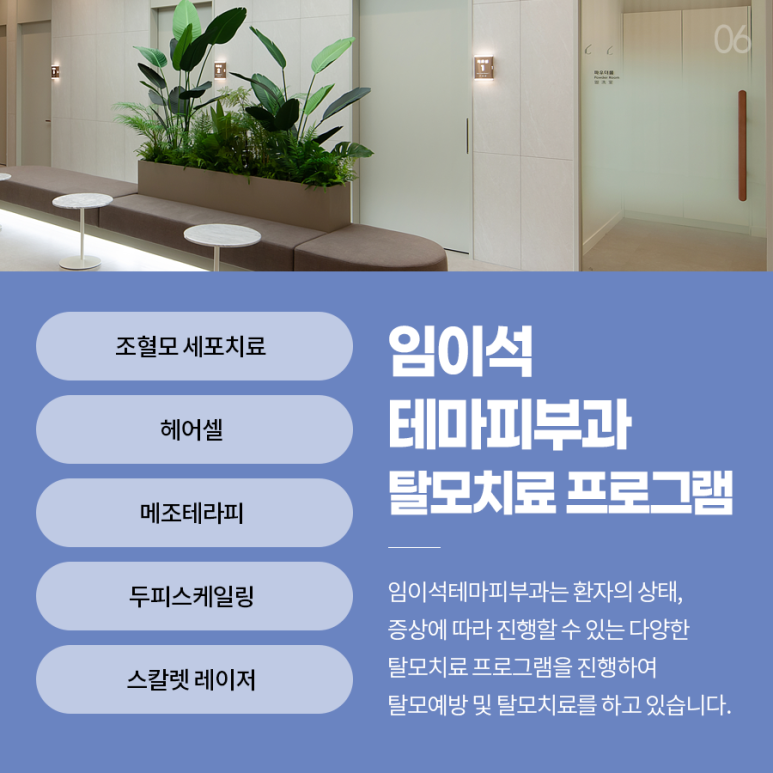
Im Eiseok Theme Dermatology Clinic provides various hair loss treatment programs that can be carried out according to the patient’s condition and symptoms to help prevent and treat hair loss.
By collecting the patient’s own blood and concentrating only the living cells,
then directly injecting them into the area where hair loss has occurred, stem cell therapy strengthens the hair roots and promotes hair regeneration. Haircell, which uses the Haircell S2 device, helps prevent ongoing hair loss and improves the thinning of hair, an early sign of hair loss. It is a hair loss treatment that helps make hair healthier.
Mesotherapy for hair loss is a procedure that helps medication work directly on the hair follicles by injecting effective hair loss medications into the scalp.
In addition, scalp scaling is a treatment method that helps keep the scalp healthy and slows the progression of hair loss, and the Scarlett laser, an effective laser treatment for hair loss, may also be used because it can treat the epidermis and dermis in 0.1 mm units and treat both layers separately or at the same time. Each hair loss treatment program presents a customized program suited to the patient’s condition after examination, with the procedures that are good to do together prescribed and then performed.
Post-procedure precautions for scalp/hair loss care
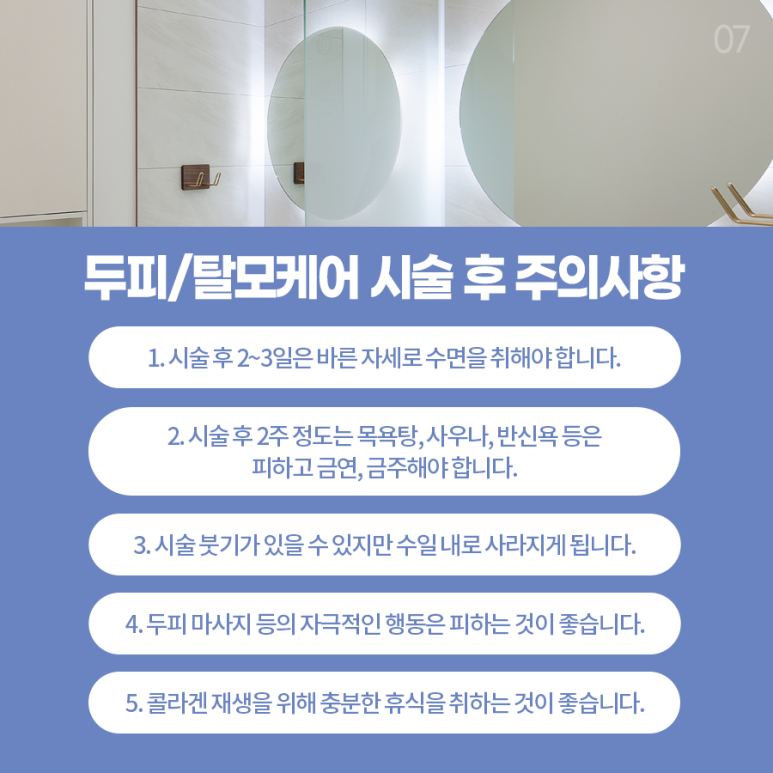
- For 2 to 3 days after the procedure, you should sleep in the correct position.
- For about 2 weeks after the procedure, avoid bathhouses, saunas, half-body baths, etc., and do not smoke or drink alcohol.
- There may be swelling after the procedure, but it will disappear within a few days.
- It is best to avoid irritating actions such as scalp massage.
- It is better to get enough rest for collagen regeneration.
Even if a patient with severe hair loss visits a dermatology clinic for hair loss, hair transplantation is not performed immediately. This is because maintaining a healthy scalp is necessary so that even if hair transplantation is performed, the graft survival rate is high and recurrence can be prevented. In addition, efforts are made to improve alopecia by restoring the scalp.
Im Eiseok Theme Dermatology Clinic treats hair loss patients based on years of clinical experience, and continuously adds or replaces premium laser equipment to minimize side effects and increase effectiveness. If you have any further questions about our treatment methods and alopecia, please feel free to contact us at any time. Im Eiseok Theme Dermatology Clinic will always be with our patients.
In addition, if you are looking for an M-shaped hair loss clinic that treats M-shaped hair loss well,
or if you are worried about alopecia areata and are looking for an alopecia areata treatment clinic,
or if you are looking for a crown hair loss clinic because of a sparse crown,
please contact us in any convenient way and we will kindly explain. Thank you.
At Im Eiseok Theme Dermatology Clinic, located near Sinsa Station in Gangnam, we provide high-level treatment with a variety of equipment.
If you have concerns about skin problems, please feel free to make a consultation appointment through our KakaoTalk channel or website. :-)