Provided by: Imi-seok Tema Dermatology Clinic
Hello, this is Imi-seok Tema Dermatology Clinic.
Before you know it, you start to worry as you look at a receding hairline and thinning crown.
Hair is not just part of hairstyle; it also plays an important role in a neat image.
When hair density decreases due to hair loss, it can make you look older, which is why many people become interested in hair transplantation to address the concern.
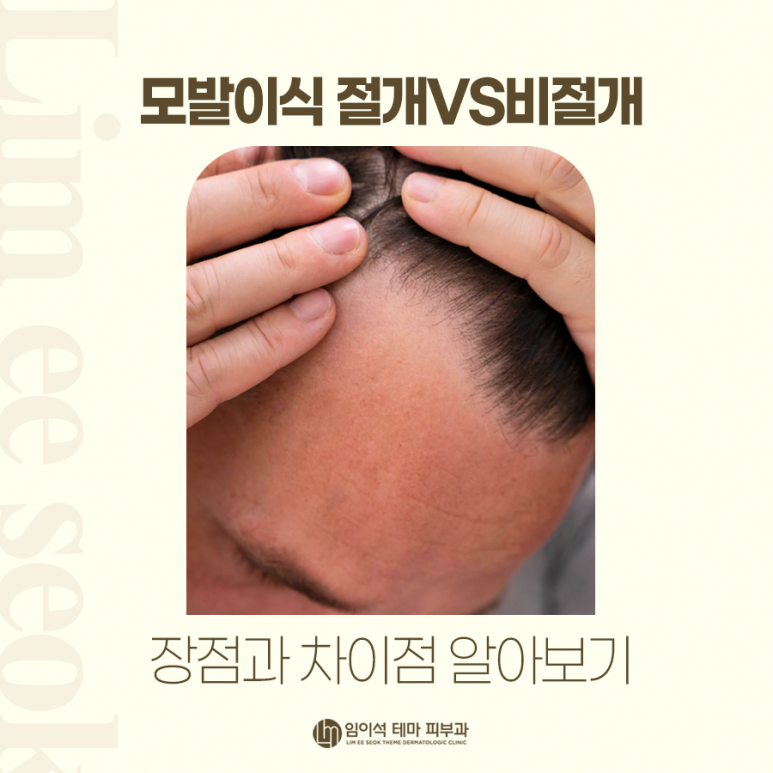
There are two methods of hair transplantation: incision and non-incision.
It is best to check which method is right for you before proceeding. Today, we will explain the benefits and differences between incision and non-incision hair transplantation.
What Is Hair Transplantation?
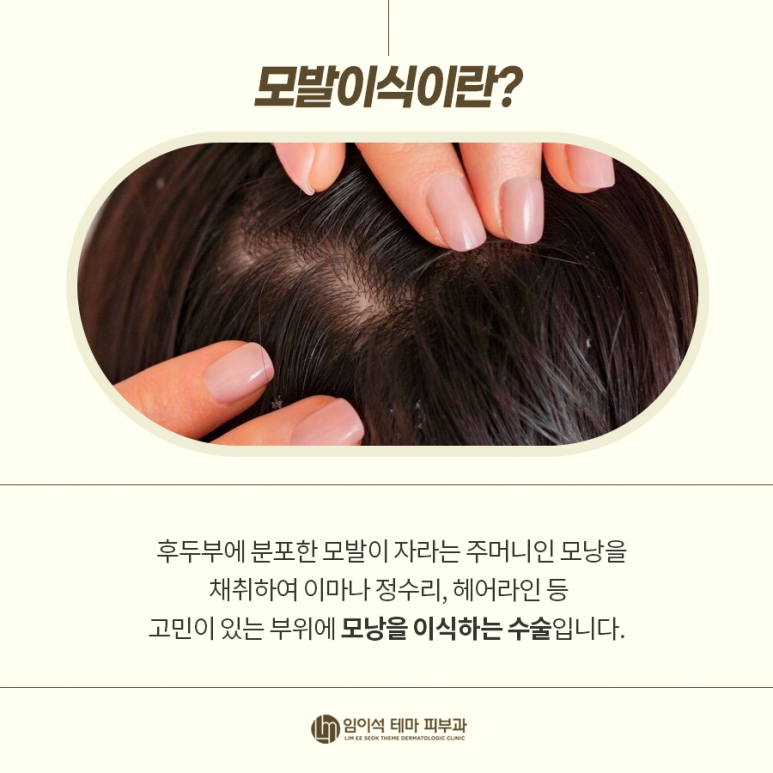
Hair transplantation is not about creating new hair, but about moving your existing hair to another area.
In general, the procedure involves collecting hair follicles from the occipital area, where hair is distributed, and transplanting them to areas of concern such as the forehead, crown, or hairline.
Hair transplantation is a procedure that rearranges your own hair, and what matters is how naturally the transplanted hair looks and how well it takes root.
Types of Hair Transplantation
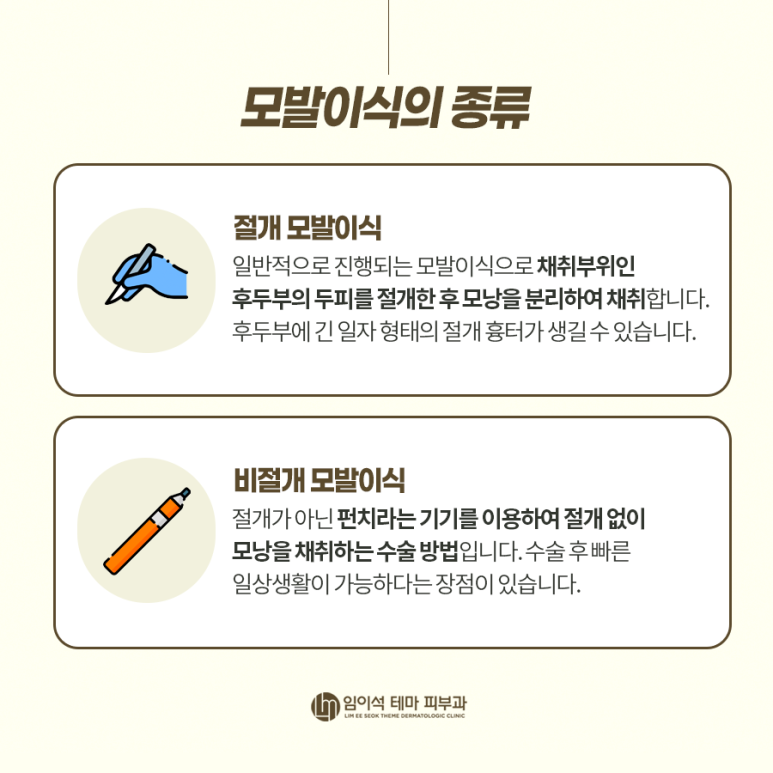
Hair transplant surgery is broadly divided into two types: non-incision hair transplantation and incision hair transplantation.
Incision hair transplantation is the commonly performed method. After making an incision in the scalp at the occipital donor area, the follicles are separated and collected. Because an incision is made, a long linear scar may remain on the back of the head.
Non-incision hair transplantation is a surgical method that uses a device called a punch to collect follicles without making an incision.
It has the advantage of allowing a quick return to daily life after surgery.
Features of Incision Hair Transplantation
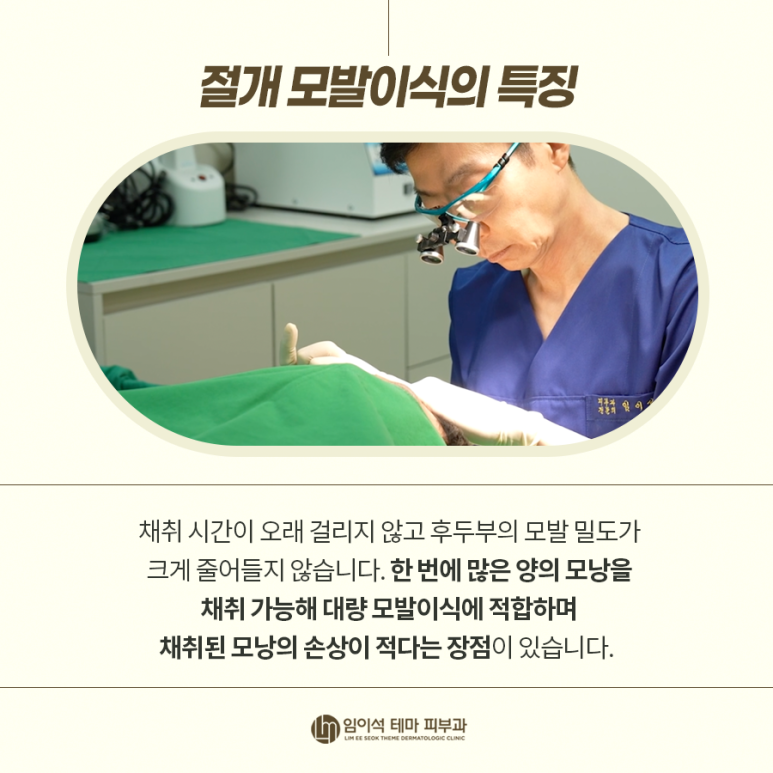
Incision hair transplantation is a procedure in which the scalp at the occipital area is incised, follicles are collected, and then transplanted. The harvesting time is not very long, and the hair density in the occipital area does not decrease significantly. Since a large amount of follicles can be harvested at once, it is suitable for large-volume hair transplantation, and it has the advantage of causing less damage to the harvested follicles. However, pain and bleeding accompany the incision site, the recovery period becomes longer, and a long linear scar remains on the back of the head.
Features of Non-Incision Hair Transplantation
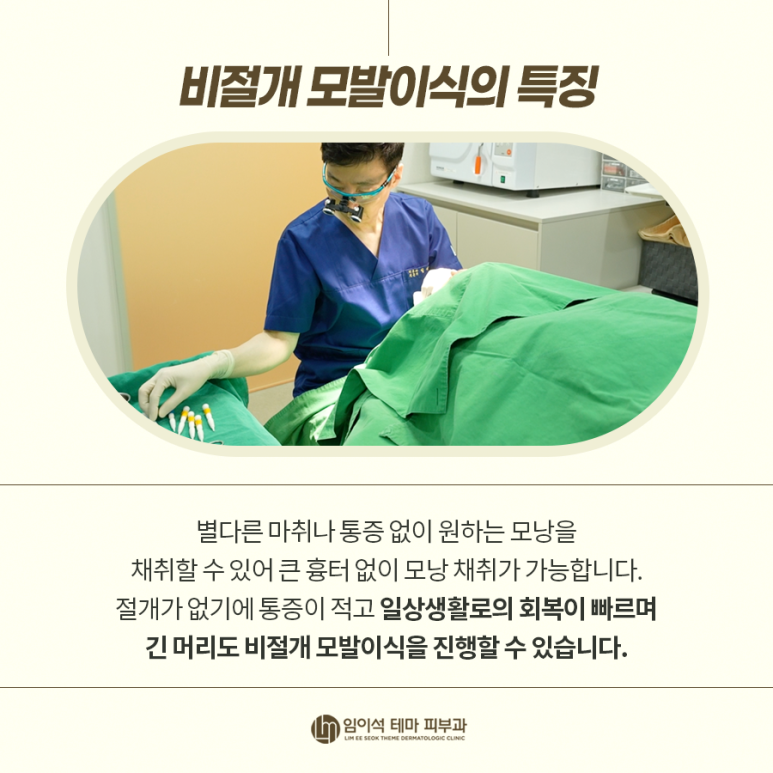
Non-incision hair transplantation is a method of collecting follicles one by one from the occipital area with a fine punch.
Because the desired follicles can be collected with little need for anesthesia or pain, follicles can be harvested without a large scar.
Since there is no incision, pain is less and recovery to daily life is faster.
Also, it is not limited by hair length, so even long hair can undergo non-incision hair transplantation.
The procedure takes longer than incision hair transplantation, and it has the drawback that it is difficult to transplant a large amount of hair at once.
Differences Between Incision Hair Transplantation and Non-Incision Hair Transplantation
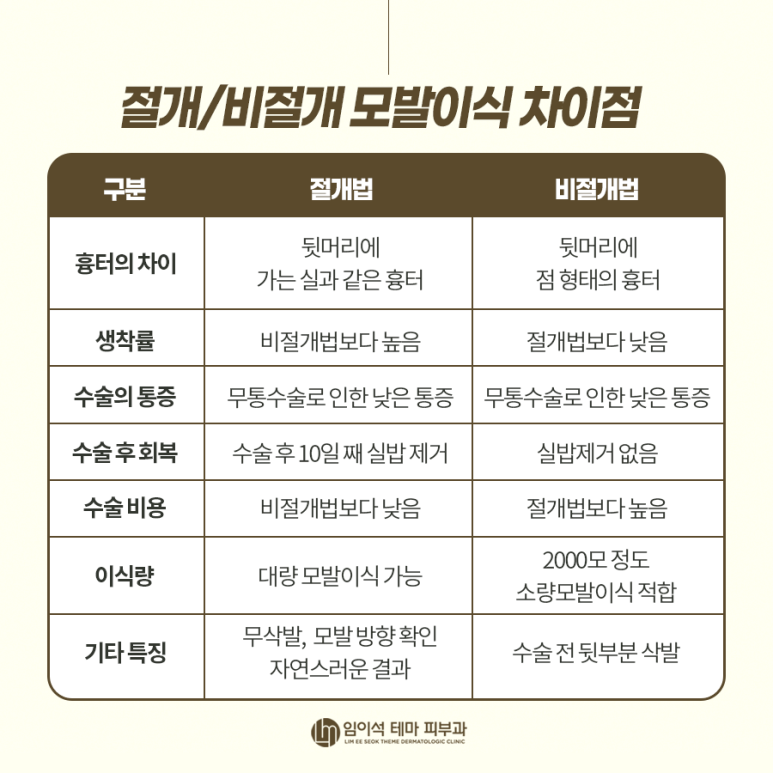
Each surgical method has its own advantages and disadvantages, so rather than saying one is better, it is best to find the method that suits the patient.
If a large-volume hair transplant is needed, incision hair transplantation is recommended, while those who need a small amount transplanted for aesthetic improvement are better suited to non-incision hair transplantation.
For the most accurate confirmation of the surgical method, visit the clinic, check the area of concern, the current stage of hair loss, and the volume of hair available, and then proceed with the method diagnosed by the doctor for a more natural improvement.
When Hair Transplantation Is Not Performed
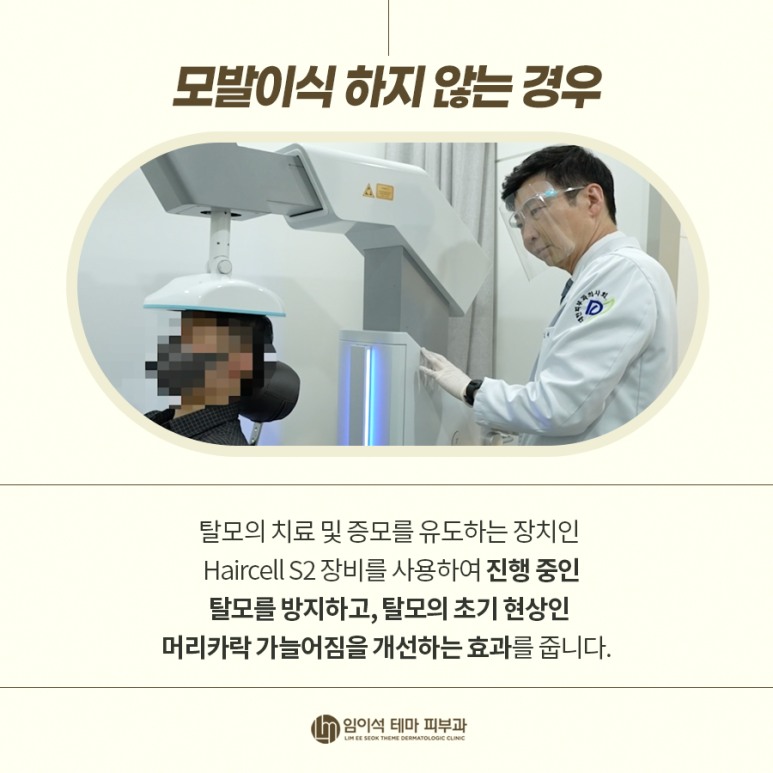
At some point, if you feel that your hair has become sparse and are considering a hair transplant, there are some people who can still receive sufficient care through management rather than hair transplantation.
These are cases where the hair has not completely fallen out, but hair loss is in progress: the hair volume remains the same, but the strands have become thinner, making the hair look sparse.
In such cases, sufficient scalp and hair loss care is possible, and Imi-seok Tema Dermatology Clinic uses the Haircell S2 device, which forms a magnetic field around the scalp to activate follicle cells and increase blood flow in the microvessels, helping to treat hair loss and promote hair growth. It helps prevent ongoing hair loss and improves thinning hair, an early sign of hair loss.
Precautions After Hair Transplantation
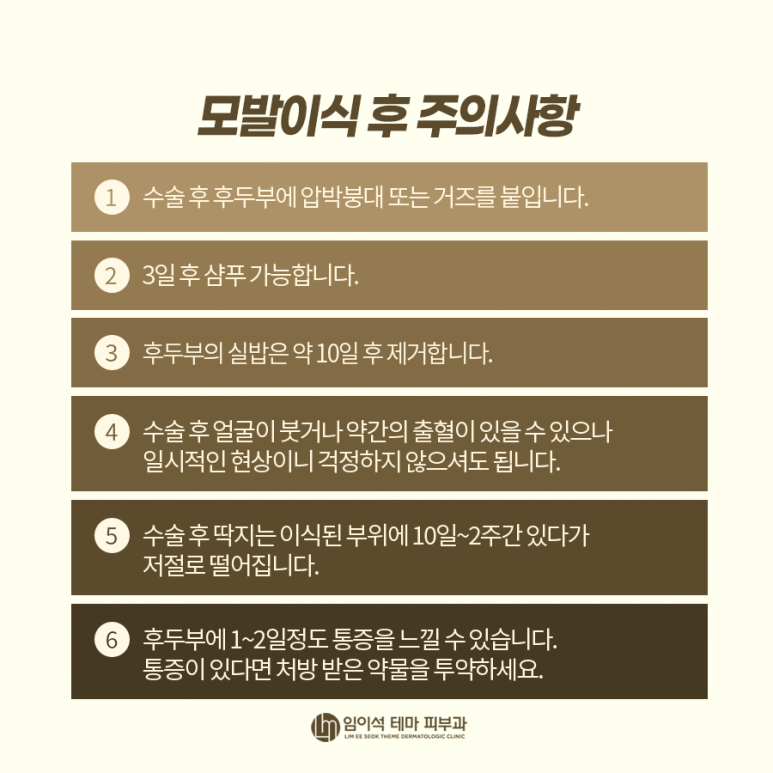
- A compression bandage or gauze is applied to the occipital area after surgery.
- Shampooing is possible after 3 days.
- The stitches in the occipital area are removed after about 10 days.
- Your face may swell or there may be slight bleeding after surgery, but these are temporary and you do not need to worry.
- Scabs at the transplanted area remain for 10 days to 2 weeks and then fall off naturally.
- You may feel pain in the occipital area for 1 to 2 days. If you have pain, take the prescribed medication.
Hair transplantation is one of the procedures that must be performed precisely and delicately, so it takes a long time compared with other procedures.
The most important point in hair transplantation is to quickly transplant the follicles to the scalp without damaging them, and this determines the survival rate of the hair transplant.
Since the scalp is also a type of skin, it is best to receive surgery and care from a dermatology clinic.
Imi-seok Tema Dermatology Clinic Hair Loss Treatment Center
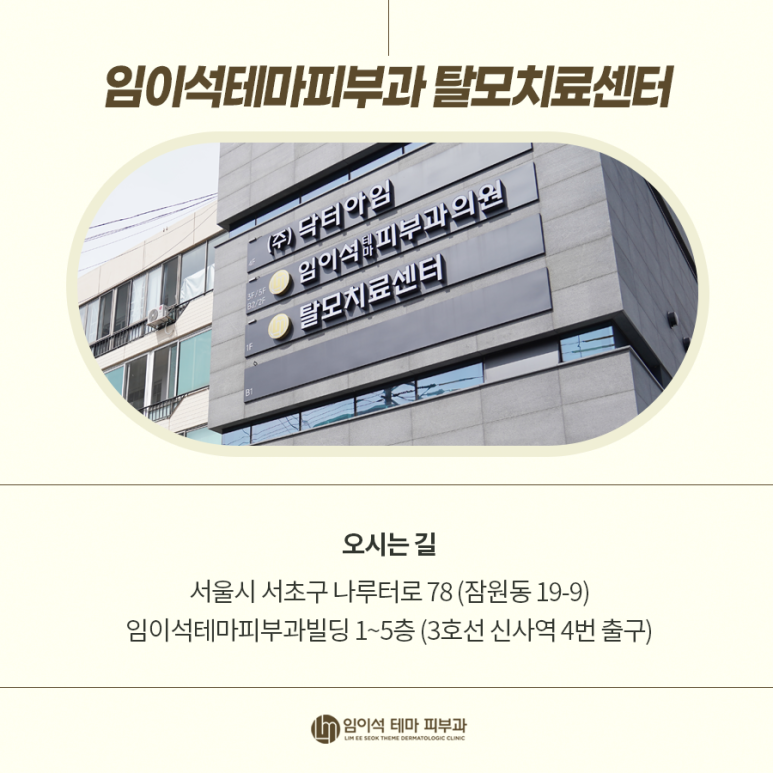
The hair loss and hair transplant center at Imi-seok Tema Dermatology Clinic is staffed by skilled personnel who can separate follicles without damaging them, and the medical team responsible for hair transplantation performs the procedure.
By shortening the procedure time and maximizing hair survival rate, the take rate after hair transplantation is improved, which increases patient satisfaction.
Imi-seok Tema Dermatology Clinic, located near Sinsa Station in Gangnam, provides high-level treatment with various devices.
If you have concerns about skin problems, feel free to make an appointment for consultation through our KakaoTalk channel or website :-)