Provider: Imi-seok Thema Dermatology Clinic
For various reasons in each season, the skin and
scalp become sensitive, and hair loss can
suddenly occur.
According to data from the National Health
Insurance Service in October 2020, the number of
hair loss patients increased by more than 11%
over the past five years.
(The number of people who visited a hospital
for alopecia and received treatment was
1.09 million.) Beyond the increase in the total
number of patients, it accounted for 43.8% of the
entire 20s and 30s generation, and it has now
become a common condition that can affect
anyone, not just middle-aged or older people.
Male hair loss must be treated according to the cause.
Male hair loss occurs for various reasons, so you must
receive treatment appropriate to the cause, symptoms,
and rate of progression. Depending on how quickly the
hair loss is progressing, treatment options include
various methods such as surgical incision and hair
transplantation. Therefore, if you notice symptoms of
hair loss, it is best to visit a dermatology clinic or hair
loss center quickly for consultation and treatment.
Causes of male hair loss

Causes of male hair loss include genetic factors and the
effect of the male hormone androgen, as well as certain
a system-wide diseases that cause nutritional deficiencies,
fungal infections such as scalp ringworm, rapid weight
loss, physical stress, and hormonal disorders.
The main cause of hair loss is largely hereditary hair loss
due to innate genetics, with a high probability when both
father and mother are affected. In the case of people in
their 20s and 30s, hair loss can occur due to stress from
employment and work life.
Types of male hair loss
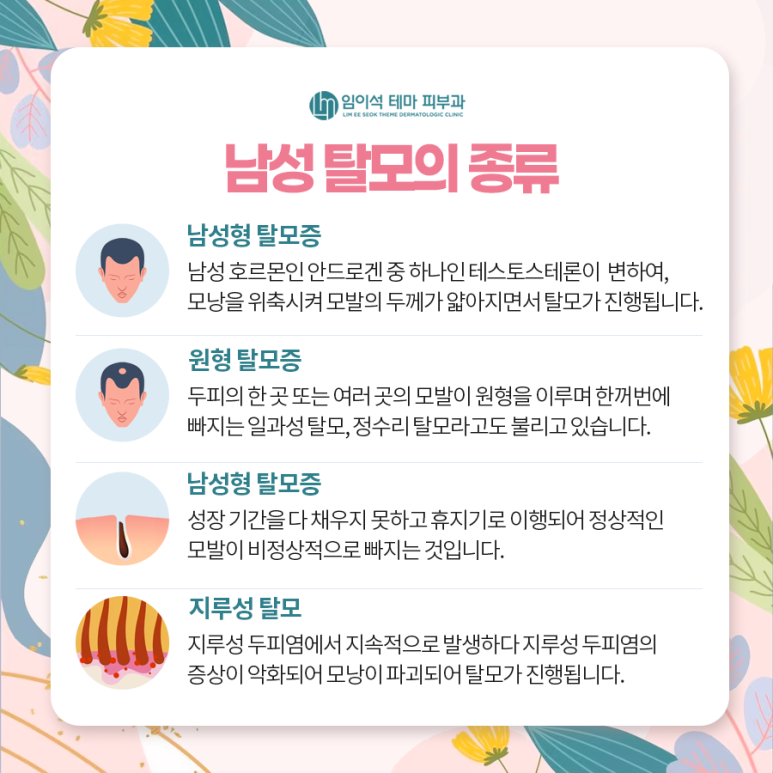
Androgenetic alopecia: Testosterone, one of the male
hormones and a genetic factor, is converted into
dihydrotestosterone (DHT), which promotes hair loss,
causing the follicles to shrink and the hair to become
thinner as hair loss progresses. Androgenetic alopecia,
which occurs when genetic hormones are altered, can
show symptoms ranging from a receding hairline that
creates an M-shaped forehead to hair loss starting from
the crown.
Alopecia areata: Alopecia areata has the highest incidence
among hair loss disorders. It can occur due to stress and
other factors, and is also called temporary hair loss or
crown hair loss, where hair in one area or multiple areas
of the scalp falls out all at once in a circular pattern.
Telogen effluvium: Hair has a certain growth cycle. The
growth cycle includes the anagen phase, in which hair is
thick and growing; the catagen phase, in which its shape
is maintained; the telogen phase, in which hair weakens
and falls out; and then the growth phase again. However,
telogen effluvium occurs when normal hair is abnormally
shed because it transitions into the telogen phase before
completing its scheduled growth period.
Telogen effluvium occurs due to acquired causes rather
than genetics, such as stress, incorrect dieting, drug
treatment, and thyroid abnormalities.
Seborrheic alopecia: Seborrheic alopecia is caused by
seborrheic dermatitis, which develops from excessive sebum
secretion, fungal infection, stress, and other causes. As
the symptoms of seborrheic dermatitis worsen, the follicles
may be destroyed and lead to hair loss. In particular, if the
skin and scalp become dry, the symptoms worsen, so you
must manage them consistently.
Hair loss treatment methods
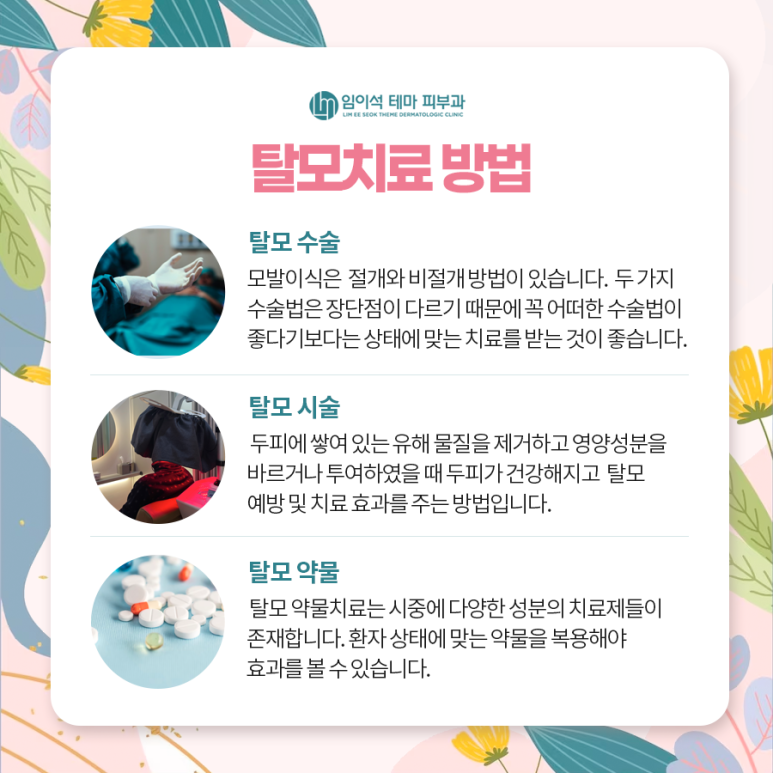
Hair loss treatment methods can generally be applied in
three ways.
They are selectively applied depending on the patient's
symptoms and condition: hair loss surgery, hair loss
procedures, and hair loss medication. We recommend
visiting a hair loss center or dermatology clinic for an
effective solution.
Hair loss surgery: Hair loss surgery generally refers to hair
transplantation, and the methods include incision and
non-incision techniques.
The incision method has the advantage that the back of the
head is not noticeable, but it requires a long recovery period
due to scars and pain. On the other hand, the non-incision
method individually extracts hair follicles one by one,
which has the advantages of fewer scars and relatively
faster recovery. Also, when the hair loss area is extensive
and a large amount of hair needs to be transplanted, the
incision method is effective. If the hair loss is still at an
early stage or the affected area is not large, the non-incision
method is effective. Since the two surgical methods have
different advantages and disadvantages, it is better to
receive treatment suited to your condition rather than
simply choosing one method as the best.
Hair loss procedures: Simply put, hair loss procedures are
similar to scalp care for hair loss. This method removes
harmful substances accumulated on the scalp and, when
nutrients are applied or injected, the keratinocytes in the
scalp become healthier, which ultimately strengthens the
hair roots and helps prevent and treat hair loss. Treatment
methods include hematopoietic stem cell therapy,
mesotherapy, Hair Cell, meso hair loss treatment, and
perifollicular injections, and they are selectively carried out
according to the patient's condition and symptoms. In the
case of procedures, internationally certified treatments are
applied so that patients can receive safe and healthy care.
Hair loss medication: There are various treatment drugs
with different ingredients available on the market. The most
famous oral medication for hair loss treatment is Propecia,
which contains finasteride, and there are many generic
drugs available. There are also minoxidil and alfatradiol,
which are not hormonal drugs but ingredients that affect
hair.
Also, taking too much can have the opposite effect, and the
medication must be taken according to the patient's
condition to be effective. If medication and procedures are
combined based on an accurate diagnosis by a specialist,
good treatment outcomes can be expected.
Hair loss procedure programs
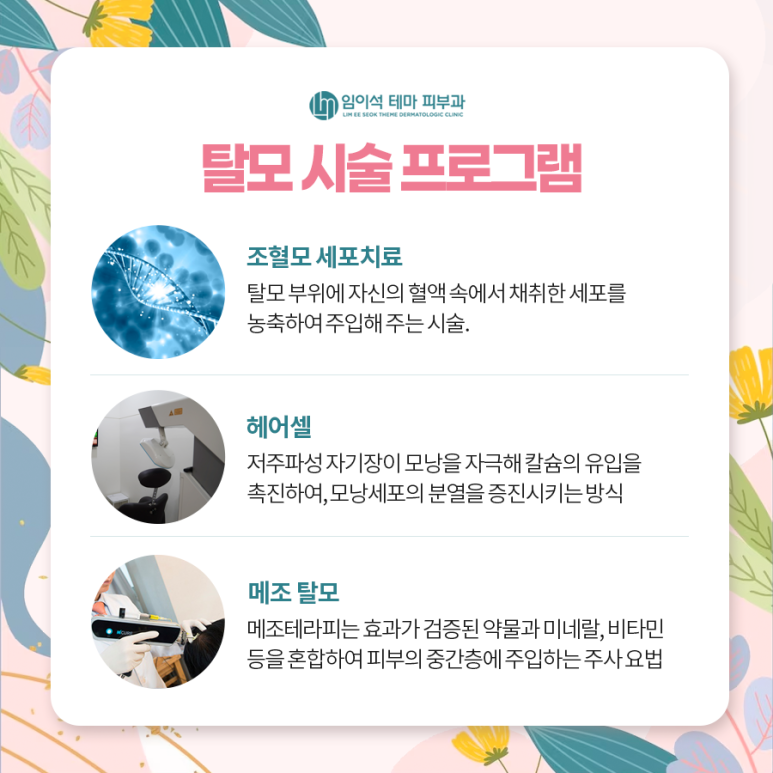
Hematopoietic stem cell therapy: This involves concentrating
cells collected from the patient's own blood and injecting
them into the hair loss area. Hematopoietic stem cell therapy
refers to plasma containing a high concentration of platelets
and is also called PRP (Platelet Rich Plasma).
When stem cells are injected into the scalp, various growth
factors are secreted, attracting stem cells, collagen
components are synthesized, the hair roots are strengthened,
and hair regeneration is promoted.
Hair Cell: This method stimulates the hair follicles through
low-frequency magnetic fields, promoting calcium influx
related to the hair follicle sheath and dermal papilla cells,
thereby increasing the division of follicular cells. Using the
Heircell S2 device for about 12 minutes a week helps prevent
ongoing hair loss and improves hair thinning, an early sign
of hair loss.
Meso hair loss treatment: Mesotherapy is an injection therapy
that mixes proven medications, minerals, vitamins, and
other ingredients and injects them into the middle layer of
the skin. Since the drugs act directly on the hair follicles, it
can maximize effectiveness with minimal pain and minimize
the systemic side effects of the medication.
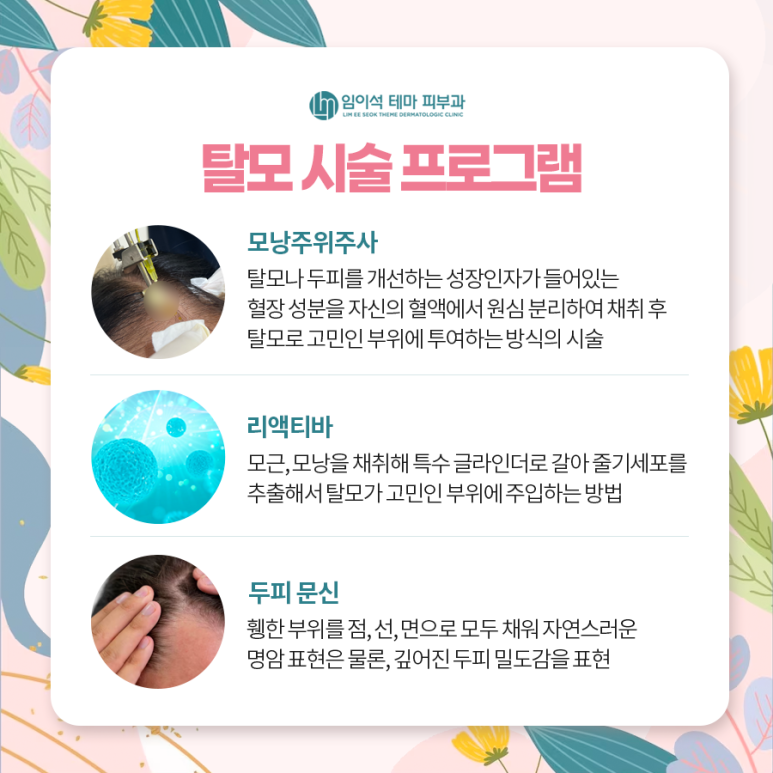
Perifollicular injection: This is a procedure in which platelet-
rich plasma containing growth factors that improve hair
loss or the scalp is centrifuged from the patient's own blood,
collected, and administered together with stem cells to the
area of concern for hair loss. It stimulates the hair follicles
and surrounding tissues, allowing healthy and strong hair to
grow.
Reactiva: This is a non-surgical method that uses a small
punch to collect hair roots and follicles from the back of the
head, grind them with a special grinder to extract stem cells,
and inject them into the area of concern for hair loss. Even
one treatment can make the hair look fuller.
Scalp micropigmentation: It fills thinning areas caused by
hair loss with dots, lines, and shading to create a natural
expression of depth and a denser-looking scalp, helping you
gain confidence.
Precautions before and after hair loss procedures
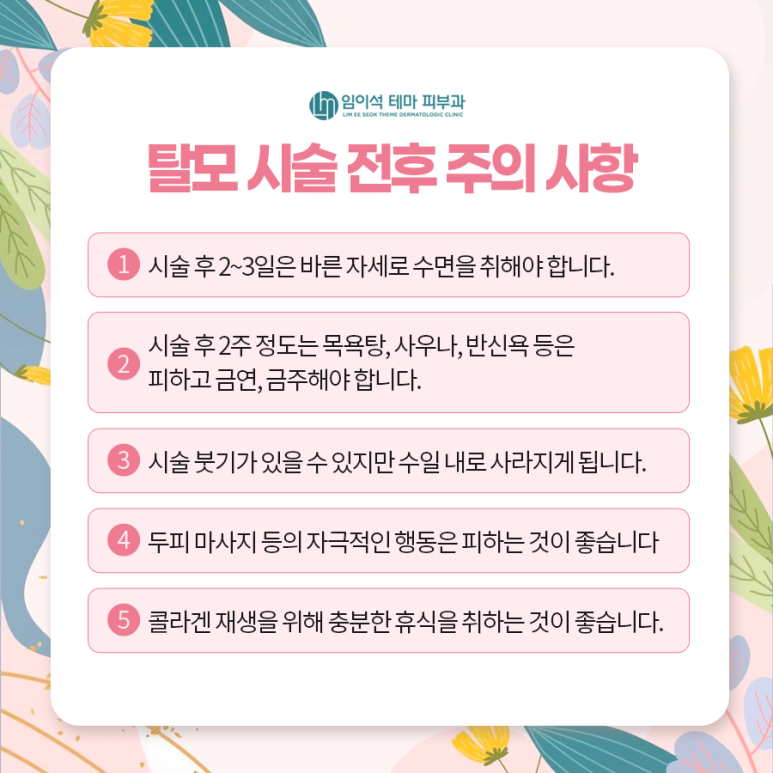
- For 2 to 3 days after the procedure, you should sleep in
an upright position.
- For about 2 weeks after the procedure, avoid bathhouses,
saunas, and half-body baths, and refrain from smoking and
drinking alcohol.
- Swelling may occur after the procedure, but it will go away
within a few days.
- Stimulating actions such as scalp massage should be
avoided.
- It is best to get enough rest for collagen regeneration.
Male hair loss occurs for various reasons, so you must
receive treatment appropriate to the cause, symptoms, and
rate of progression. Depending on how quickly the hair loss
is progressing, you can receive treatment through various
methods such as hair transplantation, Hair Cell, and
regenerative laser treatment.
Even when patients with severe hair loss visit our clinic, we
do not immediately proceed with hair transplantation. This
is because maintaining a healthy scalp is necessary to
ensure a high graft survival rate and prevent recurrence,
even if hair transplantation is performed. In addition,
hair loss may improve through scalp recovery.
Imi-seok Thema Dermatology Clinic has been providing
premium beauty care for a long time through systematic
skin problem management and treatment, and based on our
extensive clinical experience, we propose customized
treatment for patients. We are also continuously adding or
replacing premium laser equipment to minimize side effects
and improve effectiveness.
If you have any further questions about our treatment
methods or alopecia, please feel free to contact us at any
time. Imi-seok Thema Dermatology Clinic will always be
with our patients.