Provided by: Imi-seok Theme Skin Clinic

Hello. This is Imi-seok Theme Dermatology Clinic.
The red, inflamed acne that appears on the skin
is not easy to hide even if you try,
and in many cases it can worsen
even with a slight mistake in care,
so it is a condition many people worry about.
Acne is not something to solve with a temporary
cover-up, but something that should be
accurately diagnosed and fundamentally treated
according to the cause to remove it.
Today, we will cover everything about acne,
including the long-standing concerns of acne types,
causes, acne treatment methods, and
scar care, as Gangnam acne dermatology clinic
Imi-seok Theme Dermatology Clinic will explain.
Causes of Acne
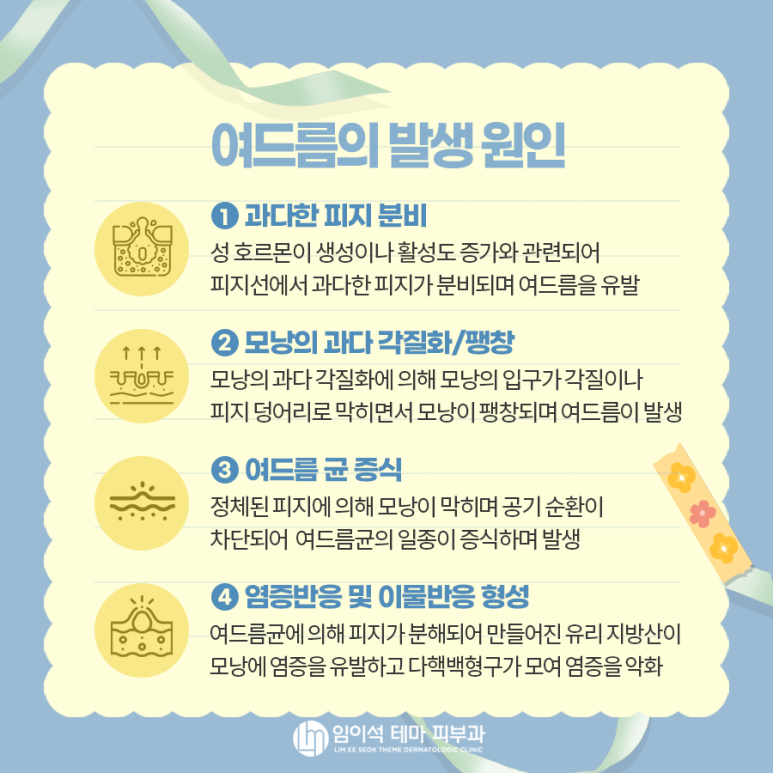
The causes of acne arise from the combined effect
of various factors, and the main causes
can be divided into four categories.
The causes of forehead whiteheads, jawline acne,
and adult acne are excessive sebum secretion,
hyperkeratinization/swelling of the follicle,
proliferation of acne bacteria, and
inflammatory and foreign-body reactions.
Excessive sebum secretion is related to increased
production or activity of sex hormones such as
androgens or dihydrotestosterone, which causes
excess sebum to be secreted from the sebaceous
glands and leads to acne. Hyperkeratinization/
swelling of the follicle occurs when the opening
of the follicle is blocked by a buildup of keratin
or sebum due to excessive keratinization of the follicle,
causing the follicle to swell and acne to develop.
In the case of acne bacteria proliferation, the follicle
becomes blocked by stagnant sebum, air circulation
is cut off, and a type of acne bacteria that thrives
in oxygen-free environments multiplies and forms.
Inflammatory and foreign-body reactions occur when
free fatty acids produced as sebum is broken down
by acne bacteria trigger inflammation in the follicle,
and as polymorphonuclear leukocytes gather,
the inflammation worsens, leading to acne-prone skin.
Types of Acne
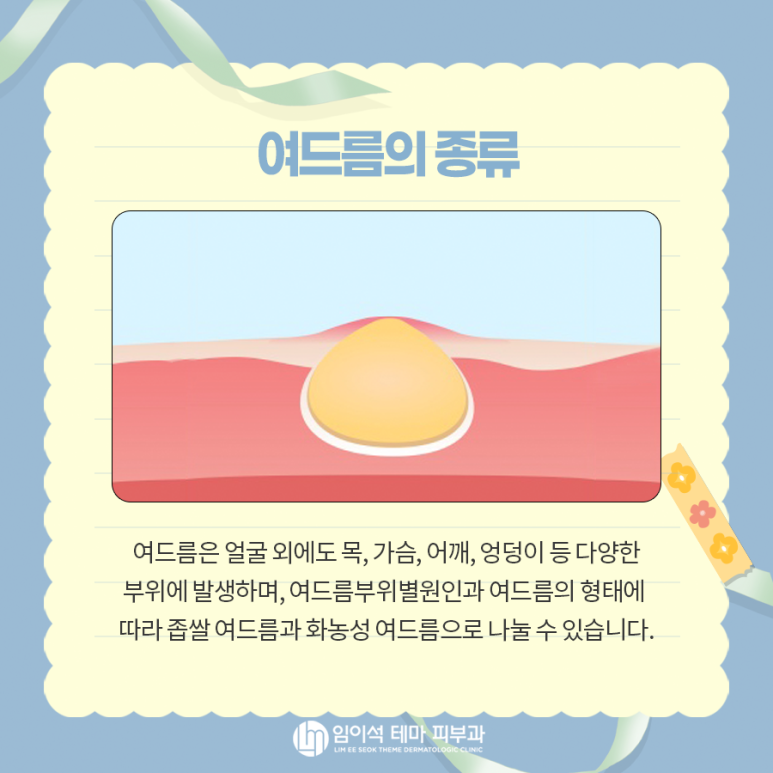
Acne occurs not only on the face but also on various
areas such as the neck, chest, shoulders, and buttocks,
and depending on the cause by area and the form of acne,
it can be divided into whiteheads and pustular acne.
Whiteheads are also called “white heads.”
The cause of whiteheads is that for various reasons,
the amount of sebum suddenly increases, and the rapidly
increased sebum cannot be properly discharged,
accumulating in the pores and forming acne.
If whiteheads are left untreated,
they have a high chance of developing into inflammatory
acne, so it is best to manage them through regular extraction.
If whiteheads keep recurring,
it is advisable to receive treatment from medical staff.
When extracting whiteheads,
if you do so with unclean hands or
use unsanitary tools, it can damage the surrounding skin tissue
and leave acne marks or scars,
so it is best to avoid doing so if possible.
Pustular acne is a form that develops from
whiteheads. Acne with inflammation is called pustular acne,
and acne does not appear only in one form but can appear in
various forms as pustular acne. If you frequently touch it with your hands
or forcefully extract it,
the dermal layer of the skin can also be damaged,
which may lead to acne scars, so caution is needed.
Is folliculitis also acne?
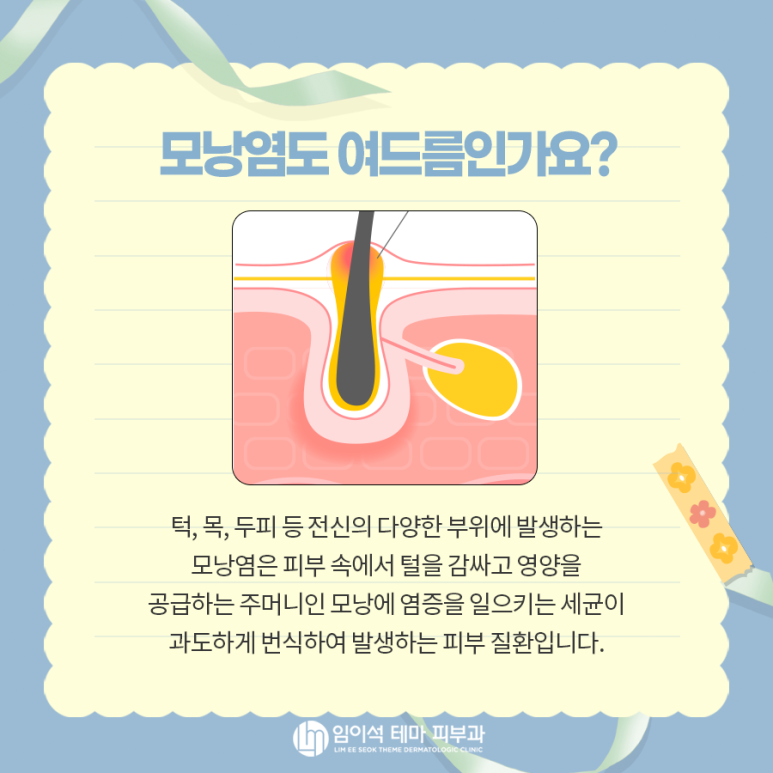
Folliculitis, which occurs in various parts of the body such as the chin,
neck, and scalp, is a skin disease caused by excessive
proliferation of bacteria that inflame the follicle,
the sac in the skin that surrounds and nourishes hair.
Folliculitis is known to be caused by bacterial
infections such as staphylococci, Demodex mites,
weakened immunity, and stress. Symptoms of folliculitis
often include yellow pustules, and unlike acne,
comedones do not come out when extracted.
It may be mistaken for inflammatory acne,
but because it is a completely different condition,
rather than trying to extract it indiscriminately,
it is better to visit a clinic, receive an accurate diagnosis,
and then get treatment for folliculitis.
In particular, folliculitis should, in principle, be managed with
medical methods. It can be treated with antibiotics or ointments,
and because it is a skin condition with a high chance of recurrence,
it is important to be thorough with prevention and care in daily life.
If left untreated, it may cause inflammation or spread to other areas,
so it is advisable to visit a dermatologist and receive treatment
that is appropriate for the patient.
Differences Between Adult Acne and Teenage Acne
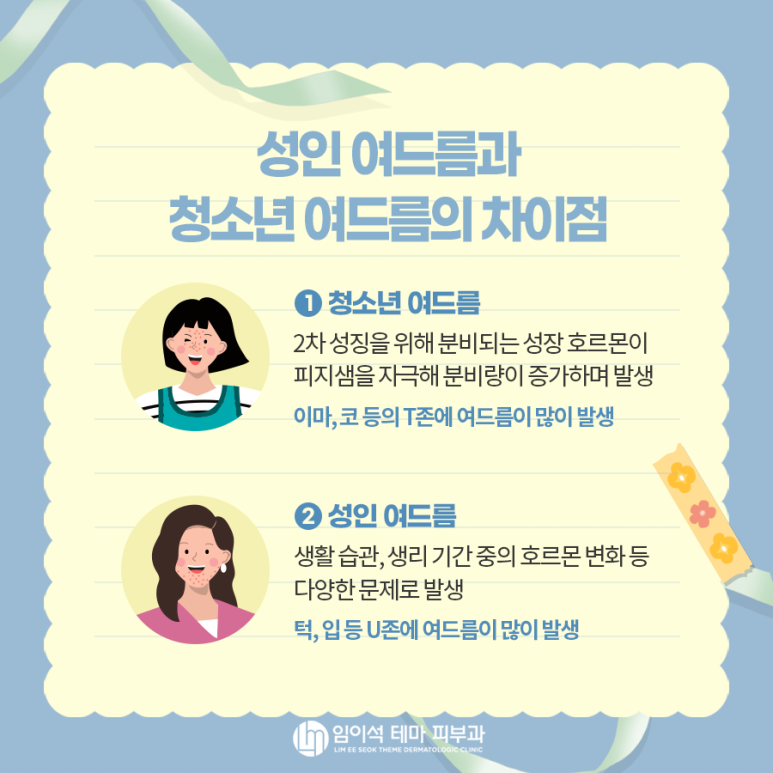
The biggest difference between adult acne and teenage acne lies
in the factors that cause them.
Puberty acne occurs when growth hormones secreted for secondary sexual characteristics
stimulate the sebaceous glands, increasing secretion,
and it often appears as inflammatory acne.
Adult acne, on the other hand, develops due to various issues such as
lifestyle habits and hormonal changes during the menstrual period.
During adolescence, acne often appears in the T-zone,
such as the forehead and nose, while adult acne appears around the chin
and mouth and is often more inflammatory,
so extra caution is needed.
Acne during adolescence may naturally decrease once the period of growth hormone secretion ends,
but if it is not cared for properly, acne scars can remain deeply,
so it is best to regularly receive extraction and acne care at a dermatology clinic.
In the case of adult acne, since most are inflammatory acne,
they often start red and then turn brown, making it highly likely
to leave deep scars and pigmentation.
When acne first appears, it is best to visit a dermatology clinic,
show the medical staff the condition of your skin and acne,
and actively receive treatment for acne, as this helps prevent
acne-related injuries and pigmentation.
Acne Laser Treatment
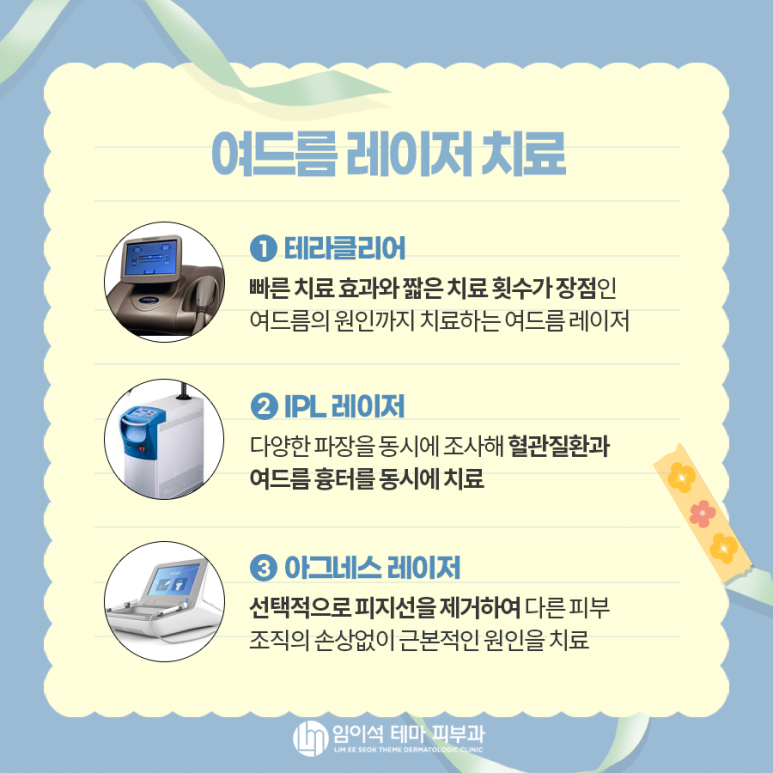
The way to get rid of acne is to visit an acne treatment dermatology clinic
and receive acne scaling, or use laser treatment for acne,
which can selectively destroy the sebaceous glands, one of the main causes of acne,
or choose a laser suitable for the skin condition to treat
red acne marks, pigmentation, and pitted scars together.
Theraclear, an acne laser therapy that also treats the causes of acne,
has received FDA approval for improving acne on all skin types,
and its advantages are fast treatment effects and a small number of sessions.
It pulls the skin into the tip to remove impurities and waste,
cleanses inside the pores to eliminate the causes of acne,
and irradiates the skin drawn close to the tip with laser light to help
reduce pigmentation and redness, shrink pores, and decrease sebum.
The IPL laser, which helps improve various skin concerns such as freckles,
blemishes, and vascular conditions, emits multiple wavelengths at the same time,
allowing it to treat not only capillary dilation but also separate conditions
such as pigmentation and enlarged pores simultaneously.
Compared with general laser procedures, it minimizes the risk of skin damage
and can effectively improve acne scars. In addition, Atra Laser is a laser toning
treatment that improves melasma and acne, restoring the function of the sebaceous glands,
the root cause of acne, to care for acne and is also an effective laser procedure
for melasma and pigmentation.
Agnes Laser, which is effective for acne treatment,
is an acne laser that selectively removes sebaceous glands
and treats the root cause without damaging other skin tissue,
and helps destroy the fundamental cause of trouble and prevent acne recurrence.
It is applied to various types of acne such as adult acne, recurrent acne,
nodular acne, and pustular acne,
and is also an effective laser procedure for getting rid of whiteheads.
Acne Scar Treatment Laser
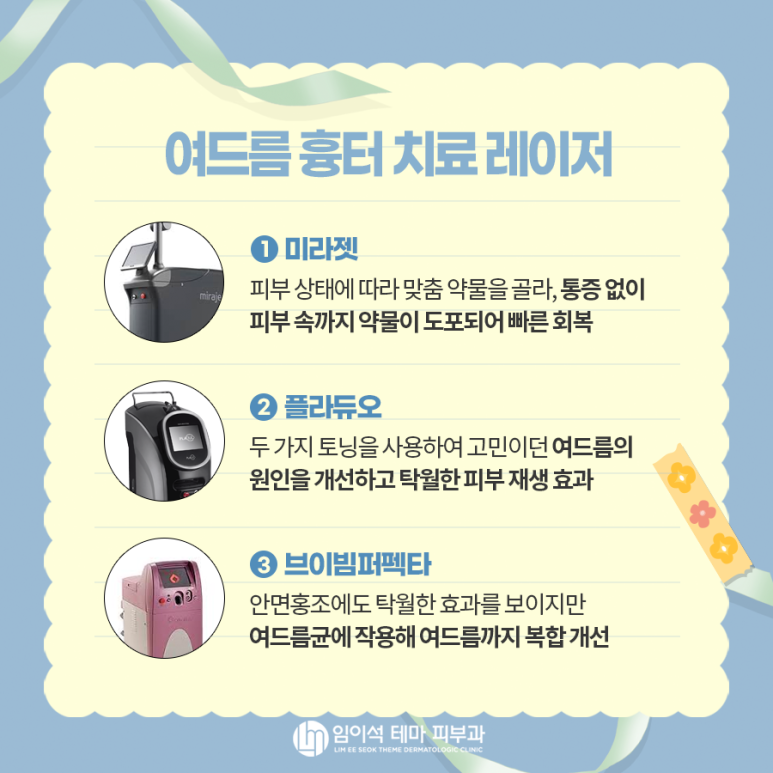
If you want to recover quickly to healthy skin after acne laser treatment,
while also caring for skin elasticity and pores,
it is good to use MiraJet Laser together.
MiraJet evenly sprays medication onto the skin without needles using microjet pressure,
delivering a rejuvenation effect deep into the skin.
Depending on the patient's skin condition,
a customized medication is selected,
and the drug is applied deep into the skin,
helping quickly calm acne and restore elastic, healthy skin.
PlaDuo, which provides excellent skin regeneration effects with dual plasma,
uses two types of toning: R-toning with argon and N-toning with nitrogen,
to improve the cause of troublesome acne and treat acne.
In addition, by using dedicated tips according to skin concerns,
it induces skin regeneration to improve skin texture/elasticity/fine wrinkles/pores/skin tone/melasma/redness,
creating healthy skin and making it a good laser for those wondering how to get rid of acne marks.
Vbeam Perfecta, known as a laser for treating facial redness,
is excellent for facial redness but is also a laser that can comprehensively improve acne
by acting on acne bacteria.
It is an effective procedure not only for treating the causes of acne
but also for treating the marks and red traces left after acne treatment,
minimizing irritation to normal skin tissue while addressing the problematic concerns.
If you are curious about how to get rid of back acne,
pitted acne scars, adult acne treatment, or managing pustular acne,
it is good to visit Imi-seok Theme Dermatology Clinic, an acne dermatology clinic,
and receive acne care and dermatology acne treatment.
For more effective treatment results,
Imi-seok Theme Dermatology Clinic continuously adds and replaces premium laser treatment equipment,
and provides reliable treatment based on rich clinical experience from more than 600,000 cases.
If you have more questions about acne, whiteheads, or folliculitis,
please feel free to contact us anytime.
Imi-seok Theme Dermatology Clinic will always be with our patients.
If you are curious about the Agnes laser procedure video from Imi-seok Theme Dermatology Clinic,
please check it through the link below.
https://www.youtube.com/watch?v=1Up1XpkRcvM