Provider: Imiseok Theme Dermatology Clinic
Modern people experience various types of hair loss due to stress and irregular lifestyle habits. As hair volume decreases, people may lose confidence, become timid, and in severe cases, even experience depression. Hair transplantation, a treatment method for resolving long-term stress and worry, comes in many types and variations, making it difficult to know which method is right for you. Therefore, it is important to find a hair transplant method that suits you based on the exact cause and symptoms of hair loss, as well as the area and progression of the hair loss.
Today, together with Imiseok Theme Dermatology, let’s look at how to find the hair transplant surgery method that is right for me.
Types of Hair Loss
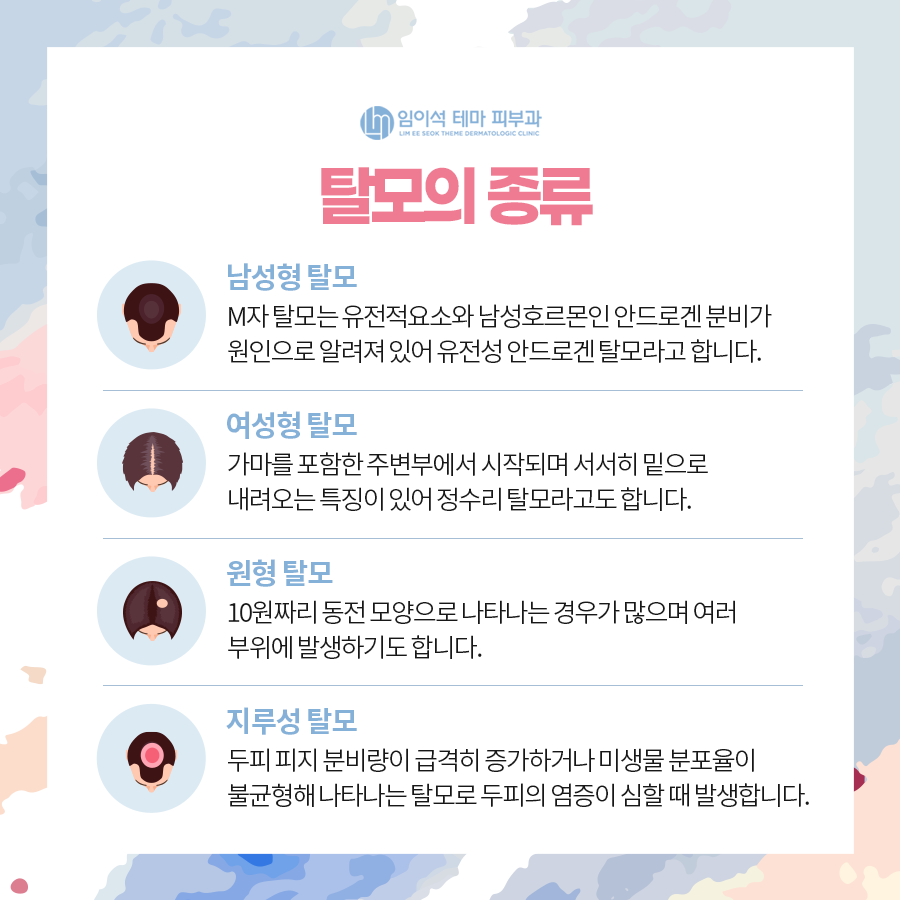
Male pattern hair loss: M-shaped hair loss is known to be caused by genetic factors and the secretion of the male hormone androgen, so it is called hereditary androgenic alopecia. It usually starts at the forehead and gradually spreads.
Female pattern hair loss: It starts around the crown, including the whorl, and slowly moves downward, which is why it is also called crown hair loss. Because it is an area that is difficult to check on your own, many people miss the early stage, and it is known to be greatly influenced by genetics.
Alopecia areata: It often appears in the shape of a 10-won coin and may occur in multiple areas. It has the highest frequency among types of hair loss and is a representative form that occurs at similar rates in men and women.
Seborrheic hair loss: This type of hair loss occurs when scalp sebum secretion increases rapidly or the distribution of microorganisms becomes unbalanced. It progresses when scalp inflammation is severe and tends to improve as the inflammation subsides.
Hair loss refers to a condition in which hair is abnormally absent from areas where it should be present. Losing about 50 to 100 hairs a day is a natural phenomenon, but if a greater amount falls out, you may want to suspect hair loss. In addition to the types of hair loss above, there are also telogen effluvium, in which hairs in the growth phase become telogen hairs and fall out early, as well as childhood hair loss.
Advantages of Hair Transplant Surgery
-
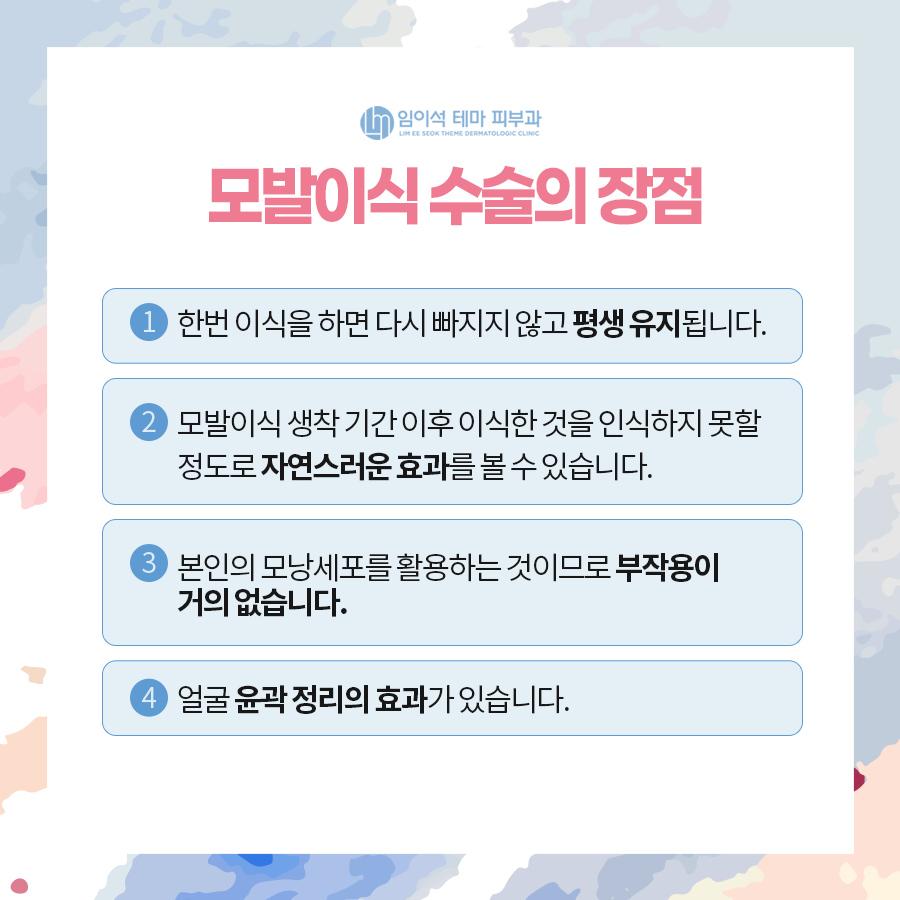
It does not fall out for life.
The follicles used for transplantation are taken from the back and sides of the head, which are not affected by hair loss. Because of this, once transplanted, the hair does not fall out again and is maintained for life.
-
It looks natural.
By transplanting and growing one’s own hair, the new hair has the same texture, growth cycle, and characteristics as the existing hair. After the hair transplant graft survival period, it can look so natural that others will not realize it was transplanted.
-
There are almost no side effects.
Because your own follicle cells are used rather than someone else’s follicle cells, another major advantage is that there are almost no side effects. Since no additional management is needed after graft survival, it grows together with the original hair and leads to even more satisfying results.
-
It has a face-contouring effect.
Without bone-shaving surgery, hair transplantation for correcting M-shaped hair loss or female hair loss through hairline correction neatly organizes the forehead line and can create a cleaner impression and a face-slimming contour-reduction effect without bone-shaving surgery.
Hair transplantation has a significant effect in improving one’s appearance into a healthier image, so many people search for terms such as hair loss hair transplant, men’s hair transplant, women’s hair transplant, M-shaped hair transplant, female hair transplant, and hairline correction while considering surgery. Because transplant surgery must be carried out precisely and delicately, it takes longer than other procedures. The most important point in autologous hair transplantation is to transplant the follicles quickly into the scalp without damaging them. This process is a crucial stage that determines the graft survival rate after hair transplantation.
Hair Transplant Surgery Methods
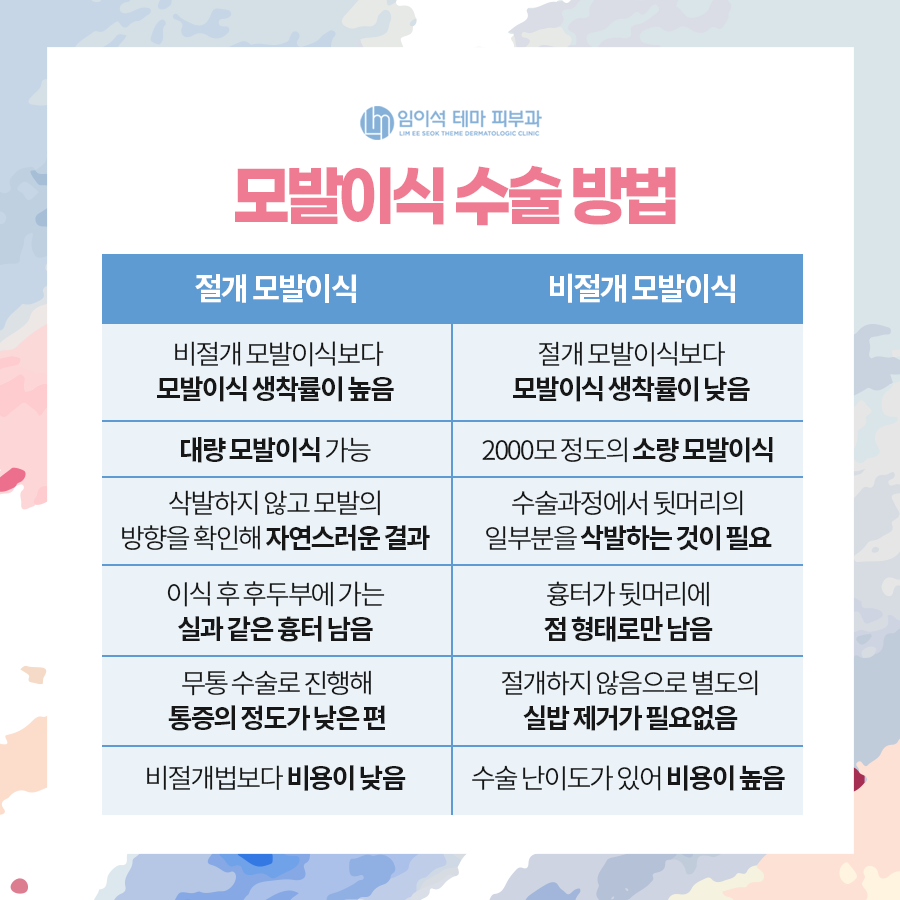
Incisional hair transplantation generally has a higher hair graft survival rate than non-incisional hair transplantation and has the advantage of allowing a large number of hairs to be transplanted. In particular, because the direction of the hair can be checked without shaving the head, it is suitable for those who expect natural-looking results.
The incisional method leaves a thin thread-like scar on the back of the head after transplantation, and the length of the scar varies depending on the amount of hair transplanted. Some people worry about pain, but the level of pain is relatively low.
Suture removal is also done on the 10th day after surgery, so recovery is relatively quick. In addition, because the hair transplant cost is lower than the non-incisional method, it is possible to undergo the procedure with less financial burden.
Non-incisional hair transplantation has a lower graft survival rate than the incisional method, but because the scar remains only as dot-like marks on the back of the head, it is a preferred method for people concerned about scars. Also, because it does not involve incision, there is the advantage that no separate suture removal is needed.
The non-incisional method requires shaving part of the back of the head during the procedure, and because it is technically more difficult, the surgery cost is higher than the incisional method.
It is recommended for those who want a small-volume hair transplant of about 2,000 hairs or a partial hair transplant.
Hair Transplant Surgery Process
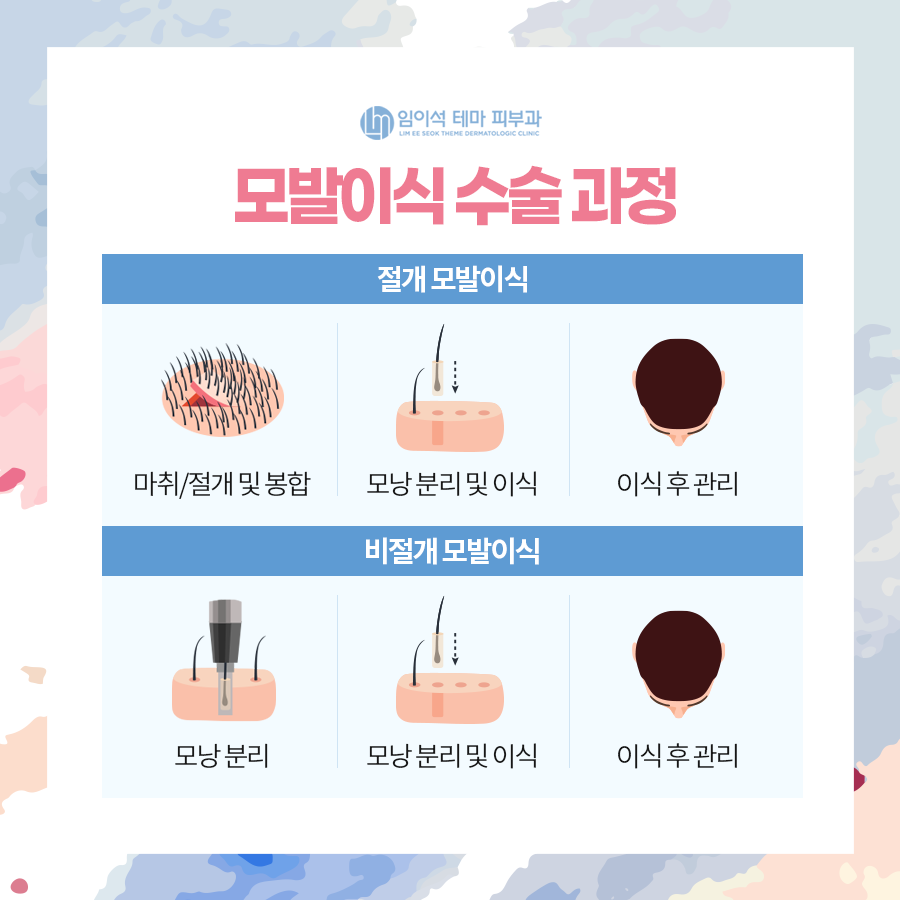
Incisional and non-incisional hair transplantation are classified according to whether the scalp is incised during the procedure.
The incisional method first involves consultation and diagnosis, followed by anesthesia. After that, the occipital area is incised to separate the follicles, and the procedure proceeds with suturing and transplantation.
Non-incisional hair transplantation skips the incision step, so the procedure is simpler than the incisional method. After consultation and diagnosis, follicles are separated from the occipital area using a punch-shaped device without an incision, transplanted, and managed afterward.
Precautions After Hair Transplant Surgery
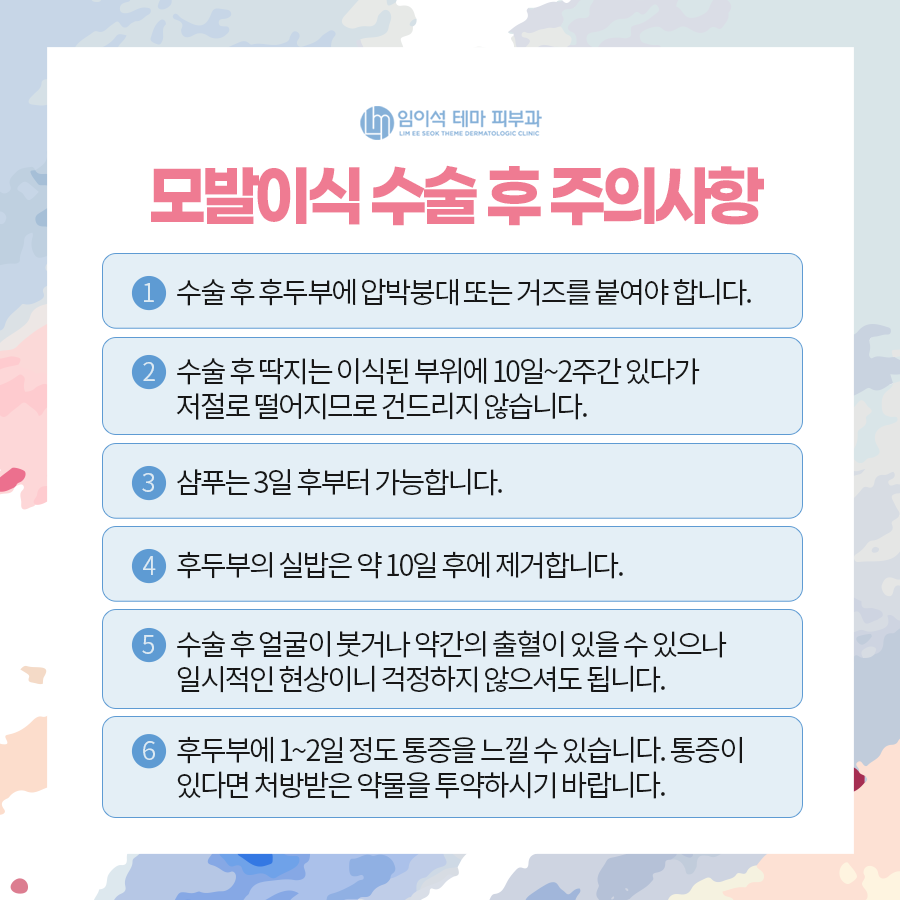
If you have had hair transplant surgery, please be sure to follow the six points below.
- After surgery, a compression bandage or gauze must be applied to the back of the head.
- After surgery, scabs on the transplanted area will naturally fall off after 10 days to 2 weeks, so do not touch them.
- Shampooing is possible starting 3 days later.
- Sutures on the back of the head are removed about 10 days later.
- The face may swell or there may be slight bleeding after surgery, but these are temporary, so there is no need to worry.
- You may feel pain in the back of the head for about 1 to 2 days. If you have pain, please take the prescribed medication.
Various types of hair loss occur due to stress and irregular lifestyle habits. Depending on the cause and symptoms of hair loss, as well as the area and progression of the hair loss, it is important to find a hair transplant method that suits you.
Regardless of the method, it takes at least 6 months to 1 year for new hair to grow from the transplanted follicles and fully settle in after transplantation. During this period, hair loss may occur in areas that were not transplanted. To prevent this, it is important to consistently continue treatments that were applied in the early stages of hair loss, such as intrafollicular injections, Hair Cell S2, and stem cell therapy (PRP).
Continuous care is necessary to keep full hair volume and maintain a great hairstyle.
Imiseok Theme Dermatology continuously adds and replaces premium laser treatment equipment and provides trustworthy treatment based on extensive clinical experience. We provide customized combination treatments and adhere to the principle of performing only one hair transplant surgery per day.
As a Gangnam hair transplant hospital and a Seoul hair transplant hospital, the hair loss and hair transplant center at Imiseok Theme Dermatology has highly experienced medical staff and personnel who separate and perform procedures without damaging the follicles. As a result, we have maximized hair survival rates and increased graft survival after hair transplantation, providing patients with a satisfying experience.
If you are concerned about hair loss, we recommend visiting a Gangnam dermatology clinic, Sinsa dermatology clinic, or skin clinic such as a hair transplant dermatology clinic or dermatology department for a thorough consultation.