
Provided by: Imi-seok Theme Dermatology Clinic
Hello. This is Imi-seok Theme Dermatology.
At some point, when you look closely at your face,
small bumps about the size of millet seeds
appearing around the eyes, cheeks, or neck
may be mistaken for pimples or acne, and if you try
to squeeze them yourself, scars can form.
They may be syringoma or milia rather than acne.
Some people are born with them genetically, but
for most people they grow as the skin ages.
Ordinary acne regenerates after extraction, and even
if you do not visit a hospital,
self-care can be enough to remove it as long as you maintain cleanliness.
Small bumps about the size of millet seeds on the skin
are classified by type as syringoma, milia, or
acne, and because these small bumps are difficult to
remove yourself and may leave marks,
it is best to visit a hospital for treatment.
Among epidermal lesions, warts occur when a virus infects
through cracks and fissures, and syringoma interferes with
clear skin, so treatment should be carried out according to the cause.
Today, at Imi-seok Theme Dermatology,
we will explain the differences and treatment methods
for skin conditions such as syringoma, milia, and
acne.
What Are Syringoma and Milia?
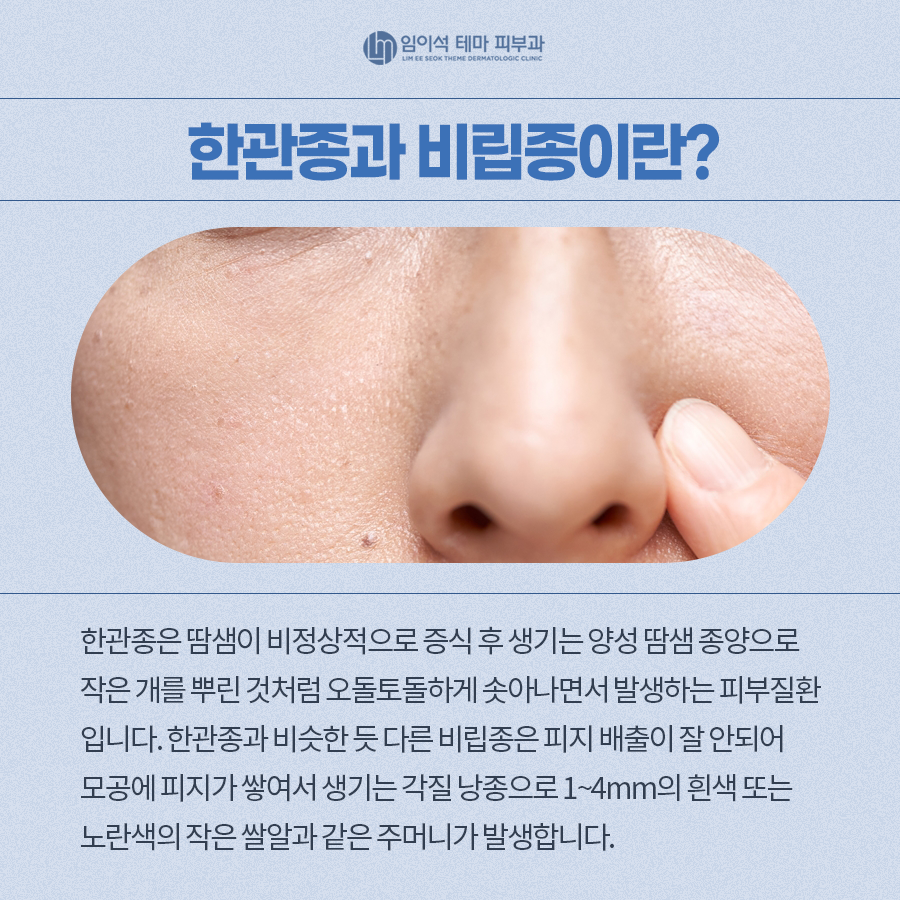
Syringoma is a benign sweat gland tumor that
develops after abnormal proliferation of sweat glands,
and it is a skin condition that appears as small,
raised bumps like scattered grains of rice.
It occurs mainly under the eyes, which is why it is also
called under-eye syringoma.
It usually appears as 2–3 mm small teardrop-shaped
yellow or skin-colored bumps, and because it is
unattractive cosmetically and cannot be hidden with makeup,
it is a skin condition that can easily cause stress.
Milia, which is similar to but different from syringoma,
is a keratin cyst caused by poor sebum drainage,
leading to sebum buildup in pores.
It appears as 1–4 mm white or yellow,
rice-grain-like sacs filled with keratin and occurs mainly
on the cheeks and eyelids.
Because sebum or keratin is trapped under the skin,
it may resemble early acne, so many people may mistake it
for acne.
Differences Between Syringoma and Milia
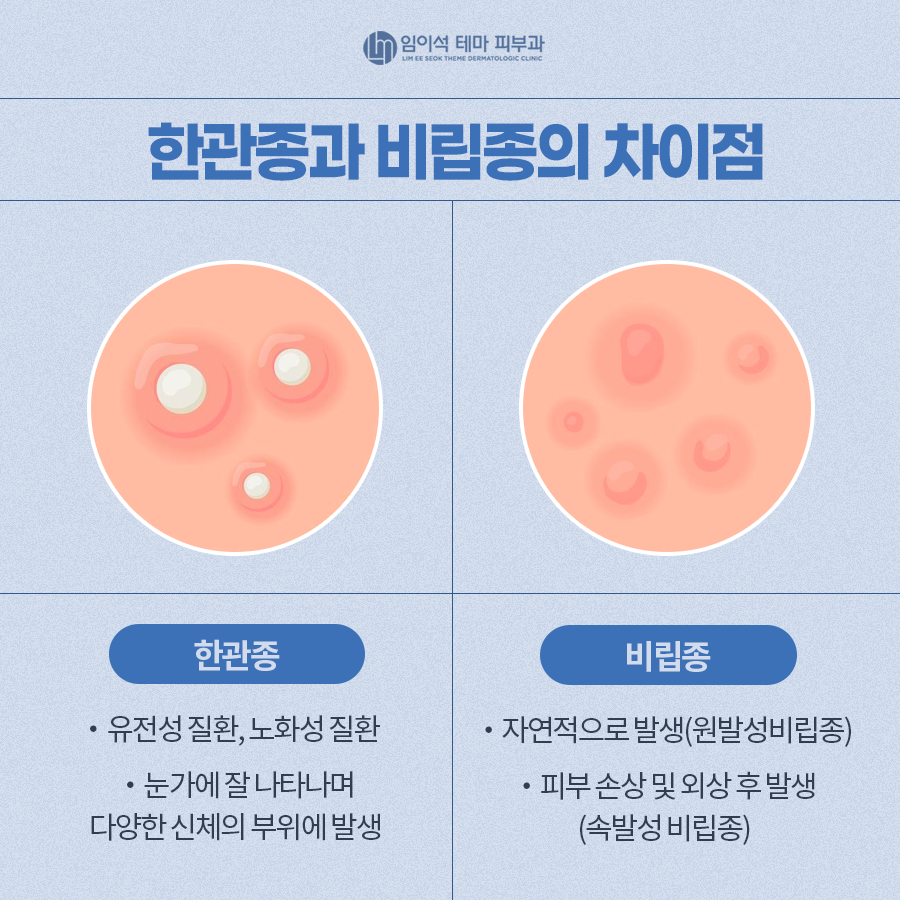
Syringoma is a hereditary condition, and if someone
in the family has syringoma, it can appear
through genetic inheritance. It often shows up around
the eyes, where it is easily visible to the naked eye,
and can occur on various parts of the body.
Milia is divided into primary milia and secondary milia
depending on the cause.
When milia develops spontaneously, it is called primary
milia and occurs on the face, especially around the
cheeks and eyelids.
Secondary milia, which develops after skin damage or trauma,
is a residual cyst caused by skin injury, starting in
hair follicles or sweat glands, and occurs after blistering
diseases or after trauma such as dermabrasion or burns,
or in areas of skin atrophy due to chronic steroid
application.
It generally means that sebum or keratin is not being
secreted smoothly from the skin.
How to Treat Syringoma and Milia
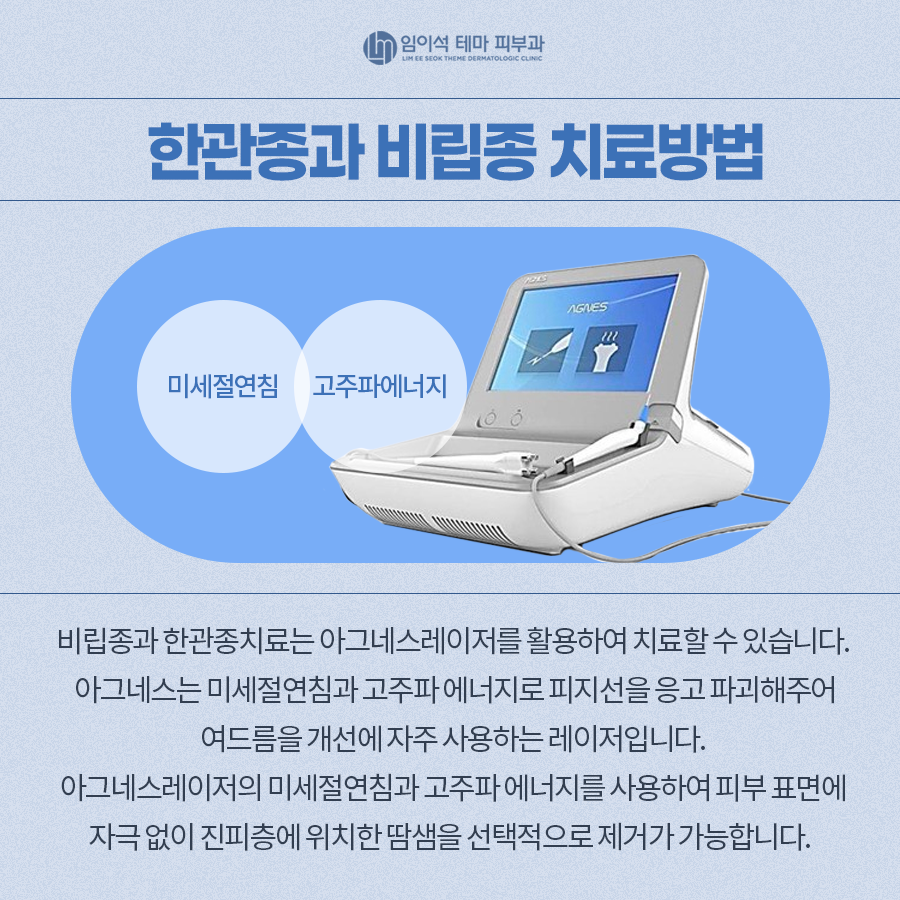
Milia and syringoma can be treated using the Agnes
laser.
Agnes is a laser often used to improve acne because it
coagulates and destroys sebaceous glands using a
micro-insulated needle and radiofrequency energy.
Using the Agnes laser’s micro-insulated needle and
radiofrequency energy, it is possible to selectively remove
sweat glands located in the dermis without irritating the
skin surface.
There may be redness for about a week after treatment,
but makeup can be applied after the procedure, so it
has the advantage of allowing treatment without disrupting
daily life.
Because syringoma is difficult to treat and has a high
chance of recurrence, completely removing the roots located
in the dermis is the most important thing.
For syringoma removal, the best approach is to undergo a
customized procedure through thorough consultation with an
experienced medical team according to your skin condition.
Milia is a condition caused by the buildup of keratin,
so keratin management is important. For milia removal,
aerbium yag laser is used to treat even sensitive areas
around the eyes without damaging the skin.
In addition, by checking the skin condition and combining
it with medical skin care suited to that condition, you can
expect better results.
Agnes for Treating Various Skin Conditions
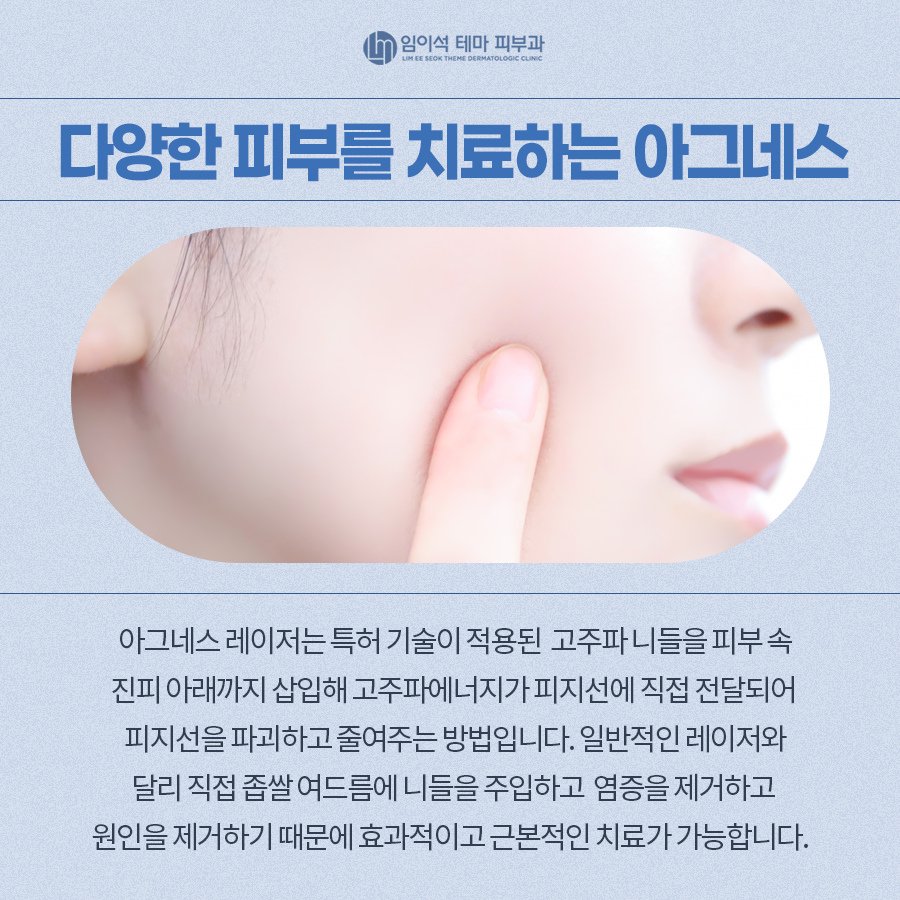
The Agnes laser can treat not only syringoma and milia
but also various other conditions.
It is also commonly known as a way to get rid of
small acne bumps, and the acne bumps that look similar
to syringoma or milia to the naked eye are exactly
that kind of case.
Small acne bumps refer to small white bumps raised on
the skin surface due to sebum gland and pore blockage
inside the hair follicle, and are also called whiteheads.
Small acne bumps are not a condition outside the skin;
they exist within the skin, so the fundamental treatment
is not to touch the outside but to remove the sebum
inside the skin.
The Agnes laser is a method in which a patented
radiofrequency needle is inserted beneath the dermis
inside the skin, and the radiofrequency energy is
delivered directly to the sebaceous glands to destroy
and reduce them.
Unlike ordinary lasers, it is effective because it inserts
a needle directly into the small acne bumps, removes
inflammation, and removes the cause, making it possible
to provide effective and fundamental treatment. If you are
a patient looking for a way to get rid of small acne bumps,
it may be a good idea to visit Imi-seok Theme Dermatology
and receive a consultation.
Various Methods for Removing Syringoma and Milia
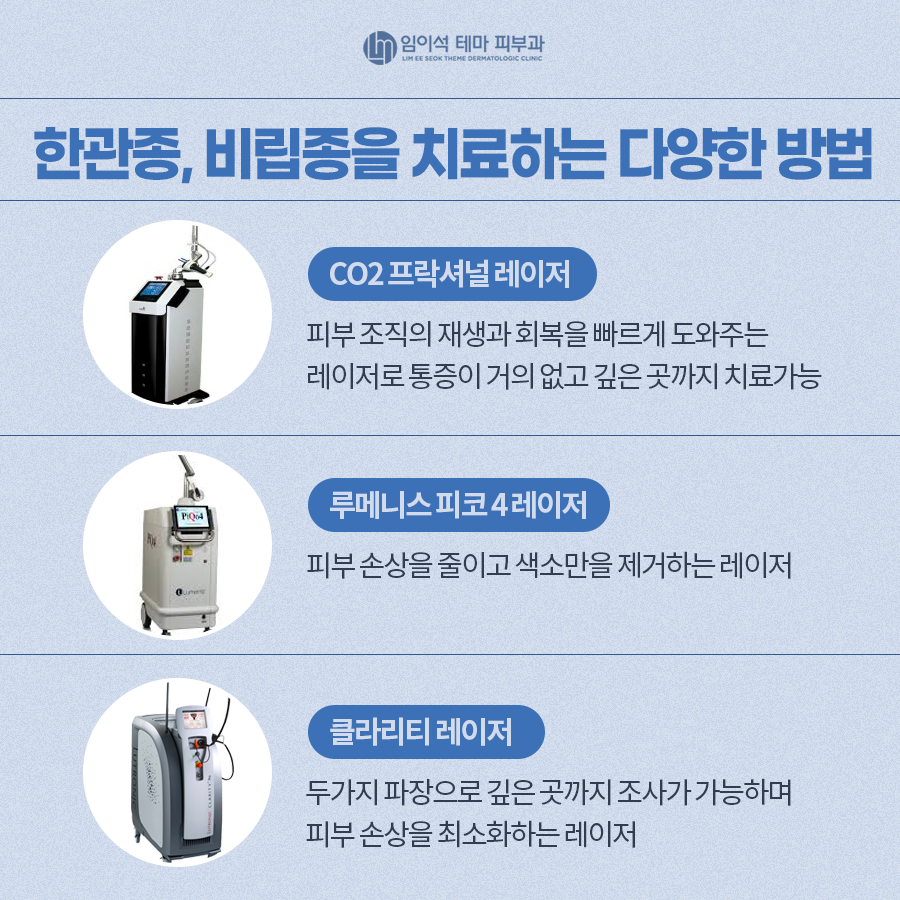
Imi-seok Theme Dermatology treats patients not only with the
Agnes laser and erbium yag laser, but also with various
methods suited to the patient’s skin lesions.
Because each person’s skin thickness and condition are
different, using a variety of treatment methods together,
rather than relying on just one procedure, may be more effective.
Syringoma can be treated with lasers such as CO2 fractional,
Lumenis Pico4, and Clarity. The CO2 fractional laser is a
laser that helps the regeneration and recovery of skin tissue
quickly. It causes almost no pain and can treat deeper
areas, making it useful for treating syringoma and milia.
In the case of the Lumenis Pico 4 laser, it is a laser that
reduces skin damage and removes only pigment. If there is
pigmentation along with the existing lesion, combining it
can provide a booster effect.
The Clarity laser can irradiate deeply with two wavelengths,
minimizing skin damage and allowing problems beneath the
skin to be treated and resolved.
In addition to these, with various equipment and years of
procedural know-how, we can neatly treat and resolve not
only troublesome syringoma but also milia, small acne bumps,
and flat warts removal.
Care After Syringoma and Milia Removal
Syringoma mainly occurs around the eyes and the brow
area, while milia occurs on the face such as the cheeks
and eyelids, but sometimes it also appears on various parts
of the body.
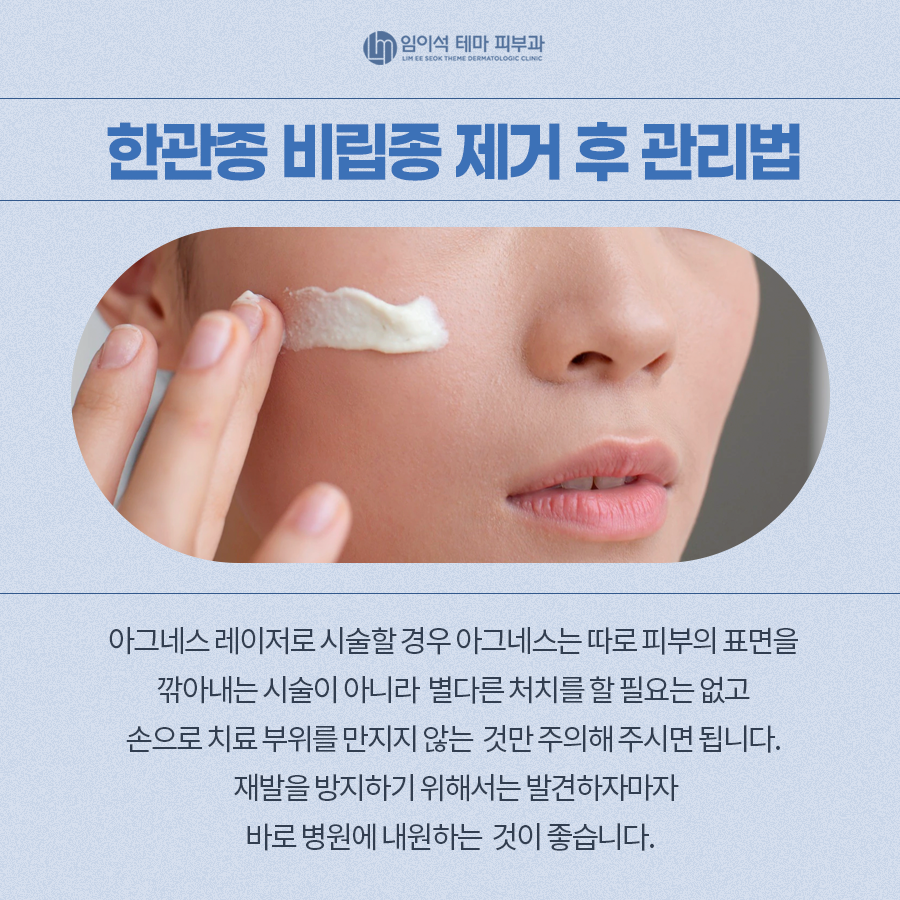
The most important post-removal care is to avoid touching
the treated area with your hands.
If the affected area is large, it is good to apply artificial
skin such as DuoDerm and, after confirming that enough
exudate has accumulated, care for it with a regenerative
cream.
When using the Agnes laser, since it is not a procedure
that scrapes away the skin surface, no special treatment is
needed; you only need to be careful not to touch the treated
area with your hands.
To prevent recurrence, it is best to visit the hospital as soon
as you notice it.
Syringoma and milia are conditions that gradually deepen into
the skin, and if left untreated for too long, one laser
session may not fully cure them, and they may remain deep
enough to create a risk of recurrence.
To prevent excess sebum from being secreted and keratin from
building up on the skin, it is also good to periodically receive
procedures such as Aqua Peel that keep the pores clean.
Imi-seok Theme Dermatology uses customized procedures based
on more than 600,000 clinical cases and, to provide treatment
suited to various skin conditions and problems, has added and
replaced more than 60 premium laser treatment devices in an
effort to systematically treat patients’ skin.
In addition, since opening in 1995, it has long worked to
provide systematic treatment for skin problems and premium
beauty care.