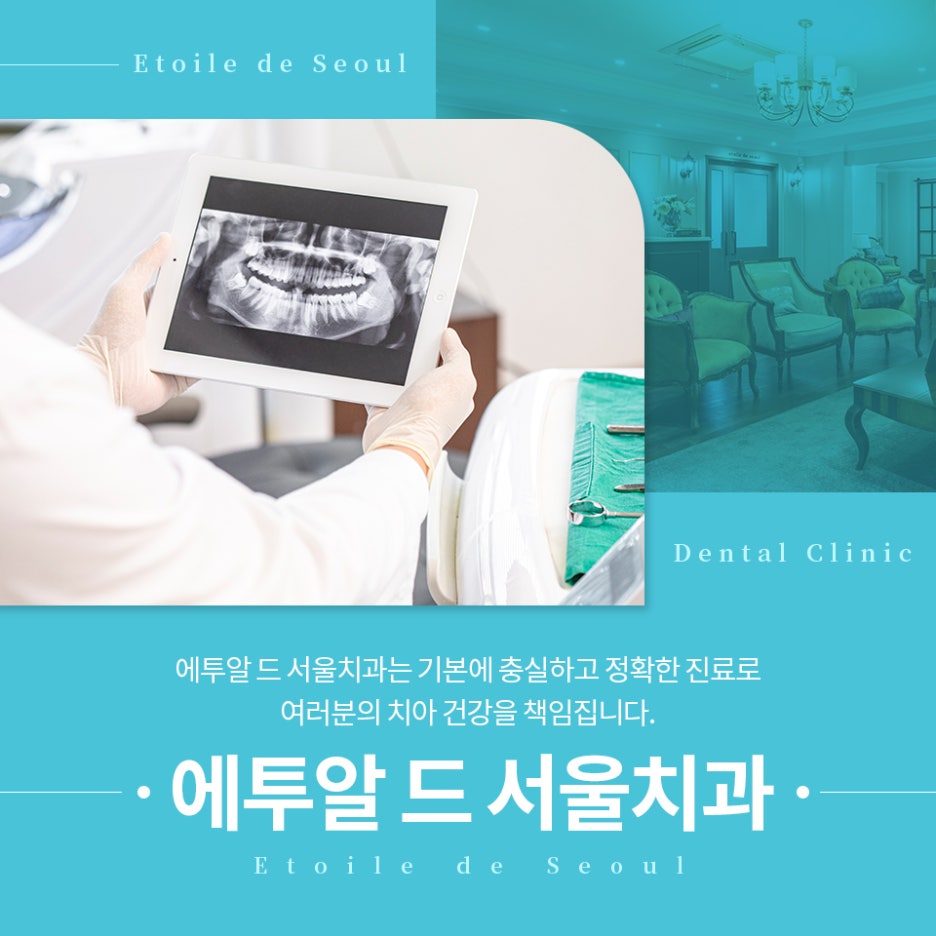
Hello, everyone. Today, I’d like to talk about implants for those of you interested in dental health. This is Etoile Seoul Dental Clinic saying hello. We understand the difficulties and concerns many people face after losing teeth. You may experience discomfort while wearing dentures, a drop in confidence due to tooth loss, or inconvenience when eating—there are likely many challenges in daily life.
Many people, after losing teeth, find themselves wondering, “What should I do now?” Dentures can be more uncomfortable than expected, chewing food can be difficult, and speech may feel unnatural, making even conversation something you hesitate to do. For those looking for a new option amid these inconveniences, implants may be one possible solution.
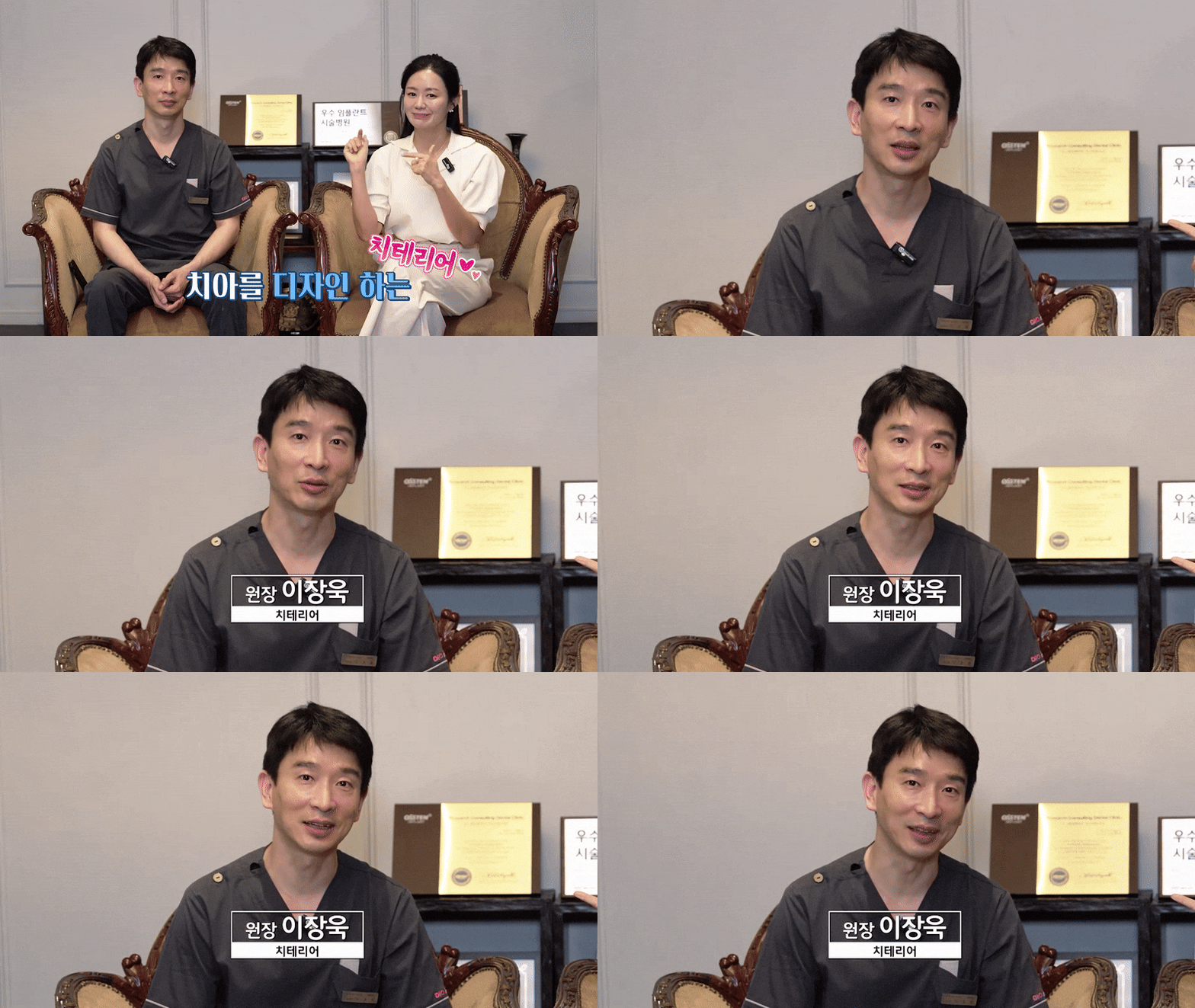
Shall we take a closer look at implants? Simply put, they are a treatment method for people who have no teeth. Unlike conventional methods, there are approaches that can restore upper or lower jaw teeth with only a small number of implants. Considering both the characteristics of implants and dentures, this method can be a way to take both cost and function into account.
Looking at the main features of implants, one point is that in some cases, tooth function can be restored with only a small number of implants. Since treatment may be possible with fewer implants than standard implant methods, there can be differences in cost and the scope of surgery.
In addition, returning to daily life after implant treatment may be relatively quick. Many people can resume their routines after an adjustment period following treatment, and the time needed to complete the prosthesis may vary depending on the condition. This is a way to reduce the inconvenience of having to live without teeth.

Who might be interested in implants? First, there are people who want to restore tooth function. Those who want treatment quickly, or those who feel discomfort using dentures, may also want to consider them. People who have difficulty coming to the clinic multiple times because of limited mobility, as well as older adults, can also find a suitable method through consultation.
How does the implant process work? First, examinations are carried out for diagnosis and treatment planning. After that, a computer-based design and prosthesis design process is performed, followed by implant placement and prosthesis attachment. After a recovery period, the final prosthesis is attached. Using modern technology, precision has improved.

Many people are curious about the difference between implants and dentures. Dentures are placed on the gums or attached to a few supports, so their chewing force may be lower than that of natural teeth. Implants, on the other hand, have a fixed prosthesis, which can provide stronger chewing force and less movement.
Implants can also look natural. Prostheses made with modern materials and technology can recreate the natural shape of teeth and gums, potentially delivering a satisfying result in appearance.

How should you care for implants after treatment? In general, it is best to care for them like natural teeth. Proper brushing every day and flossing are necessary, and regular checkups are important. Through regular examinations, checking the condition of the implant and the health of the surrounding gums is necessary for long-term maintenance.
Let’s look at some common questions about implants in a Q&A format. We often get asked, “Can implants be done even if there is not enough jawbone?” With modern technology, there are cases where treatment can be performed by placing implants at special angles and positions depending on the condition of the jawbone.
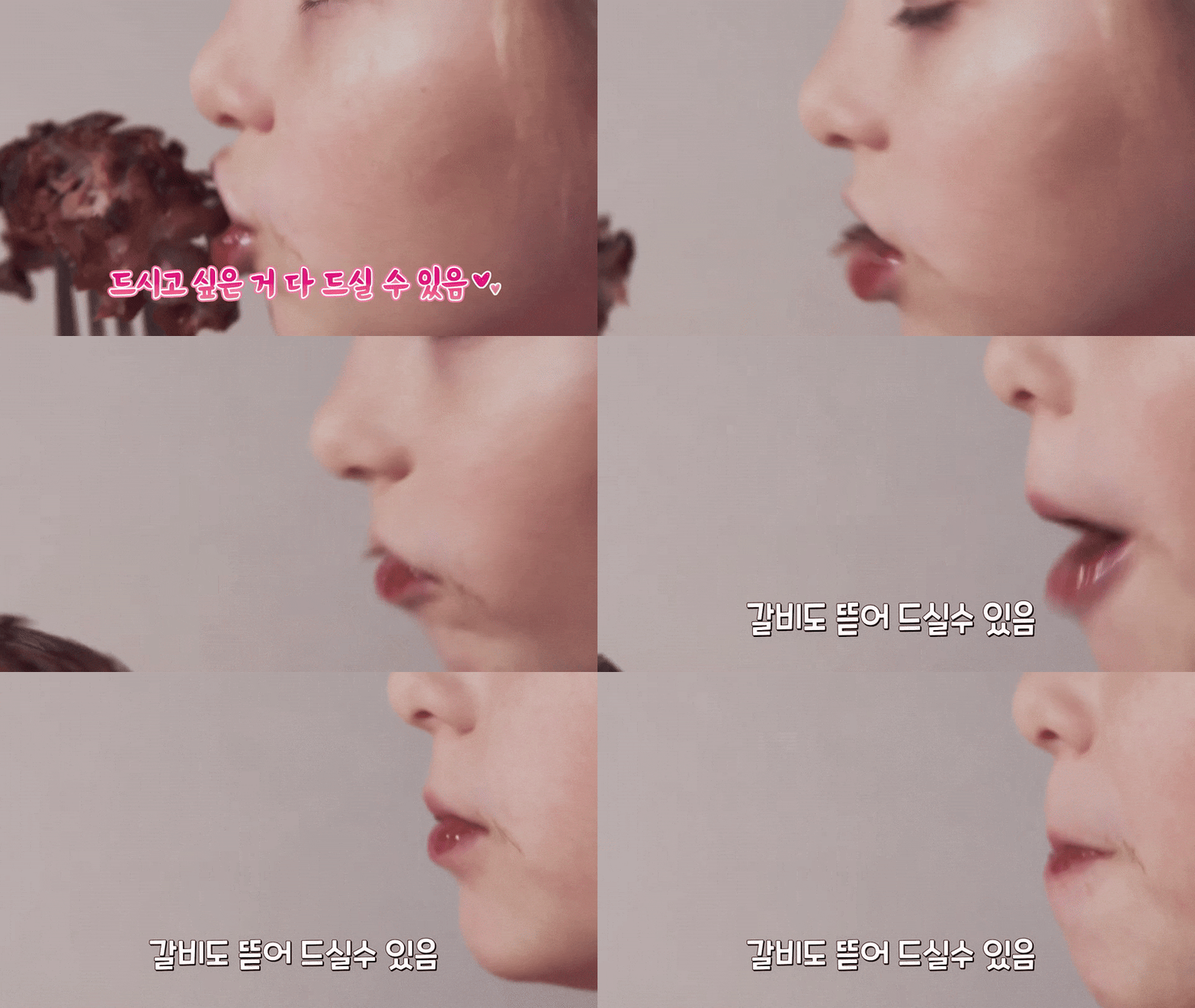
We also frequently get asked, “How long is the recovery period after implants?” It varies depending on the individual, but generally an adjustment period is needed after the temporary prosthesis is placed before returning to daily life, and the time until the final prosthesis is completed differs from person to person.
Another question is, “Can older adults also receive implant treatment?” Overall health status is a more important factor than age. It can be considered for people who have difficulty coming to the clinic or who want to restore tooth function, but this depends on individual health conditions, so judgment is needed.

If you are considering implants, one piece of advice is to first make an accurate determination of whether this is the right treatment for you. It is best to decide by considering your oral condition, health condition, lifestyle pattern, and more. Also, because implants are a treatment that involves surgery, it is important to gather information through consultation.
Implants can be one option for people without teeth. They can restore tooth function, allow a return to daily life after an adjustment period, and provide chewing ability and appearance similar to natural teeth. For those who want to move away from the inconvenience of dentures and find a more comfortable, confident life, implants may be one possible option.
Dental health is related to quality of life. We hope you can enjoy the basic happiness of eating, smiling, and speaking. If you have more questions about implants, please ask during your consultation. We support your healthy smile.










 Previous image
Next image
Previous image
Next image








 Previous image
Next image
Previous image
Next image