Lee Jang-wook, Chief Director
Hello.
This is Etoile de Seoul Dental Clinic, supporting healthy smiles.
Today, I’d like to talk about one of the questions we are asked very often in the clinic: “Do teeth have to be shaved down to get laminate veneers?”
Many people looking into laminate veneers at a Sinsa-dong dental clinic likely pause at the phrase “tooth reduction.” People who have long been concerned about the shape or color of their teeth, those who found orthodontic treatment to be burdensome because of the long treatment period, and those who were excited after learning about laminate veneers but felt afraid when they heard that teeth must be reduced—all of these concerns are something we face every day in the clinic.
We can fully understand that fear and hesitation through the expressions of our patients. After reading this post, we think your questions about why tooth reduction is necessary, how much is done, and how to care for it afterward will become much clearer.
A choice for a healthy smile
How heavy must that feeling have been every time you covered your mouth?
Among those first looking into laminate veneers at a Sinsa-dong dental clinic, many find themselves naturally covering their mouths in photos because their tooth color is uneven or because there is a wide gap between the front teeth.
Even in important settings, they hold back their smiles, and that discomfort can gradually affect their confidence in daily life.
Many people also look into orthodontic treatment but turn to laminate veneers because the long treatment period feels burdensome. We often see patients visit the clinic wanting to change both the shape and color of their teeth within a relatively short period. However, the phrase “teeth must be shaved down” can lead to vague fear, causing them to delay making a decision.
Once you understand exactly what tooth reduction means, that fear can become much lighter.

Laminate veneers are thin porcelain pieces applied to the tooth surface
Laminate veneers are an aesthetic dental treatment in which the front surface of the teeth is lightly reshaped and then covered with thin porcelain shells.
The thickness is usually around 0.3 mm to 0.5 mm, making it easy to think of it as adding a new outer layer to the tooth surface, much like applying a nail design.
They are used in a variety of aesthetic situations, such as when teeth are dark or heavily stained, when there are gaps between the front teeth, or when the teeth are uneven in shape or worn down on the surface. Their 특징 is that they are not simply a way to make teeth “whiter,” but a method that can adjust color, shape, and size together.
This is exactly why many people choose them when they want noticeable positive changes in a short period of time.
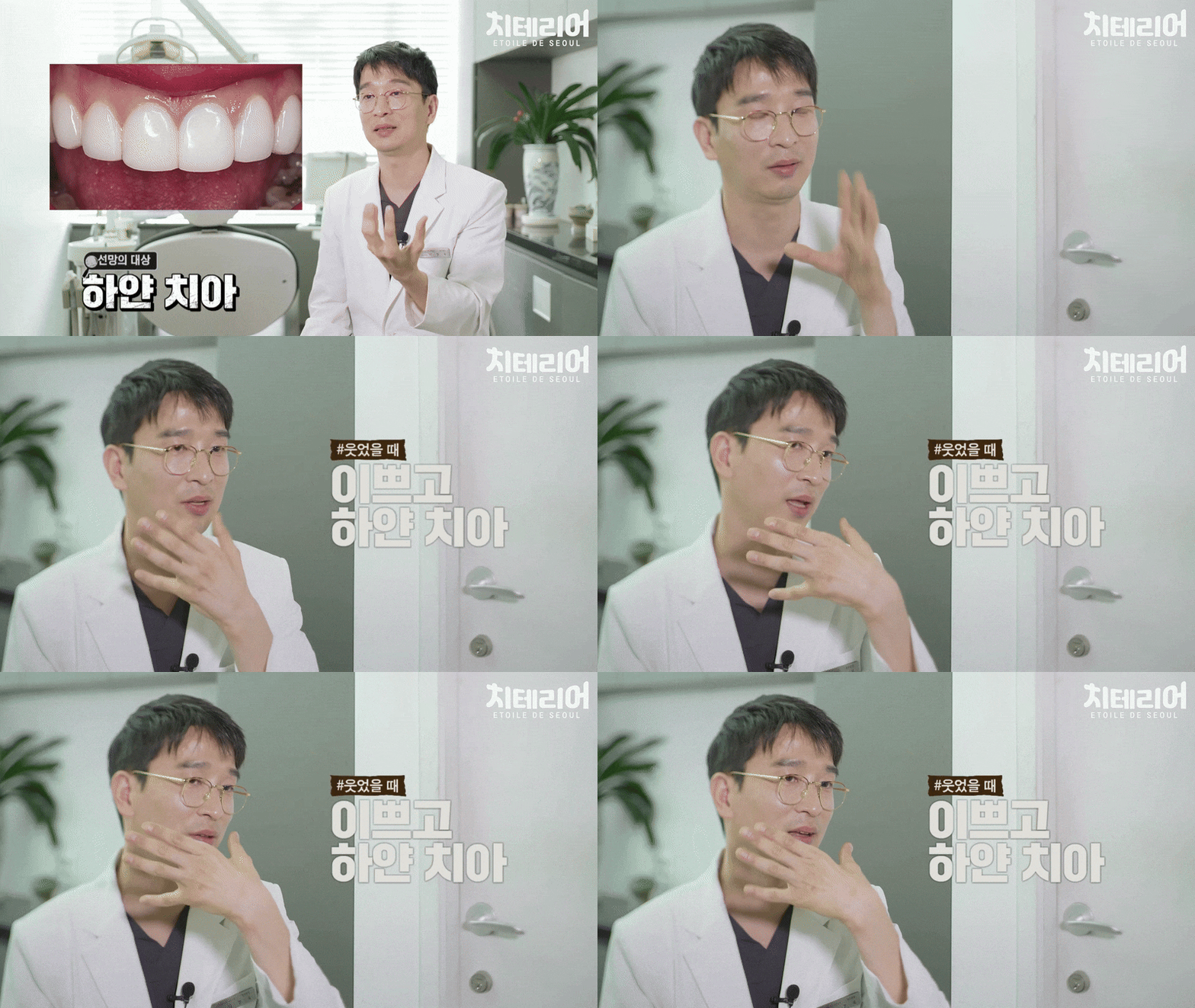

Reduction is not something to fear; it is a preparation process for natural results
The main reason tooth reduction is necessary is to create space.
Even though laminate veneers are thin, they still have a certain thickness. If enough space is not created on the front surface of the tooth, the tooth may appear to protrude forward after placement, or the upper and lower teeth may not fit together naturally.
It works on the same principle as preparing a wall surface evenly before attaching tiles so that the tiles adhere properly. In addition, if the tooth surface is appropriately reshaped, the veneer can bond more evenly and securely, which can lead to a much more natural aesthetic result.
The reduction itself does not damage the tooth; rather, it is an important step that lays the foundation for the veneer to remain natural and stable over time.
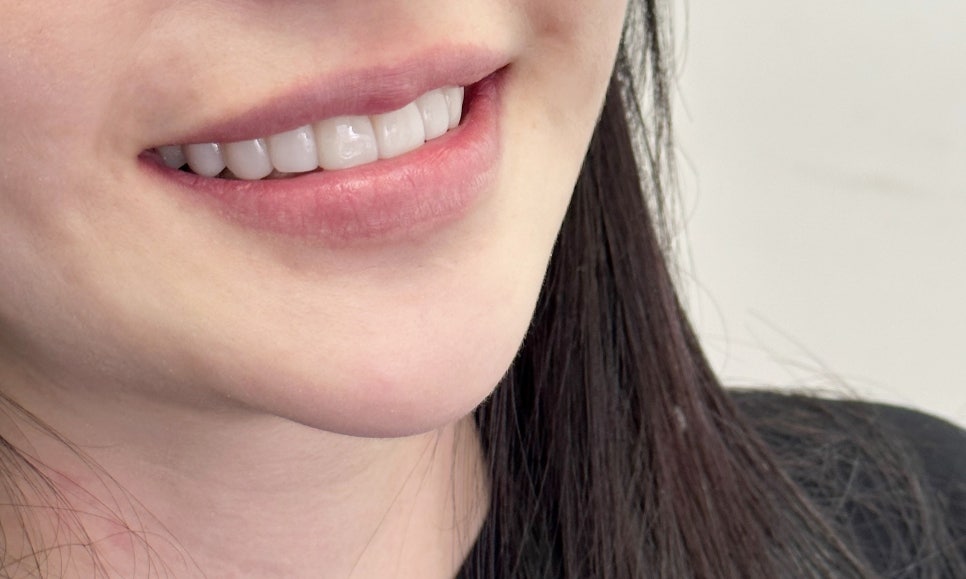
It is only a slight adjustment to the enamel, and it is different from crown treatment
Many people confuse tooth reduction with crown treatment when they hear about it.
Crowns require deep reduction around the entire tooth, but laminate veneers only involve lightly reshaping about 0.3 mm to 0.5 mm of the enamel, which is the hard outermost layer on the front surface of the tooth. It is important to precisely plan the amount of reduction in advance through a digital intraoral scan and proceed accurately without unnecessary removal.
The process is carried out in the following order: ① initial consultation and oral condition diagnosis → ② tooth reduction and digital impression taking → ③ trial fitting of custom-made veneers (temporary bonding) → ④ final bonding.
In this process, sufficient communication with the attending medical staff is an important factor that affects the quality of the result.

Caring for laminate veneers after treatment is not as difficult as you might think
Because of the nature of porcelain, laminate veneers are resistant to staining and maintain their gloss for a long time, which is advantageous for preserving aesthetics similar to natural teeth.
Post-treatment care after laminate veneers at a Sinsa-dong dental clinic is not very complicated. It is best to maintain oral hygiene with proper daily brushing and avoid the habit of biting directly into hard or chewy foods with your front teeth.
If you grind your teeth or clench your jaw, the use of a night guard (a mouthpiece worn while sleeping) is recommended. Having a regular checkup every six months to examine the condition of the veneers and the health of the surrounding teeth can help maintain them in good condition for a long time.
Care is ultimately not very different from taking care of your own natural teeth.

The more you know, the less fear you feel; the more you understand, the easier it is to decide
Sufficient information and trust are the starting points of good treatment
Once you accurately understand the principles and purpose of tooth reduction, vague anxiety often decreases significantly. The word “shaving” may make it feel as if the entire tooth is being damaged, but in reality, it is a minimal process carried out within the range of the enamel.
Once you carefully understand why it is needed and to what extent it is done, anticipation often becomes stronger than fear.
Laminate veneer tooth reduction is not simply a process of “cutting down” the tooth; it is an important step that lays the foundation for a natural and long-lasting result. How much and in what way it is reduced is directly related to the quality of the outcome, so accurate diagnosis and careful planning come first. If you are considering laminate veneers at a Sinsa-dong dental clinic, it may be helpful to calmly review your tooth condition and treatment plan together with the medical team.

Previous image
Next image
▼ Etoile de Seoul Dental Clinic YouTube ▼