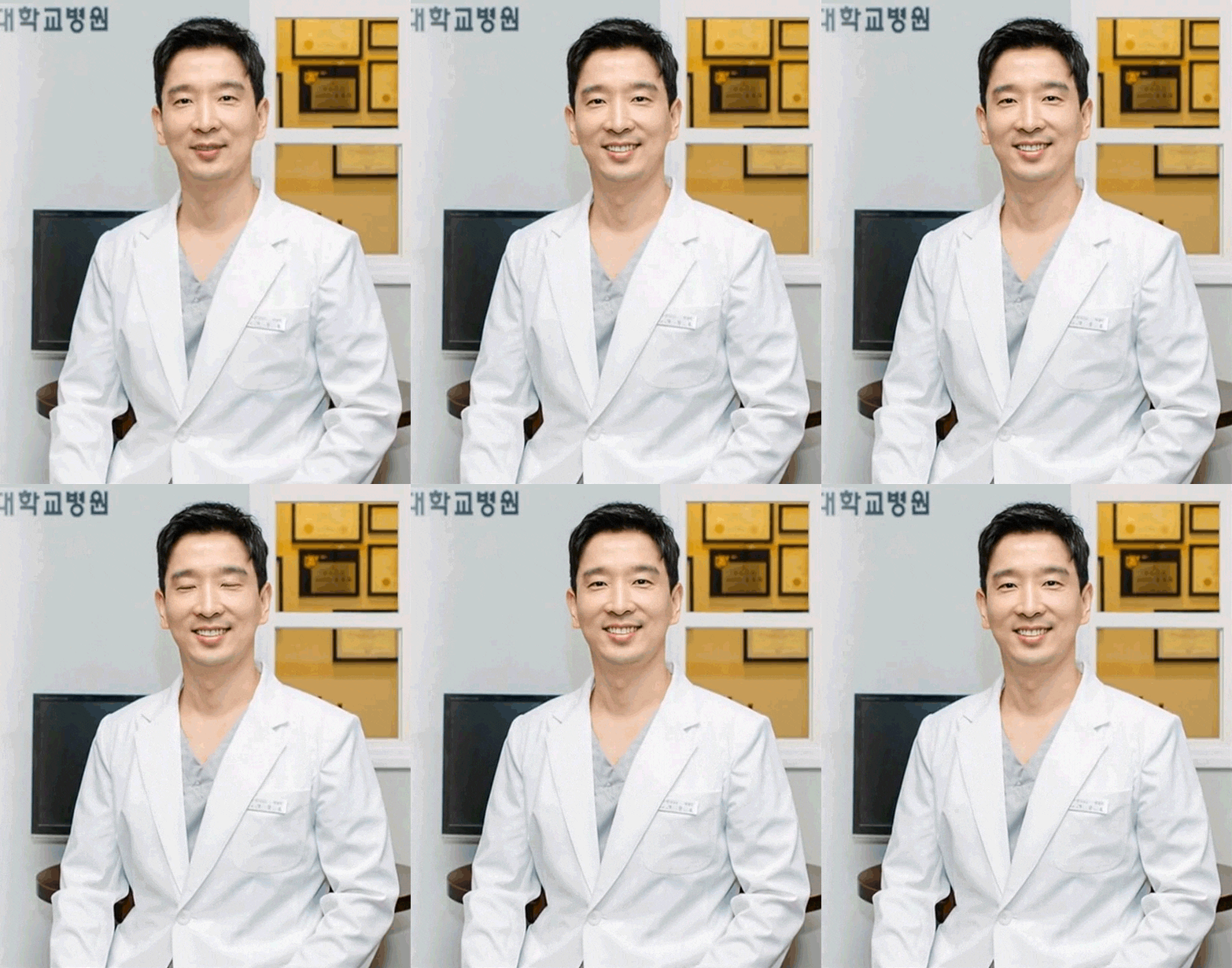
Before deciding on a treatment direction,
accurate information comes first.
One of the questions we often hear in the clinic is, “I’ve been using dentures for a long time. Should I switch to implants now?”
Because many people decide on a treatment direction without fully understanding the difference between implant dentures, today I would like to calmly explain this difference from a dental perspective.
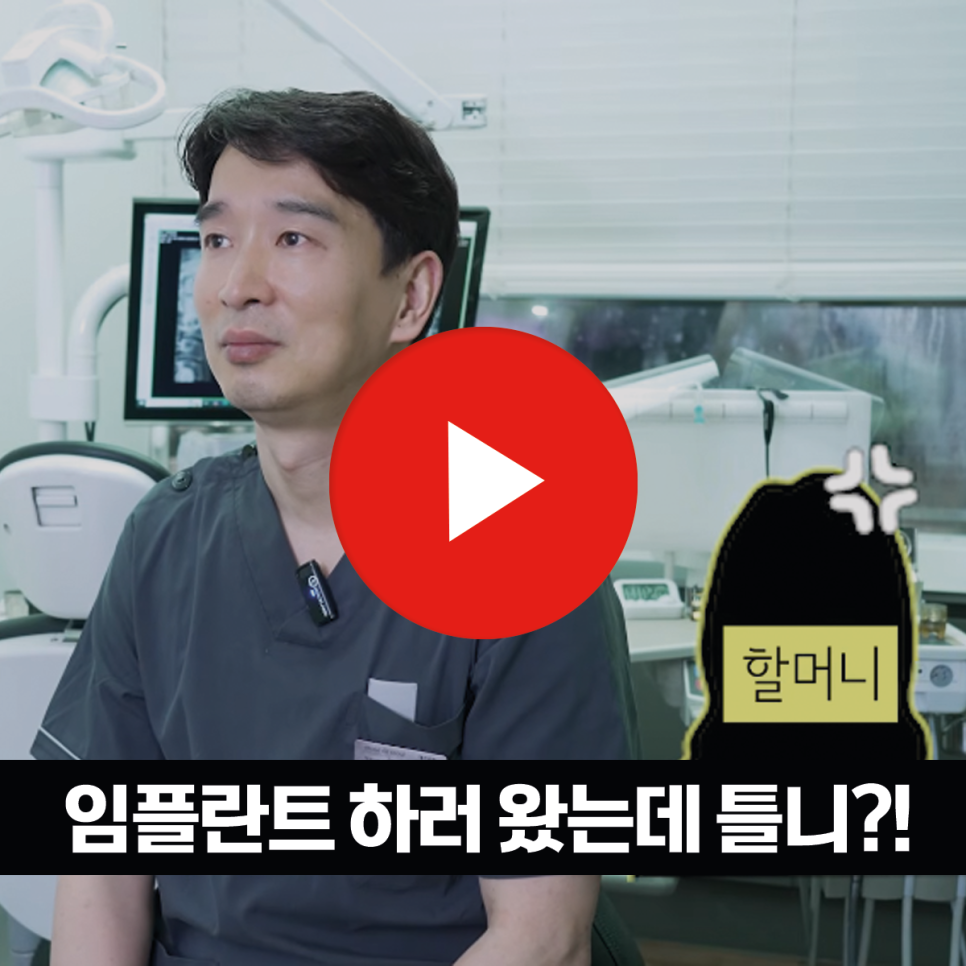
✨ Watch the Chiterior YouTube video ✨
(Click)
The moment you change from dentures to a no-bone arch
❗Why it’s possible even in your 80s❗
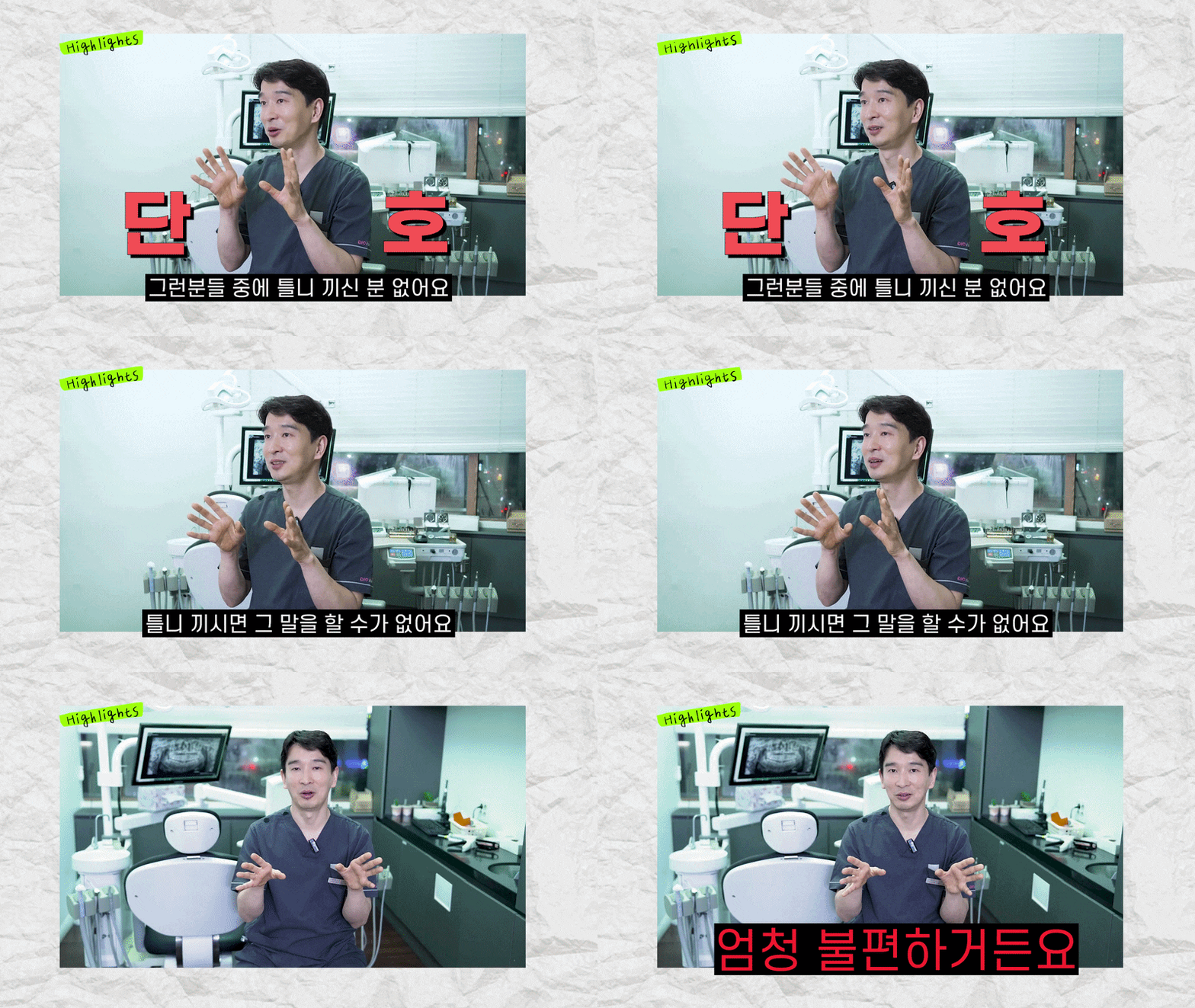
You need to first understand the structural limitations of dentures.
To look at the difference between implant dentures, it is helpful to first understand the structural characteristics of dentures.
Dentures are prosthetic devices that assist chewing by resting on top of the gums.
A denture that is custom-made at first can be used fairly comfortably, but structural limitations may appear over time.
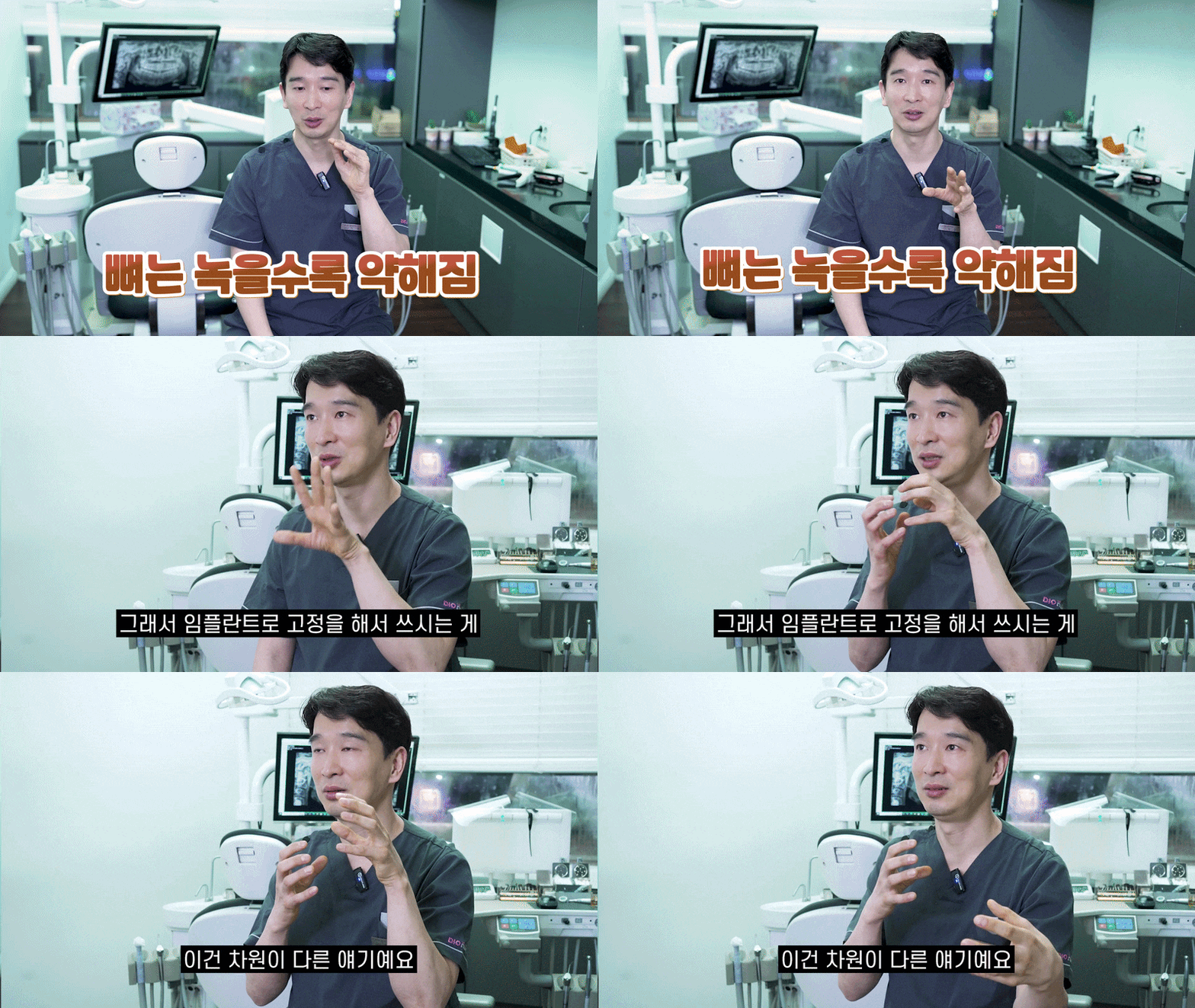
Unlike when teeth or implants are present, dentures do not sufficiently stimulate the jawbone. When stimulation decreases, the jawbone is gradually resorbed, and as a result the denture no longer fits as it did at first. This can lead to lifting during meals or repeated discomfort from a foreign-body sensation.
Chewing force is often lower than that of natural teeth, so many people feel discomfort when eating hard or chewy foods.
 The advantages and practical limitations of individual implants
Many people who have lost all of their teeth consider individual implants.
The advantages and practical limitations of individual implants
Many people who have lost all of their teeth consider individual implants.
Individual implants are placed one by one at each missing tooth site, and can offer results close to natural teeth in terms of chewing force and esthetics.
However, restoring the entire upper and lower jaws may require a considerable number of implants in some cases, and the resulting cost and treatment time are also substantial.
When reviewing treatment options, it is important to consider these practical burdens of individual implants as well.
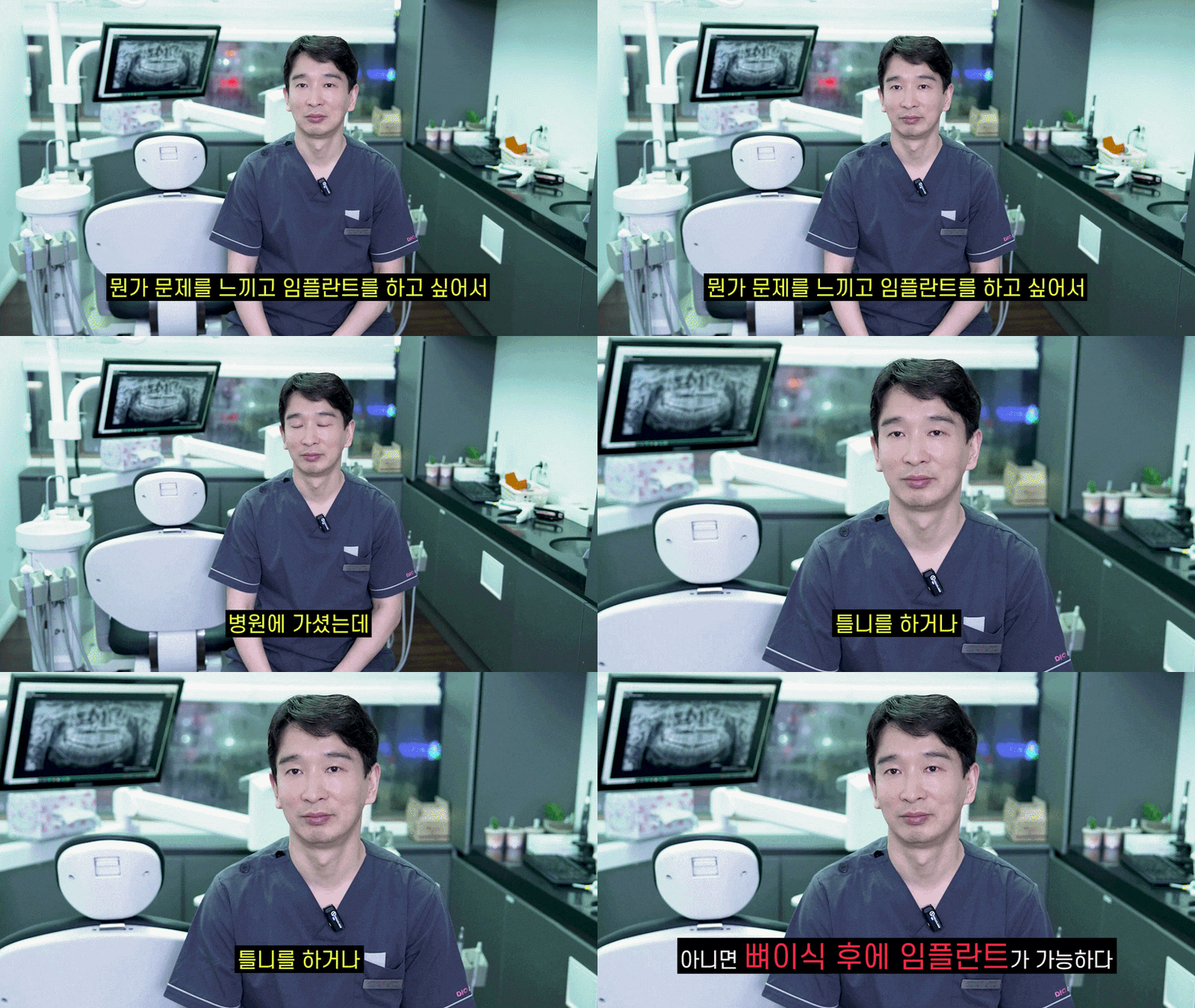
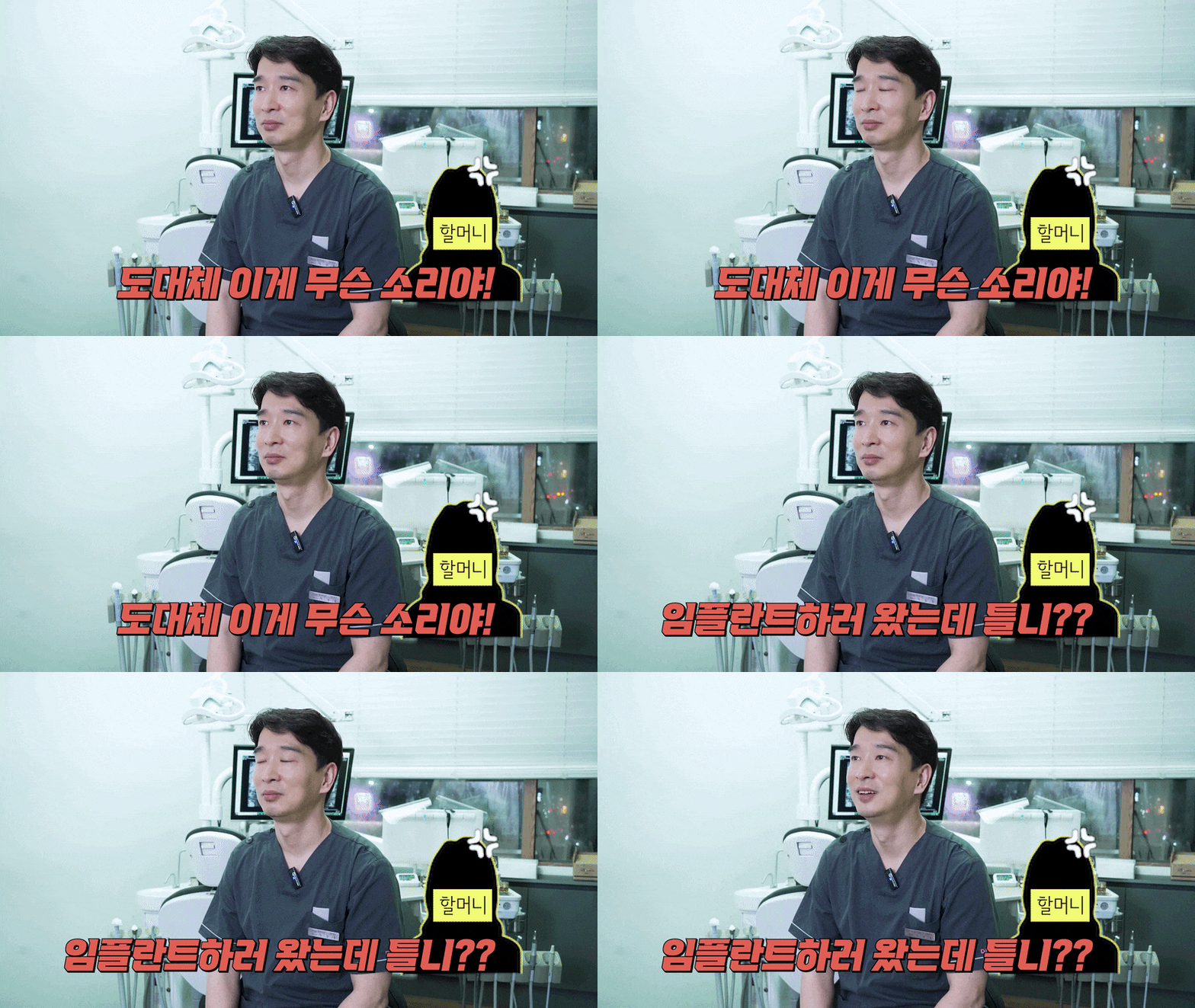 No-bone arch, an approach that bridges the gap between the two methods
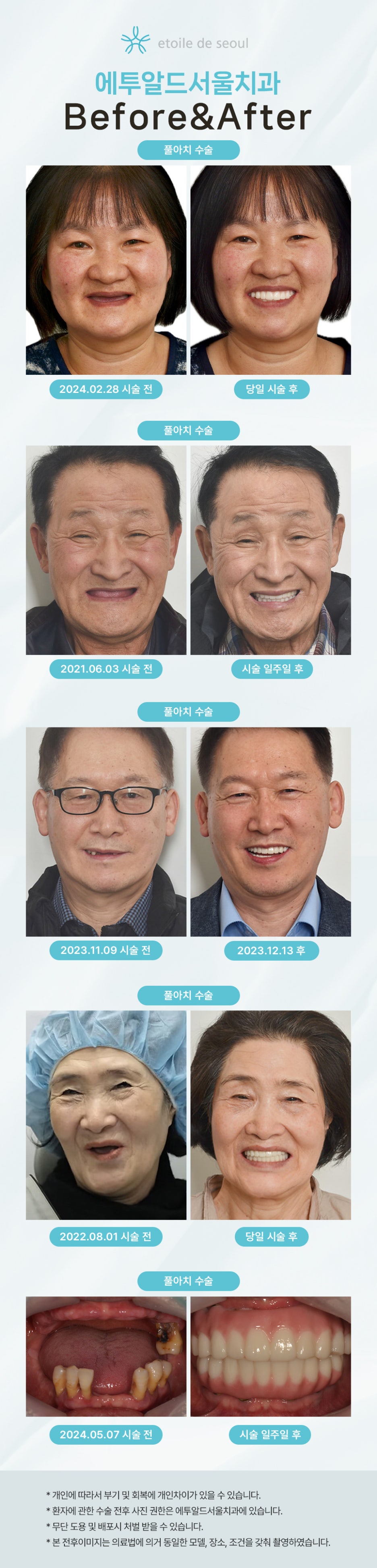
The full-arch implant treatment we provide in our clinic, No-Bone Arch, is a treatment approach positioned between dentures and individual implants.
No-bone arch, an approach that bridges the gap between the two methods
The full-arch implant treatment we provide in our clinic, No-Bone Arch, is a treatment approach positioned between dentures and individual implants.
Understanding this method together can help you better grasp the difference between implant dentures.
Using only 4 to 6 implants per arch in the upper or lower jaw, the entire dentition is restored with a fixed prosthesis. Because the prosthesis is fixed in the mouth and does not move, chewing force can often be expected to be close to that of natural teeth.
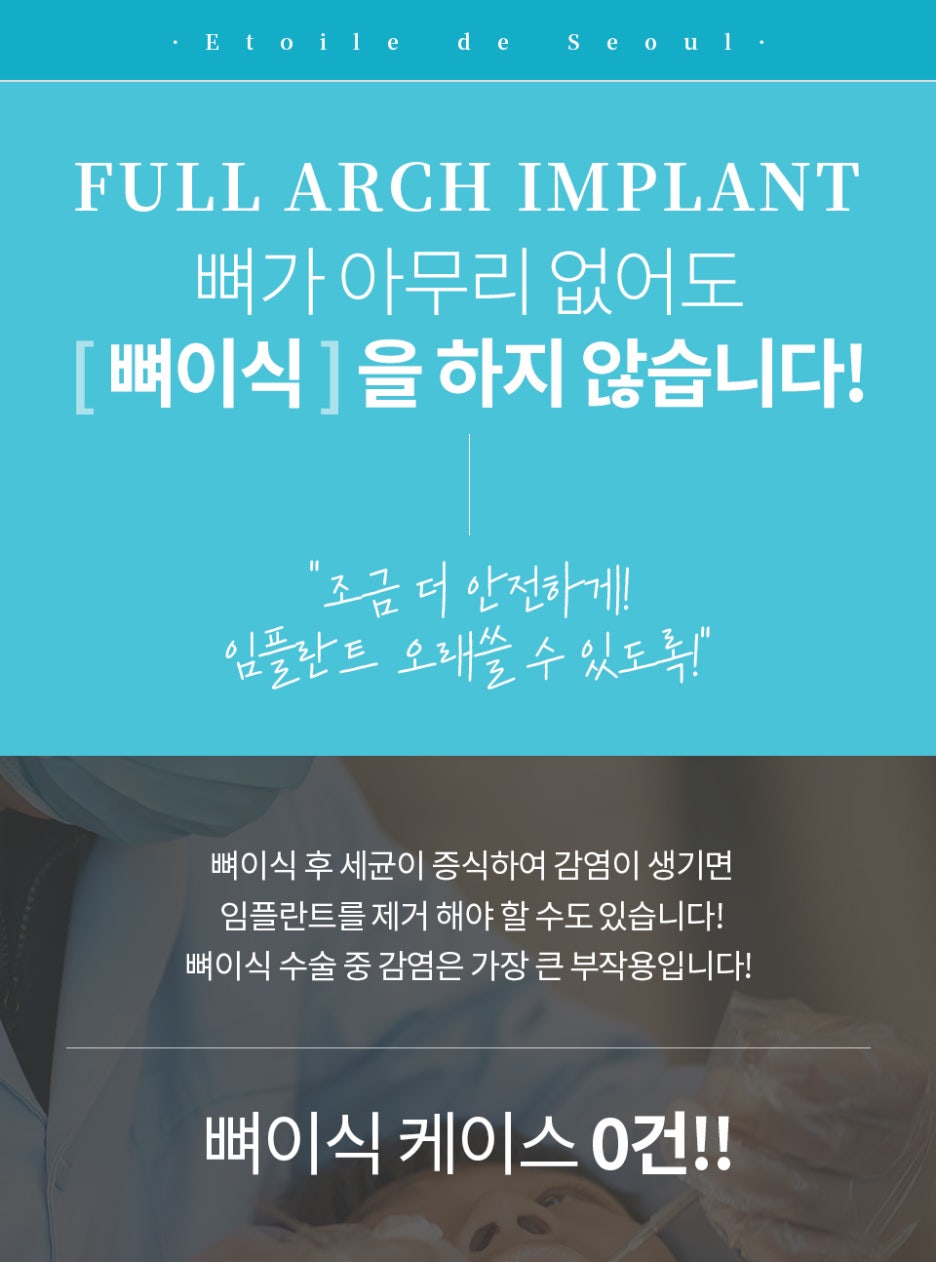
Even when there is not enough jawbone, in some cases implants can be placed at appropriate angles using a 3D CT navigation system, allowing treatment without bone grafting.
The prosthesis uses pink porcelain to finely reproduce the gum line, and zirconia material to achieve a tooth color close to that of natural teeth, so aesthetically pleasing results can also be expected.
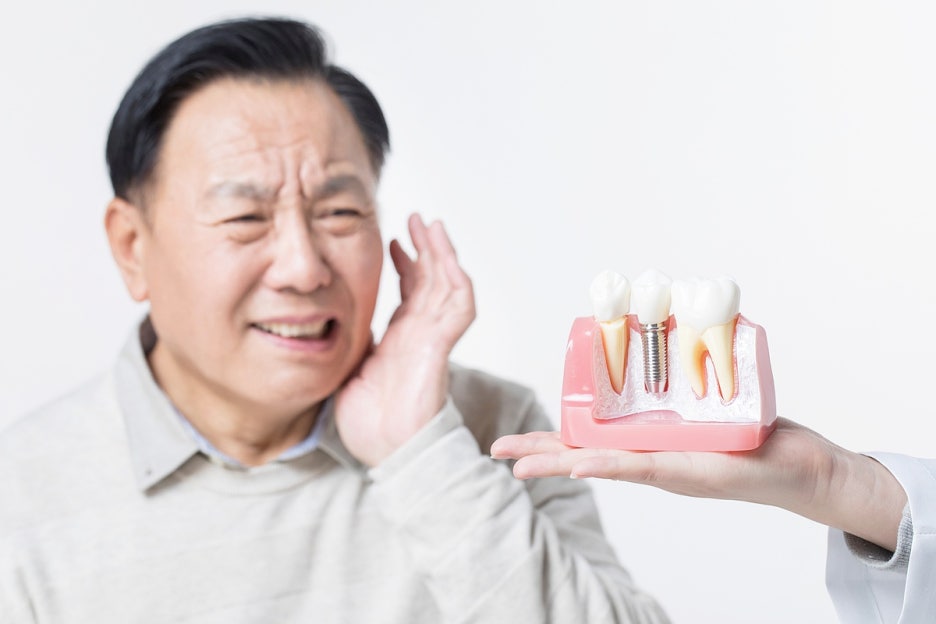
Who is this approach better suited for?
Here is a summary of who full-arch implants may be a better fit for.
People who have used dentures for a long time and experienced jawbone resorption, people who feel burdened by the cost and treatment period, people who have difficulty making multiple visits, and people who want to return to daily life with a temporary prosthesis in place early in the process may be the main candidates.
Even for older patients, treatment is often possible if overall health is appropriately maintained, and visitors with diabetes or high blood pressure should first receive a detailed examination and consultation.
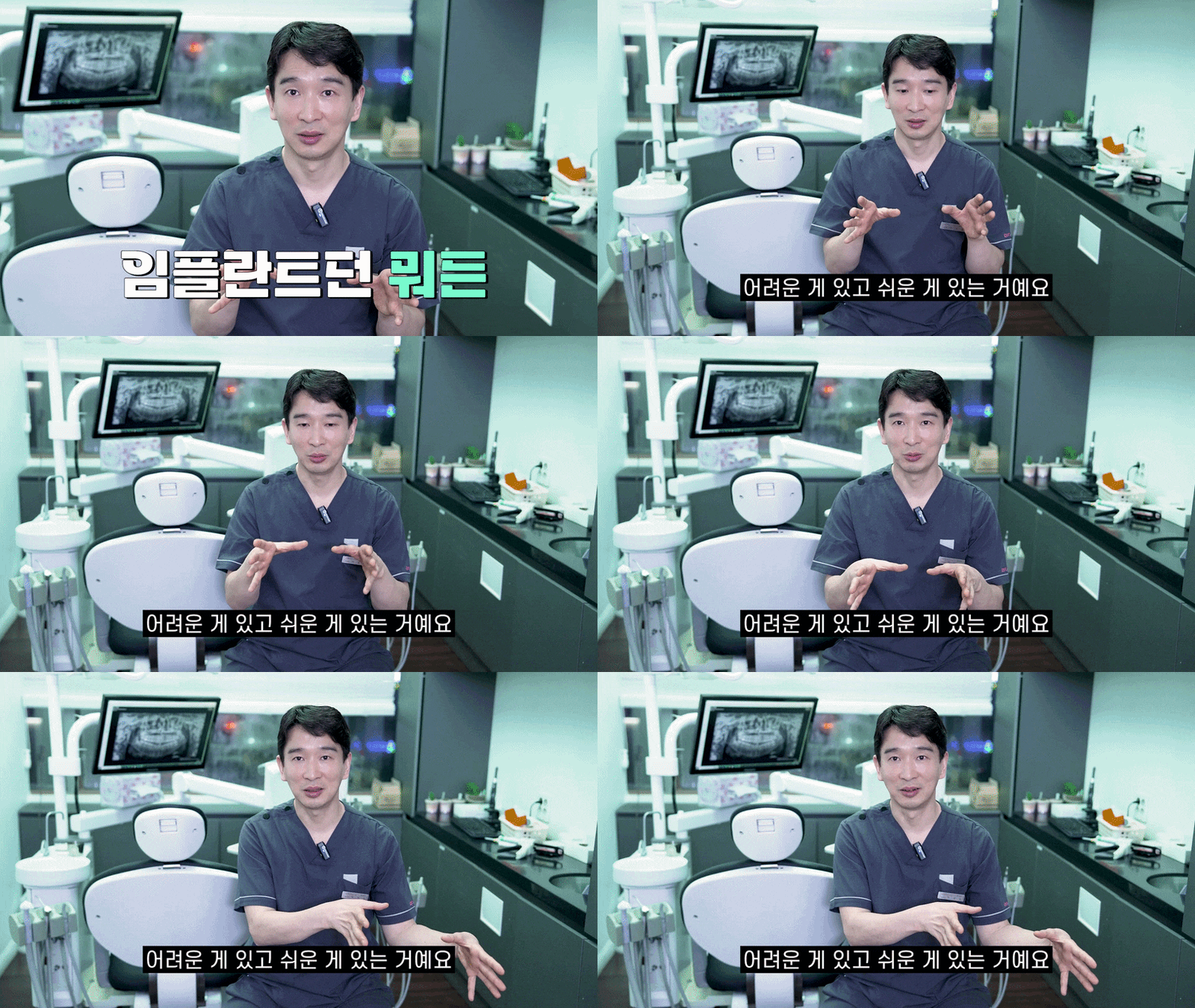
 Management after treatment, and what changes in daily life
Full-arch implants are fixed prostheses in the mouth, so you can care for them just as you would natural teeth.
It is important to maintain proper brushing habits consistently and to manage the area around the prosthesis with floss or interdental brushes. Regular checkups every six months help keep track of the gum condition around the implants and are useful for maintaining long-term stability.
During the period when the temporary prosthesis is being worn, you should avoid hard foods. After the final prosthesis is fitted, many foods can usually be eaten freely.
The difference between implant dentures is also evident in this aspect of care.
Without the need to remove them like dentures or clean and store them separately, you can expect a daily routine in which a fixed prosthesis is cared for just like natural teeth.
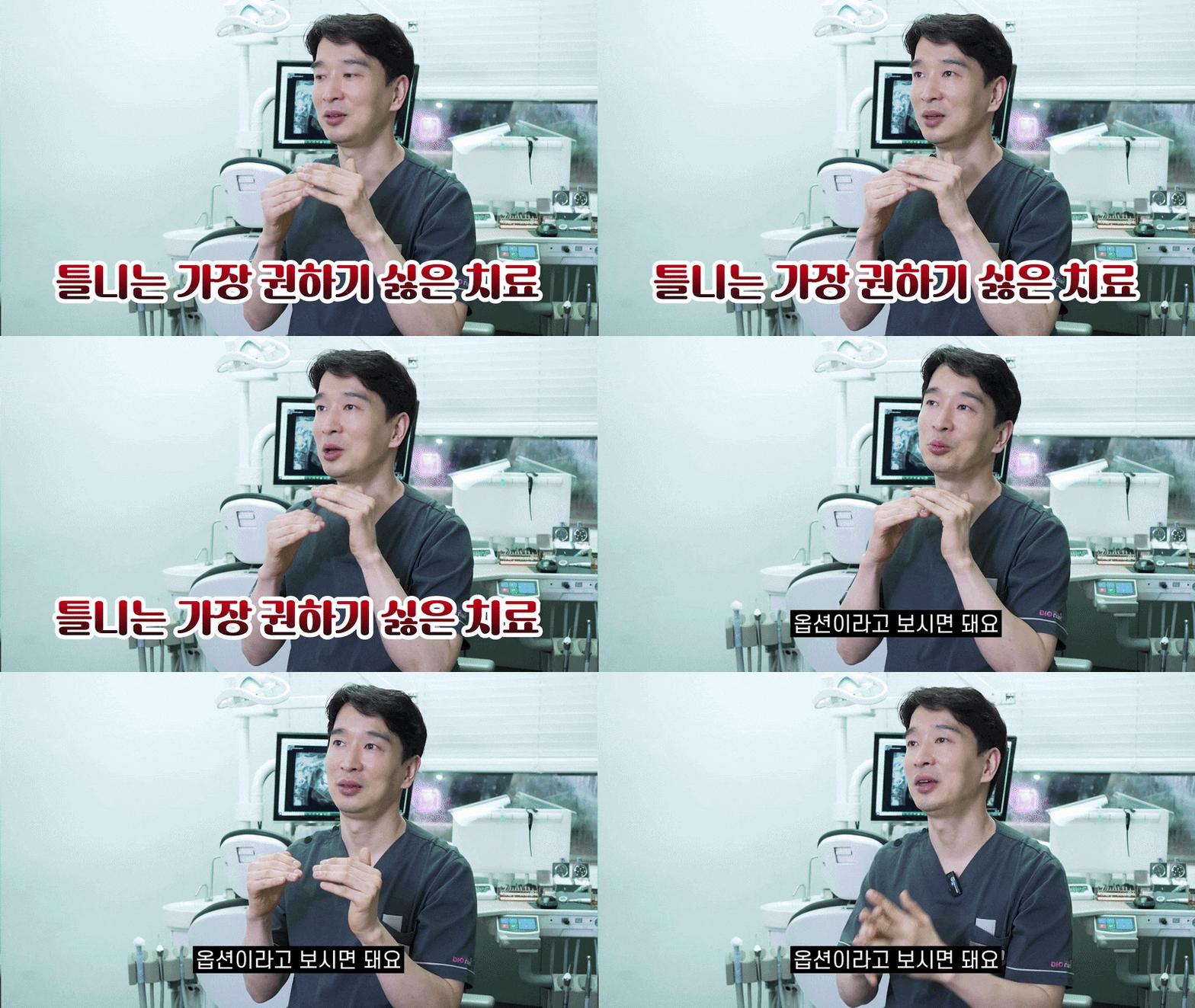
I believe that understanding the difference between implant dentures is the starting point for making the right treatment choice. Even for the same tooth loss, the condition of the jawbone, overall health, and oral structure differ from person to person, so it is best to determine which method is more suitable through a detailed examination and one-on-one consultation.
We aim to prioritize the preservation of teeth and gums and to recommend only the treatment that is truly necessary.
I hope today’s story is of some help to those who are considering their treatment options. Thank you.
 Previous image
Next image
Previous image
Next image









 Previous image
Next image
Previous image
Next image








 Previous image
Next image
Previous image
Next image