For those who are
more curious about
the time afterward
When I speak with people in the treatment room who have relied on dentures for a long time, I often find that they are more curious about the period after surgery than the surgery itself.
They often ask, “When will I be able to eat comfortably again, as I used to?”
So today, to help ease some of the uncertainty, I would like to calmly organize the stages of full-arch implant recovery, just as I explain them in the treatment room.
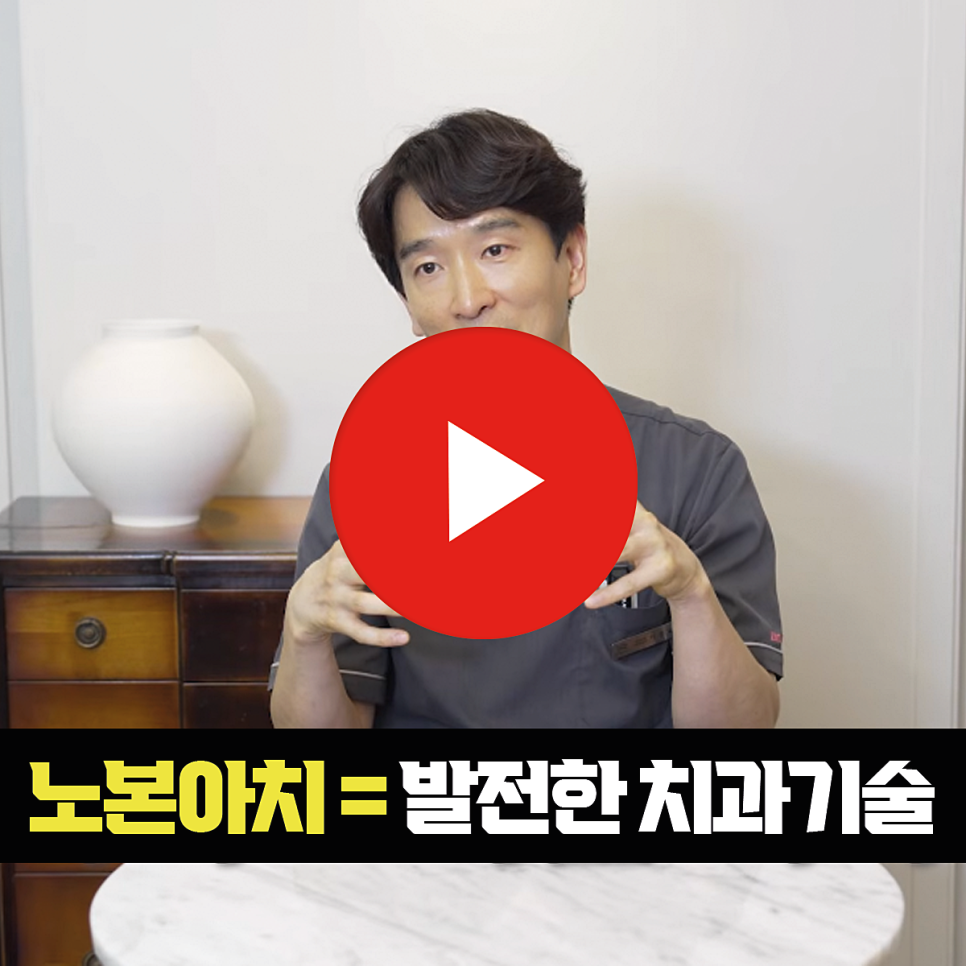
✨ Watch the Chiterior YouTube video ✨
(Click)
After undergoing a no-bone arch procedure
❗Can you return to your daily life right away?❗
When the jawbone shrinks,
the area that needs to heal also becomes larger
When an edentulous state, in which few or no teeth remain, continues for a long time, the jawbone is gradually resorbed and becomes thinner.
The roots of the teeth stimulate the jawbone and help maintain its shape. When the roots disappear, the stimulation received by the bone also disappears.
If several implants are placed over a wide area in a state where the amount and density of bone have decreased, the area where the gums need to heal also becomes larger.
This is why conventional full-mouth implants may feel as though they take a long time.
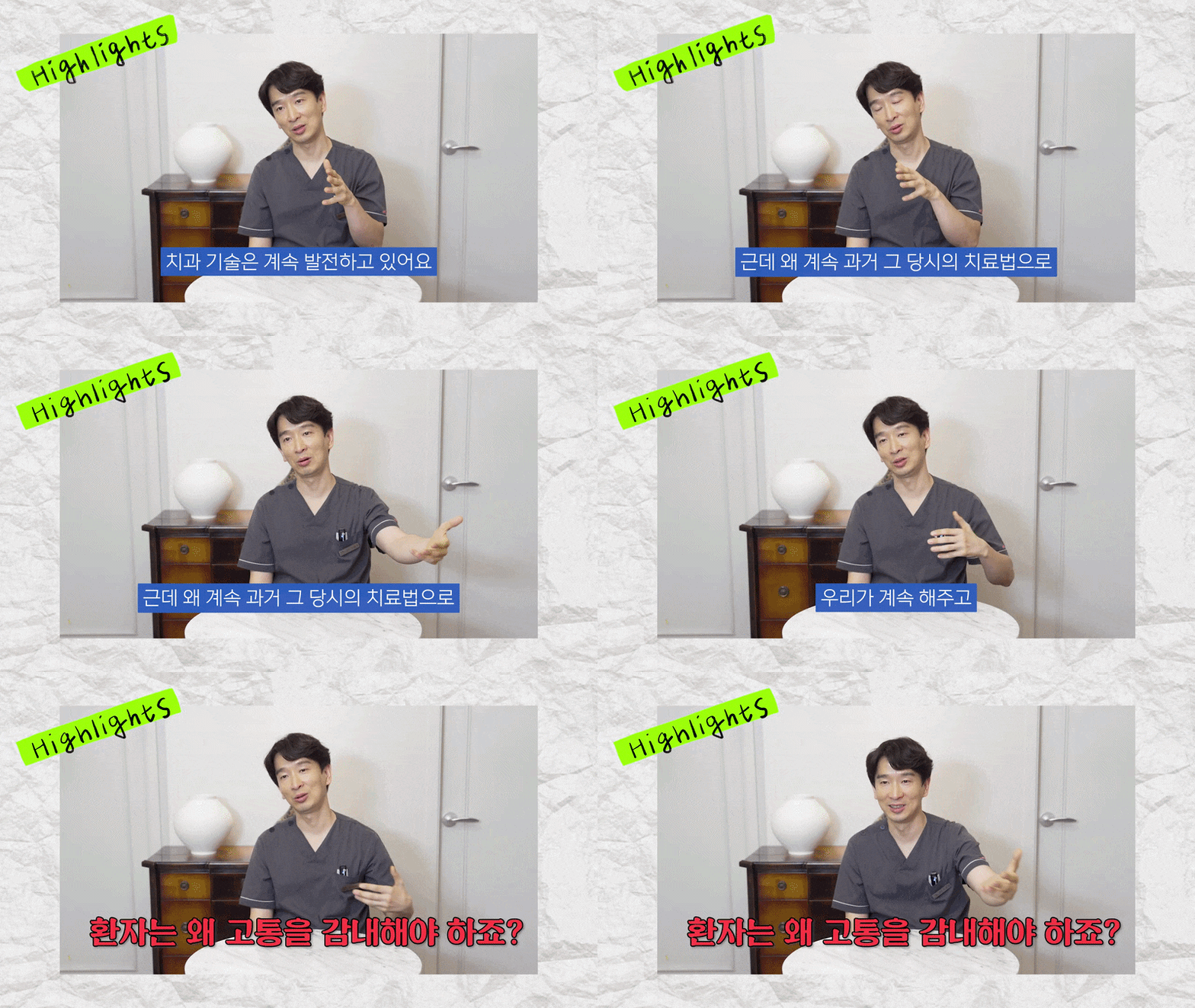
A small number of implants share the forces of chewing
Full-arch implants support the entire upper or lower jaw on one side with four to six implants.
Rather than placing an implant at every tooth position, the dentist selects areas where the bone has been relatively well preserved, places the implant posts there, and attaches a single connected prosthesis on top.
It may be easier to understand if you think of a bridge.
Just as several piers evenly support the load of an entire bridge deck, a small number of implants distribute and support the forces of chewing.
Because fewer sites are treated, the area where the gums need to heal is also smaller.
Another characteristic of this approach is that the period spent without teeth is not very long. This is why full-arch implant recovery may feel relatively shorter than recovery from full-mouth implants.

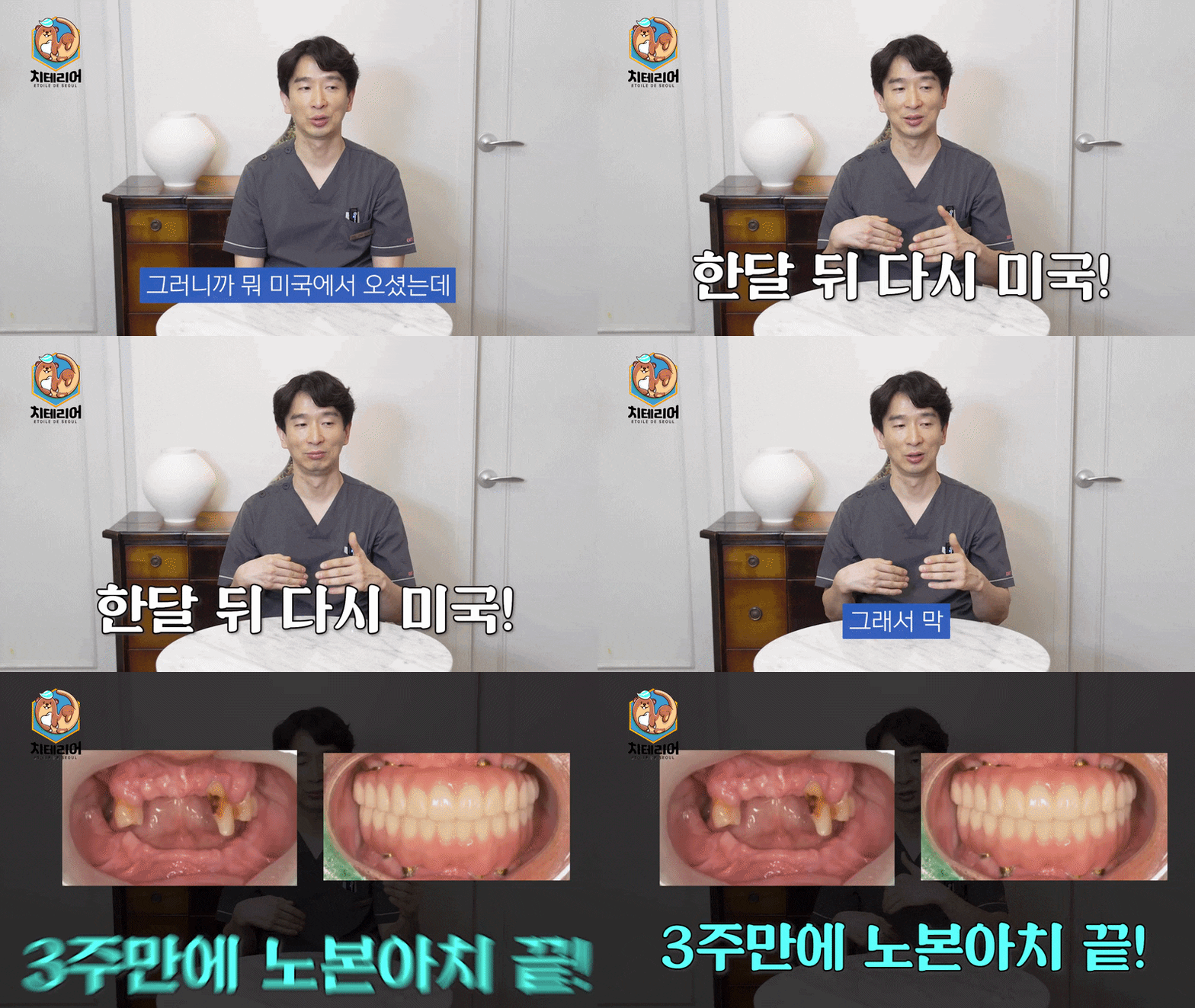
The process becomes clearer when divided into stages
Let me explain the process by dividing it into more specific stages.
After planning the implant positions in advance with a digital navigation guide and 3D CT, minimizing gum incisions can significantly reduce swelling and discomfort after surgery.
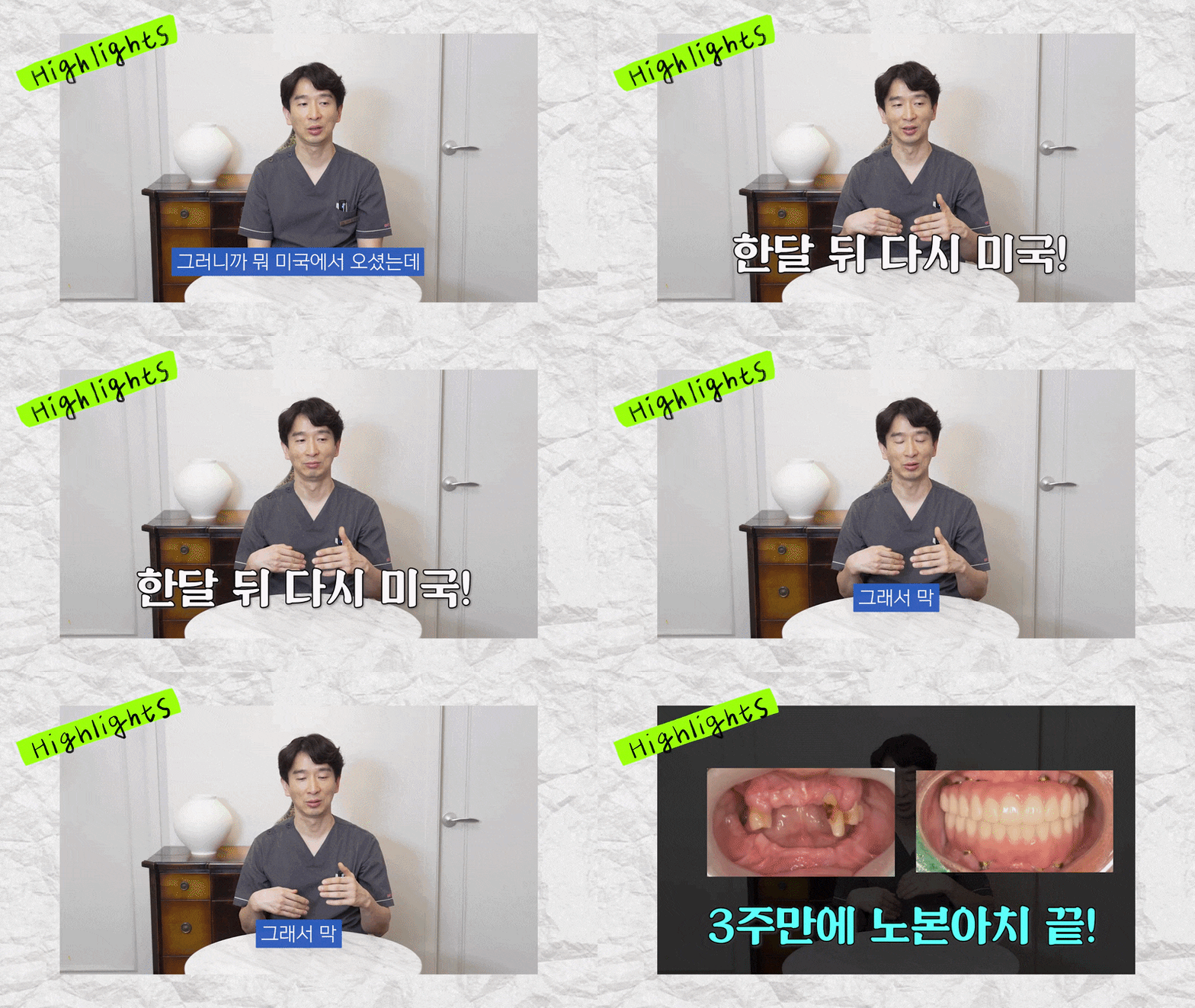
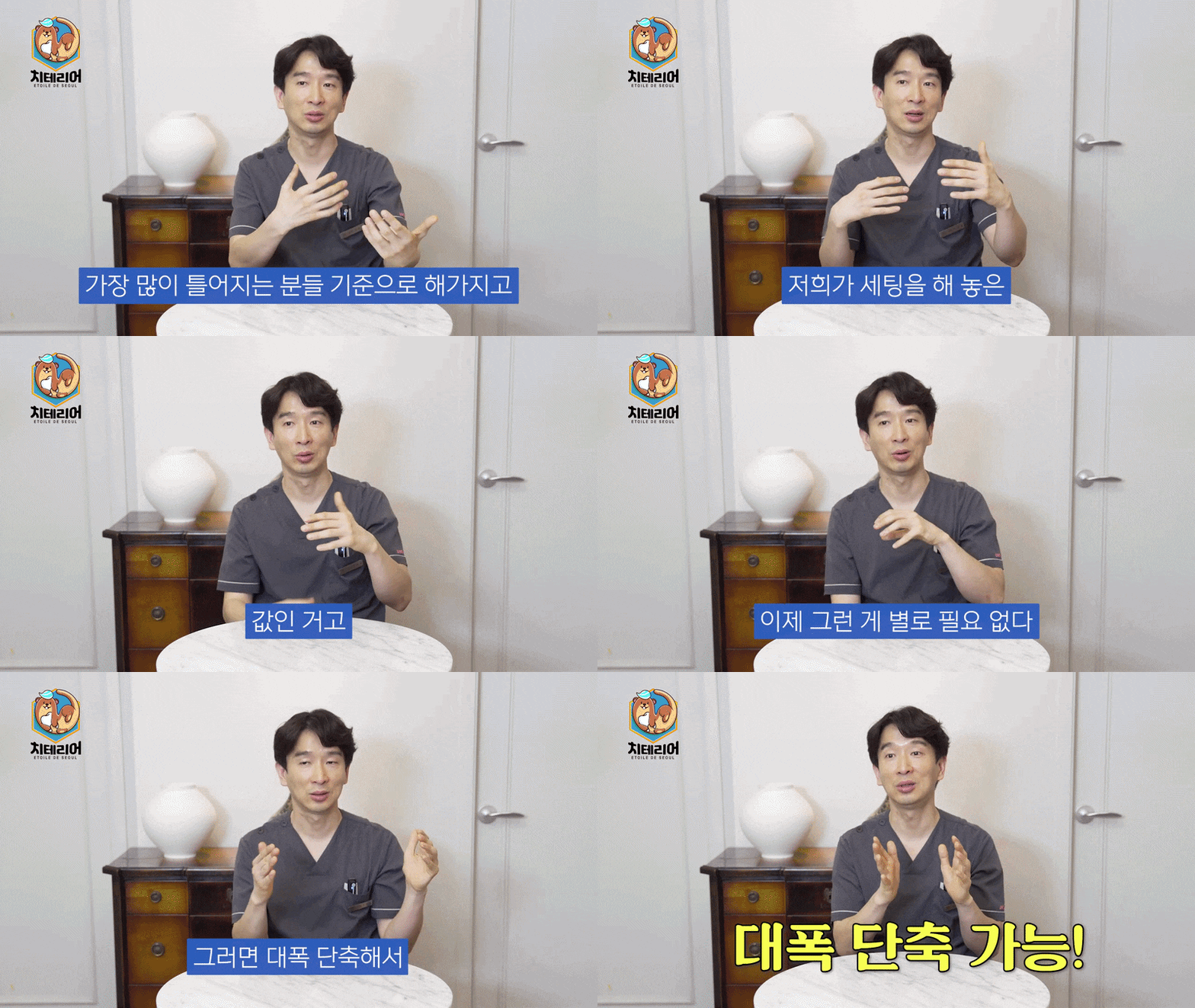
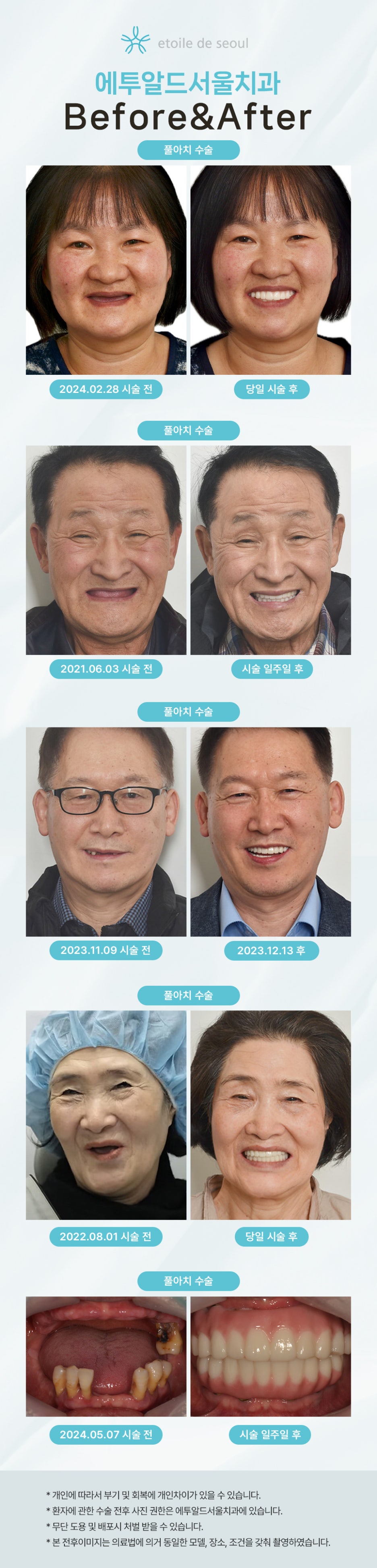
On the day of surgery, a temporary prosthesis is often placed, allowing recovery to the point where light meals are possible.
Afterward, the gums heal and the swelling subsides over approximately two weeks. During this period, it is advisable to eat mainly porridge or soft foods.
Once the implants have gone through the process of becoming firmly anchored in the jawbone, the final prosthesis is generally completed in around 30 days.
However, this is only an average progression for full-arch implant recovery. The timeline varies from person to person depending on the condition of the jawbone and overall health.

The speed of recovery ultimately depends on care afterward.
Even when surgery is completed successfully, the outcome can vary depending on how you spend the period afterward.
While wearing the temporary prosthesis, avoid hard or chewy foods. We also recommend temporarily stopping habits that can interfere with gum healing, such as using a straw or smoking.
Brush with a soft toothbrush without irritating the area, and be sure to take the prescribed medication and use the mouthwash as directed.
Even after the final prosthesis is placed, brushing every day and using dental floss can help maintain its function for a long time.
Above all, regular checkups every six months allow the condition of the gums around the implants to be examined in advance.
This care serves as a strong foundation for preserving the results even after completing the full-arch implant recovery period.
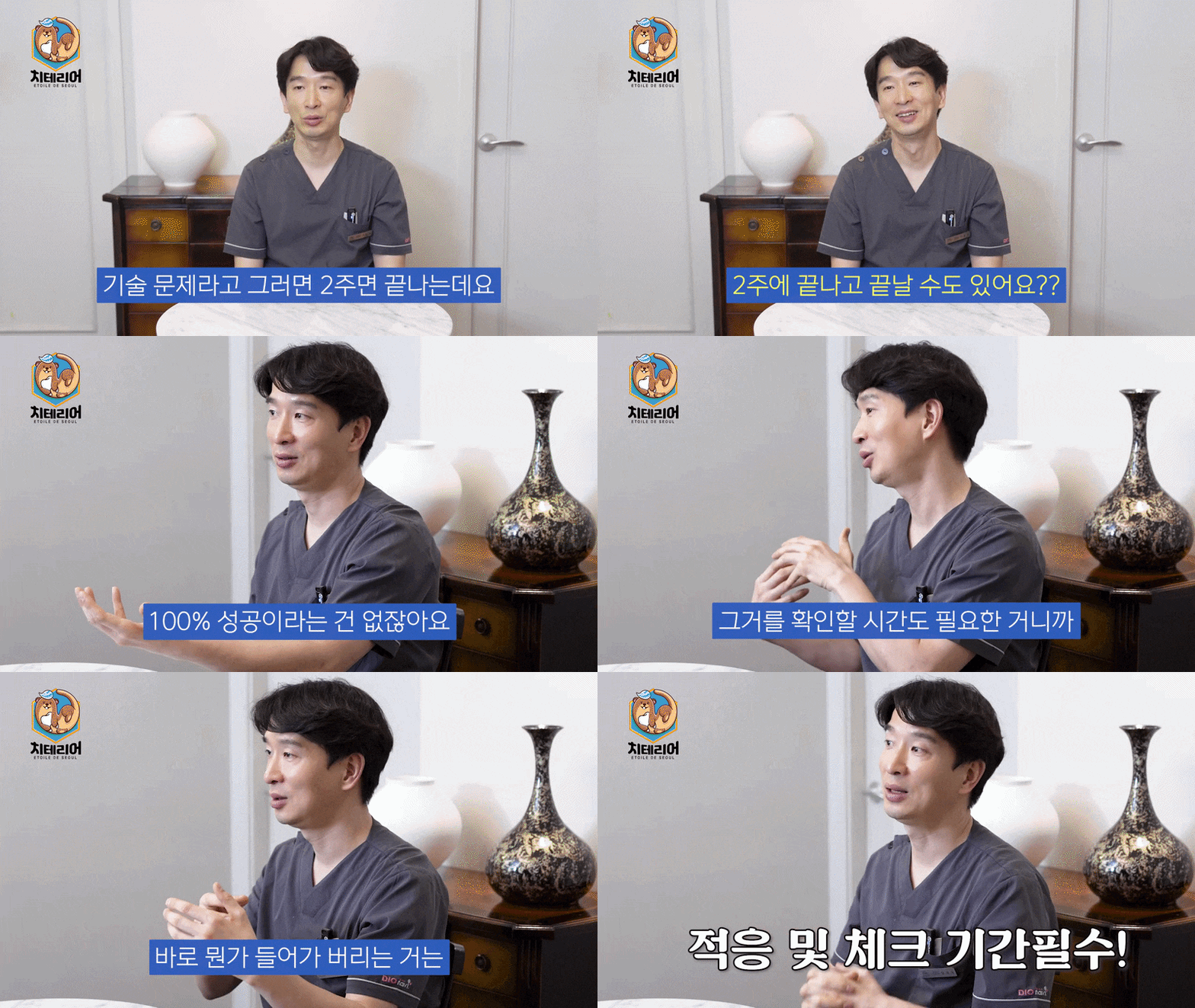
The conditions differ from person to person, even with the same edentulous state
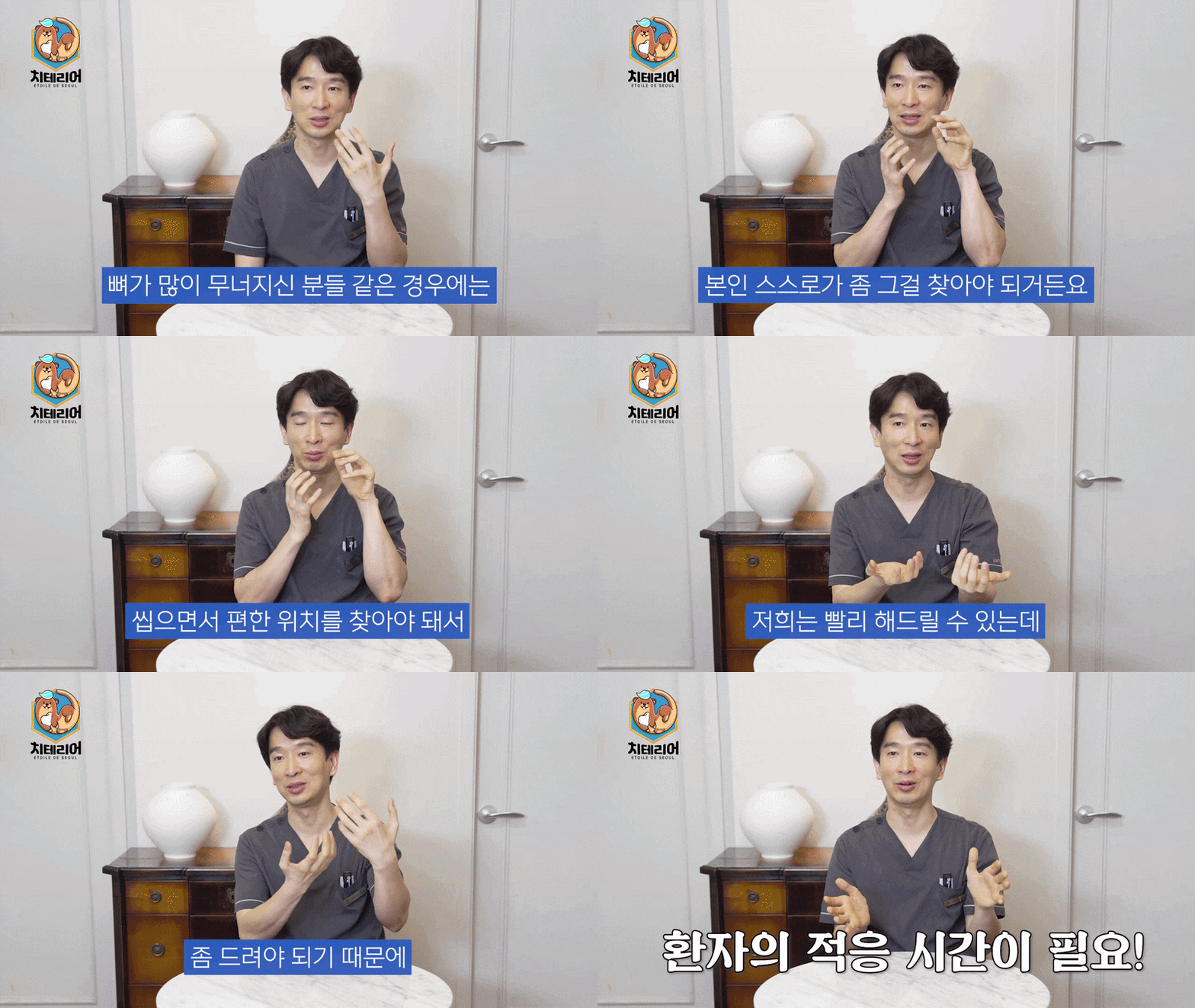
Even among people with the same edentulous condition, the amount of remaining jawbone, usual bite habits, and overall health differ from person to person.
Therefore, it is difficult to determine the course of recovery based on a single average figure found online.
I always begin treatment by preserving as much of the remaining jawbone as possible and first examining the balance of how the upper and lower jaws come together.
This is because I believe that personally examining each patient’s oral condition and creating a plan suited to that individual should come before focusing on expensive equipment.
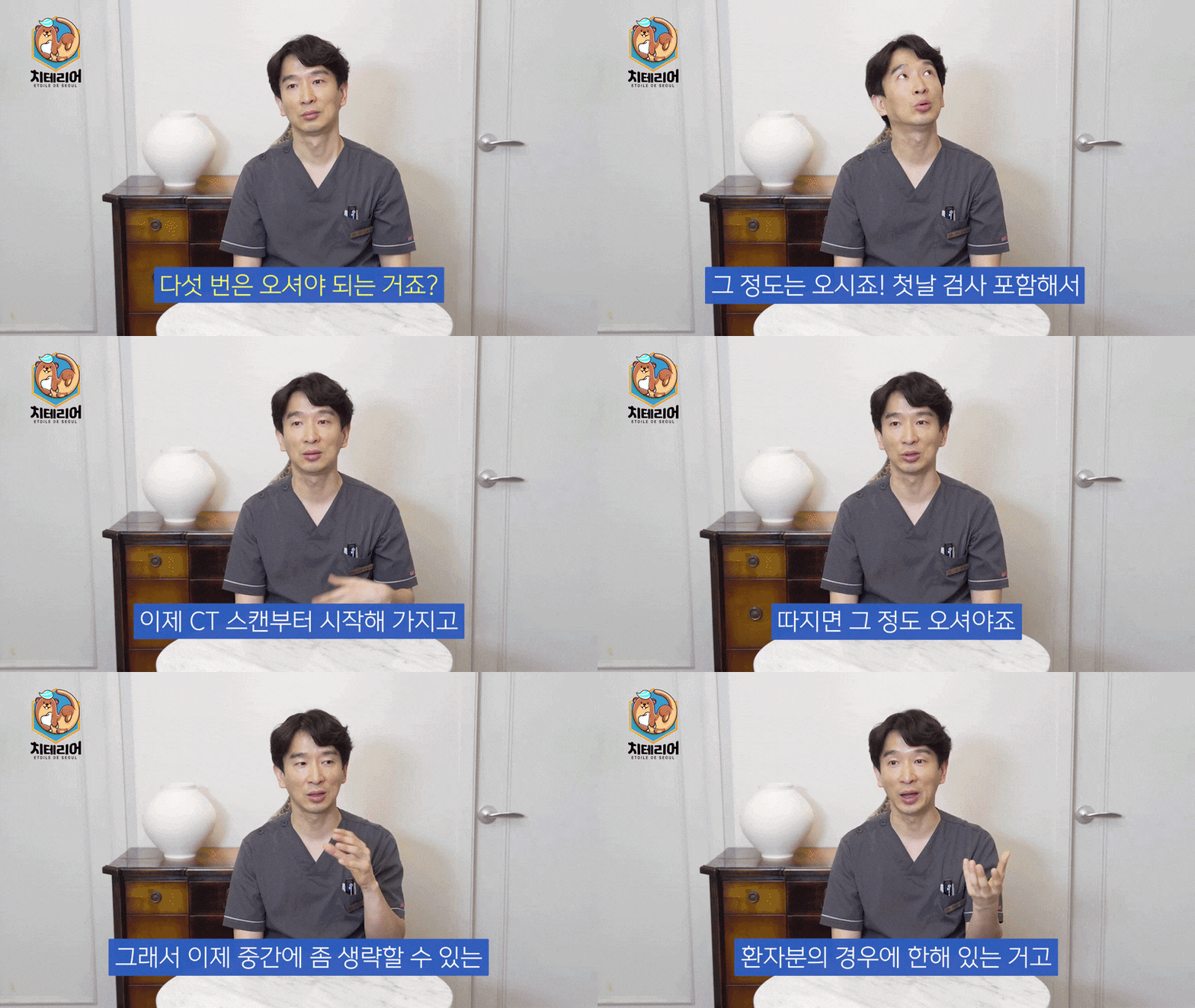
Check your current condition before making a decision
In summary, the full-arch implant recovery period is determined by the combination of the stage-by-stage process, care afterward, and each person’s individual oral condition.
If you are hesitant about treatment, rather than rushing into a decision, we recommend starting by accurately learning about the current condition of your own mouth.
A decision made based on accurate information is the most reliable starting point.
I sincerely wish you a healthy smile today and always.













Previous image
Next image









Previous image
Next image