Full-arch implants,
Misconceptions and truths
about pain
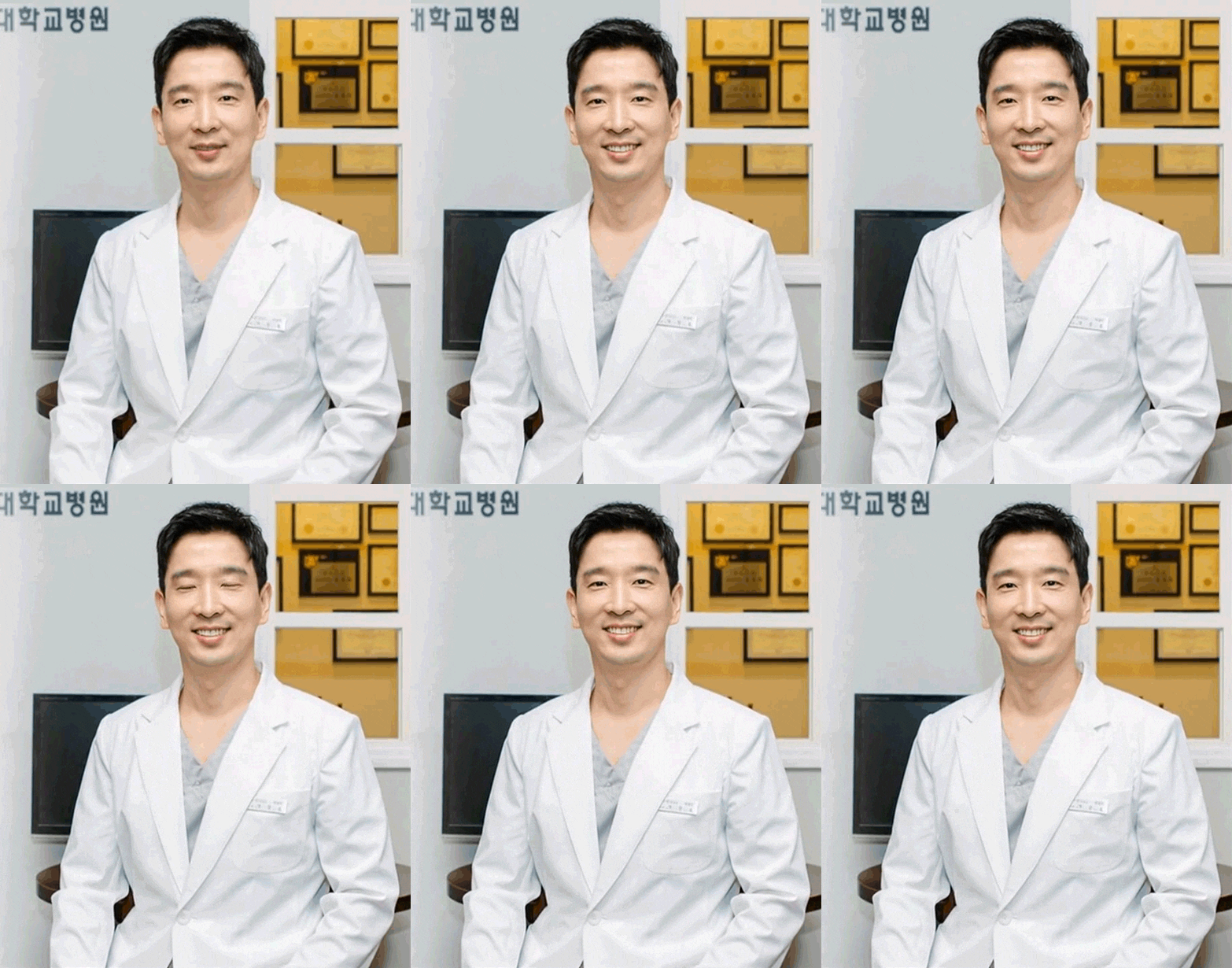
After graduating from Seoul National University Graduate School of Dentistry, I have spent more than 20 years working in the clinic. I am a dentist who has repeatedly worked with patients to consider full-arch implant surgery, which many people consider a particularly challenging procedure.
If you are quietly reading this post today, I imagine that one part of your heart may feel quite heavy.
The tooth spaces that have been empty for a long time, dentures that keep slipping, and the frustration of lying awake at night, groaning, “My gums and teeth hurt so much.”
In the clinic, I often hear people say, “I thought implants would last a lifetime once I had them, but they hurt and are so uncomfortable that I can’t stand it.” At the center of these concerns is often the thought, “What if it hurts again?”
Many people have put off making a decision for a long time because they are worried about full-arch implant pain. So today, I would like to explain slowly the five things that may help you feel more at ease if you know them before deciding on treatment.
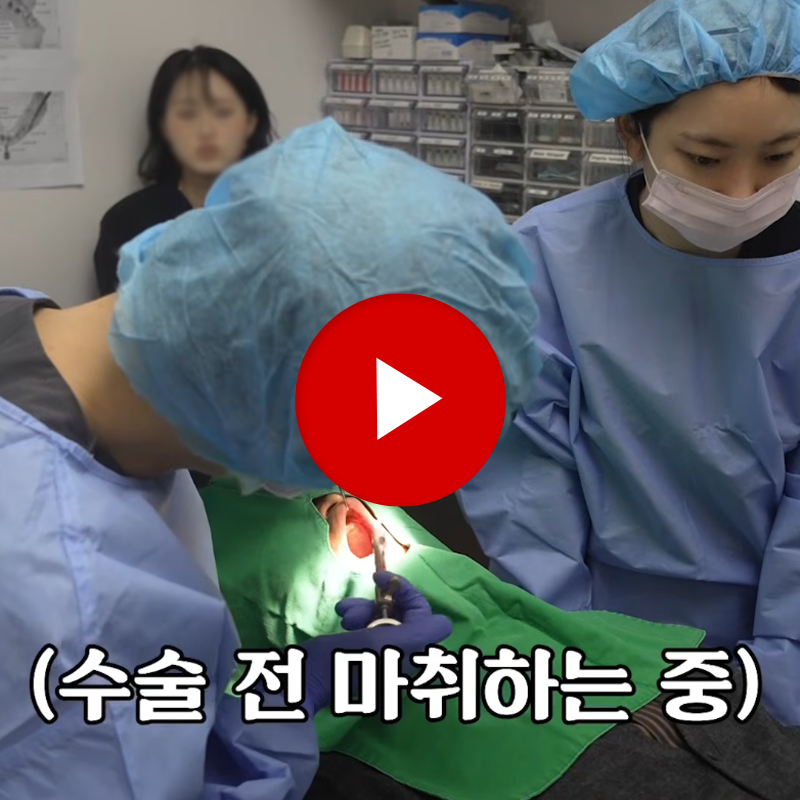
✨ Watch the Chiterior YouTube video ✨
(Click)
❗Full video covering the full-arch implant process from start to finish!❗
First, what exactly is
a full-arch implant procedure?
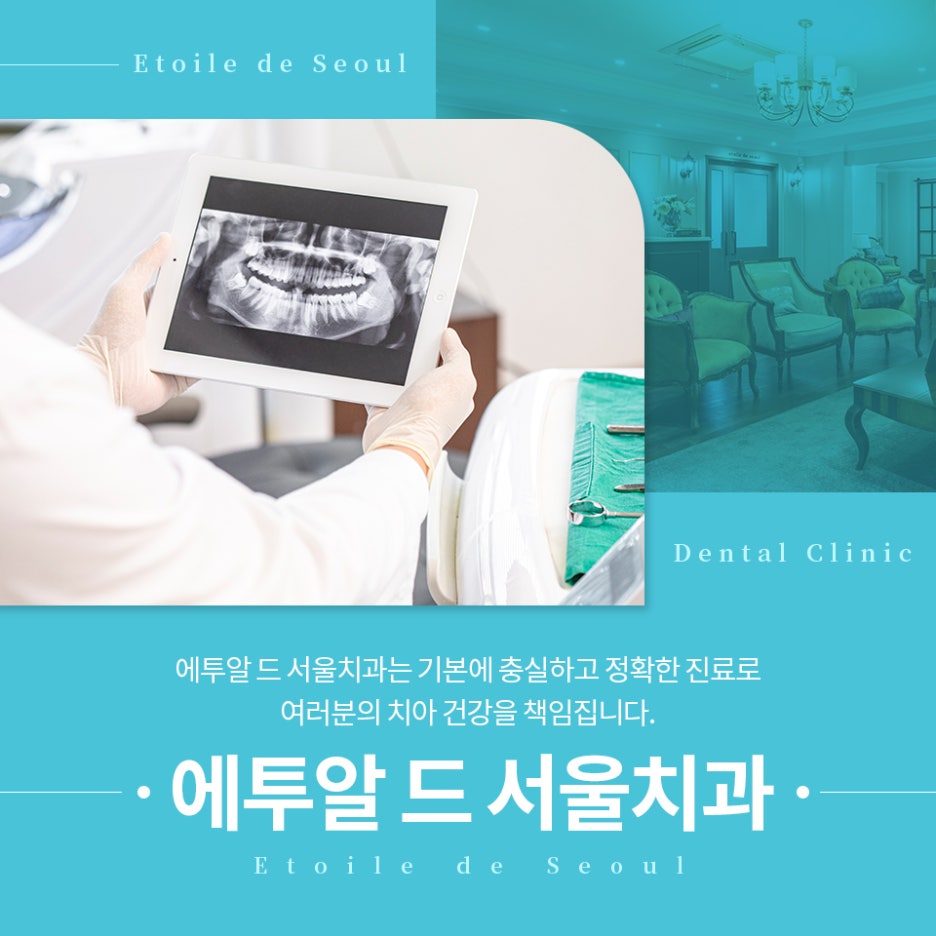
People who have lost several teeth or almost all of their teeth are described as edentulous.
In the past, many people in this situation relied on dentures, but they may have felt uncomfortable because their gums were pressed and the dentures became loose whenever they ate.
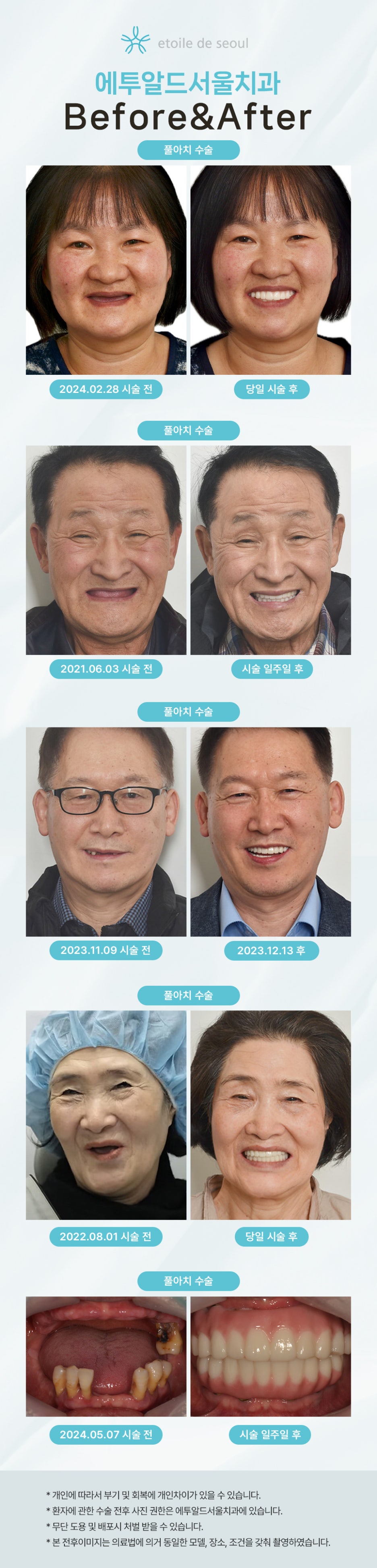
This is a fixed method that firmly supports one entire arch—that is, the entire upper or lower jaw—with approximately four to six supporting posts.
Instead of densely driving posts into the entire area of soft ground, it may be easier to understand if you picture selecting several points with the firmest foundation, positioning the posts at precise angles, and having them support the entire roof.
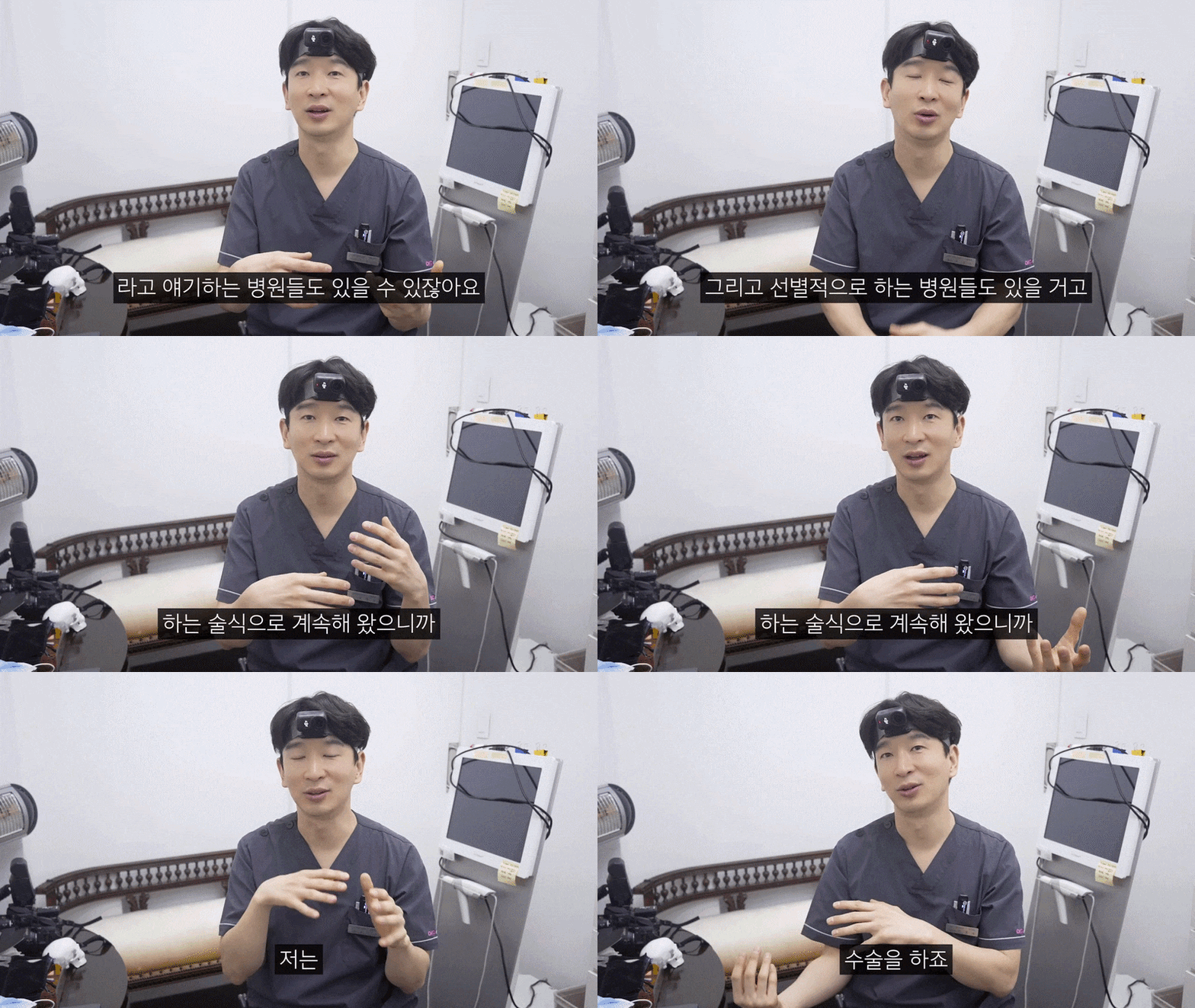
Second, what many people were actually afraid of
was “bone grafting”
After a tooth is lost, the alveolar bone at that site gradually decreases over time.
As the role of the tooth root, which gently stimulated the bone, disappears, the bone becomes lower in width and height, much like ground slowly sinking after a supporting post has been removed.
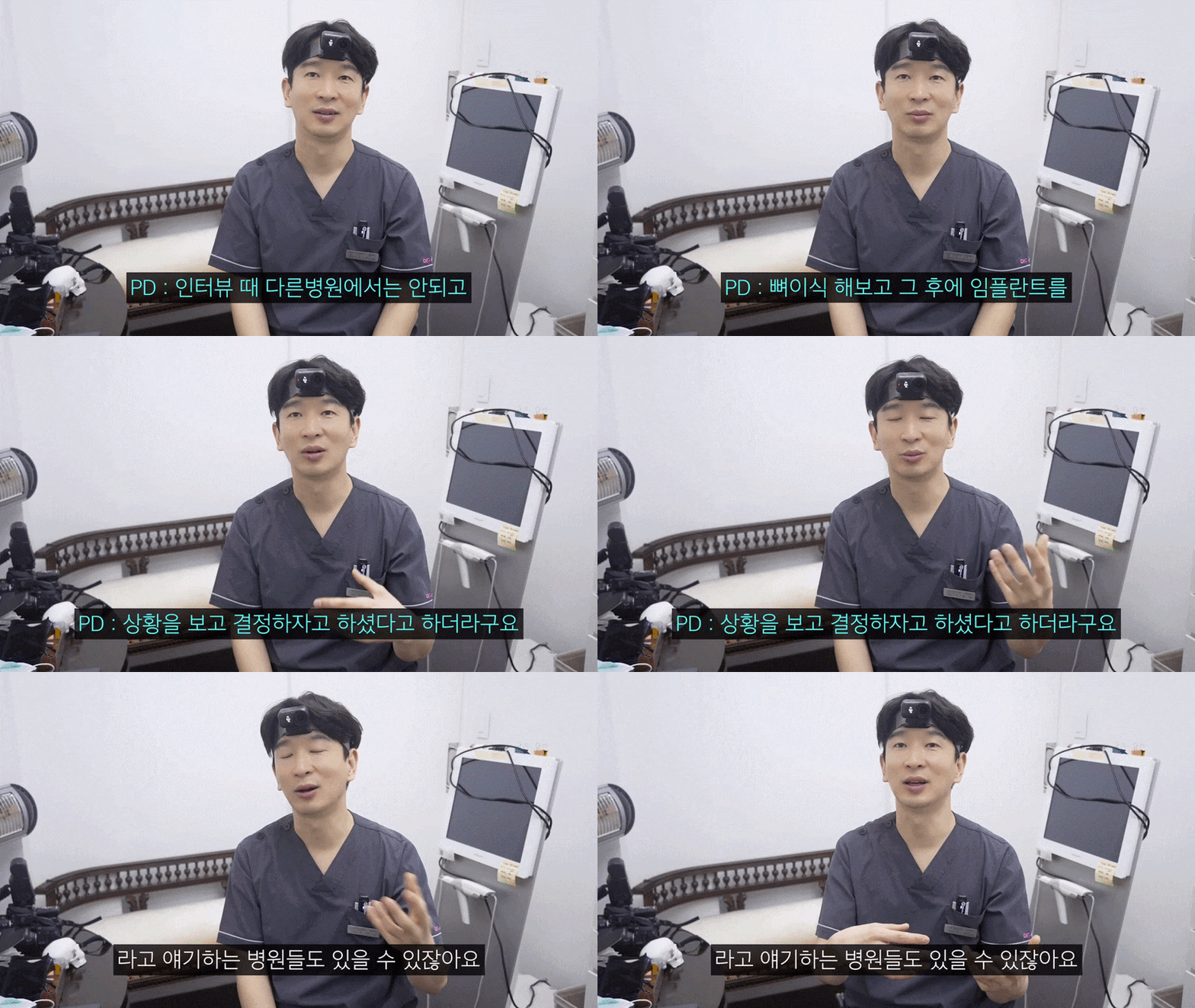
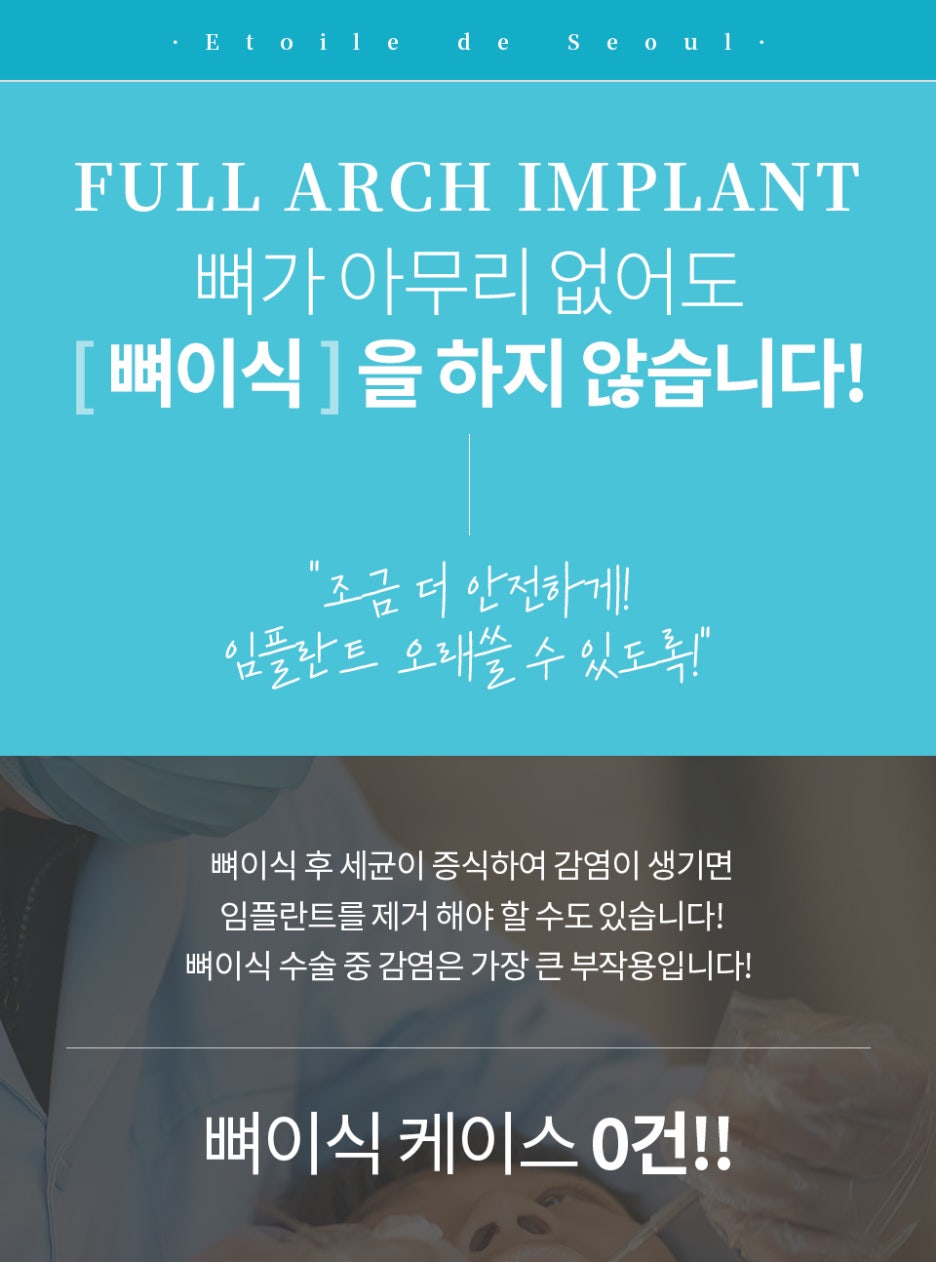
In the past, when there was not enough bone, bone grafting had to be performed first. Many people turned away when they heard the words “bone grafting.”
In many cases, concerns about full-arch implant pain also stem from a vague sense of unease about this bone-grafting process.
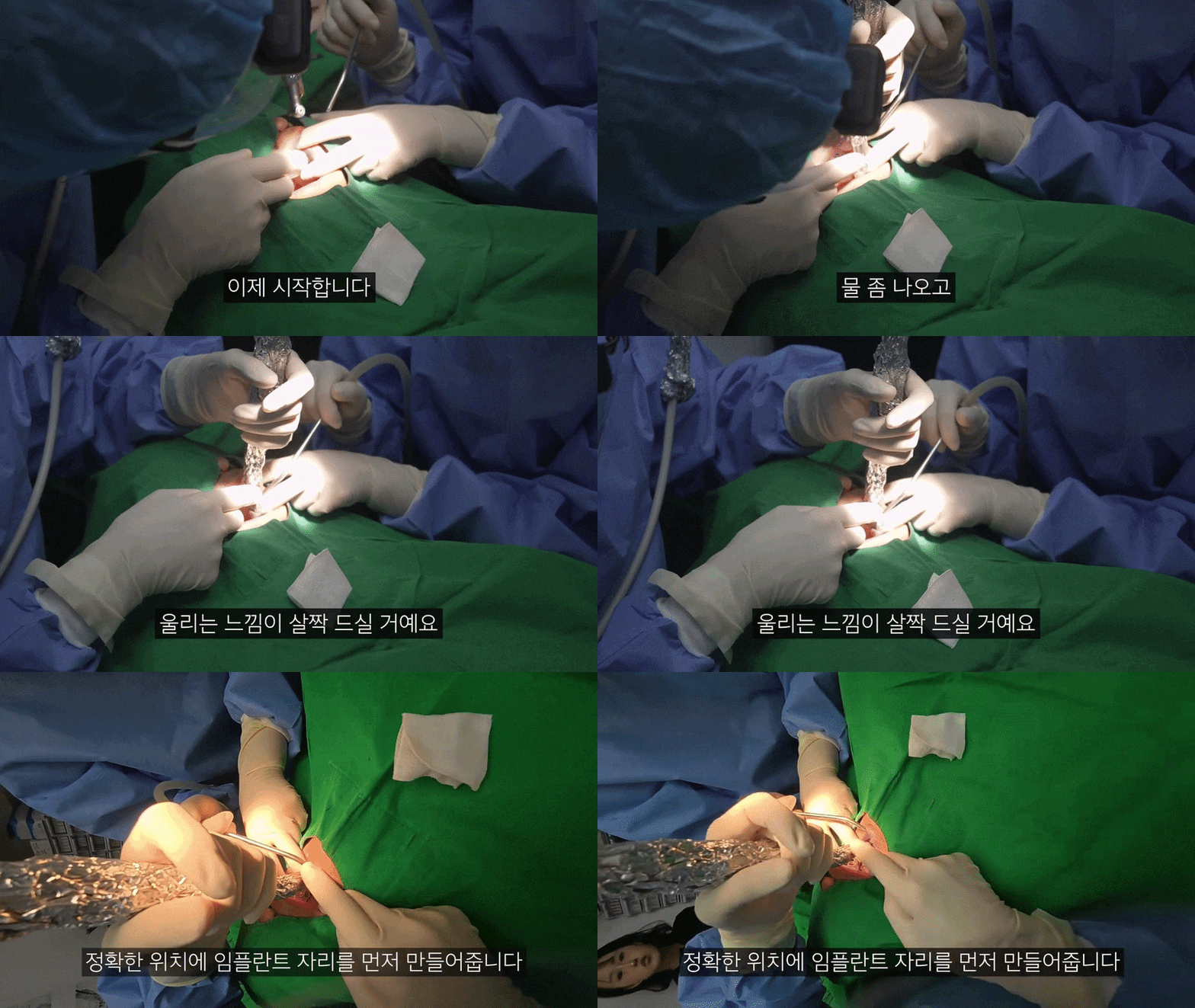
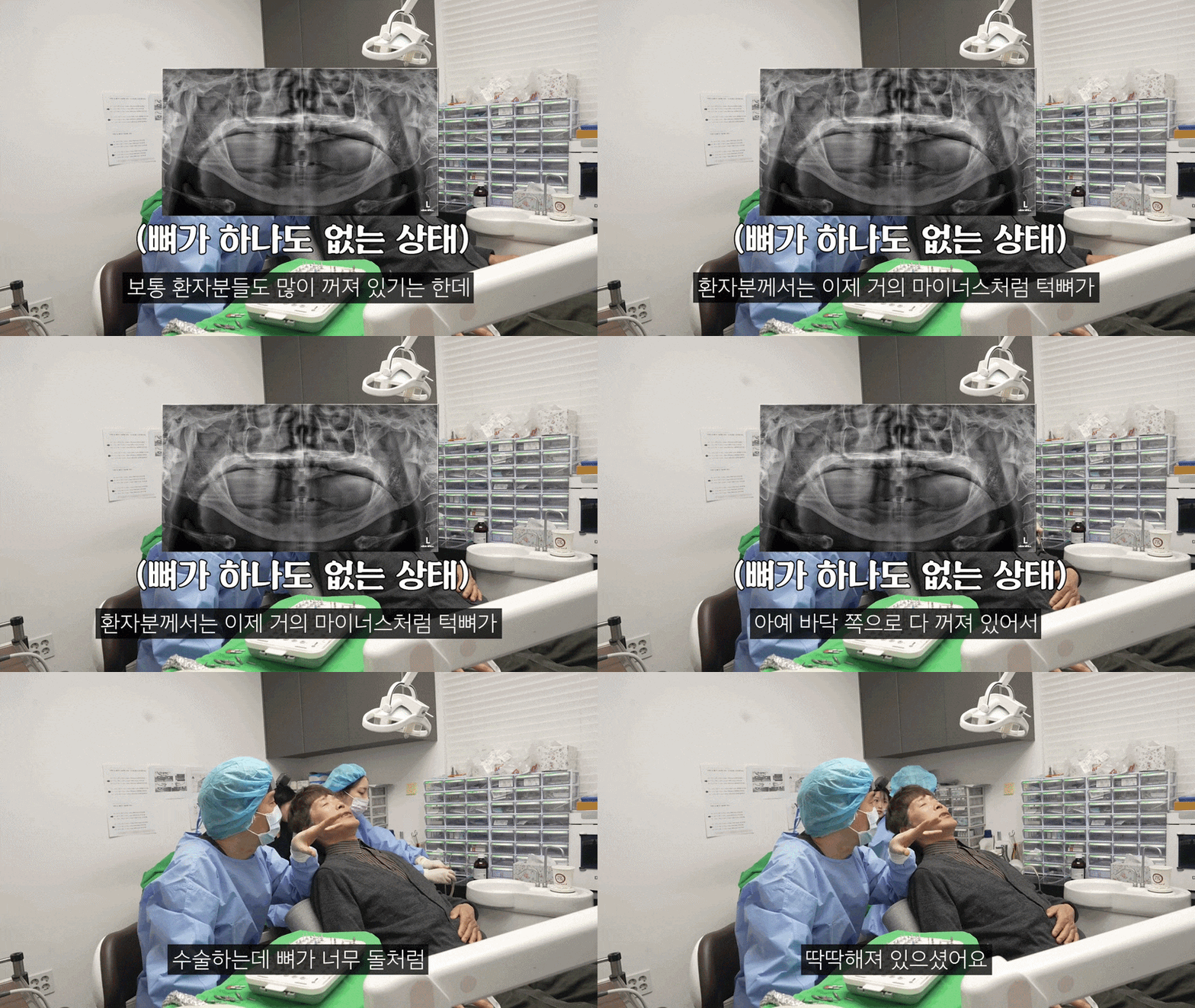
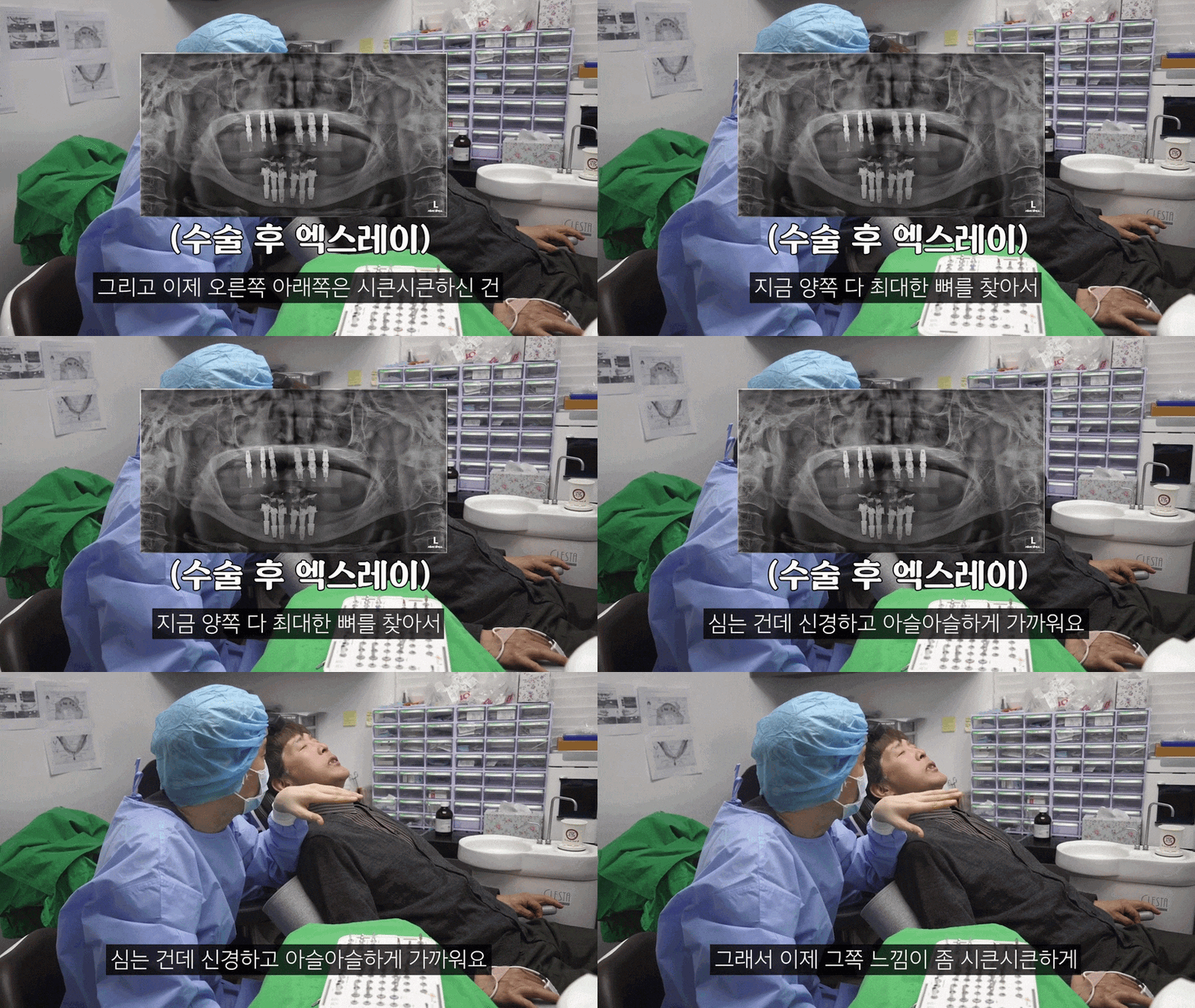
I would first like to point out that, by using the remaining strong bone and placing the posts at an angle, many cases can proceed without the need to fill in the bone.
Third, we examine what cannot be seen
before beginning
The part I devote the greatest care to is preoperative diagnosis using 3D CT.
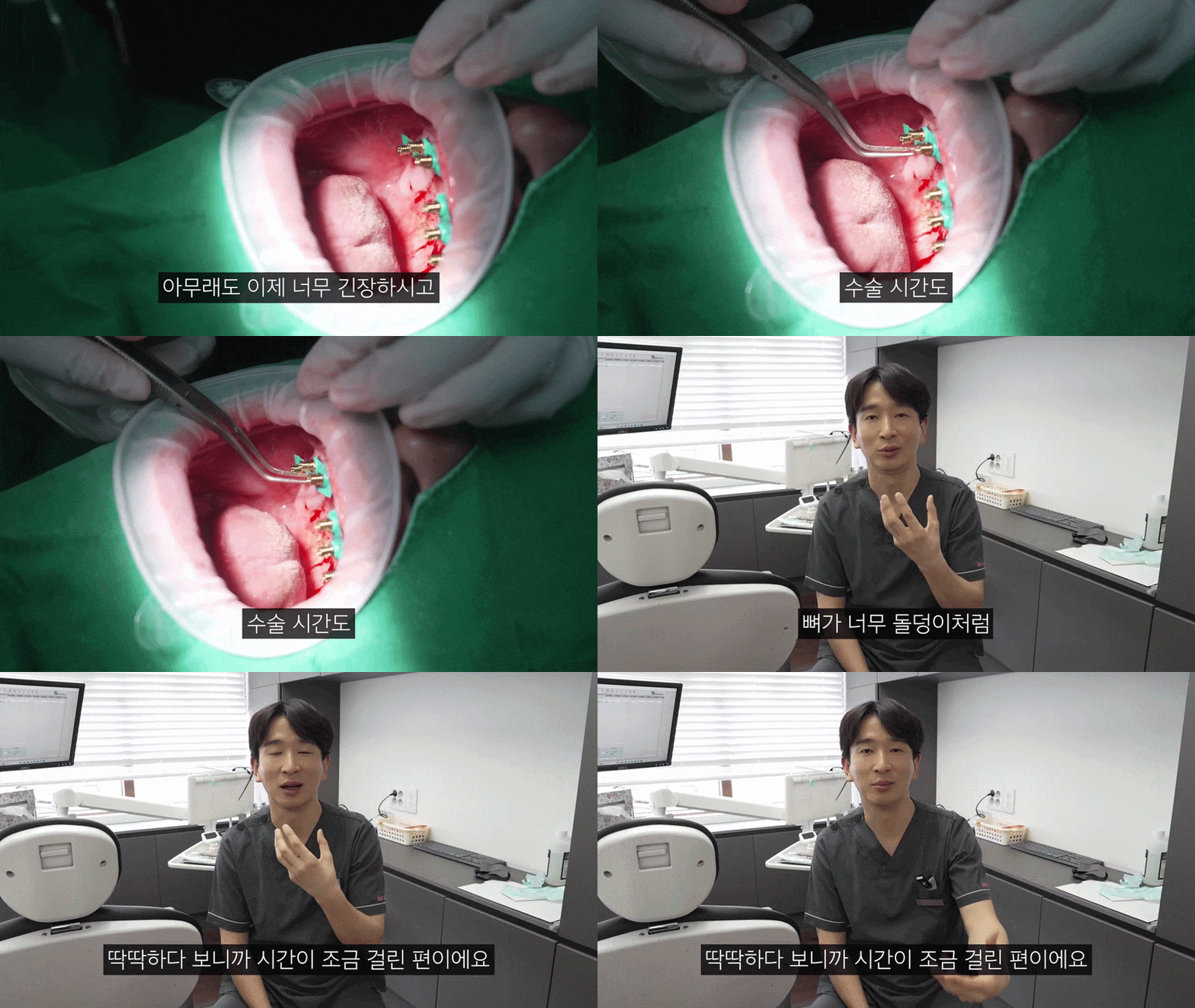
Based on the scans, we perform a simulated operation in a computer beforehand and design, one by one, the position and angle at which the implants will be placed while avoiding the nerves and blood vessels.
With the help of equipment such as the DIO Navi Guide, we can examine an unfamiliar route on a map before setting out, reducing the incision and surgical area and placing the implants in the planned locations.
When the surgical area is smaller, the discomfort experienced during recovery tends to be reduced accordingly, so we plan the procedure in a way that can lessen the burden of full-arch implant pain as much as possible.
Fourth, you do not have to spend time without teeth
on the day of surgery
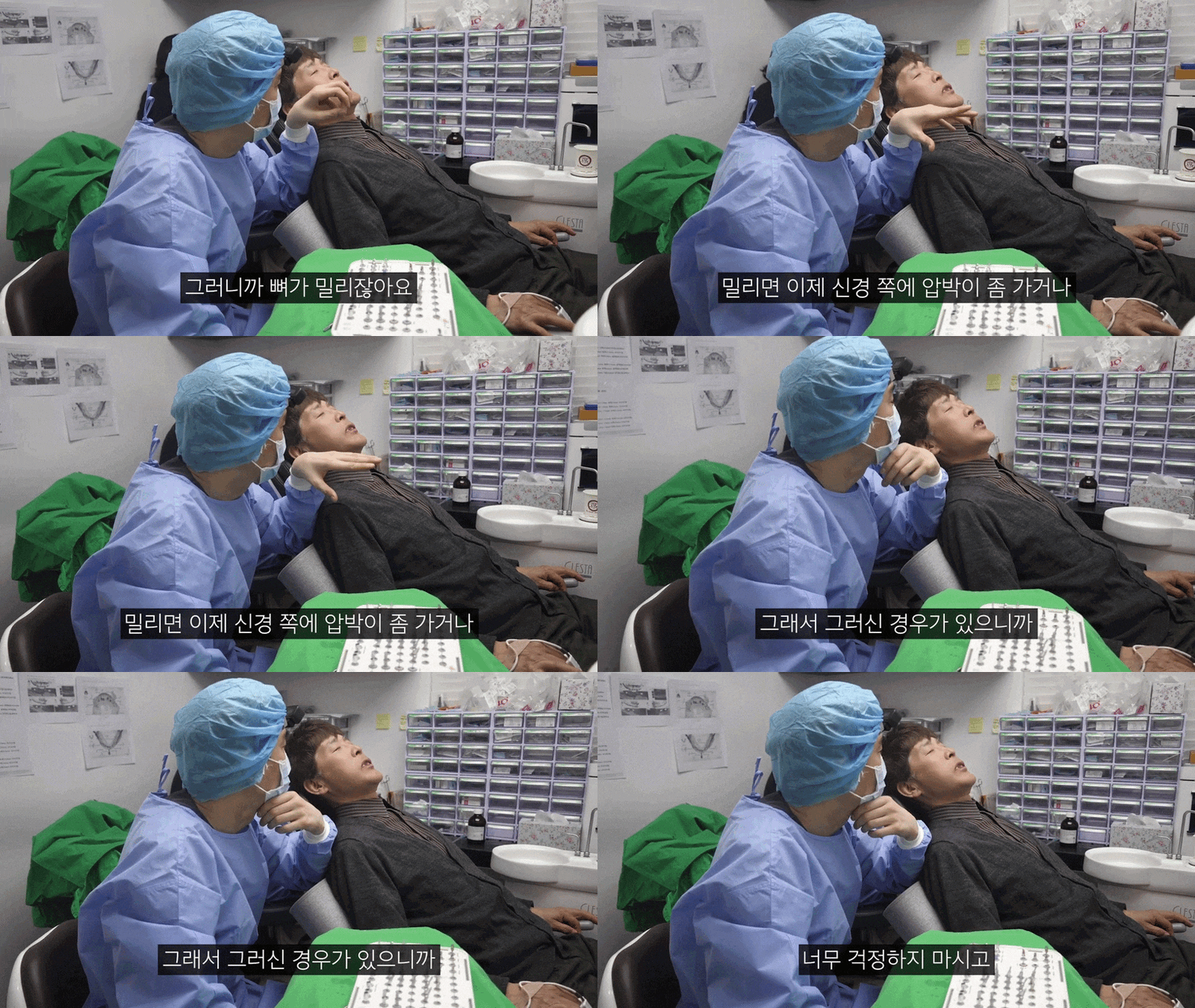
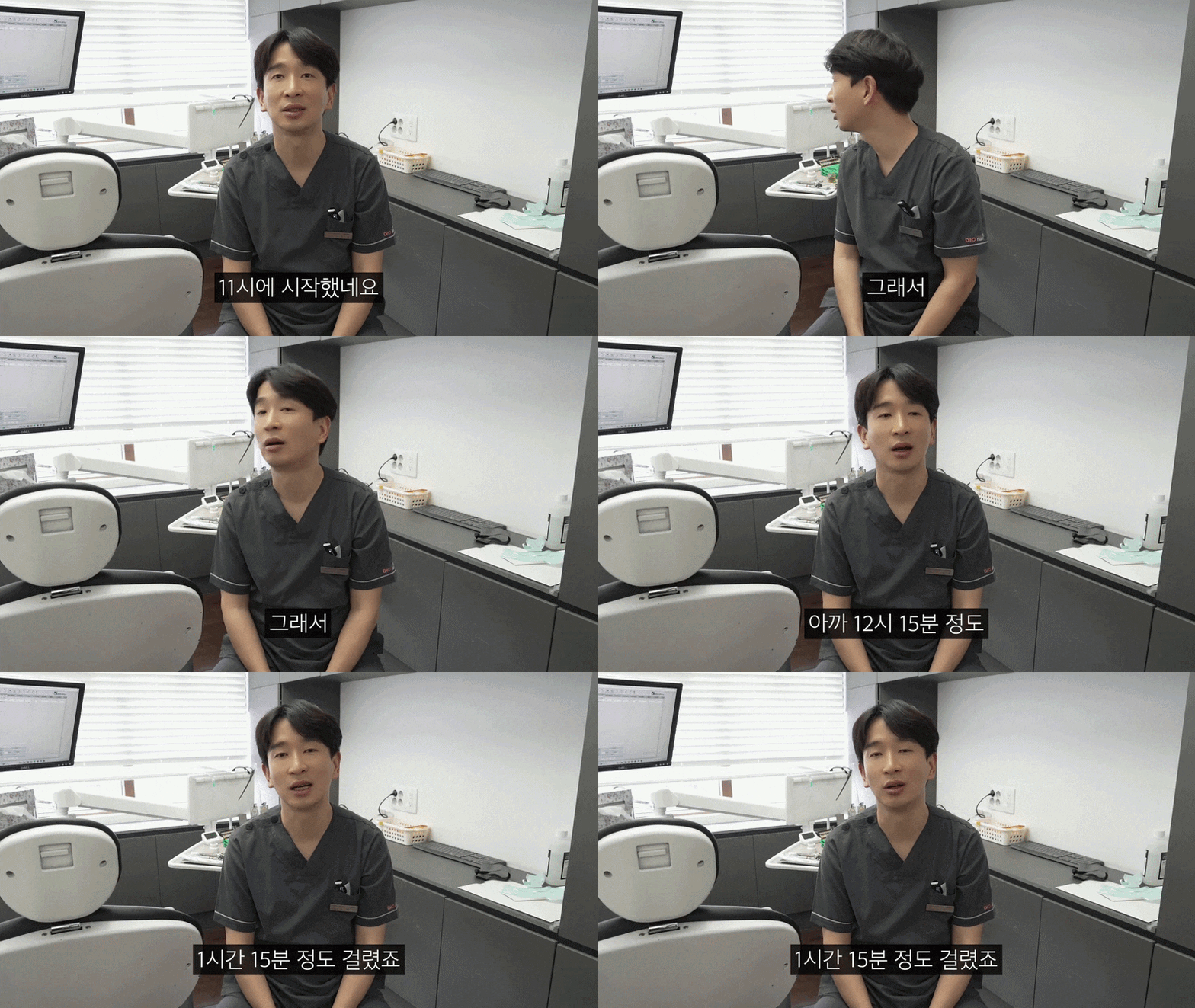
In many cases, temporary prosthetic teeth are placed on the same day that four to six supporting posts are inserted.
This reduces the amount of time you have to spend with an empty mouth.
However, the timing of eating and returning to daily activities varies from person to person depending on the condition of the gums and bone.
Some degree of full-arch implant pain may occur after surgery, but I can say that it is generally at a level that can be managed with the pain medication prescribed for you.
While using the temporary prosthetic teeth, it is best to avoid hard or chewy foods and eat soft foods to give the gums time to settle.
Once the gums have healed and the implants have stabilized, the final prosthetic teeth are completed using zirconia and pink porcelain.
Fifth, every mouth is different
Even among people who are all edentulous, the amount and location of the remaining bone, the way the upper and lower jaws meet, and their overall health all differ.
Therefore, rather than applying one fixed answer to everyone, it is essential to examine the condition with CT and an oral scan and discuss a plan suited to that individual.
Even if you have diabetes or high blood pressure, treatment may be considered if the condition is well controlled. If there is still a possibility of preserving natural teeth, we may first consider that option.
After treatment, brush and floss every day and use an interdental brush, just as you would care for natural teeth. Regular checkups are also important for long-term use.
We also provide complimentary care related to full-arch treatment for up to three years, so we continue to monitor you during that period.
Here are direct answers to the questions
we hear most often in the clinic
Q1. Will the pain be severe after surgery?
A. Since the surgical area is relatively small, it is often not as difficult as you may expect.
You may experience swelling or a tingling sensation for several days after surgery, but this can generally be managed with pain medication. The degree varies depending on the condition of each person’s gums and bone.
Q2. I was told that I have almost no alveolar bone. Is it still possible?
A. This method involves selecting the remaining strong bone and placing the implants at different angles, so many cases can proceed without bone grafting.
However, we need to examine your CT scan directly before we can accurately determine whether it is possible.
Q3. Can my elderly parent also receive this treatment?
A. It is a method worth considering, particularly for people who have difficulty making multiple visits or are considering full-mouth implants.
However, individual differences depend on overall health, so diagnosis comes first.
Q4. Is it okay if I have diabetes or high blood pressure?
A. If the condition is well controlled, treatment can generally be considered. Above all, it is important to conduct detailed examinations and develop a plan suited to the individual’s condition.

If you have been hesitating for a long time because of concerns about full-arch implant pain, I hope the five points covered today have eased the weight on your mind, even a little.
I believe that calmly comparing options based on accurate information and taking time to consider which path suits the condition of your own mouth ultimately leads to the healthiest choice.
📍 Directions (Location)
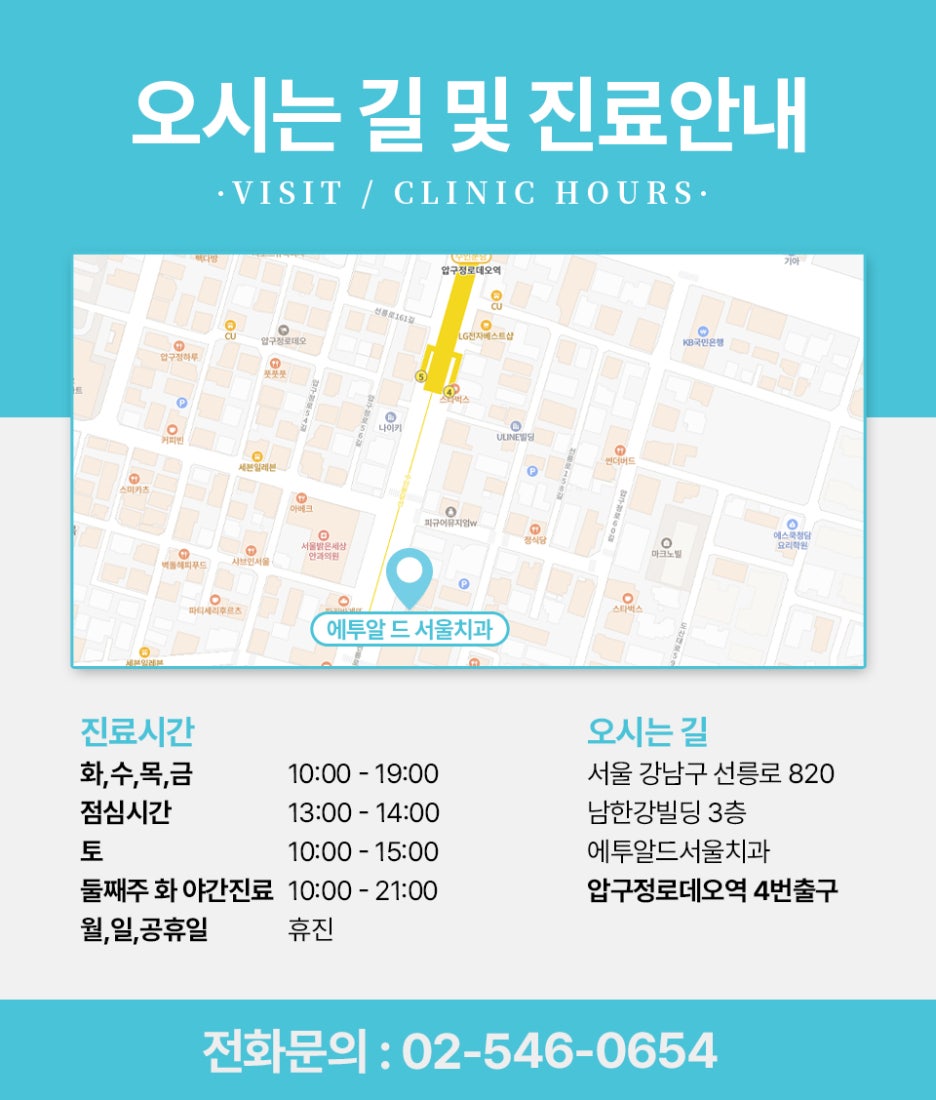
- 3rd Floor, Namhangang Building, 820 Seolleung-ro (85-3 Cheongdam-dong), Gangnam-gu, Seoul
⏰ Clinic Hours
-
Tuesday–Friday: 10:00 a.m. – 7:00 p.m.
-
Saturday: 10:00 a.m. – 3:00 p.m.
-
Evening hours: Second Tuesday of each month, 10:00 a.m. – 9:00 p.m.
-
Lunch break: 1:00 p.m. – 2:00 p.m.
-
Closed: Every Monday and Sunday
📞 Consultation and Appointment Inquiries











Previous image
Next image









Previous image
Next image