When you find yourself
covering your mouth with your hand
whenever you smile,
I understand that feeling very well.
While studying at Seoul National University School of Dentistry, one thing I always kept in mind was that once tooth tissue is reshaped, it does not grow back.
So today, I would like to answer, one by one, the questions I often receive in the clinic about whether Cheongdam no-prep veneers really cause less damage to teeth.
If you have felt hesitant to smile because of the color or shape of your front teeth, I hope this article will ease some of your vague fears and give you a basis for making your own decision.
The person who hesitated for years
at the thought of having healthy teeth filed down
Let me tell you about someone I met recently.
She was in her mid-thirties and said she had long been bothered by the fact that her front teeth looked slightly yellow and long.
She said she could not smile openly at important gatherings and kept covering her mouth while talking. She had looked into veneers, but after hearing that “healthy teeth would have to be filed down,” she became frightened and had been putting it off for several years.
“Doctor, becoming more attractive would be nice, but I’m really afraid of damaging my real teeth.” When she said this in a trembling voice, I nodded and told her that her feelings were completely understandable.

Thin ceramic veneers that require little tooth reshaping—are you curious about how they work?
Veneers are, simply put, an aesthetic dental treatment in which very thin porcelain (ceramic) shells are bonded to the front surfaces of the teeth to refine their color and shape.
It may be easiest to understand if you imagine delicately adding a thin shell over a fingernail.
With the traditional approach, the tooth surface is reshaped slightly to create room for the veneer. Cheongdam no-prep veneers greatly reduce this amount of tooth reduction or require almost none at all.
Because as much enamel as possible—the hard outer layer surrounding the tooth—is preserved, the resulting sensitivity or burden from stimulation to the nerve tends to be relatively lower.
You can think of it as applying thin wallpaper over an old wall rather than sanding the wall down first.

How are prepared and no-prep veneers different?
Veneers can broadly be divided into two types.
One type involves reshaping the surface by about 0.3–0.5 mm before bonding the veneer. The other is this no-prep approach.
Prepared veneers have the advantage of providing space for the veneer, keeping the result from feeling too bulky and making it easier to achieve the desired shape.
Cheongdam no-prep veneers, on the other hand, focus on changing the color and shape while preserving the natural tooth tissue as it is.
This can be especially appealing because it leaves more treatment options available if another treatment becomes necessary in the future.
However, because a thin veneer is added to the tooth surface, it may be difficult to achieve the desired result with this approach alone when the teeth already protrude significantly or their color is very dark. In such cases, it is more appropriate to consider other options together.

What I told her
I first suggested that we review the results of a detailed examination together.
I explained each point using photographs and models, including how much of her teeth could be preserved and what her gum line looked like.
Fortunately, she appeared to have room for improving the color and length of her teeth without making significant alterations to them.
“I never imagined I could smile while protecting my own teeth.” I still remember the expression on her face as her eyes filled with tears.
Cheongdam no-prep veneers are not the right answer for everyone. However, for those who have postponed smiling because of their fear of having “healthy teeth filed down,” they may be an option worth considering.

Questions answered directly by the clinic director
Q1. If they are called no-prep veneers, does that mean the teeth are not touched at all?
A. The name can easily cause misunderstandings. It means that little to no tooth reduction is performed, but depending on the situation, the surface may still be reshaped very slightly. The key is to preserve as much of your enamel as possible.
Q2. Can anyone receive them?
A. Unfortunately, no. If the teeth protrude forward, there are large gaps between them, or their color is very dark, it may be difficult to achieve the desired result with this approach alone.
That is why it is essential to honestly explain whether the treatment is suitable after an examination.
Q3. Could the veneers come off or become discolored?
A. Ceramic itself is relatively resistant to staining, but changes may occur over time depending on the margins where the veneers meet the teeth and on your care habits.
Frequently biting down on very hard objects with your front teeth can also cause a veneer to come off.
Q4. How should I care for them so they last well for a long time?
A. Continue brushing and flossing as usual, but avoid habits such as opening bottle caps with your front teeth or biting ice. Regular checkups to examine the margins can also be helpful.

Teeth are precious tissues that are difficult to restore once lost.
That is why I always think first about “how much of your own teeth we can preserve,” rather than simply making them “more beautiful.”
If you came to this article because you are curious about Cheongdam no-prep veneers, I hope what you read today will serve as a foundation for calm decision-making instead of impatience.
A smile becomes all the more precious the longer it is postponed. As a dentist walking the same path with you, I sincerely hope your smile becomes a little more comfortable.
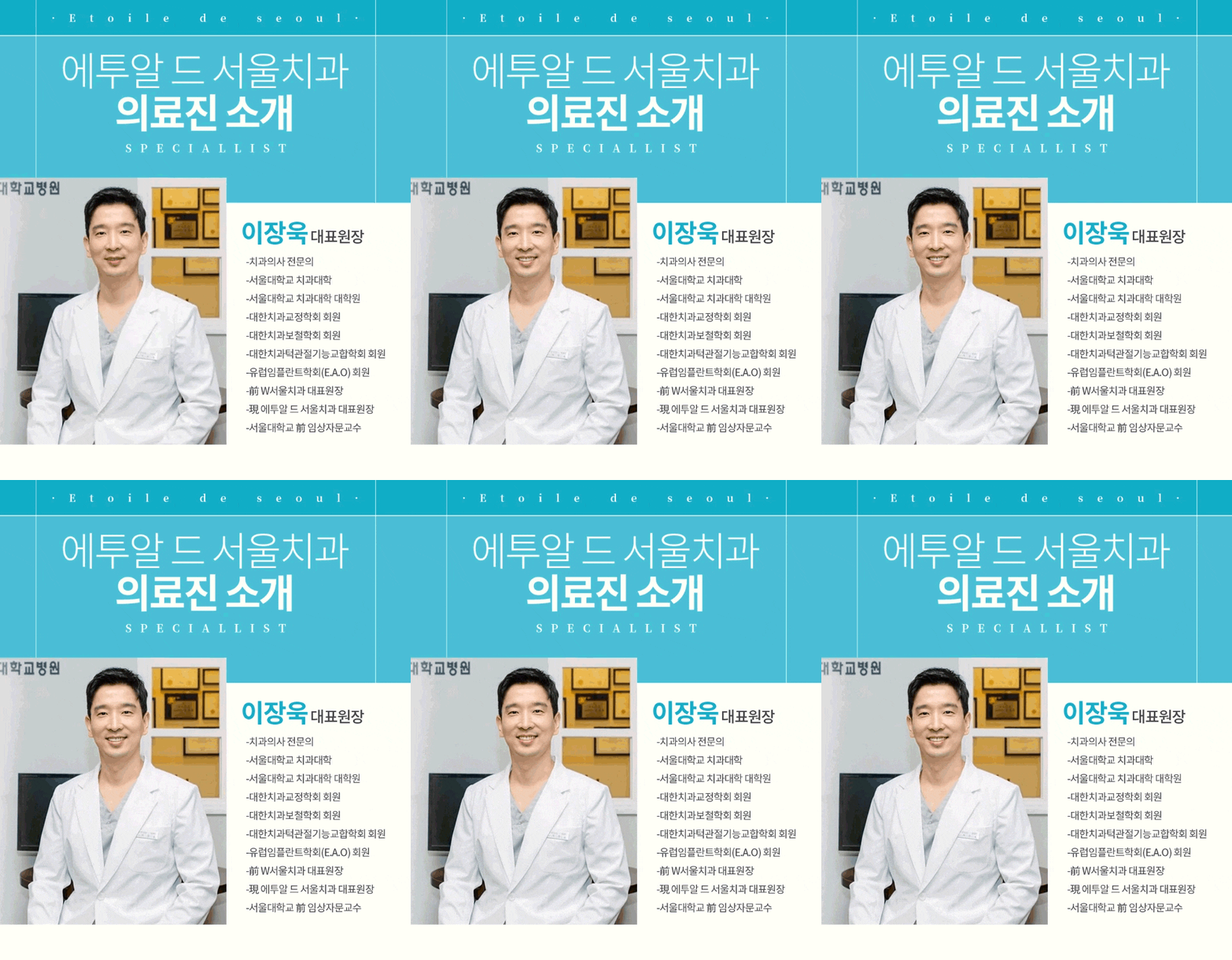
🦷 Etoile Seoul Dental · Director, Lee Jang-wook
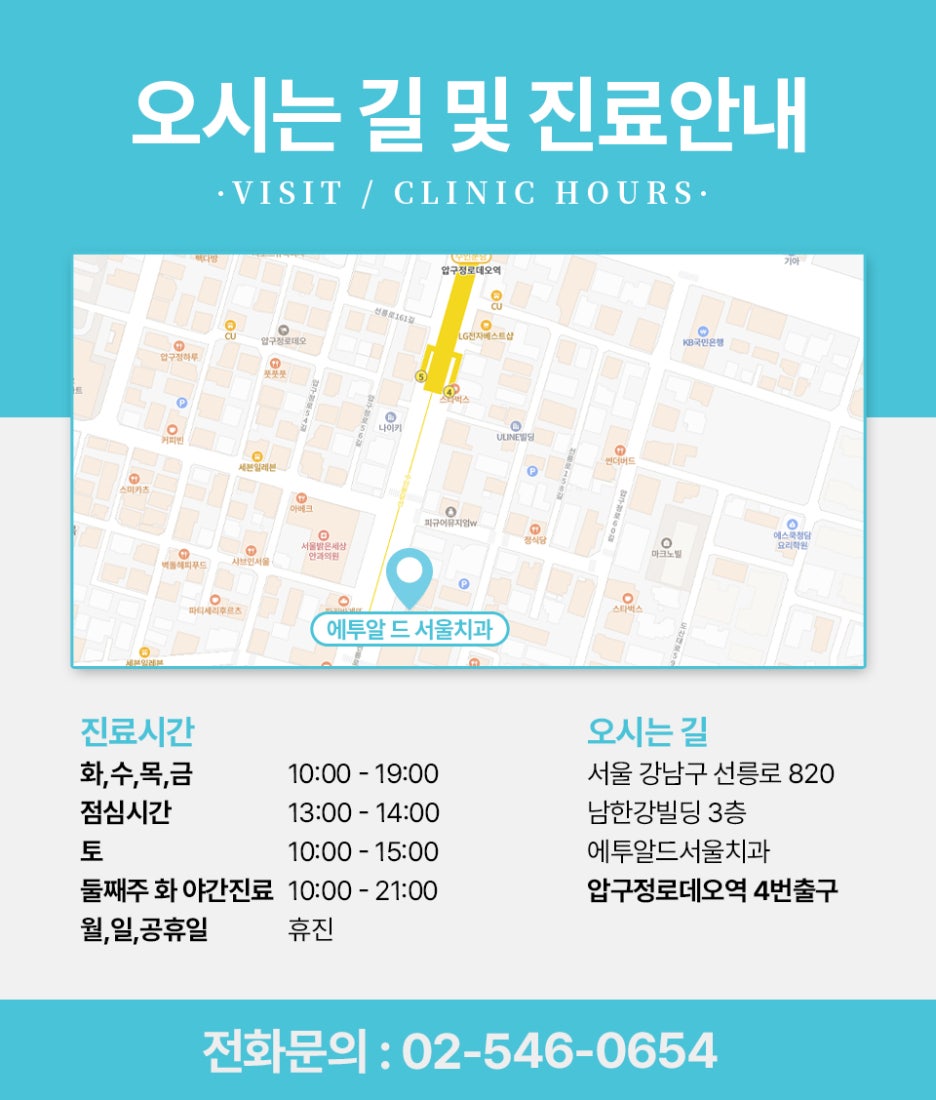
📍 3rd Floor, Namhangang Building, 820 Seolleung-ro, Gangnam-gu, Seoul
📞 02-546-0654
🕙 Clinic Hours
· Tuesday–Friday 10:00–19:00 (Lunch 13:00–14:00)
· Saturday 10:00–15:00
· Evening hours until 21:00 on the second Tuesday of every month
· Closed on Mondays
On weekdays, our clinic remains open until 7 p.m., and we are also open through Saturday afternoon. Once a month, on the second Tuesday, we stay open until 9 p.m.