Implants are said to last
for a lifetime once you get them…
Can they really
stay with you until the end?
After graduating from Seoul National University School of Dentistry, I have dedicated my career to restoring the lost teeth of many older adults.
If you have clicked to read this, you may have been worrying for a long time about your parents’ teeth or your own.
Worries such as, “Will they last a long time this time?” and “What if I struggle again after only a few years?”
Today, I would like to calmly explain how the lifespan of full-arch implants is actually determined, so that I can provide at least a little answer to those concerns.
✨ Watch the Chiterior YouTube video ✨
(Click)
A real review of replacing
only the upper teeth with No-Bone Arch
❗Full Upper-Jaw Implants❗

A concern I encountered recently
in the treatment room
Last month, a woman in her sixties came to see us holding her grown daughter’s hand tightly.
She had relied on dentures for many years, but they kept lifting and becoming loose, making it difficult for her to comfortably enjoy even a piece of galbi, one of her favorite foods.
Her daughter became teary-eyed as she said, “I want to give her implants instead of dentures now, but she is older, and I cannot decide because I am worried about what will happen if they do not last long.”
In fact, this is not a concern unique to the two of them. It is something we hear very often in the treatment room—a story shared by many of us.
What kind of treatment are full-arch implants?
Full-arch implants are a treatment that restores all the teeth on one side—the upper or lower jaw—with teeth fixed onto four to six implant posts.
Instead of placing an implant for every single tooth, it may be easier to picture it as building a bridge with several sturdy posts to support an entire row of teeth.
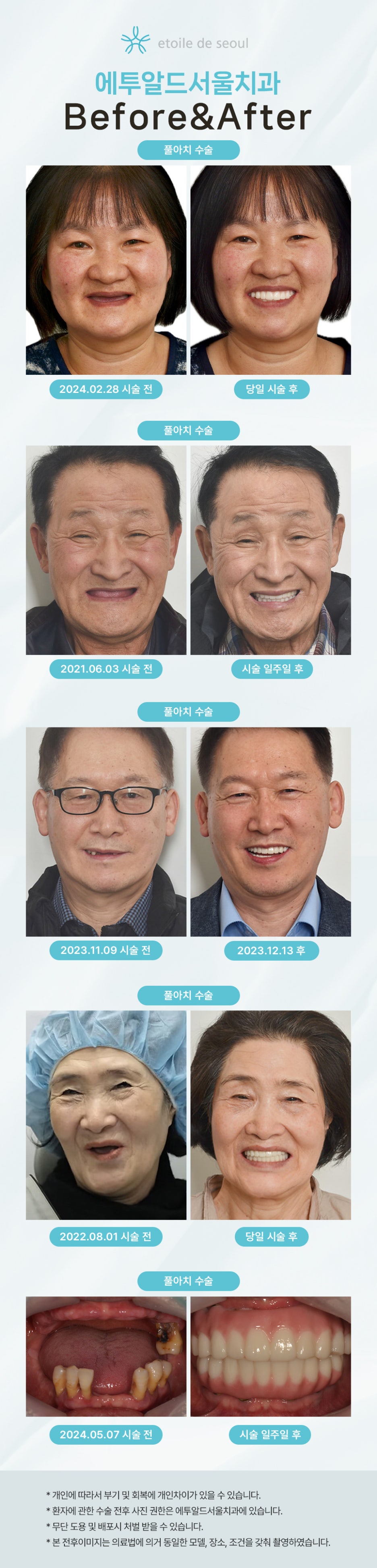
Unlike removable dentures, they do not move around in the mouth, and one of their major features is that they can restore chewing strength to around 90% of that of natural teeth.
That is why most people who ask about the lifespan of full-arch implants are those who have become tired of wearing dentures for many years.
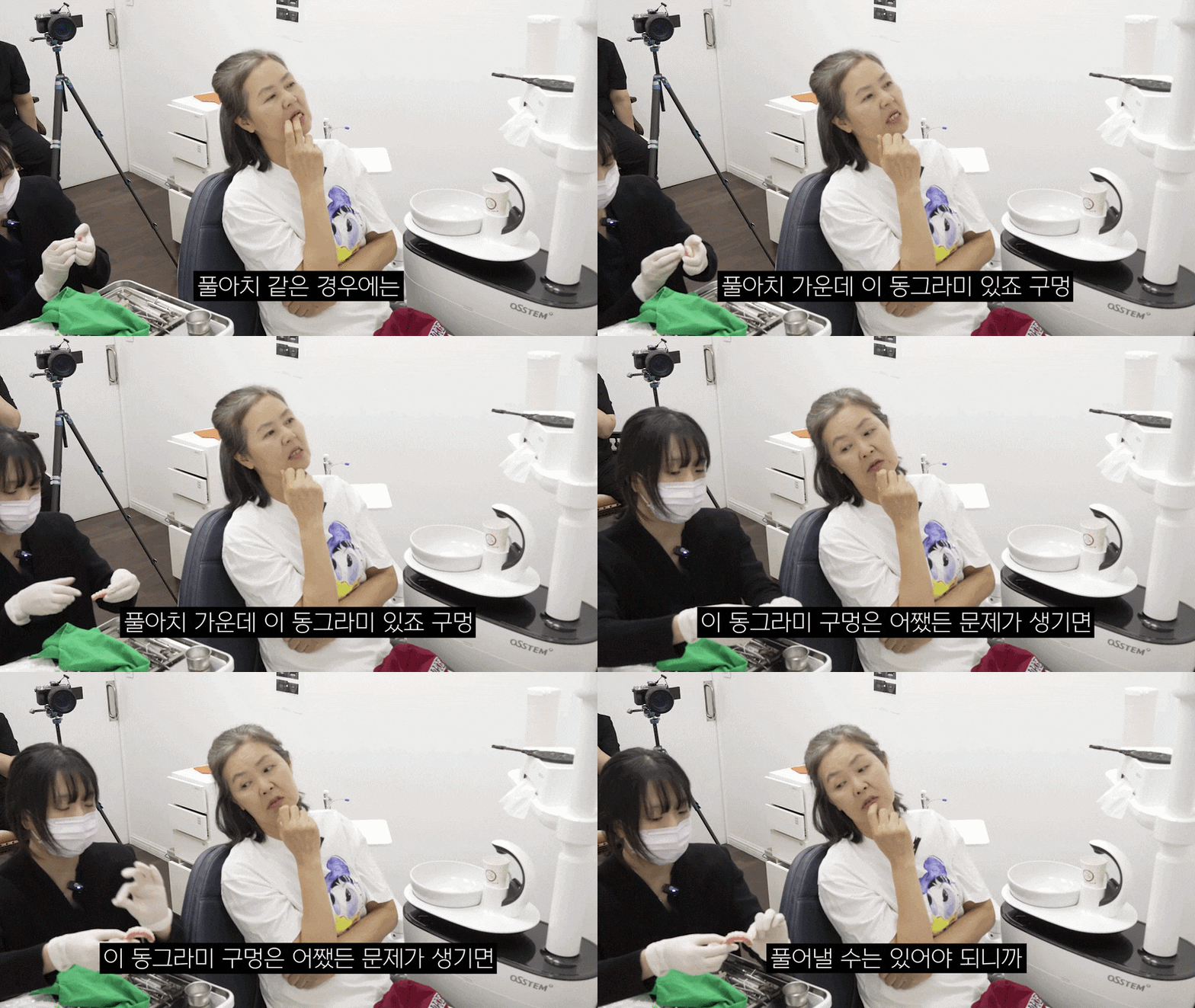
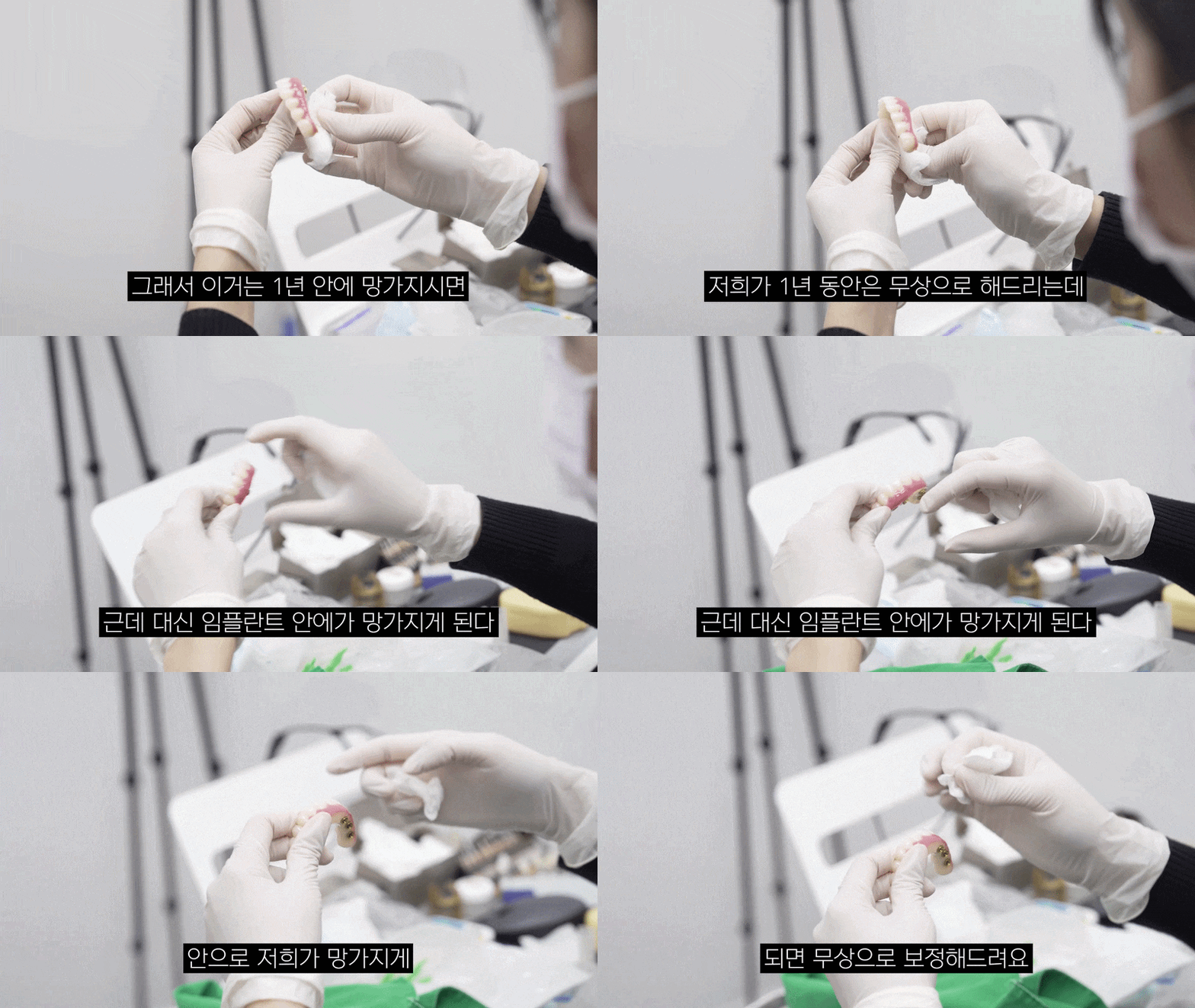
The treatment process and the story behind it
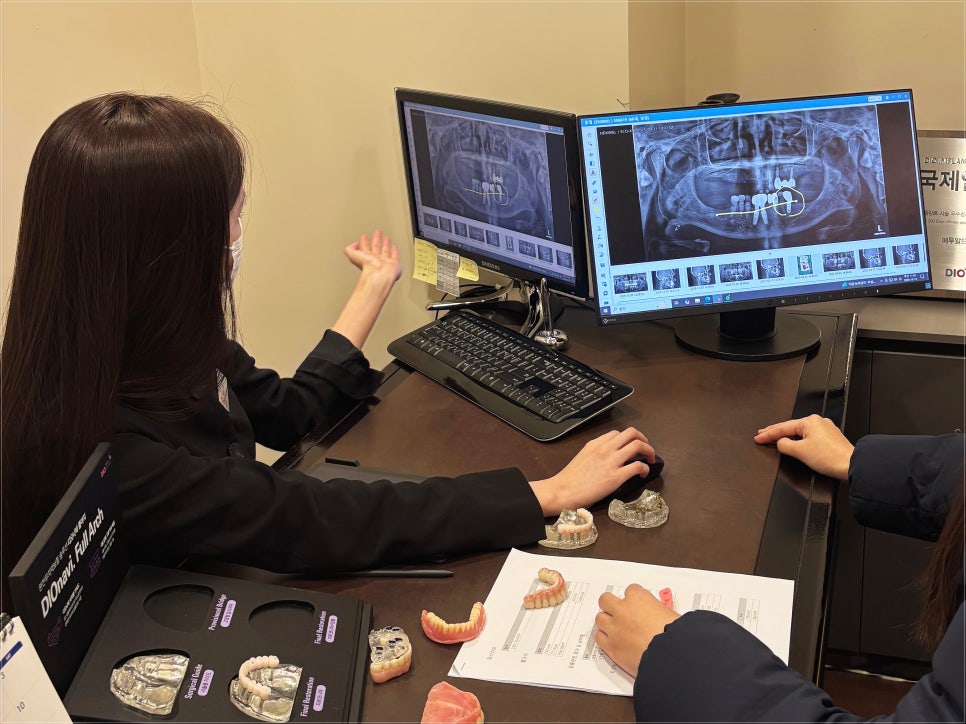
First, we create a map of the jawbone using CT scans and an oral scan, then simulate and design the surgery in a computer program.
This process allows us to place the posts accurately in the planned positions.
The gums are made with pink porcelain, while the teeth are crafted from zirconia to resemble the natural color and texture of the gums and teeth.
There is also no need to give up in advance simply because you have insufficient jawbone. There are ways to design the angles and positions to reduce the burden of bone grafting.
The carefully prepared foundation ultimately becomes the root that firmly supports the lifespan of full-arch implants.
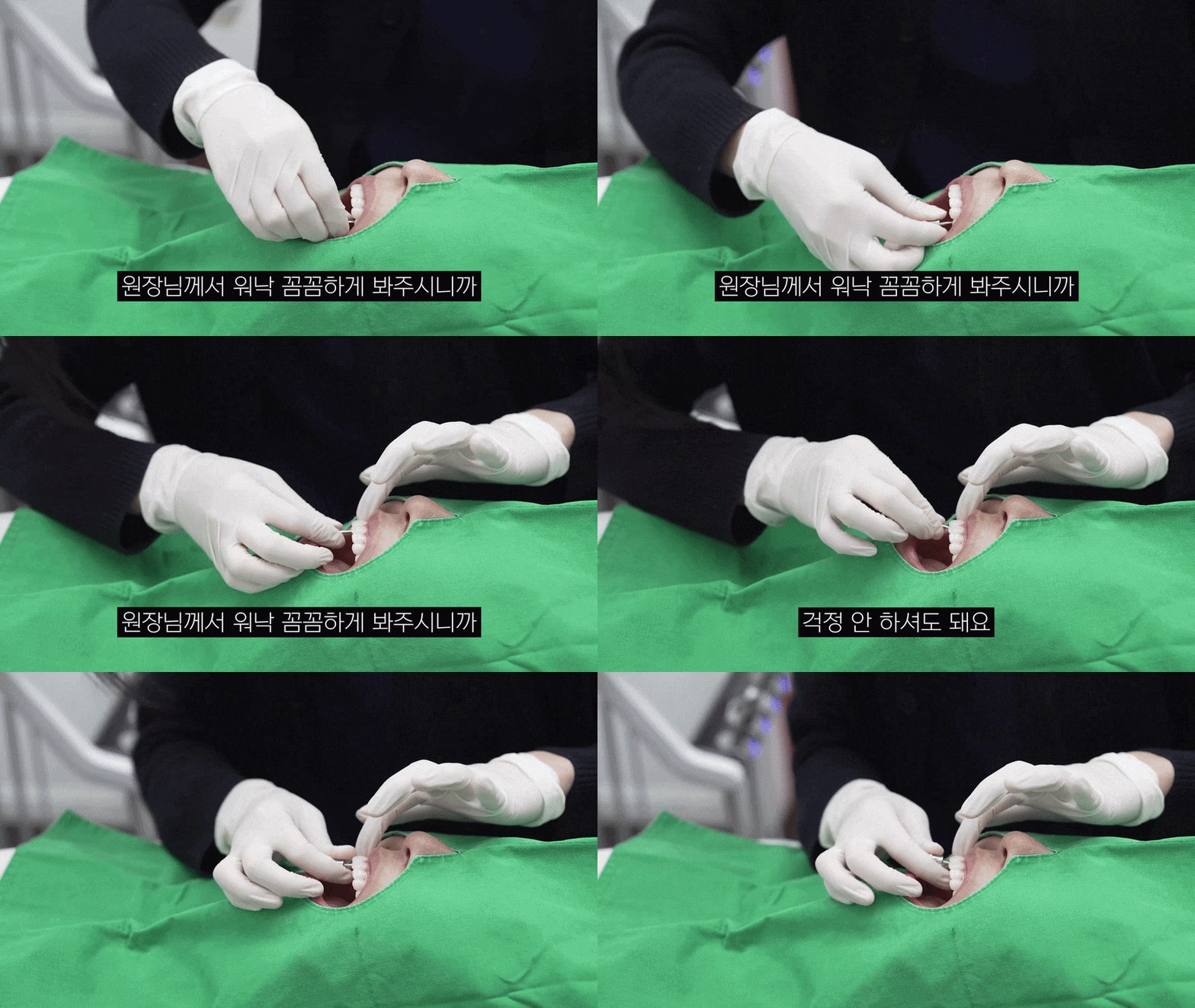
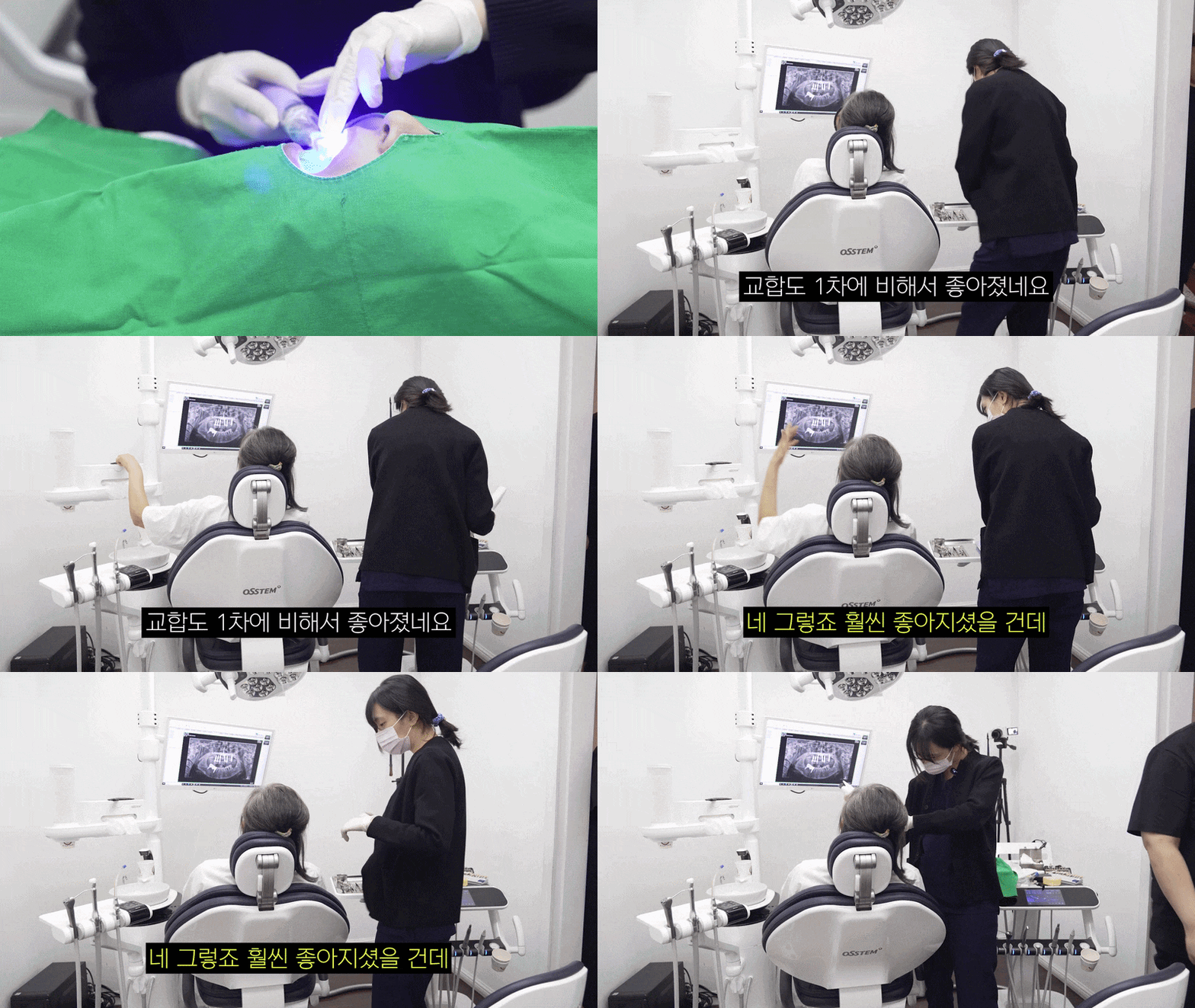
So, how long can they last?
To be honest, we cannot guarantee an exact number of years for everyone.
Each person’s jawbone condition, chewing habits, and level of care are different.
However, when the two wheels of thorough daily brushing and flossing, along with regular checkups every six months, keep turning properly, there are quite a few cases in which implants remain in use for more than 10 years with appropriate care.
Just as a car that receives timely inspections tends to last longer.
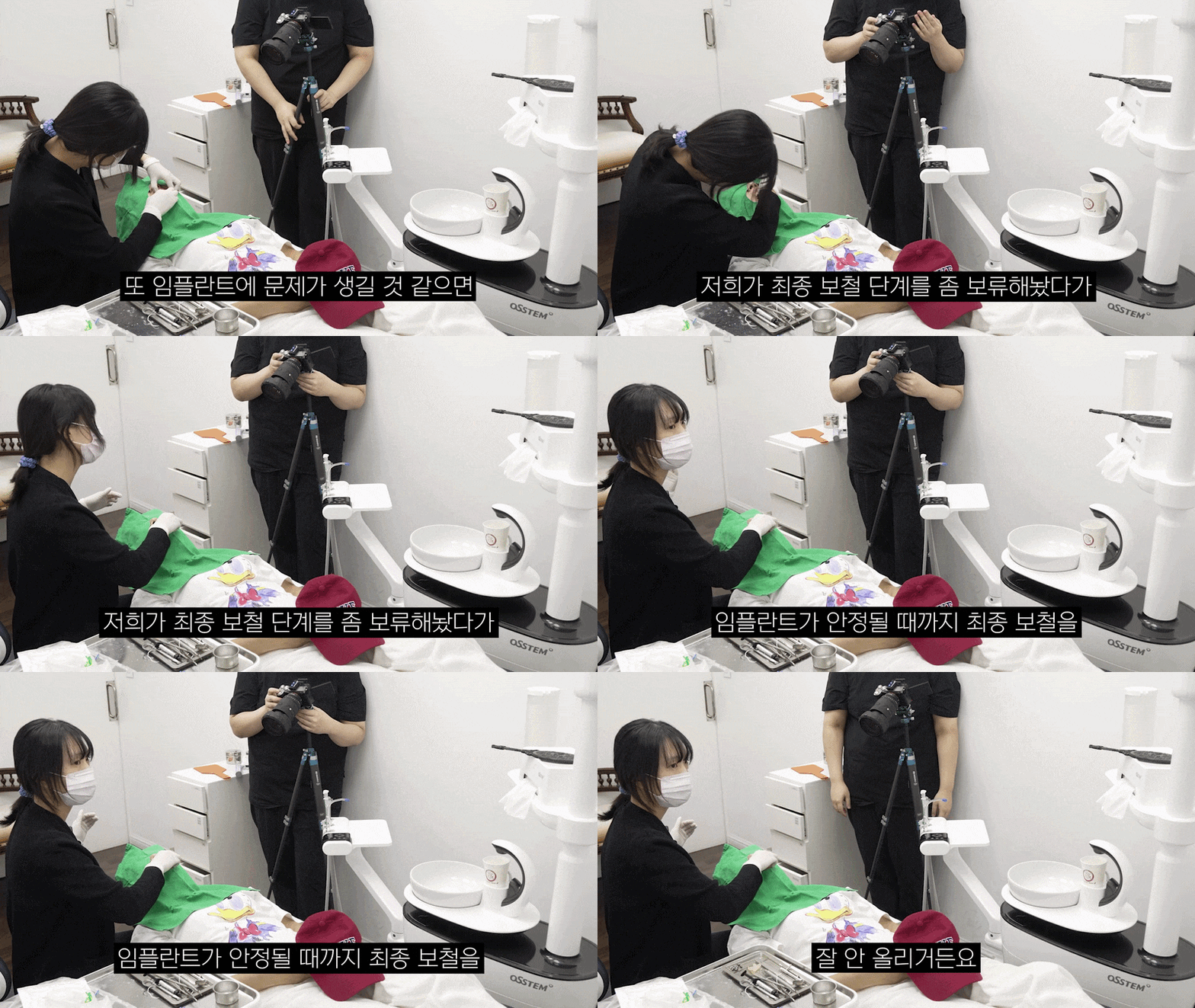
We continue to care for our patients after treatment through complimentary full-arch-related treatment within three years.
However, individual differences exist, and changes such as inflammation or loose screws may occur. Regular checkups are therefore equally important for preserving the lifespan of full-arch implants.
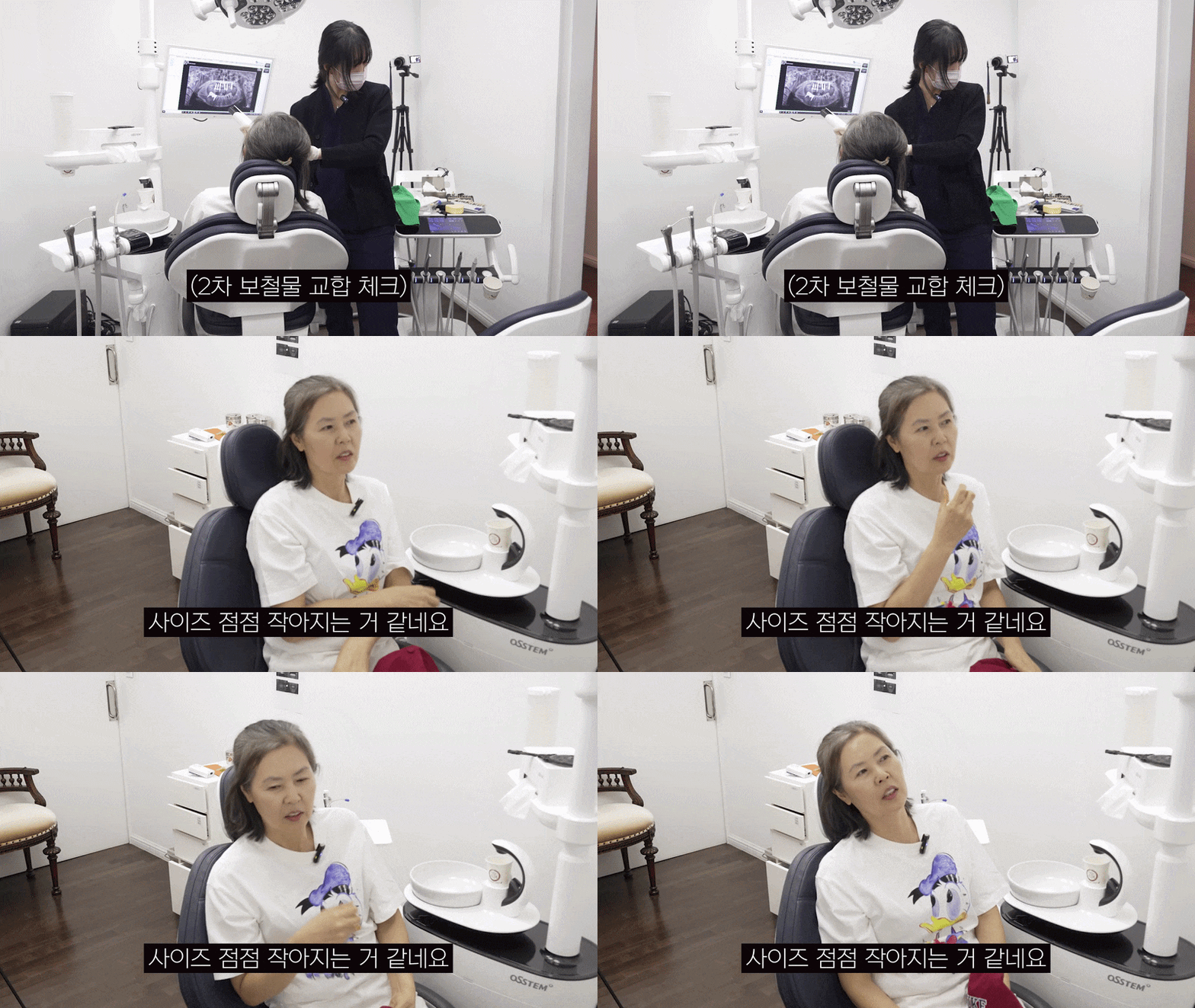
Answers directly from the director
Q1. I was told that I have almost no jawbone. Is it still possible?
A. Even when the jawbone is insufficient, treatment using four to six posts is often possible by designing the angles and positions. However, we can provide an accurate assessment only after a CT examination.
Q2. Can my elderly parents receive this treatment?
A. It is often possible even for older patients. It can actually be helpful for people who find it difficult to make many trips to the clinic. However, individual differences depend on overall health, so a preliminary diagnosis is essential.

Q3. Is it okay if I have diabetes or high blood pressure?
A. If the condition is well controlled, treatment is often possible. To help you feel reassured, we conduct detailed examinations and create a plan suited to your physical condition.
Q4. Are there any side effects or points I should be careful about?
A. As with any surgery, changes such as inflammation, swelling, or loose screws may occur. That is why we emphasize that regular checkups and consistent care are especially important.
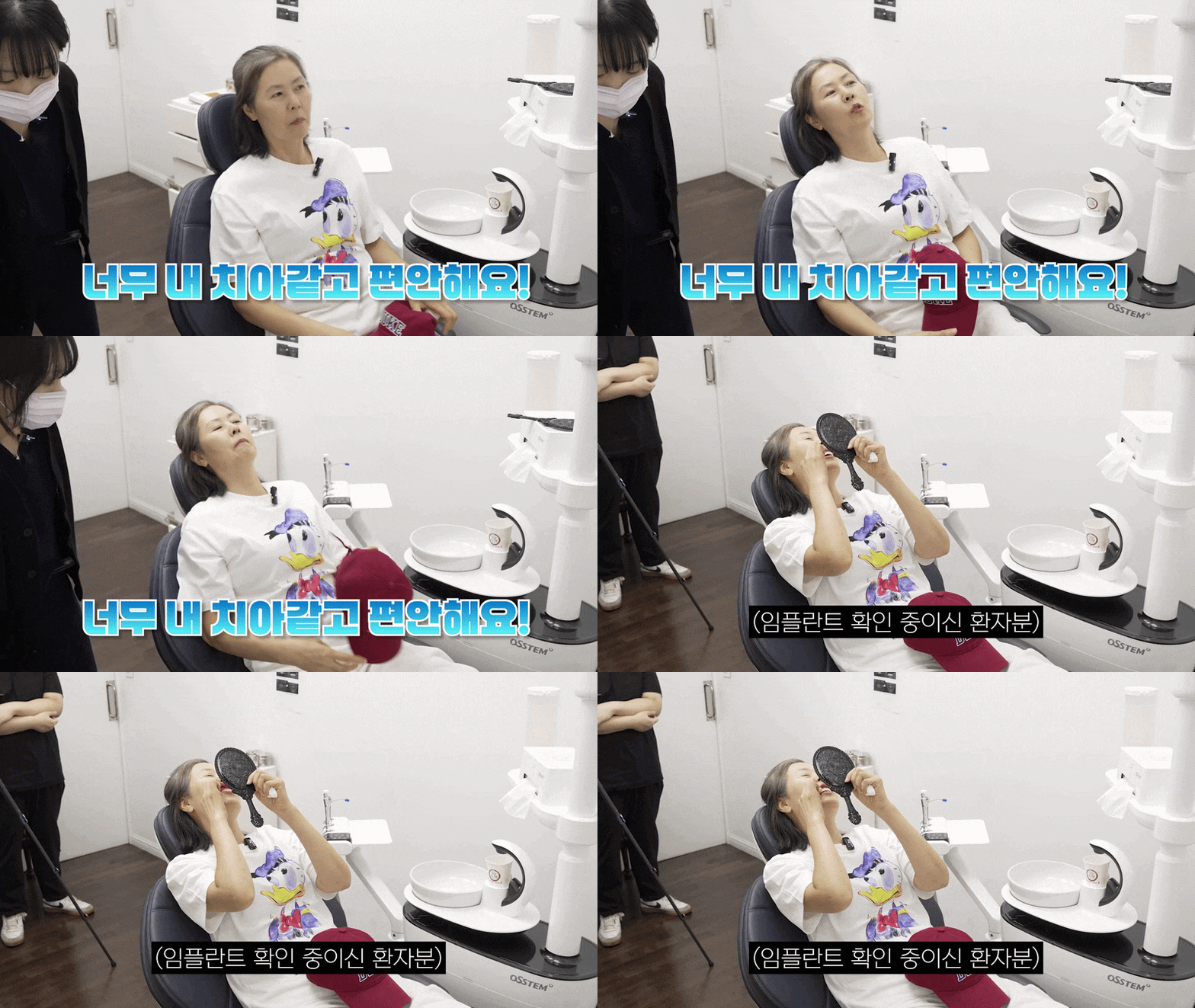
For everyone who has been worrying
I said this to her daughter that day as well.
Rather than focusing on a single number, I suggested that we look together at her mother’s gums and daily habits and find a way for the treatment to last as long as possible.
The lifespan of full-arch implants is not a predetermined fate. It is a story written together by careful planning at the beginning and consistent care afterward.
If you are currently worried about your parent’s meals or your own smile, that concern itself is already a very good first step.
I hope this article has served as a small light for you today.
🦷 Etoile de Seoul Dental Clinic
Director Lee Jang-wook (Graduate of Seoul National University School of Dentistry)
📍 Location: 3rd Floor, Namhangang Building, 820 Seolleung-ro, Gangnam-gu, Seoul
☎ Phone: 02-546-0654
🕒 Office hours
· Tuesday–Friday | 10:00 a.m. – 7:00 p.m.
· Saturday | 10:00 a.m. – 3:00 p.m.
· Lunch break | 1:00 p.m. – 2:00 p.m.
· Second Tuesday of each month | Evening hours until 9:00 p.m.
· Monday | Closed
We will continue caring for your teeth from our longstanding location in Seolleung, conveniently close to Apgujeong, Cheongdam, and Sinsa-dong.