

Have you started noticing your neck contour when looking in the mirror?
As we age, one of the natural changes that appears is sagging skin on the neck. We may take care of our face but overlook the neck, only to notice at some point, when looking at photos or in the mirror, that the lines of the neck have changed. This is not simply an aesthetic concern; it can also affect confidence. Today, we will look at the causes of neck sagging and ways to manage it.
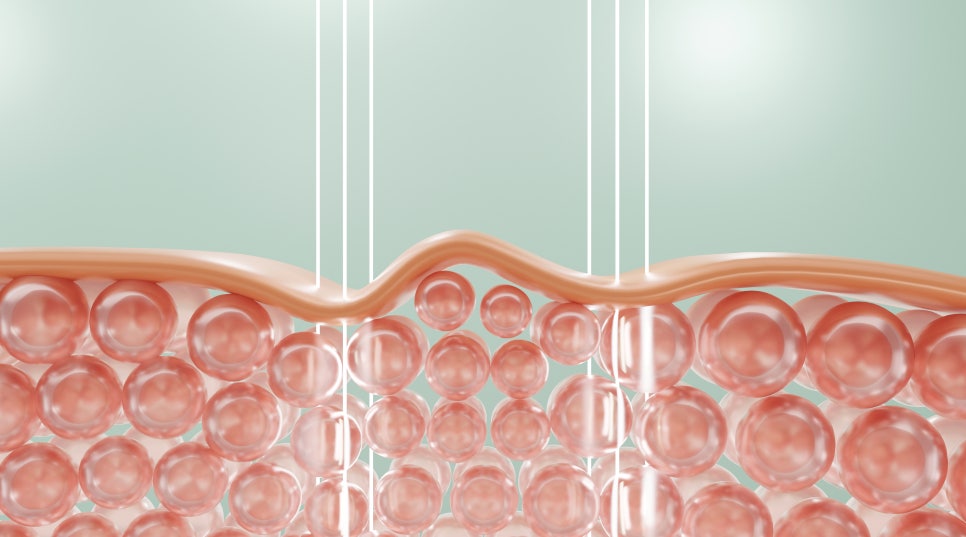
Why does neck sagging
occur?
The neck is an area where signs of aging appear quickly because the skin is thin and contains little subcutaneous fat. As we age, collagen and elastin production decreases, and the protein structures that maintain skin elasticity weaken, causing the skin to sag under the force of gravity. Exposure to ultraviolet rays, weight changes, and postural imbalance caused by smartphone use can further accelerate the breakdown of the neck contour. In particular, many people today spend long periods looking down at smartphones or computers. This can cause an imbalance in the neck muscles and worsen wrinkles known as “tech neck.” Along with these habitual postures, inadequate neck care and rapid weight loss can also accelerate sagging.

Effects of neck sagging
Changes in appearance
When the neck sags, the overall facial contour may appear less defined, creating an impression of looking older than one’s actual age. Even when the face looks youthful, an aged-looking neck can create an unnatural imbalance. This may lead to reduced confidence in social and interpersonal situations and can be particularly noticeable when taking photos or participating in video conferences.
Psychological effects
External changes can also affect psychological well-being. When small changes noticed each time you look in the mirror accumulate, they can negatively affect your self-image, which may also influence social interactions. In today’s society, where social expectations regarding appearance are high, signs of aging can feel like an even greater psychological burden.

Neck care methods
you can try in daily life
There are methods you can try at home to care for the neck area.
-
Maintain proper posture (hold your smartphone at eye level)
-
Stretch your neck regularly
-
Extend your facial care products down to the neck
-
Apply sunscreen carefully to the neck as well
-
Maintain skin elasticity by drinking enough fluids
-
Eat foods rich in vitamins C and E
-
Promote circulation with neck massage
Consistently practicing these methods may help alleviate early-stage neck sagging and slow its progression. In particular, posture correction and stretching can help address contributing factors, so it is important to pay consistent attention to them in daily life.

If you are concerned about neck sagging,
how about these care methods?
Stimulating collagen production with TensTherma
TensTherma may be considered to address the decrease in collagen, a major cause of neck sagging. TensTherma uses radiofrequency energy to deliver heat to the deeper layers of the skin. This thermal energy contracts collagen fibers and stimulates the production of new collagen. As existing collagen becomes tauter and new collagen is produced, elasticity in the neck skin gradually improves. A feature of TensTherma is that it acts on deeper layers rather than the skin’s surface, allowing for a natural lifting effect. A slight tightening sensation may be felt immediately after the procedure, and as collagen regeneration becomes more active over the following 2–3 months, the skin around the neck may become firmer. Although results vary from person to person, the effects are generally known to last for approximately 6 months to 1 year.
Strengthening the skin’s supporting layer with Ultherapy
Ultherapy is a procedure that uses high-intensity focused ultrasound (HIFU) to act on the deeper layers of the skin, including the fascial layer. The principle involves accurately delivering ultrasound energy to a targeted depth to contract tissue and stimulate collagen production. It may be particularly helpful for strengthening the supporting structures beneath the neck skin and lifting sagging areas. One advantage of Ultherapy is that it may provide long-term improvement from a single procedure. Changes that appear gradually after the procedure can result in a more natural-looking outcome, and because the procedure is performed without damaging the skin’s surface, the recovery period is relatively short. It may also help improve neck wrinkles in addition to sagging skin, making it suitable for overall neck care.

Improving elasticity with Thermage
Thermage is a procedure that uses unique radiofrequency technology to deliver thermal energy to each layer of the skin. This thermal energy immediately contracts collagen fibers and, over the long term, stimulates the production of new collagen, which may help improve elasticity in the neck area. Because it can act at various depths, comprehensive care from the surface to the deeper layers is possible. A feature of Thermage is that it can provide both an immediate tightening sensation and the collagen regeneration effects that develop over time. The neck skin generally becomes firmer gradually over 2–3 months, and although results vary from person to person, the effects are generally known to last for approximately 1–2 years.
Consistent care is key
For neck sagging, consistent care is more important than a temporary procedure. The most effective approach is to combine posture correction and skincare in daily life with appropriate procedures when needed. Above all, remember that the key to managing aging in the neck area is to find a method that suits you, start gradually, and maintain it consistently.












Previous image
Next image