
Have you ever looked in the mirror and thought, “When will these marks finally disappear?”
Many people feel frustrated when they look at the marks left behind after acne has gone away.
When the skin surface does not feel smooth and instead feels uneven,
the concern grows because the bumps and texture are not hidden even with makeup.
In fact, this kind of concern is not simply a matter of visible marks on the surface; it happens because the structure inside the skin has changed.
Recently, care methods such as Elavie Rituo, which many people are showing interest in,
are ultimately approaches that target not just the skin surface but the internal structure as well.
So today, let’s take a step-by-step look at why marks remain after trouble has passed,
and explore together what kinds of care methods may be helpful.

Trouble marks, why do they
stay for so long?
The reason marks remain even after acne or pimples form and then subside is closely related to the inflammatory response. When inflammation occurs in the skin, the surrounding tissue is damaged, and during the recovery process it may not return to its original state.
In particular, if you touch or squeeze a blemish with your hands, the irritation can reach the dermis layer and lead to scar tissue formation. Marks created this way do not easily disappear even over time, and they become a major cause of uneven skin texture.
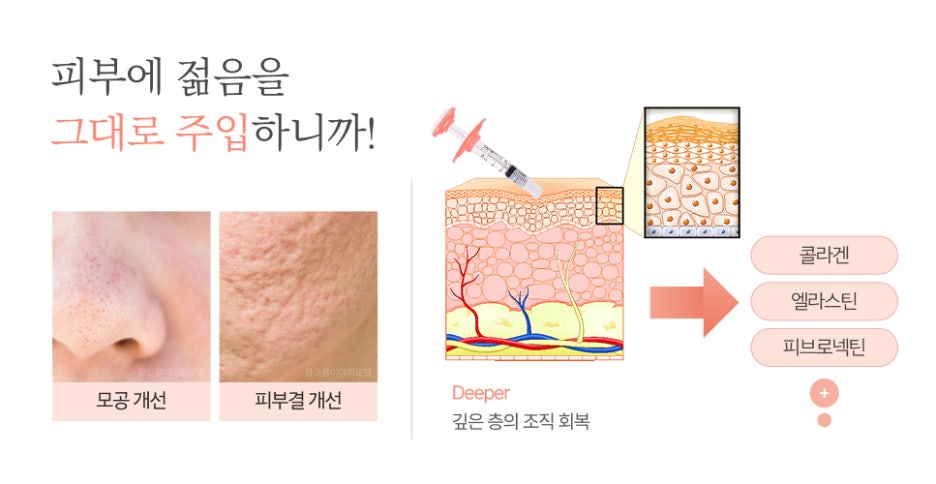
If uneven skin texture is bothering you
- The difference created by changes in skin structure
When trouble recurs, components such as collagen and elastin inside the skin become unevenly distributed or decrease. Just like a wall develops a hole and that area sinks in, the skin also develops bumps and dents when support in certain areas weakens.
These changes also make the surface look less smooth, and makeup is more likely to cake as it is applied. Even if you try to cover it with makeup, shadows can form depending on the angle, making it stand out even more.
- Concerns that appear along with enlarged pores
Marks left after trouble often appear together with enlarged pores. Because the tissue around the pores weakens due to inflammation, the pores widen, making the skin texture look even rougher. This can be seen not simply as a surface problem, but as a state in which the entire internal environment of the skin has been affected.
Why is it difficult to manage?
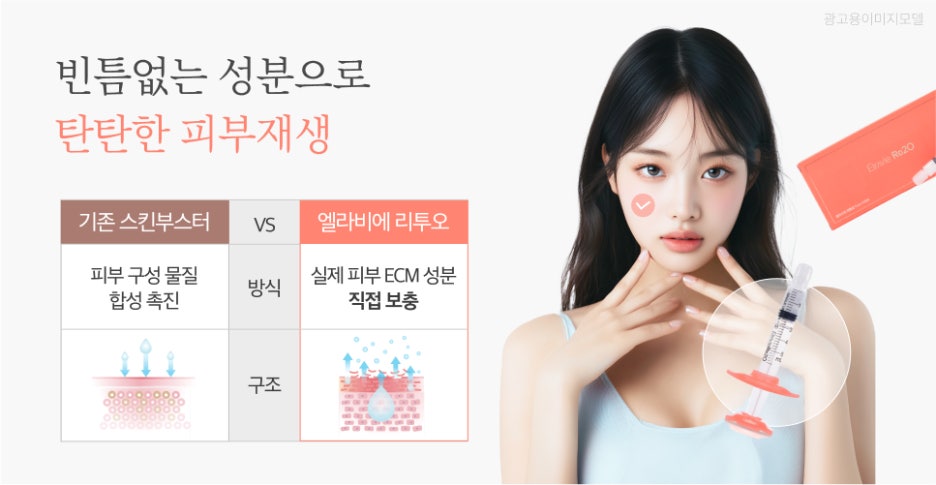
Many people try to improve it with skincare products alone, but once scar tissue or structural changes have already formed, there may be limits to what can be achieved with topical care only. Maintaining skin condition through exfoliation care and moisturizing is helpful, but it is often not enough to restore the deeper structure itself. That is why approaches that act directly inside the skin are gaining attention.
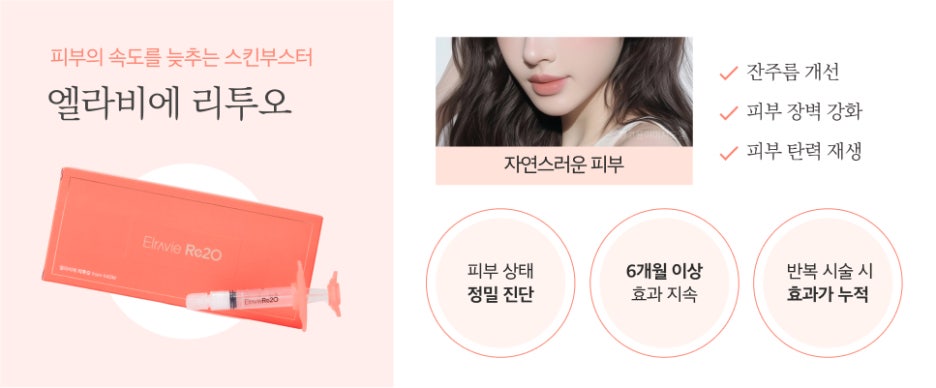
Skin booster Elavie Rituo that slows the skin’s pace
Then what kind of care method
can you consider?
- Strengthening skin structure with an ECM-based skin booster
Recently, ECM-based care methods such as Elavie Rituo have been drawing attention. ECM stands for extracellular matrix, and it is made up of components such as collagen, elastin, and proteoglycans. These components act as support structures that allow cells to settle and regenerate within the skin, but they gradually decrease as you age or as damage accumulates.
Elavie Rituo uses a matrix derived from human dermis to minimize immune response while directly replenishing the components needed inside the skin. Rather than simply filling the surface, it can be described as an approach that strengthens the skin structure itself, like rebuilding the foundation of a collapsed building.
In this process, fibroblasts become activated, promoting the synthesis of new collagen and elastin, and over time you can expect gradual improvements in skin elasticity and texture.
In particular, when applied to areas with structural changes such as enlarged pores or depressed scars, it may help improve the internal skin environment itself. Some people experience a radiant feeling from within the skin about 5 to 7 days after the procedure, and in the long term, they may notice that the skin texture becomes smoother.
Sufficient consultation and a care plan are important
No matter which care method you choose, the appropriate approach can vary depending on the individual’s skin condition. You need to consider the depth and extent of the trouble marks, skin type, and other factors together. There are also several procedure options, such as hand injection, cannula, and Derma Shine, and each has a different level of pain and a different feel in practice, so it is important to find the method that suits you through consultation.
Since marks left after trouble did not appear overnight, care also requires consistency. Restoring the internal structure of the skin takes time, but if you find the right method and proceed step by step, you may gradually experience improvement. Above all, accurately understanding your own skin condition and establishing a care plan that matches it can be considered the first step.



Gangnam Station Elavie Rituo: How to Care for Skin Texture Made Uneven by Trouble Marks
Gangnam Station Elavie Rituo: How to Care for Skin Texture Made Uneven by Trouble Marks










Previous image
Next image