
Some people pause when they come across discussions about cheek fat while learning about Thermage.
They worry that, because the procedure uses heat, it might melt fat.
There is a reason for this concern.
When they hear that radiofrequency delivers energy deep into the dermis and subcutaneous fat layers,
they may become anxious that it could affect volume that should not be lost from the face.
There are also stories circulating about faces appearing thinner after the procedure.
However, in most cases, the point where sinking occurs is related not to the heat itself but to something else.
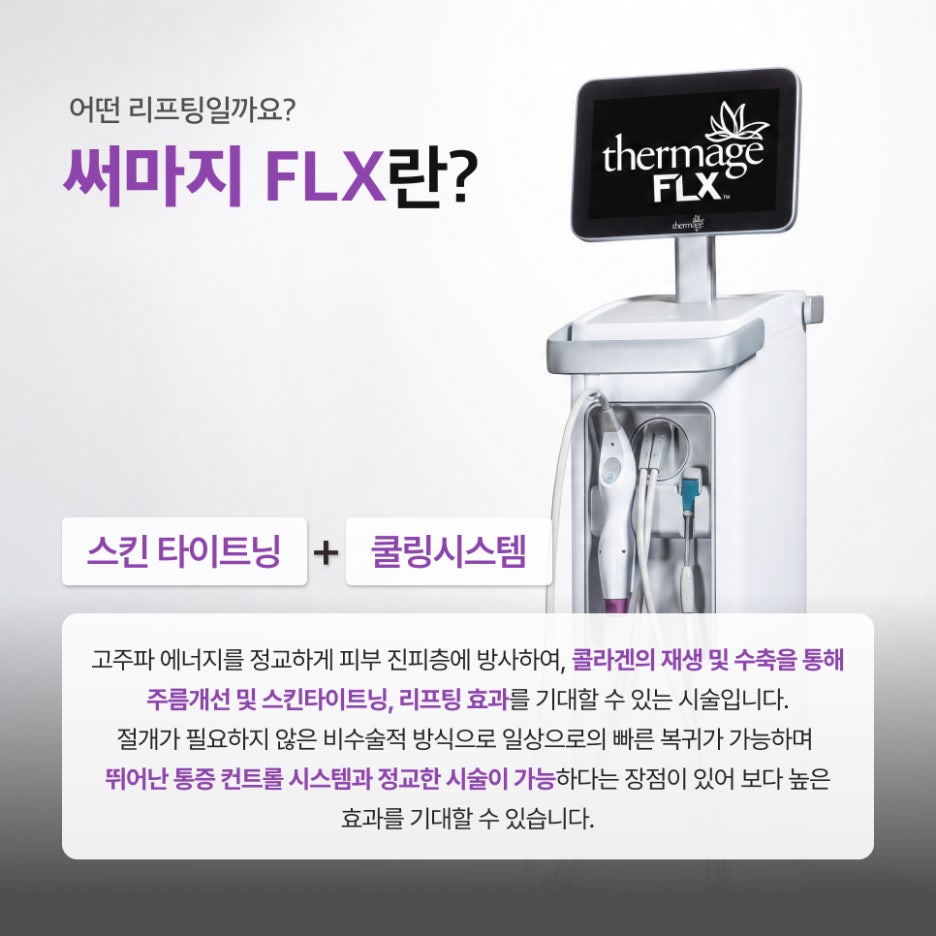
What kind of lifting procedure is it? What is Thermage FLX?
Heat does not create hollowness—design does
Thermage’s radiofrequency targets collagen. When the collagen fibers in the dermal layer are exposed to heat, they immediately contract, followed by a reaction that produces new collagen in that area. It is not designed to target fat.
However, the thickness of the fat layer and the skin varies from one area of the face to another. If the same intensity is repeatedly applied to an area that originally has little volume, that area alone may appear relatively sunken. The center of the cheek and the temples are representative examples.
Age is also a factor. If facial fat has already decreased and the facial contours have become flatter, lifting only the elasticity can make the remaining volume move upward, creating the illusion that the lower area looks hollow. Ultimately, the issue is not the total amount of energy. It is a matter of design: which layer receives the energy, which areas are treated, and how much energy is distributed to each area.

Cooling the epidermis while heating only the deeper layers
Thermage works through simultaneous cooling and heating. When the tip is placed against the skin, cooling pulses first lower the surface temperature. Radiofrequency thermal energy then penetrates deep into the dermal layer. This creates a difference between the temperature at the surface and the temperature inside.
Because only the collagen inside receives heat while the surface is protected, a response can be induced in the deeper layers without damaging the epidermis. Cooling continues while the heat penetrates and is activated once more during the final stage to complete the procedure.
Vibration is also used. The continuous vibration during the procedure helps disperse the sensation of stimulation, reducing the burden of pain. This is also why a topical anesthetic cream is applied for about 20–30 minutes before the procedure. The entire treatment generally takes less than 40 minutes. Since it is non-incisional, no additional time needs to be set aside for recovery.
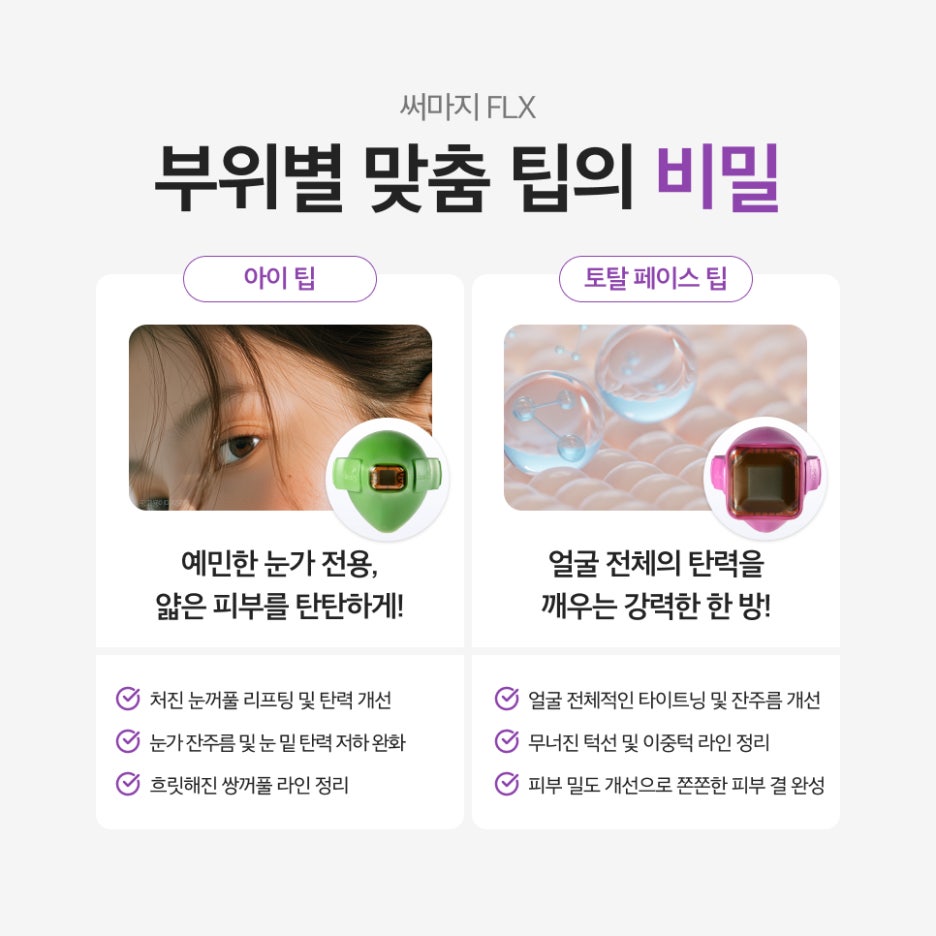
The results immediately after the procedure and two months later appear different
The changes felt on the day of the procedure come from contraction. As existing collagen tightens immediately in response to heat, the first noticeable effect is a more refined appearance of the facial contours.
This impression may temporarily fade. The actual change comes as newly produced collagen settles into place, so remodeling gradually continues over one to two months after the procedure. During this period, the skin’s density becomes fuller, its texture becomes smoother, and its elasticity improves.
This is also where the concern about facial volume is determined. As collagen fills in, it adds thickness to layers that have become thin. Therefore, when the procedure is appropriately designed, the result tends to be closer to filling out than to sinking. The duration of the results is generally considered to be about 8–12 months. The timing and duration of the effects may vary depending on the individual’s skin condition.

If you have been putting off the procedure because you are afraid your cheek fat might look sunken, what you need to check is not whether to undergo the procedure but how it will be performed. You should first determine where the fat is thin on your face and which areas should receive less energy. Even when the same device is used, the results can vary depending on how the intensity is distributed by area and how the tip is operated. Therefore, the thickness of the skin and the condition of your facial volume should be assessed together before the procedure.
Because this procedure involves heat, reactions such as flushing or swelling may occur, and individual reactions to topical anesthetic cream also vary. Repeat procedures are often discussed on a one-year cycle, but this may also be adjusted depending on the individual’s condition. Rather than avoiding it unconditionally, we recommend first consulting about which areas of your face need to be protected.

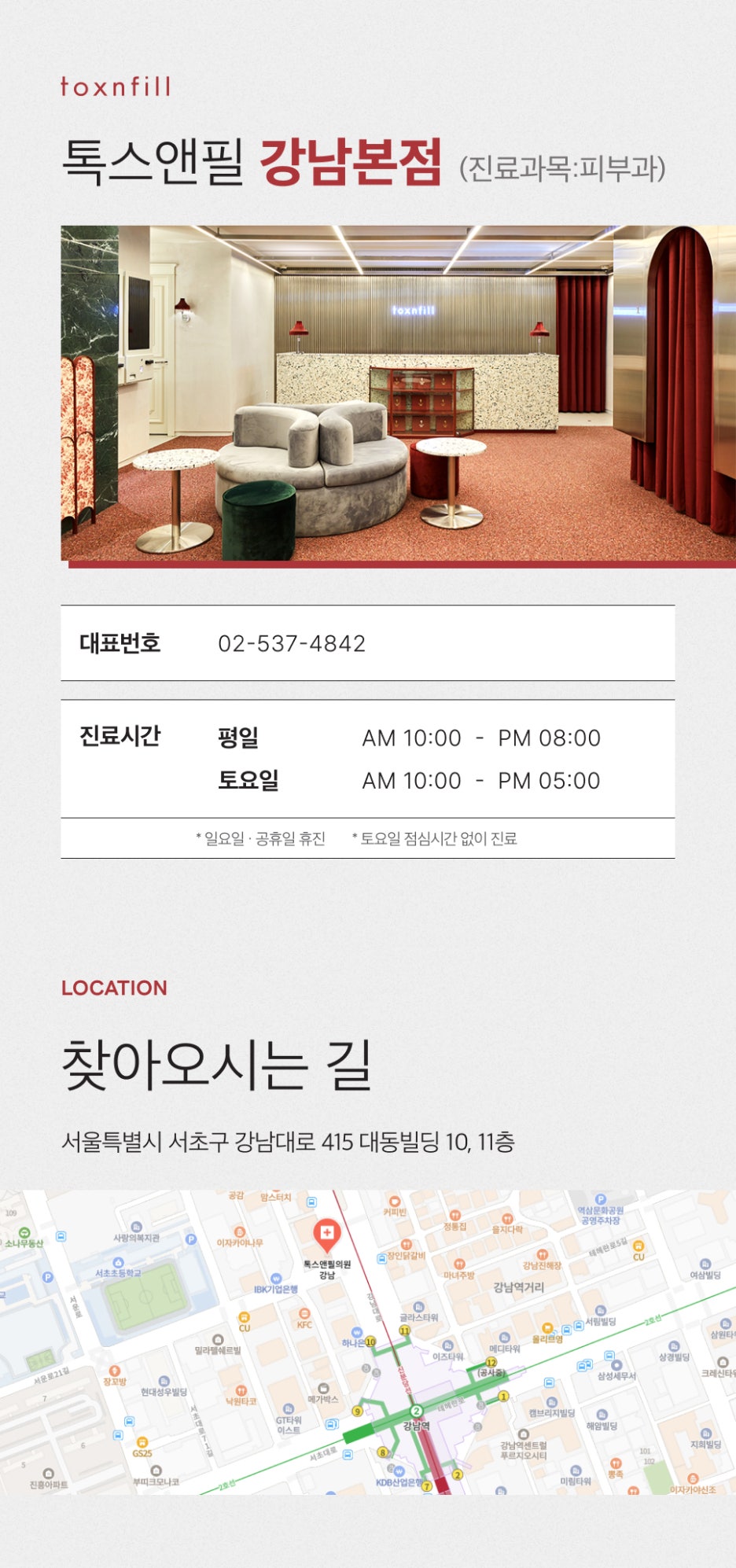
Toxnfill Gangnam Main Branch
Interested in Gangnam Station Thermage lifting?
| Address | 10th and 11th floors, Daedong Building, 415 Gangnam-daero, Seocho-gu, Seoul |
|---|
| Phone number | 02-537-4842 |
We pursue healthy beauty based on the principles of authentic products, proper quantities, and sincere care.

Are You Hesitating About Gangnam Station Thermage Lifting Because You’re Worried Your Cheek Fat Might Look Sunken?
Are You Hesitating About Gangnam Station Thermage Lifting Because You’re Worried Your Cheek Fat Might Look Sunken?










Previous image
Next image