You need to know "my line" to aim for better cosmetic results.
The eyes are one of the body parts that play an important functional role in helping us see and understand things. However, apart from this functional role, they also serve another important purpose. What, then, is considered the most important aspect of them? For those of you reading this post, after you wake up each morning and face yourself in the mirror, the first part you are likely to look at is your eyes. When facing yourself, and when facing others, the eyes are also the first feature that draws people’s attention. That is why many people worry about the eyes more than any other body part, both functionally and aesthetically, and many seek eye surgery for various reasons. Today, I’d like to talk about the most representative and commonly sought-after types of double eyelids and the related surgery among these eye-related concerns.

The basics of eye cosmetic surgery start with double eyelid surgery. From entropion, which can be a functional problem, to concerns about the shape of the eyes, many people look into cosmetic procedures. A double eyelid is a distinct crease formed in the skin that surrounds the eye, and the overall eye shape, including the size and appearance of the eyes, is determined by this crease. In the past, when cosmetic procedures were not as active as they are now, many of you may have tried to create an eye line that suited your face using double eyelid glue or tape. Sometimes, the naturally born double eyelid line can change in shape after repeatedly using these artificial methods.
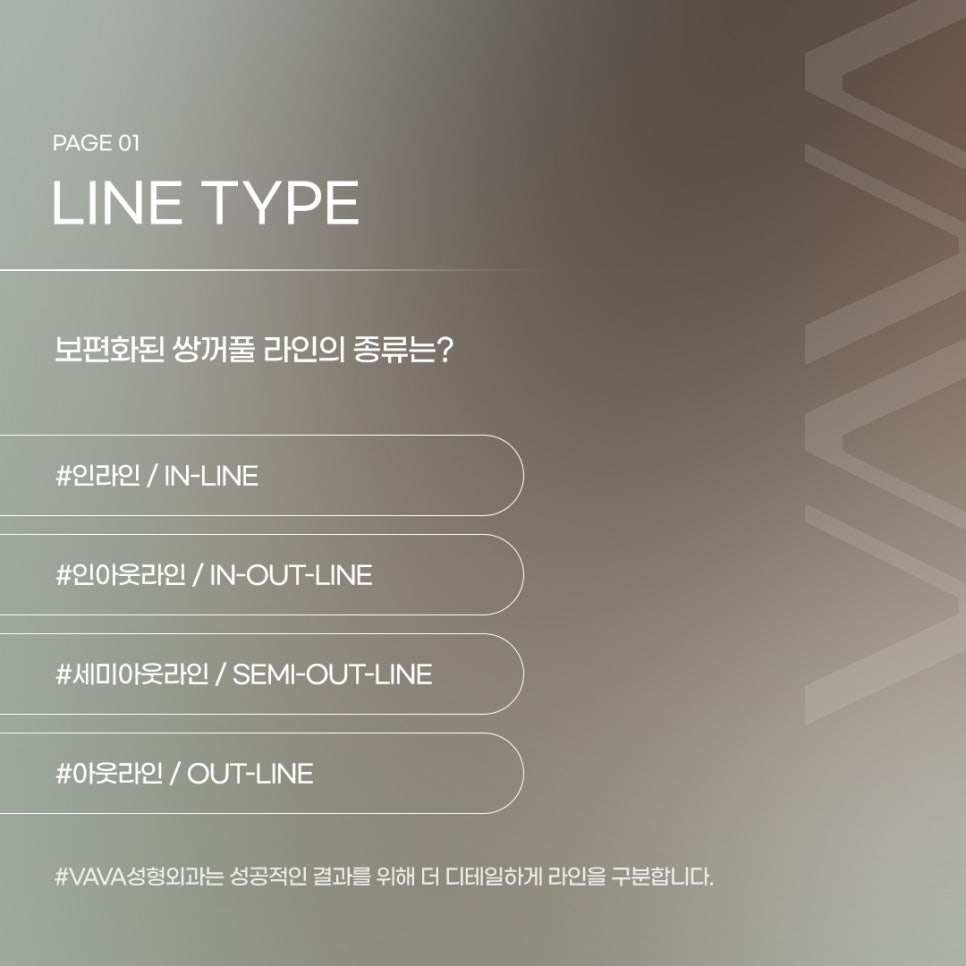
So, what types of double eyelids are there, and what are the characteristics of each? In the past, double eyelids were broadly divided into three types, but recently, considering the characteristics of the eyes, they are more finely classified into four types, and the most suitable type can be recommended to match a person’s facial features.
First is the "in-line (IN-LINE),"
which refers to a case where the double eyelid line and the lash line are almost at the same position and height. This is commonly referred to as naturally pretty eyes, and even after surgery, it has the characteristic of looking as if the person had double eyelids from the beginning. Because of this, it is a technique and eye type preferred by those who want to improve their appearance in a way that is subtle and not obviously surgical.
The second is the "in-out line (IN-OUT-LINE)."
The in-out line is also a very common method because it suits a wide range of eye shapes. It is especially suitable for people with medium-sized eyes, like many Koreans, whose eyes are neither very large nor very small. The double eyelid line starts where the eye begins and matches the lash line, but toward the outer side there is a slight distance, and the line rises a little more. This line can also create a natural yet defined eye appearance, making it a good recommendation for those who value a memorable image.
The third is the "semi-out line (SEMI-OUT-LINE),"
which is also suitable for Asians with average-sized eyes and is an appropriate surgical method for those with eyes slightly larger than average. It has also drawn considerable attention because it creates a gentle impression. In addition, since it is said to be a surgical method modified for East Asians, it can be described as a line surgery that has received favorable reviews in Korea as well.
The last line I will explain is the "out line (OUT-LINE)."
The double eyelid line is positioned above the lash line, creating the effect of making the eyes look considerably larger. Because of this, it is recommended for those whose eyelids are thin and whose eye shape may otherwise look unclear, as it can create a more defined eye appearance and is suitable for those who want a sharper impression.
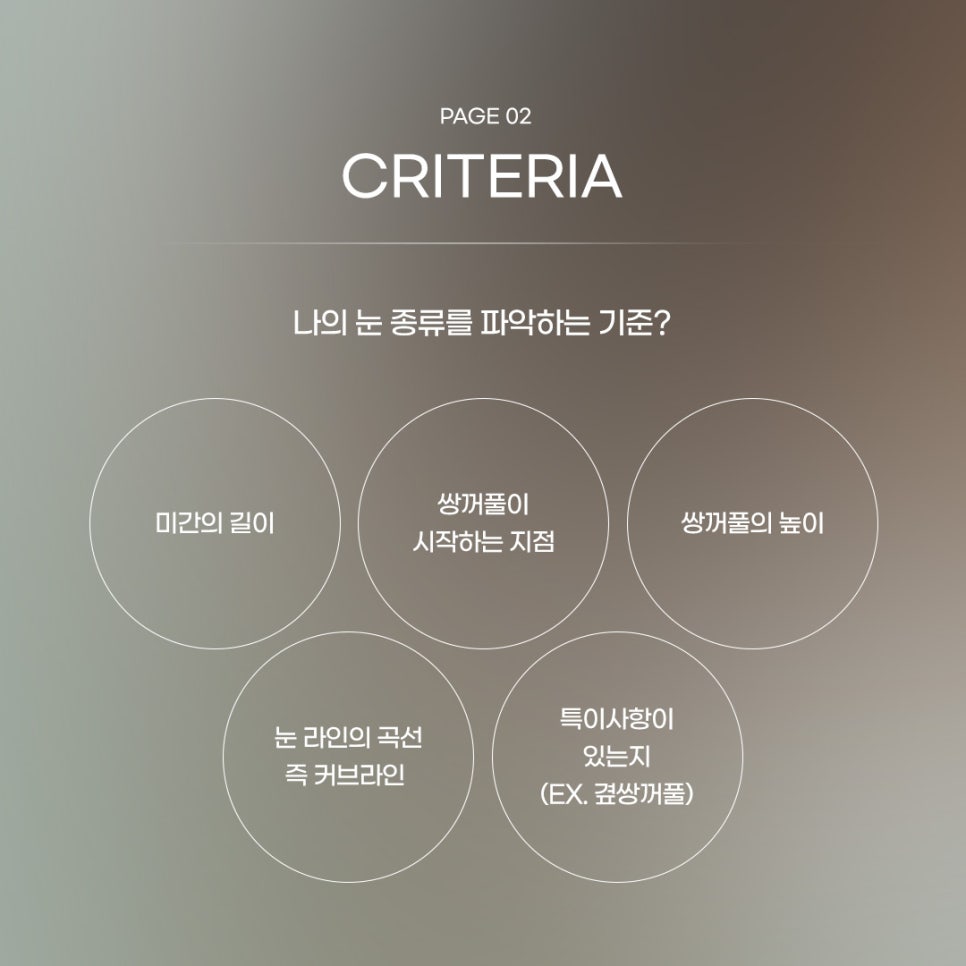
You need to understand your own eye type accurately in order to achieve the right eye line. At this point, you need to recognize things such as the length of the glabella, the starting point of the double eyelid, the height of the lashes and the double eyelid, the curve and contour of the eye line, and whether there are any special features such as double folds, so that you can obtain the line you truly want.
To put it simply, most people have an epicanthal fold, and based on this and their own characteristics, if a low line is created, it becomes an in-line. However, if the line is formed in the same direction as the epicanthal fold, it can become an in-out or semi-out line. Lastly, if the line is formed higher than the epicanthal fold, an out line is created.
The most important point here is that you should identify in advance the line that suits you and then undergo surgery.
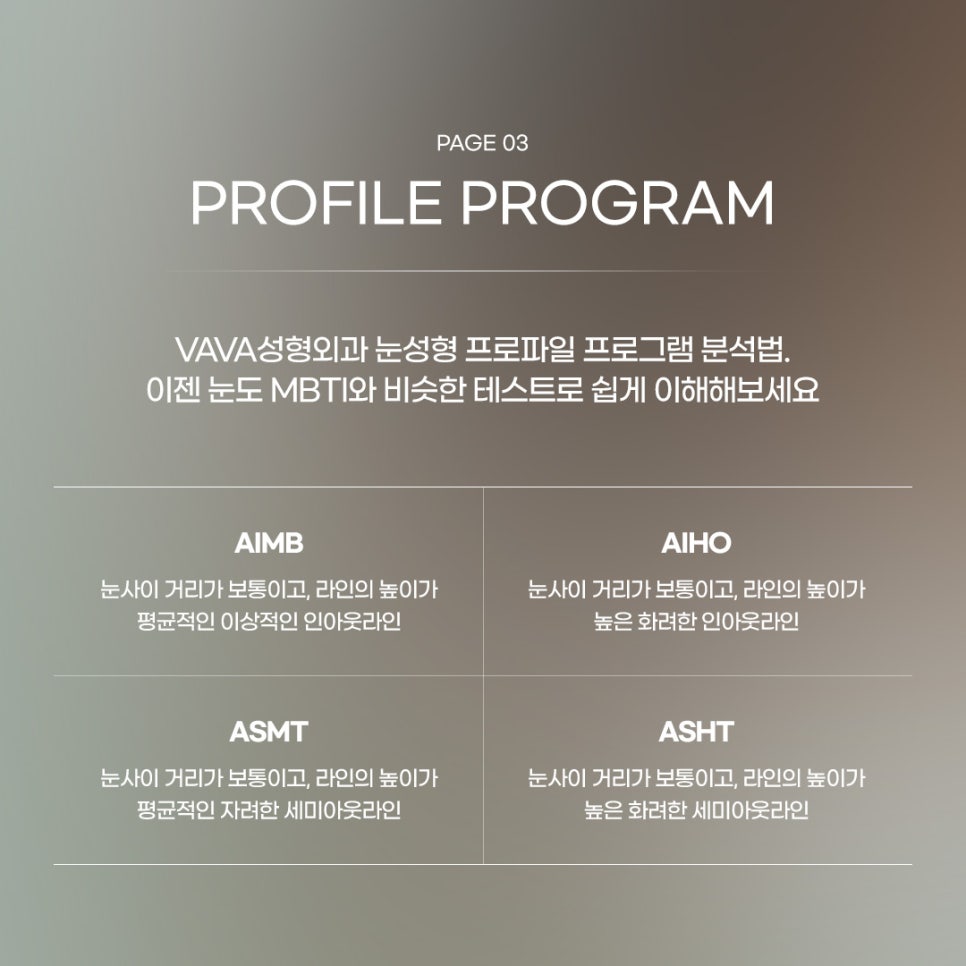
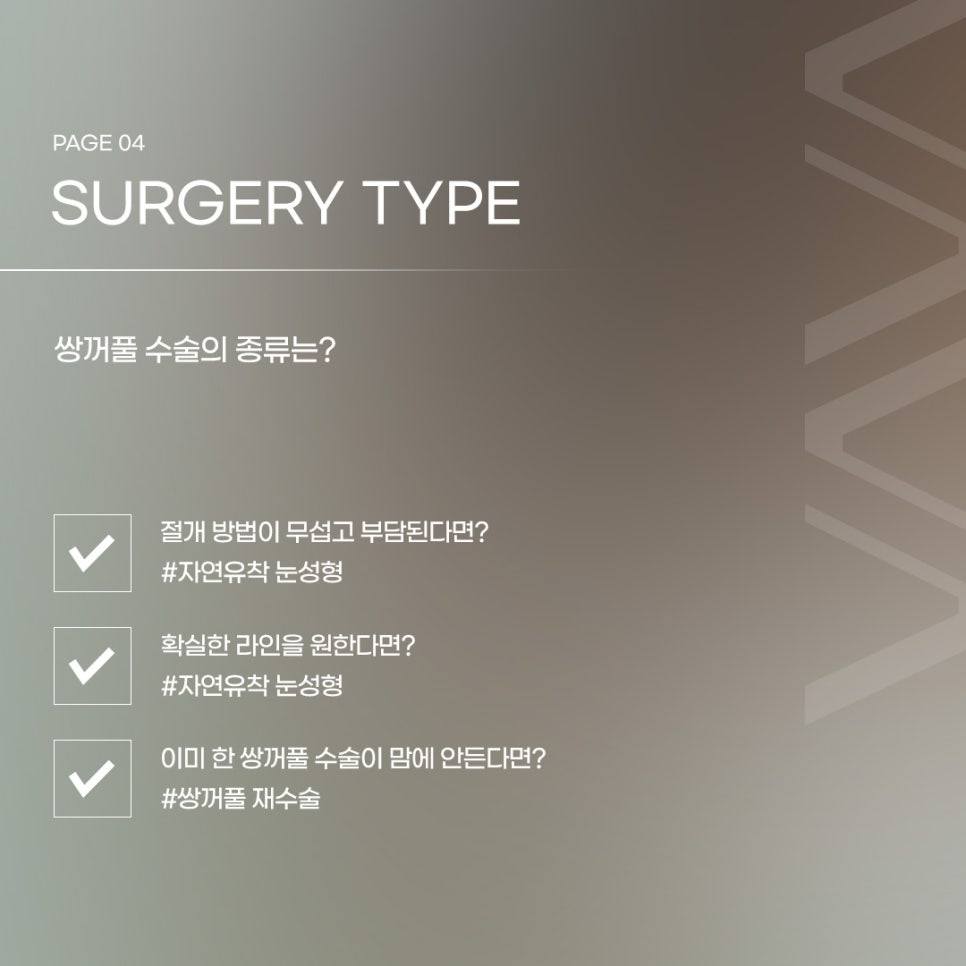
Double eyelid surgery can be divided into different types depending on the eye shape, and the procedure can be chosen according to what suits the individual.
The most representative method is natural adhesion, which begins by making tiny holes at the desired location where the double eyelid is to be created. After removing fat, the method connects the skin and the muscle in the eyelid (levator palpebrae superioris), allowing for a clearer and more natural result.
Next is incisional eye surgery. When creating the double eyelid line, an incision is made at the desired location, after which unnecessary skin tissue, fat, and muscle are removed before the surgery continues. Through this, it can improve symptoms such as sagging skin around the eyes or ptosis that may occur when the eyelid skin is thick or when a thick layer of fat has built up in the eyelid area. For this reason, it can be said to be suitable for those who need a surgical effect in terms of function as well.
The last one, the partial incision method, is performed literally by making a small incision to partially cut and remove areas with unnecessary fat or muscle, then firmly supporting and suturing the skin and muscle. This method can be applied to cases where it is difficult to improve the eyes with natural adhesion or the buried-suture method, cases where there is relatively a lot of fat and muscle in the eyelid, or cases where the line has come undone after a buried-suture procedure.
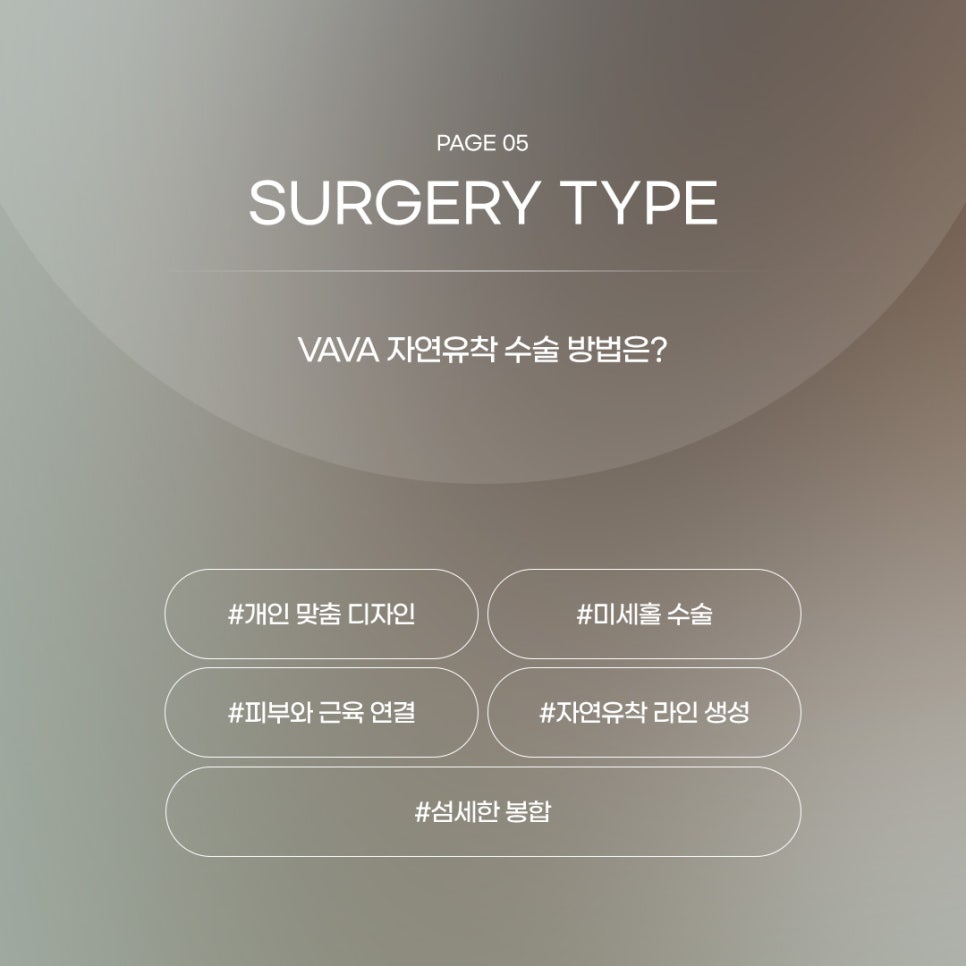
Among the different types of double eyelids, natural adhesion can be applied to people who, like many Koreans, do not have thick eyelids and have little sagging. It causes minimal scarring and swelling, and the procedure is not visible to the naked eye, making it a natural technique. After making tiny holes at the area where the double eyelid line is desired, fat is removed and the skin is connected to the levator palpebrae superioris to create a natural eye shape.
Although the natural adhesion method may seem relatively simple, even with this technique, a customized design suited to the individual must be applied, and it should be understood that tiny holes are made to firmly connect the skin and muscle, allowing a natural double eyelid line to form. In addition, careful suturing to minimize scarring is essential.
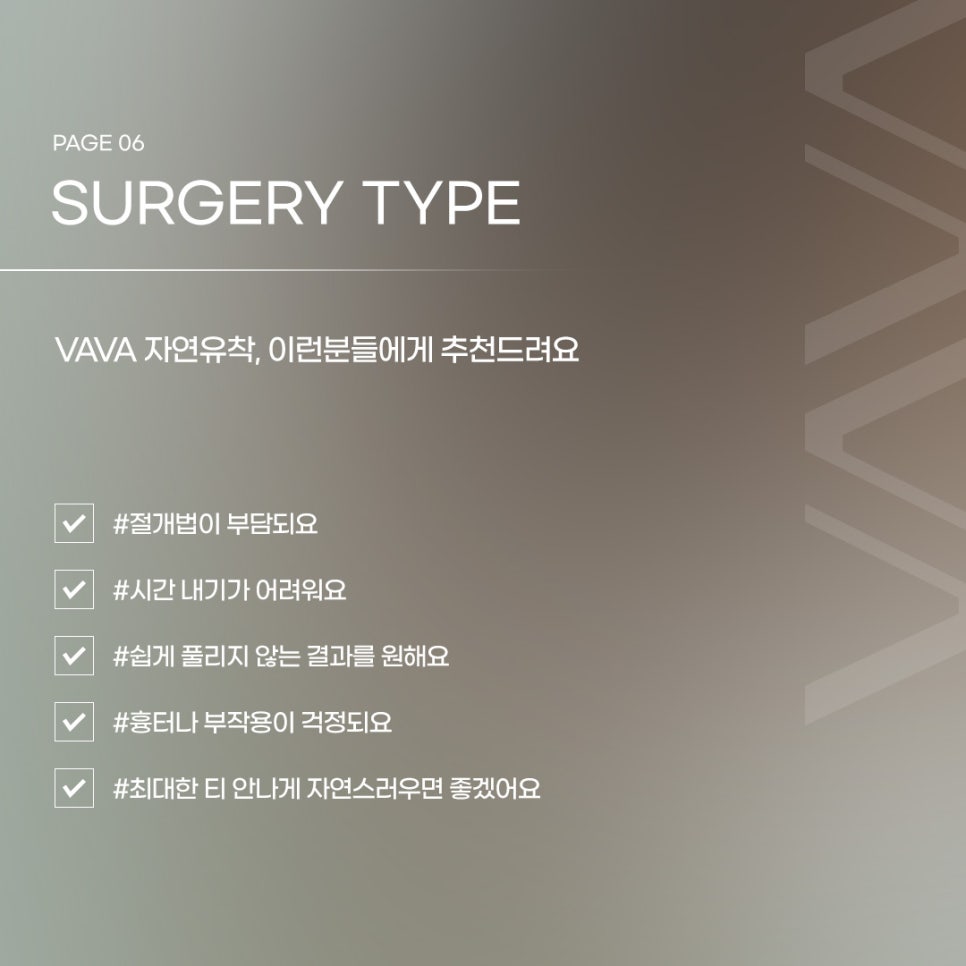
As such, natural adhesion eye surgery can be considered appropriate for those who find procedures involving incisions burdensome among the various methods of creating double eyelids, those who want a shorter recovery period due to time constraints, those who want to be free from concerns about scars or side effects, and finally those who want a natural look that is not obvious while also hoping for results that last semi-permanently.
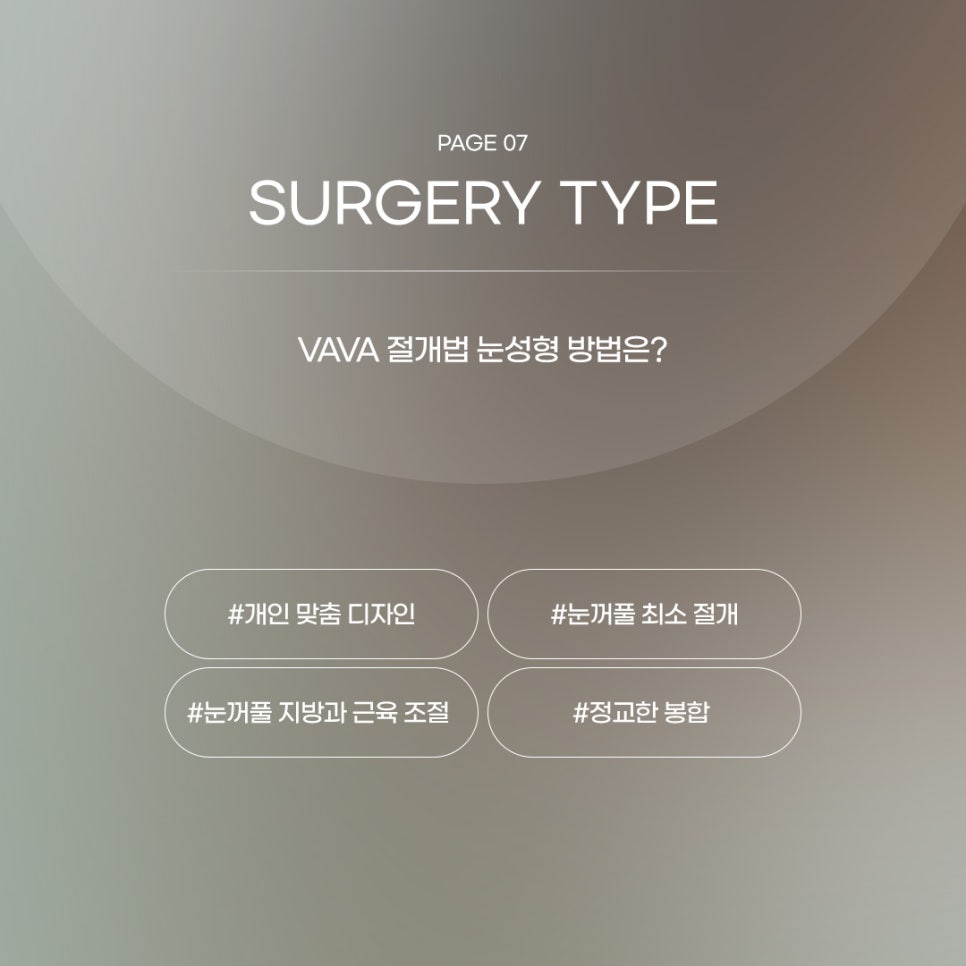
Just as we can see that people’s appearances vary, eyes can also be improved with specific techniques even when the eyelid skin is thick or there is a heavy fat layer, and that is the incisional method.
This procedure should also begin with a design tailored to the individual. Since in all surgeries, the larger the incision, the harder it may be to avoid side effects caused by scarring or inflammation, it is essential to preserve eyelid condition through minimal incision and to clearly control the fat and muscle in the lower layers of the eyelid. Lastly, careful suturing is key. Poor suturing can allow external viruses to enter the body and cause inflammation.
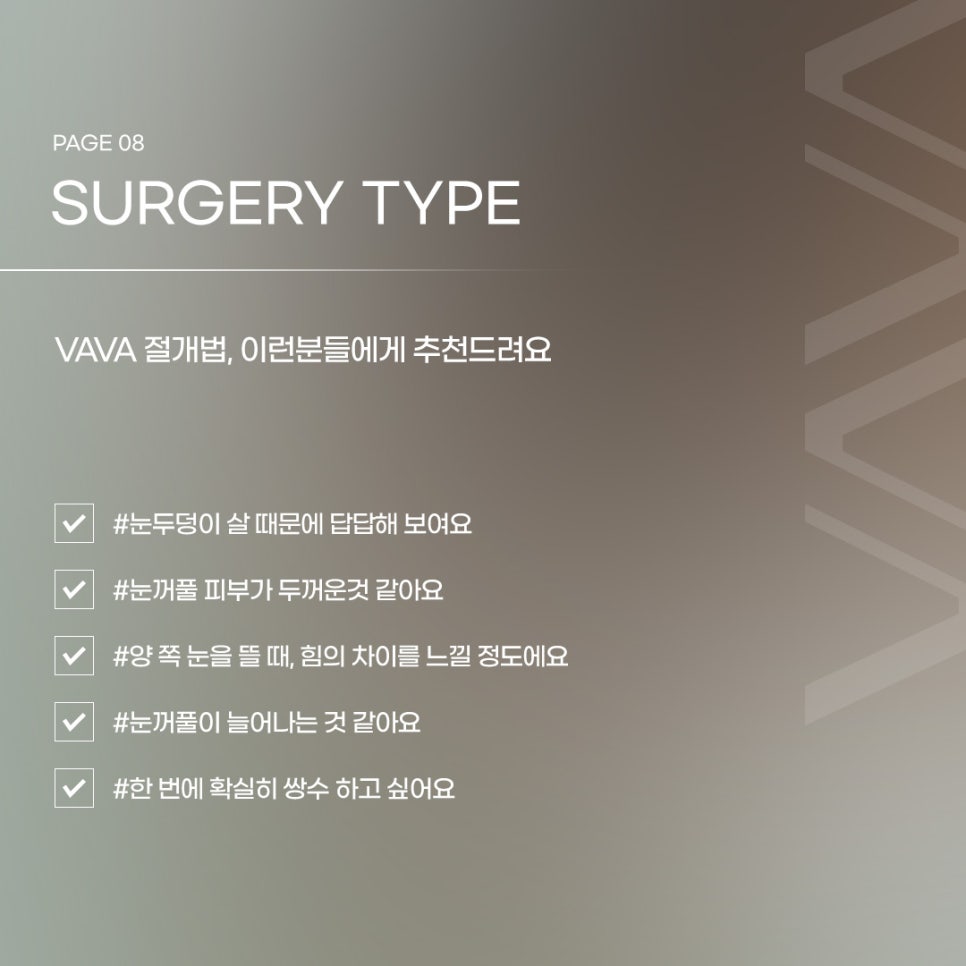
Cases that require incisional eye surgery are similar to the examples in the image above, and it is important first to understand your own eye characteristics and determine whether your eyes clearly require an incision. If you make the wrong choice, you may end up with an eye shape that feels burdensome, so thorough planning through consultation with a specialist is essential, and I would like to emphasize this point.
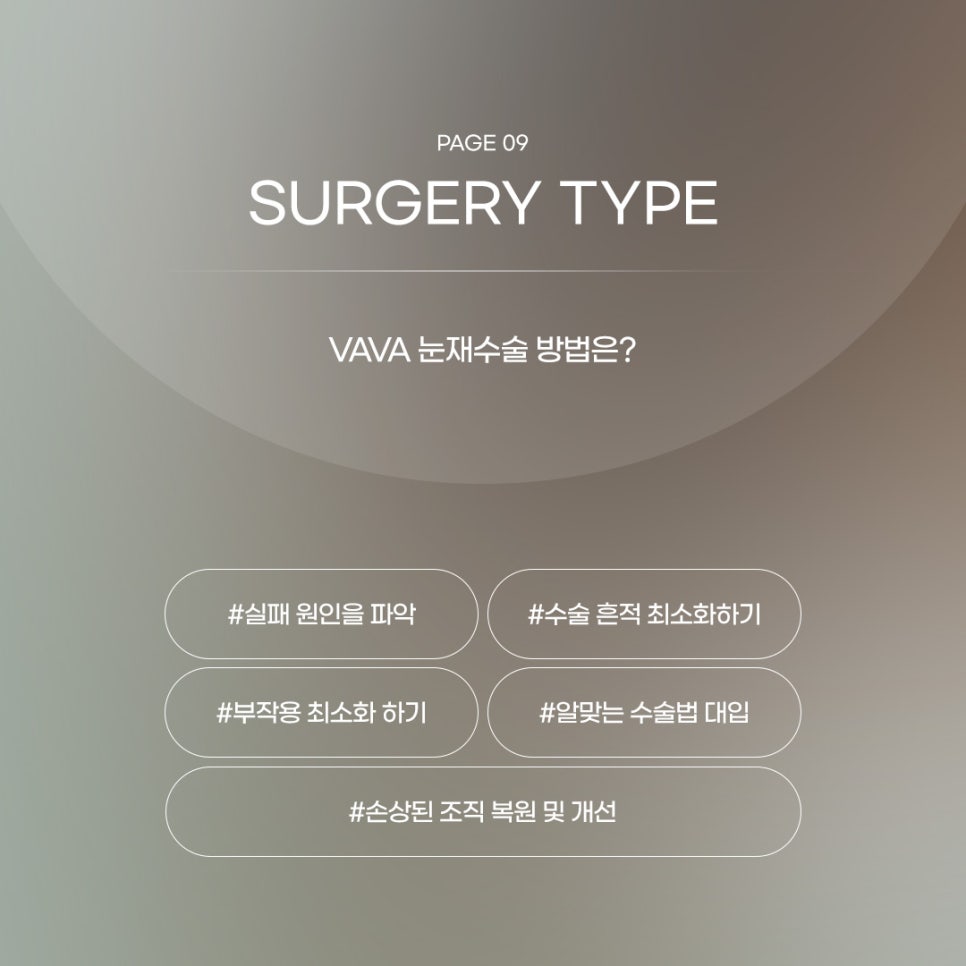
The final point of today’s post is eye revision surgery. When many people hope for revision surgery, it can largely be divided into three cases.
First, when they are not satisfied with the shape of the eyes,
second, when inflammation or side effects have occurred,
and third, when the first surgery has come undone,
and so on.
After carrying out the revision method step by step through the image above, applying revision surgery would be the most efficient approach.
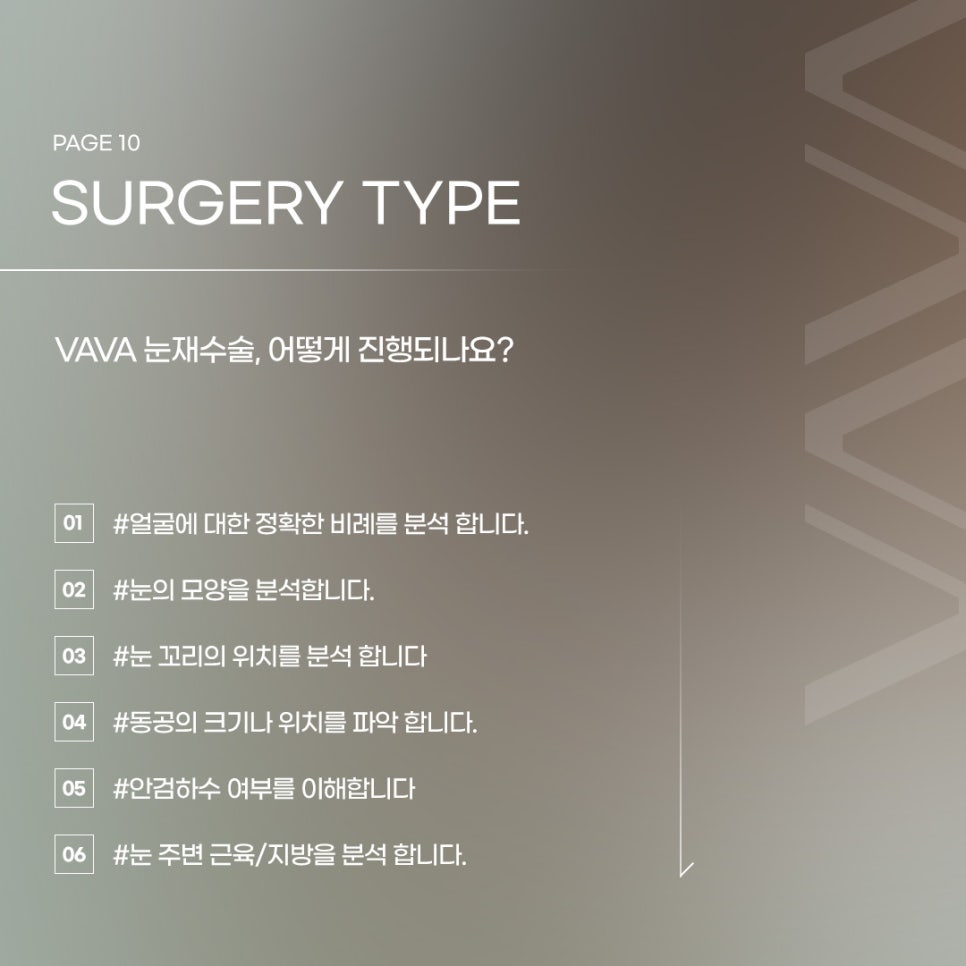
In the case of revision surgery, it is important for both the patient and the medical team to identify the cause of the failure and consider the current condition and appearance when planning the surgery.
Through this post, we looked at the types of double eyelids and the surgical methods that can be applied accordingly. Since translating the wording directly makes it difficult to understand the improvement points or needs of each individual objectively, please use this as reference only to the extent that it is helpful, and if you have any additional questions, please feel free to communicate with us at VAVA at any time.
#바바성형외과의원 #쌍꺼풀종류 #쌍꺼풀수술종류 #쌍꺼풀수술