Learn about the impression created by nose type

The impression created by nose type plays a major role. For nasal deformities that are congenital or acquired, it is possible to improve complexes and correct aesthetic aspects by considering facial harmony and the anatomical structure of the nose. Today, let’s talk about the right rhinoplasty methods for each type.
- A Bulky Nose That Looks Spread Out
A nose tip that is round, blunt, and spread wide, commonly called a bulky nose, takes up a large presence in the overall face and can look even more prominent when smiling, which may have a negative effect on your impression.
Because the nostrils are spread out, a bulky nose can also make the entire bridge or nose height look lower. In such cases, simple dieting or exercise cannot effectively reduce the size, so a carefully planned surgical method can produce effective results in reducing volume.
The spread-out nostrils of a bulky nose can be improved to some extent with nostril reduction, but meaningful improvement may still be difficult. For that reason, reinforcing and raising the tip using implants or autologous cartilage tends to show a more definite change. A low bridge is usually raised with silicone, but if the bridge is wide because the underlying structure is broad, lateral osteotomy can create a slimmer appearance from the front as well.
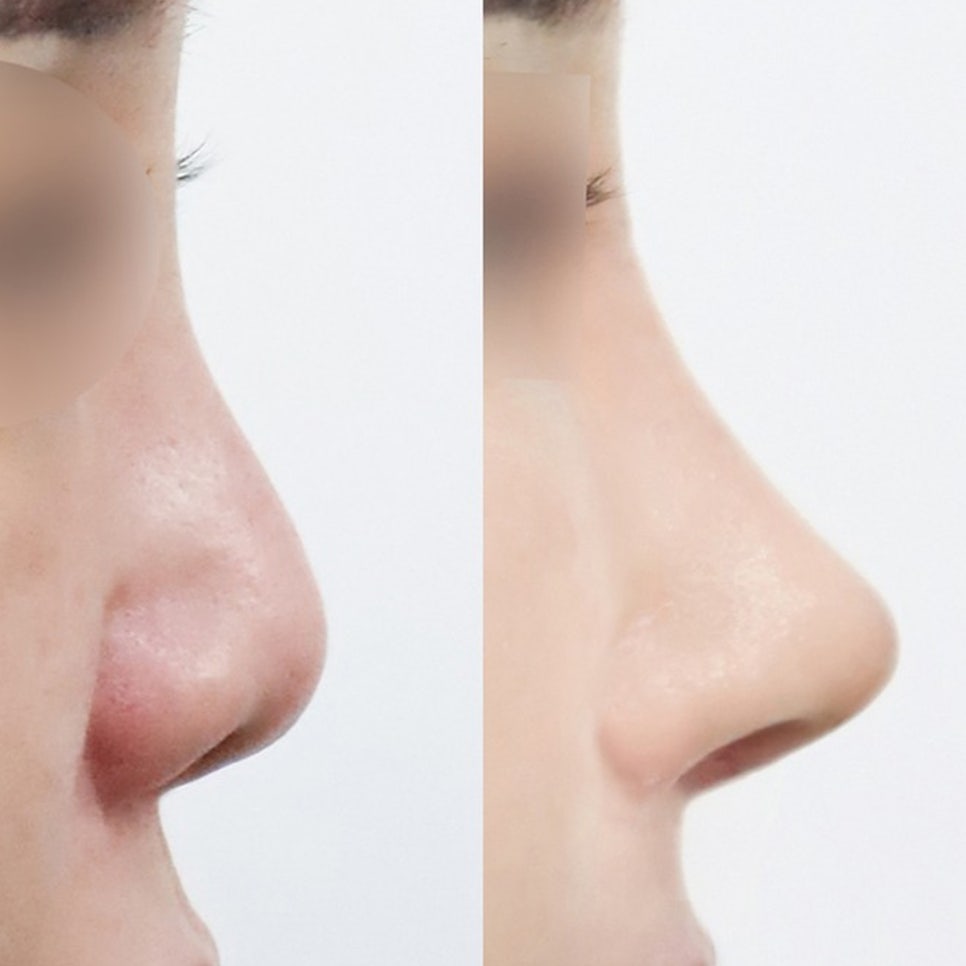
This patient had spread-out nostrils and a blunt appearance from the front, so the tip was reinforced using autologous cartilage. At the same time, because the bony structure of the bridge was also wide, lateral osteotomy was used to reduce the bridge area, and 2.5 mm silicone was used at the starting point of the nose to improve the bulky nose into a slimmer look even from the front.
- A Hump That Gives a Strong Impression
Not only a nose curved like an eagle’s beak, but also a case opposite to a straight nose where the bridge is bulging and the tip is drooping, creating an arrow-like shape, is referred to as a hump nose. Hump noses often make the face look harsh and unnatural, so hump correction surgery is often performed to shave down the bridge and raise the drooping tip.
If the hump is not clearly corrected at the beginning of the shaving process, there is a high chance it may recur later. Therefore, when performing hump surgery, it is important to thoroughly remove the curvature.
However, if there is no curvature on the bridge and the tip is drooping, making the bridge appear relatively突出, this is not a true hump but a false hump, called a pseudo-hump. In such cases, rather than shaving the bridge for correction, the tip alone can be corrected with an implant or autologous cartilage through a non-implant procedure.
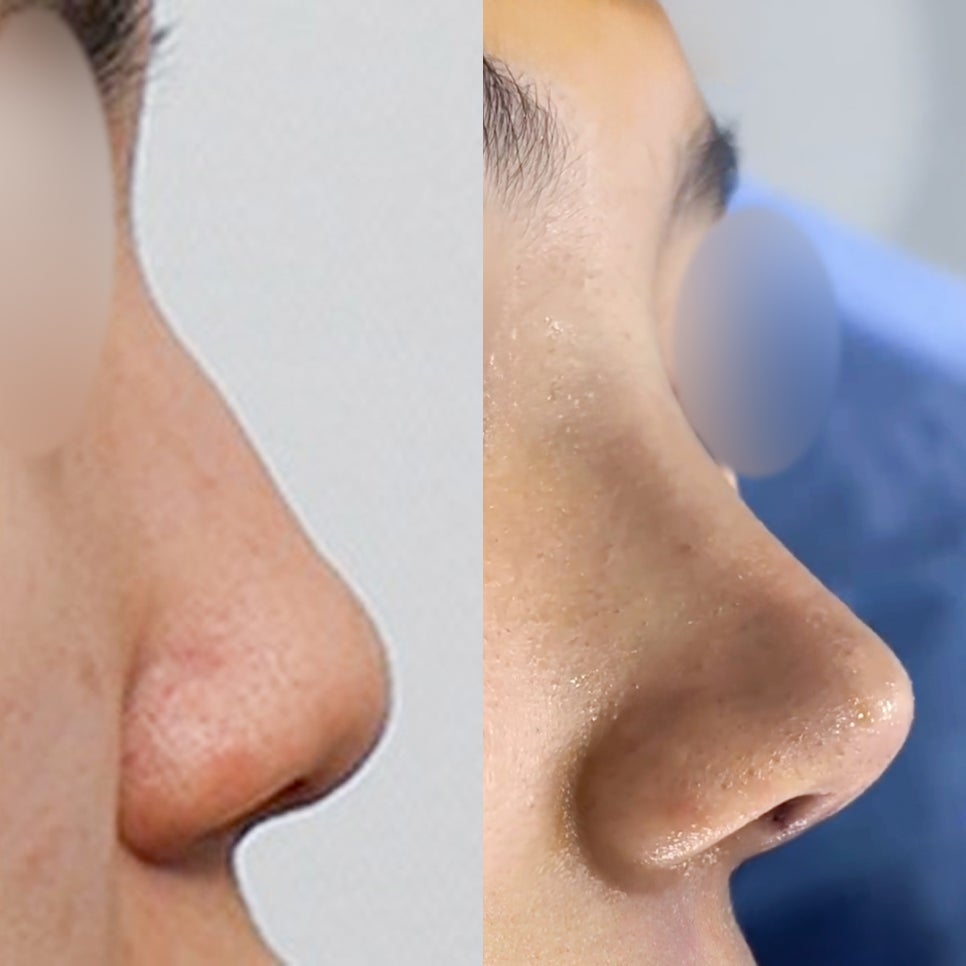
In this patient’s case, the nose had a hump on the bridge and a drooping tip that made the nose look long. The bridge was corrected by shaving the hump flat, then the bridge was raised with low silicone, and the tip was improved by using both septal cartilage and ear cartilage together to address the long-looking and curved hump nose.
- A Short Nose That Does Not Look Refined
A short nose, or upturned nose, where the tip appears lifted because the nose is short and the nostrils may be more exposed, can give an unrefined impression and is also considered unfavorable in physiognomy.
In cases of a short nose or upturned nose, it is often because the cartilage is underdeveloped or the skin is tight. If the angle between the nose and the upper lip, called the nasolabial angle, is 110° to 115° or more, it can be referred to as a short nose or upturned nose.
To correct this, surgery is usually performed using septal extension to lengthen the lifted tip and extend the septum, or by using columellar strut and reversed grafting to create support that lowers and fixes the alar cartilage downward, followed by a nostril-lowering method that pulls the alar cartilage down to the support.
Nostril lowering requires a large amount of cartilage, and because the nose tip must be lowered while also being raised, there must be enough skin to stretch. If those conditions are not met, additional structural materials need to be grafted. Methods include harvesting and grafting part of the septal cartilage, or using materials such as autologous rib cartilage or donor rib cartilage to improve the nose to a length that suits the face.
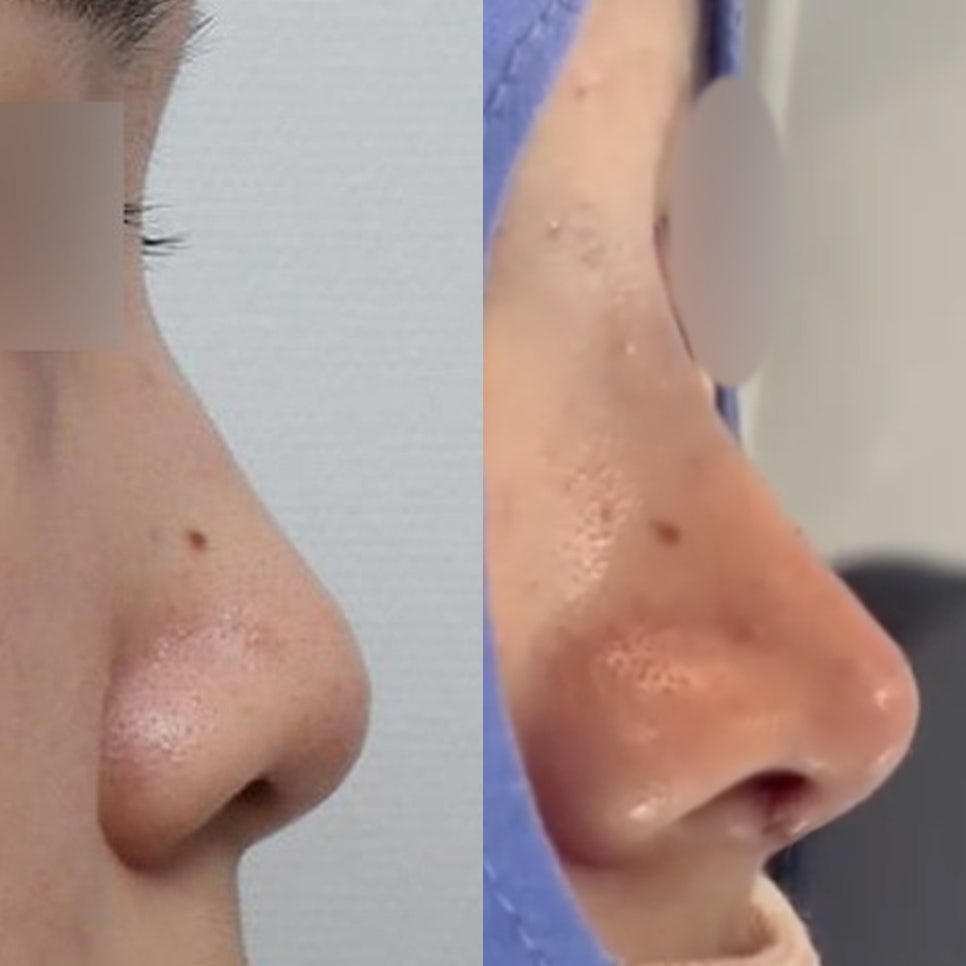
This patient had a low nose and, when viewed from the front, an upturned nose with nostrils that appeared lifted. Correction using nostril lowering surgery was needed, but there was not enough septal cartilage to use for the procedure, so donor rib cartilage was additionally used to correct the lifted-looking tip. Silicone was also used to raise the low bridge to the ideal height, showing an improved result.
※ Please note that for this case, personal consent regarding portrait rights was obtained for the medical column.

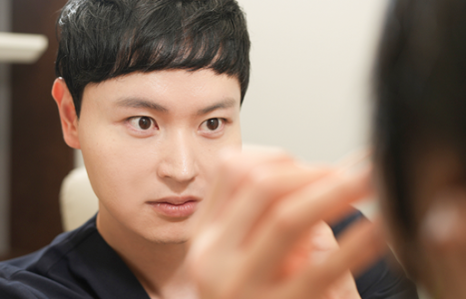
Among the facial features that make up the face, the nose is located at the center and is one of the most three-dimensional areas, so the impression can be greatly affected by its length, height, and shape. Therefore, it is recommended to consult closely with a specialist about your own type and try a design that considers balance.


#바바성형외과 #코수술 #매부리코 #복코 #들창코