
Recently, there has been a significant number of people who, even after their first nose surgery or revision surgery, still do not get the nose line they wanted and continue to consider another revision.
If we look at the common problems of people considering revision or re-revision surgery, most cases went wrong starting right from this point: the consultation.
To accurately identify the surgical method that is right for you, there are many things to consider through a detailed consultation based on examinations, including nose line design based on facial proportions, the exact problem, the surgical plan, and the selection of materials that can be used.
So today, let’s look at the types of improved nose revision surgery after accurately identifying the problems and carrying out a carefully planned approach.
- Asymmetric nostrils and a hump that was not fully removed
This patient came in because they had undergone their first nose surgery and revision surgery at another hospital due to a hump and asymmetry in one nostril, but the condition had not improved.
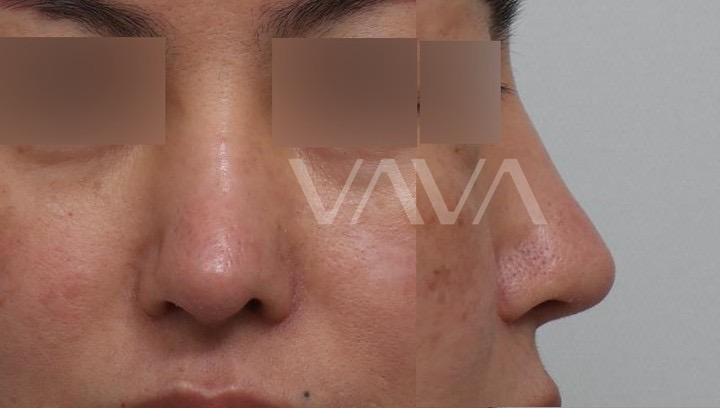
From the front, the bridge and tip of the nose felt blunt, and one nostril appeared to be pulled upward. From the side, the hump had not been fully corrected, leaving little curve in the bridge line and making the nose look more masculine.
In the case of a hump, if it is not properly shaved down the first time, it often grows back, which is why revision surgery is frequently performed. For that reason, it is important to shave it down thoroughly. As for nostril asymmetry, it can occur when the correction process of tying the cartilage has been overcorrected.
Through a careful consultation, we decided to correct the remaining hump with additional lateral osteotomy, and the nostril that appeared lifted was identified as having curled cartilage inside the nose, so we planned to improve it by straightening the cartilage.
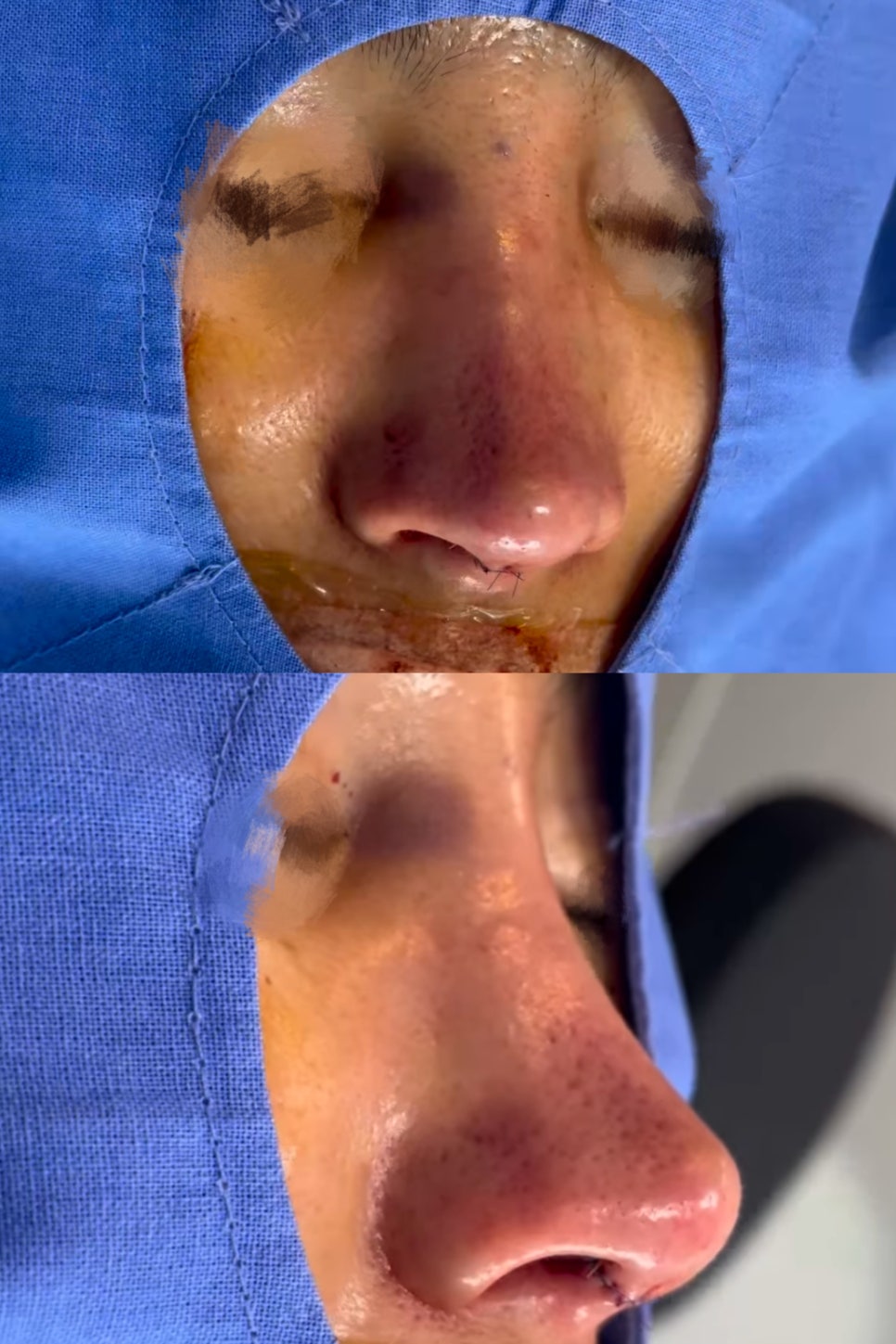
Thanks to proceeding with an accurate surgical plan, the patient’s concern about the lifted nostril and the hump that had not improved has been addressed, showing a more symmetrical, smoother, and improved hump correction result.
- A blunt bulbous nose that did not improve
This patient came in because, although they had undergone their first bulbous nose surgery at another hospital, the blunt appearance of the bulbous nose from the front had not improved.

The blunt feeling of the nostrils and tip of the nose from the front had not disappeared at all, and the overall impression of the face also looked wider.
In cases of a bulbous nose, the skin is thick, but if non-rigid material is used at the tip and the height cannot be increased, the blunt appearance may not improve. In other cases, the alar cartilages may be spread apart to the left and right, and if they are not tied and corrected in the proper proportions, improvement often does not occur.
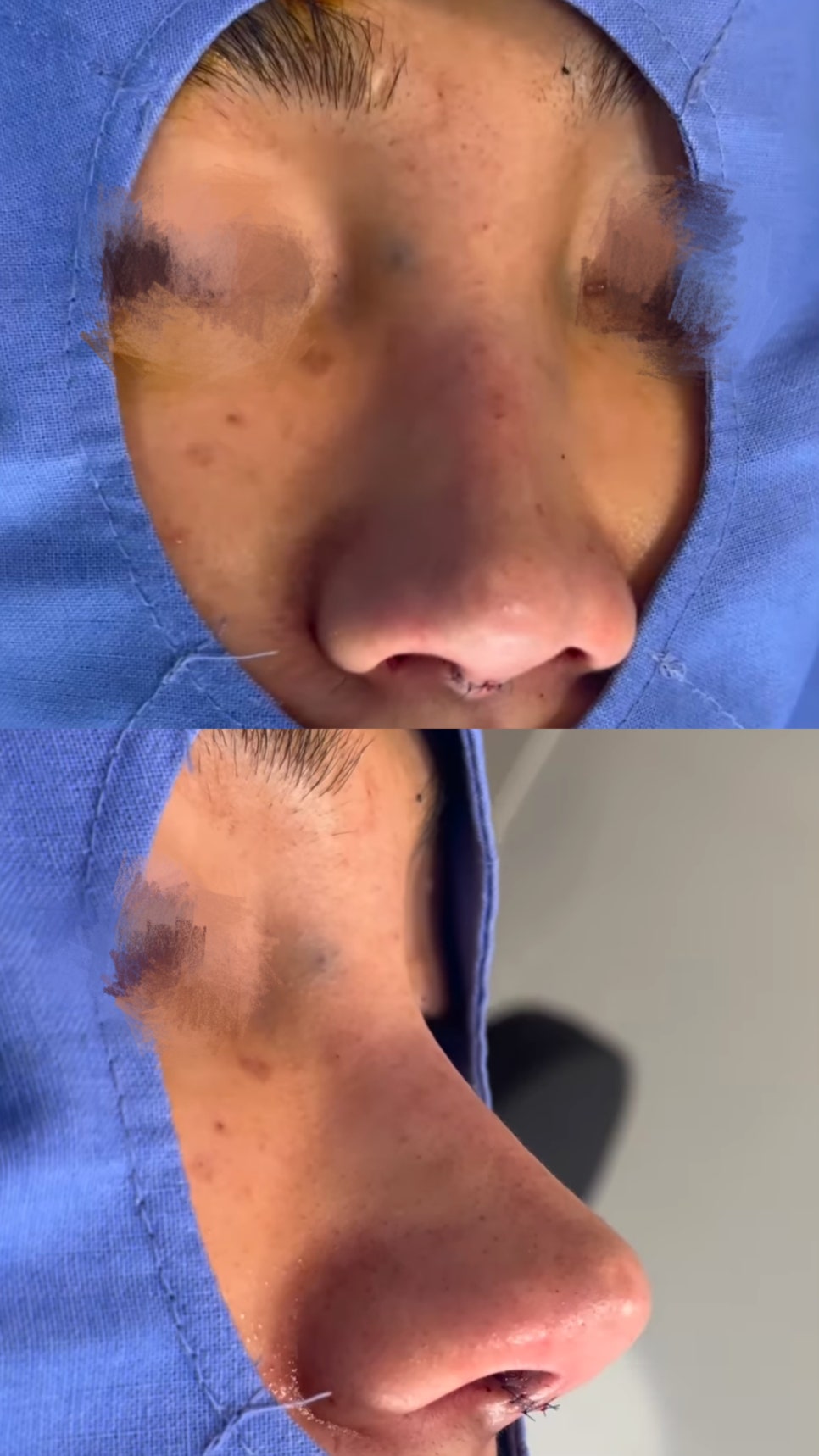
Through a careful consultation, we decided to improve the overall frontal bulbous-nose appearance by performing bulbous-nose correction, lowering the nostrils, refining the bridge line, and improving the columella depression scar at the same time. For the tip, we planned to replace the silicone and use donated rib cartilage together with ear cartilage to firmly increase the height, so that a slimmer impression could be achieved from both the front and the side.
Thanks to accurately identifying the problem and proceeding with a surgical plan, the patient’s concern about the blunt bulbous appearance from the front has been improved.
- A crooked nose and a pinched tip
This patient came in because, although they had undergone their first surgery and revision surgery at another hospital, the crooked appearance from the front had not improved, and the tip also looked pinched, making the nose aesthetically unappealing.
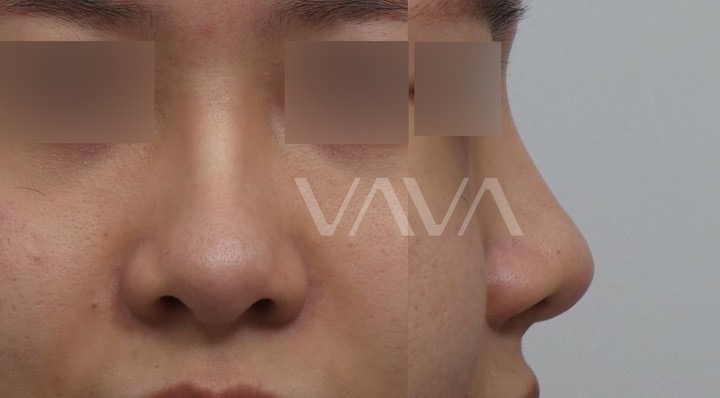
When viewed from the front, a crooked nose makes the overall facial symmetry also appear crooked, while a pinched nose is not easy to notice from the side but becomes more prominent when viewed from the front or from below.
A crooked nose often occurs because the internal cartilage was not fixed sufficiently and gradually becomes crooked over time. A pinched nose usually occurs when the tip cartilage is tied too tightly, or it can also appear frequently when the nose is raised excessively.
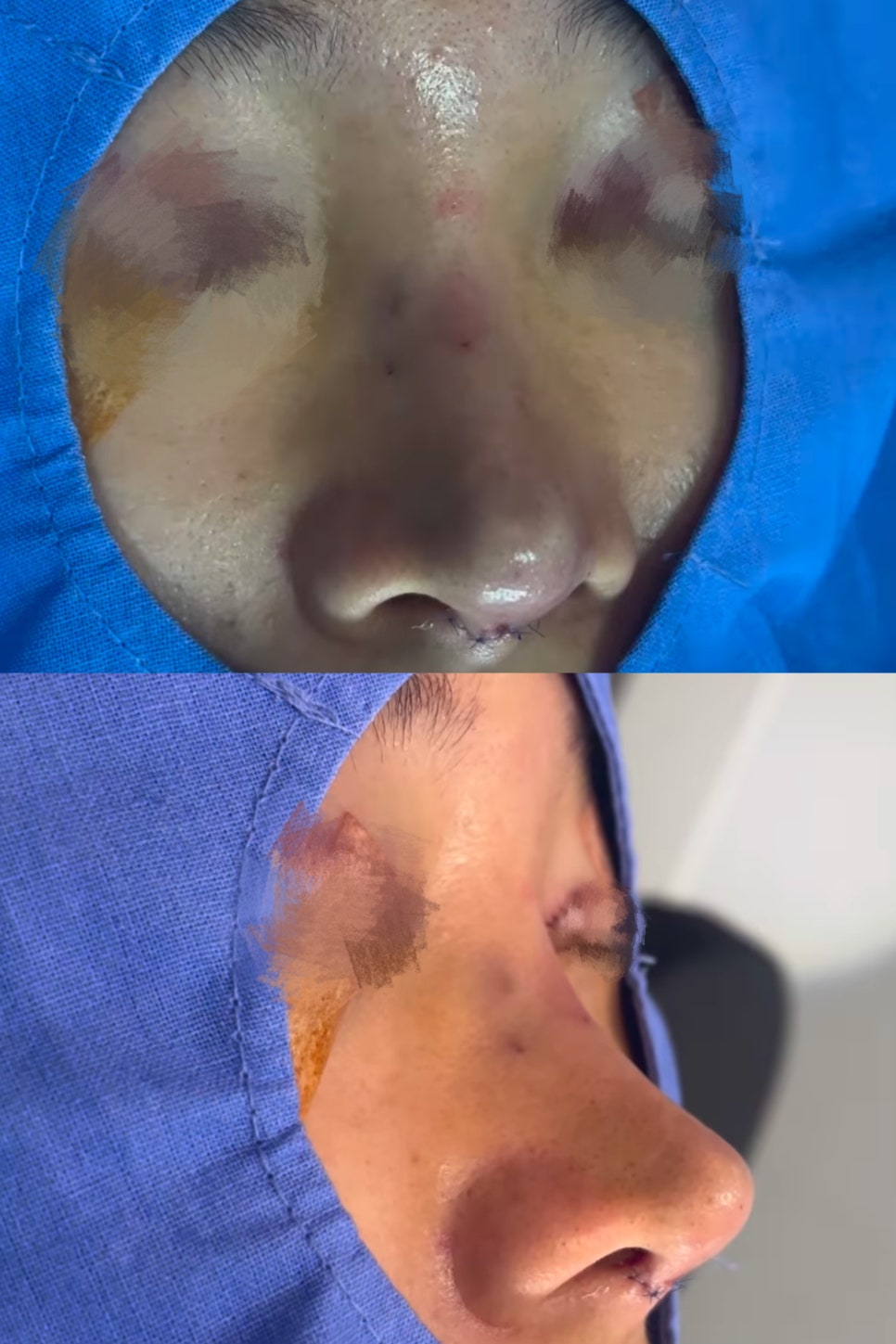
Through a careful consultation, we decided that for the crooked nose, we would carefully examine the internal structure of the nose, determine the condition of the nasal bone, cartilage, and implant position, and then reposition them to the optimal location for improvement. For the pinched-looking tip, after checking the internal condition, we planned a surgical approach to loosen the overly tightened cartilage and improve the pinched appearance.
By accurately identifying the problem and proceeding with the surgical plan, the pinched and crooked nose seen from the front has been improved to look symmetrical and free of the pinched appearance.
※ Please note that for this case, individual consent for portrait rights was obtained for the medical column.

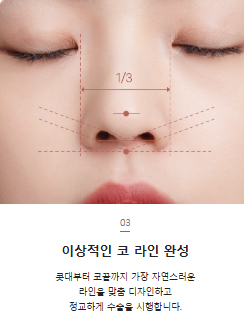
A re-revision nose surgery, which requires far more delicate and careful work than a first surgery or even a first revision, is a difficult procedure, so it is important to receive treatment from medical staff with abundant surgical know-how and skill. In addition, because each person’s skin condition and internal nasal structure are different, if the procedure is not carried out with an accurate plan, another revision surgery may be needed again. Therefore, the most important part is accurately identifying the problem and finding the solution.
At Baba, we provide an optimized plan through careful consultation and a customized surgical plan from start to finish, delivering the best results.


