
People each have different types of eye shapes and sizes, as well as differences in eyelid thickness and the degree of eyeball protrusion.
Among those considering double eyelid surgery, some can achieve the desired eye shape with double eyelid surgery alone, but depending on the structure and characteristics of their own eyes, there are cases where canthoplasty is also needed at the same time.
The types of canthoplasty can be broadly divided into four categories: inner corner canthoplasty, upper canthoplasty, outer corner canthoplasty, and lower canthoplasty. Today, I will explain the types and methods of canthoplasty according to eye shape, as well as the effects of each.
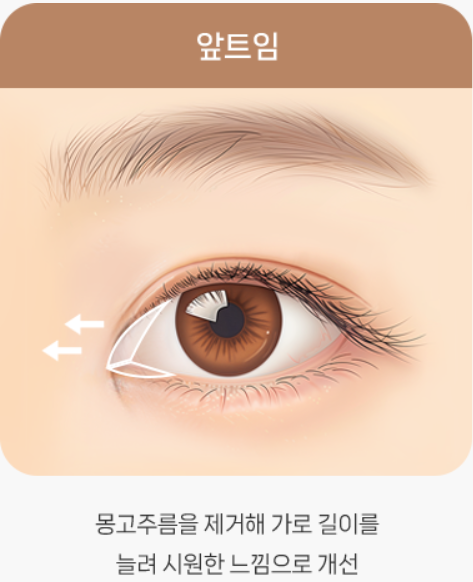
- Inner corner canthoplasty
Inner corner canthoplasty is mostly known as a procedure that removes the epicanthal fold.
The surgical method involves making an incision at the inner part of the eye (medial canthus) and pulling it forward to fix it in place.
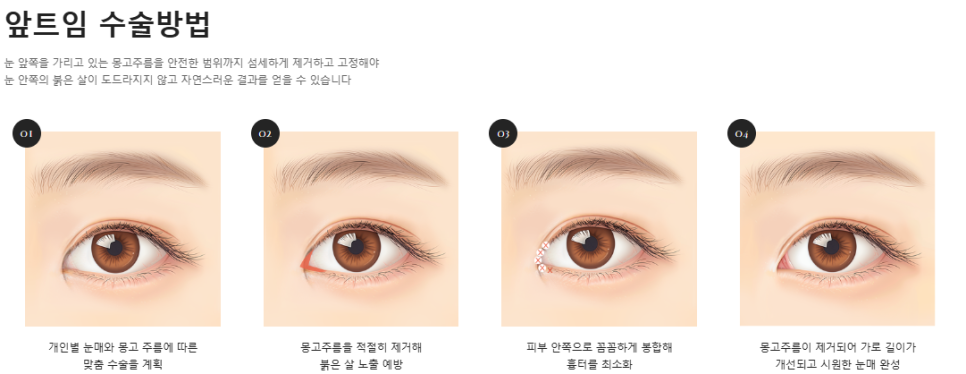
If inner corner canthoplasty is performed, the covered inner corner of the eye can be naturally expanded forward, improving the front line of the double eyelid that may have appeared somewhat round. This can be an effective canthoplasty method for people with an epicanthal fold shaped like a hook at the inner corner of the eye or for those with a wide distance between the eyes.
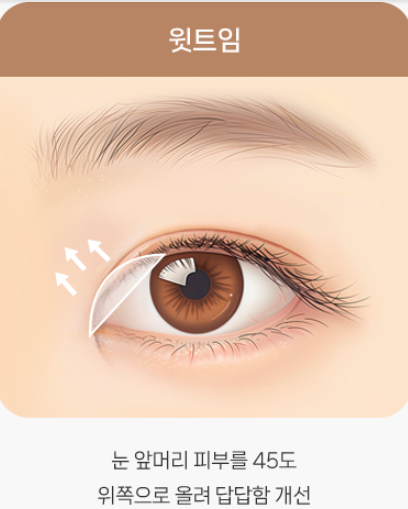
- Upper canthoplasty
This is a surgical method in which the upper part of the inner corner of the eye is incised, connected to the fascia, and pulled to a natural range, then fixed upward at a 45-degree angle.
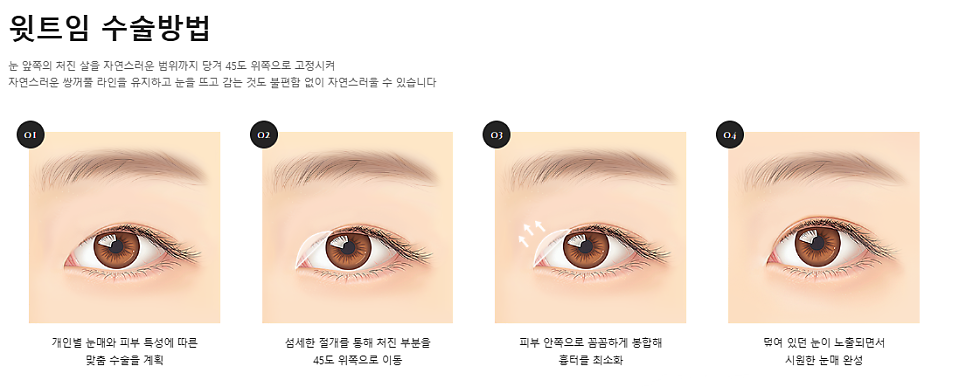 If upper canthoplasty is performed, a natural double eyelid line can be created, and as the covered inner corner of the eye is expanded upward, the partly hidden pupil at the front of the eye can appear more open and refreshed. This can be an effective canthoplasty method for people whose upper eye area feels tightly blocked or who have uneven double eyelids.
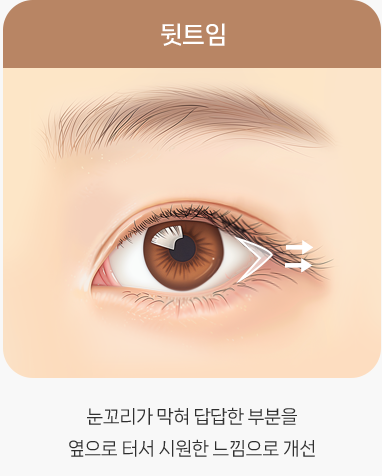 3. Outer corner canthoplasty
This is a surgical method in which the outer part of the eye (lateral canthus) is incised, pulled backward, and fixed in place.
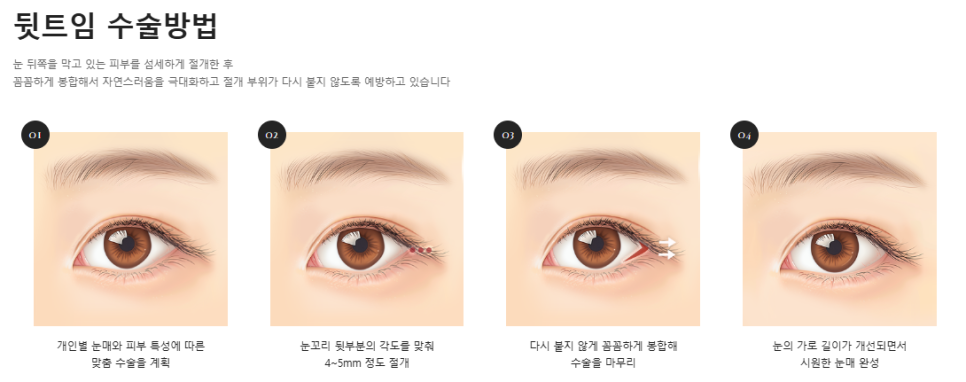
If outer corner canthoplasty is performed, the length of the back part of the eye increases, making the overall horizontal length of the eye appear longer.
It can be an effective canthoplasty method for people whose eyes are short horizontally or whose outer corners tilt upward, making their impression seem sharp.
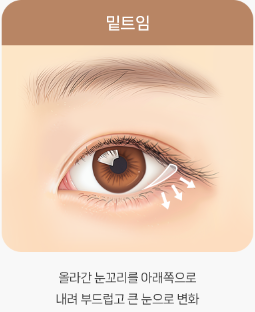
- Lower canthoplasty
This is a surgical method in which the conjunctiva under the eye is incised, pulled downward, and naturally fixed at a 45-degree angle.
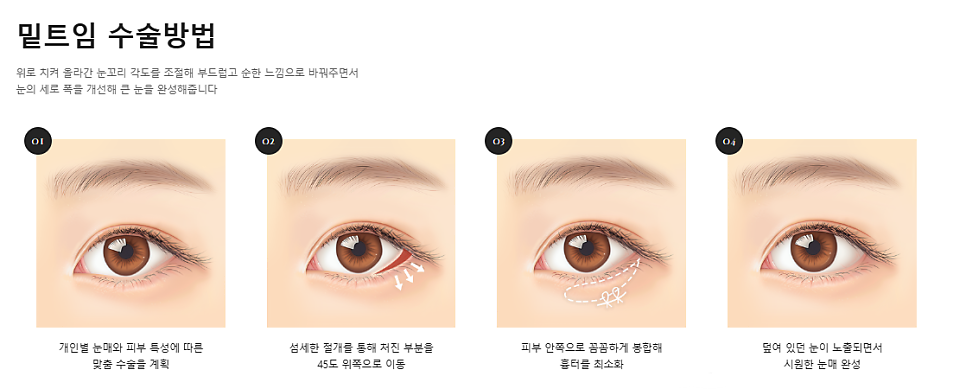
If lower canthoplasty is performed, the angle of the eye is lowered, softening the eye shape and extending the vertical length of the eye.
It can be an effective canthoplasty method for people whose outer corners tilt upward or who have a drooping eye shape.
Side effects
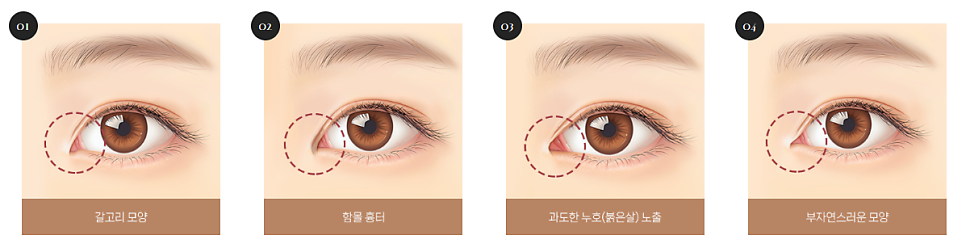
All surgeries can come with side effects, and let’s look at the side effects related to canthoplasty.
First, among the common side effects after inner corner canthoplasty and upper canthoplasty, the lacrimal caruncle may be excessively exposed, making the eyes look too close together, or the shape of the inner corner of the eye may be altered, resulting in a hook shape, depressed scars, white scars, and other forms.
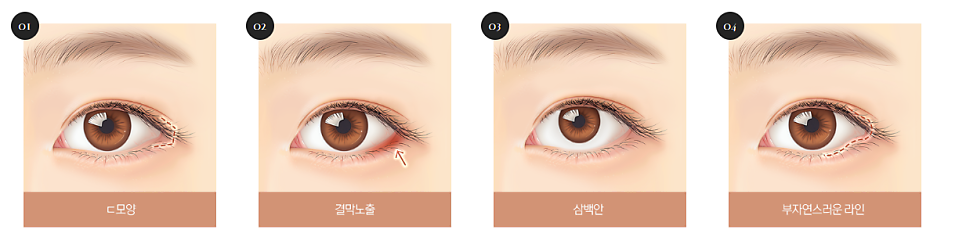
In addition, common side effects after outer corner canthoplasty or lower canthoplasty include a D-shaped appearance, conjunctival exposure, exposed sclera under the iris, and unnatural lines.

Canthoplasty is a surgical method that can more effectively improve the horizontal and vertical length of the eyes, as well as the angle of the eyes, which cannot be solved with double eyelid surgery alone.
However, if an incorrect surgical method is performed without considering the individual’s characteristics, side effects may follow. Therefore, I recommend proceeding with an effective surgical plan through a thorough consultation with a highly skilled specialist.