Individuals often plan and undergo rhinoplasty to improve their unique nasal concerns and achieve an ideal nasal line, but sometimes, after time has passed, the nose can become distorted and lead to unsatisfactory results.
If such unsatisfactory results occur or problems develop with the nose, revision rhinoplasty is considered. The causes can appear in many ways, and among them, the most common case is tip drooping caused by postoperative absorption.
So today, Baba Plastic Surgery will explain how to achieve a satisfying nasal line without tip drooping.
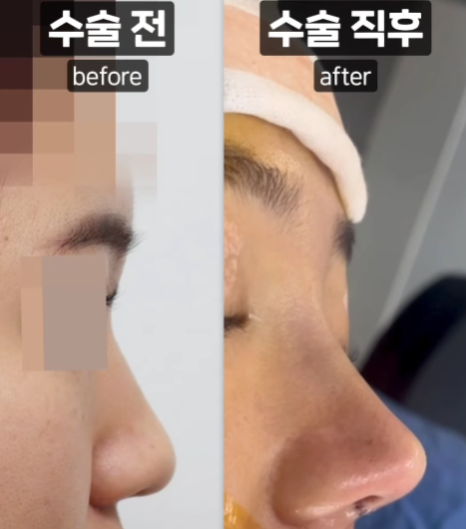
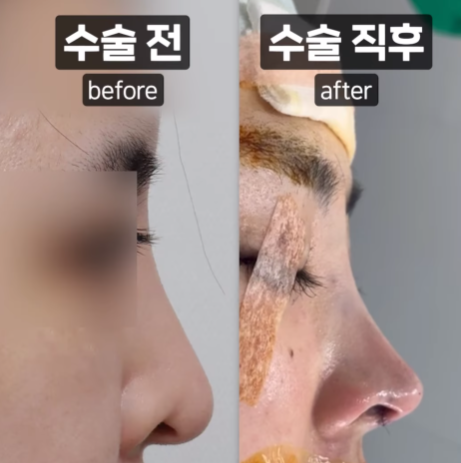

How can you tell if tip drooping has occurred?
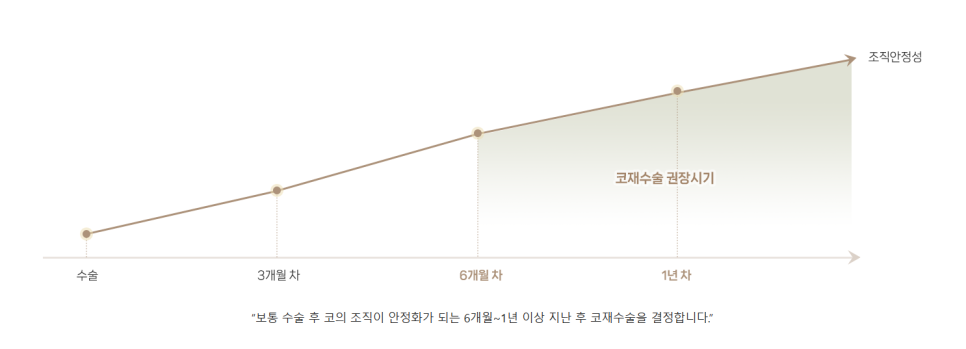
To determine tip drooping, it is important to assess it after allowing enough recovery time rather than immediately after nasal surgery.
After nose surgery, gauze is placed inside the nose to stop bleeding and apply pressure, and then removed the next day. At that time, the nostrils that had been expanded by the gauze may become smaller after the gauze is removed, which can make the nostrils and nasal openings seem smaller and make it appear as though the tip has drooped.
However, this is a natural change that occurs as swelling subsides after nose surgery, so there is no need to worry.
To accurately determine tip drooping, major swelling usually goes down within about a month, and the exact line can be assessed as residual swelling subsides over 3 months to as long as 1 year.
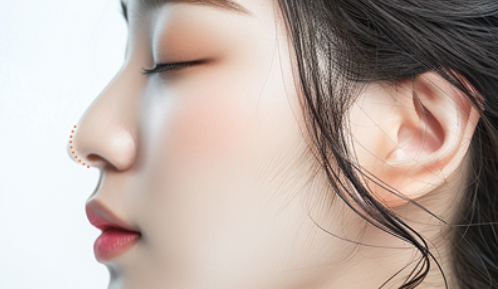
At that point, if you take a side-view photo of your nose with a neutral expression and the tip appears to droop downward in a hook shape, you can self-diagnose tip drooping.
Why does tip drooping occur?
There are various reasons why tip drooping occurs. First, looking at the mechanism, it is related to the pressure the skin exerts after surgery and the support structure that resists that pressure.
If a person is naturally prone to having skin that stretches easily, the force trying to return it to its original state will be weaker.
Conversely, if a person’s skin does not stretch easily, the force trying to return it to its original state will be stronger.
Therefore, tip drooping can occur after nose surgery when the force the skin receives is greater than the force the internal support can withstand.
In addition, tip drooping can occur not only because of the skin, but also if the lateral cartilage inside the nose is weak or if the septum is weak, and it can also appear depending on daily habits.
What should you do if tip drooping occurs?
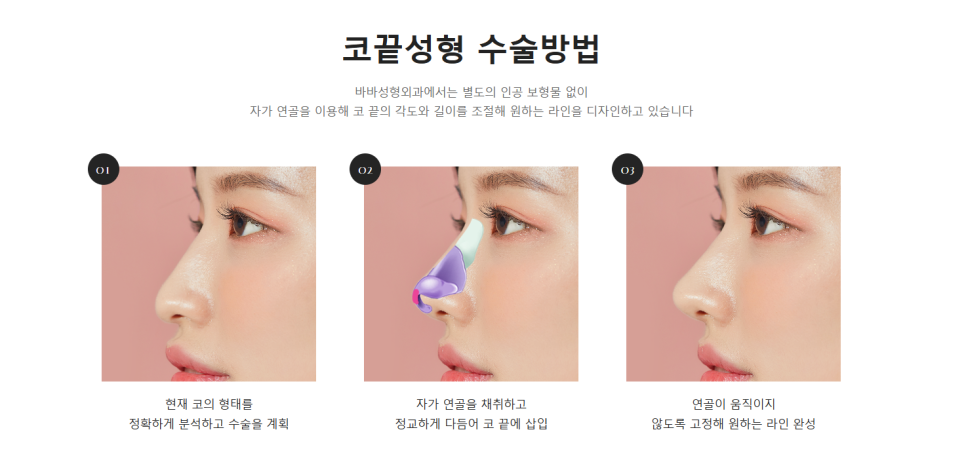 If drooping occurs because the internal structure of the nose is weak, it can be prevented by strengthening and lengthening the support.
If the lateral cartilage is weak, other cartilage may be grafted to reinforce it. In this case, ear cartilage, septal cartilage, or cartilage harvested from another part of the body is commonly used and grafted to the nasal lateral cartilage for reinforcement. If the septum is weak, extension techniques can be used to lengthen and firmly fix it, or, if necessary, donor rib cartilage or the patient’s own rib cartilage can be used to make it more stable.
If drooping occurs because the internal structure of the nose is weak, it can be prevented by strengthening and lengthening the support.
If the lateral cartilage is weak, other cartilage may be grafted to reinforce it. In this case, ear cartilage, septal cartilage, or cartilage harvested from another part of the body is commonly used and grafted to the nasal lateral cartilage for reinforcement. If the septum is weak, extension techniques can be used to lengthen and firmly fix it, or, if necessary, donor rib cartilage or the patient’s own rib cartilage can be used to make it more stable.
What should be done to prevent tip drooping?
Tip drooping can naturally occur depending on each individual’s nasal structure and characteristics, but the simplest way to help prevent it is habits.
Typically, after nose surgery, patients are instructed to avoid excessive laughing, sleeping face down, rubbing the nose, or stimulating it with their hands.
Laughing can put stress on the nose because of the structural characteristics of the nasal muscles. When you laugh, the nasal muscles naturally pull to both sides and are used continuously, and at that time the support may weaken, which can lead to tip drooping.
Also, sleeping face down or directly touching and irritating the nose are actions that weaken the structure of the nose after surgery, so it is best to avoid them as much as possible.
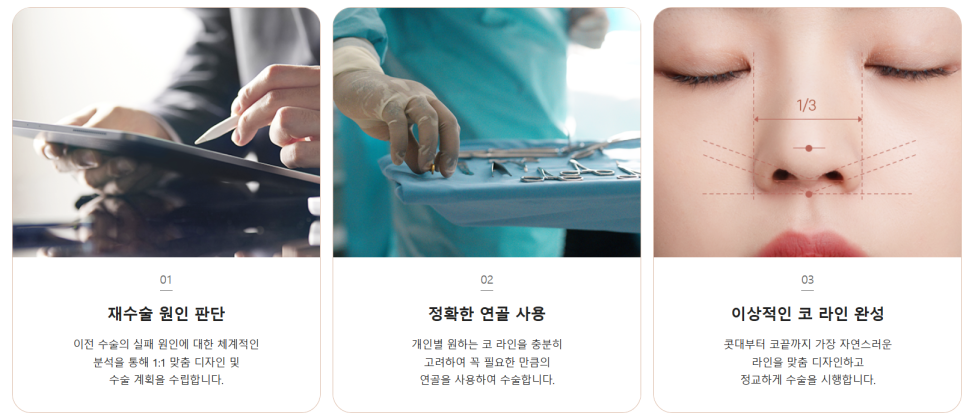
Achieving a satisfying line without tip drooping is the most important thing, but if tip drooping has already occurred and you are considering revision rhinoplasty, it is recommended to properly understand the characteristics of your own nose and undergo surgery with an experienced medical team.
At Baba Plastic Surgery, through the latest medical equipment and safety protocols, we provide precise examinations and attentive consultations, taking into account even the delicate characteristics each individual has, to deliver a perfect surgical plan and results.
We will respond with sincerity so that you can return to daily life with complete recovery, not just up to the end of surgery.