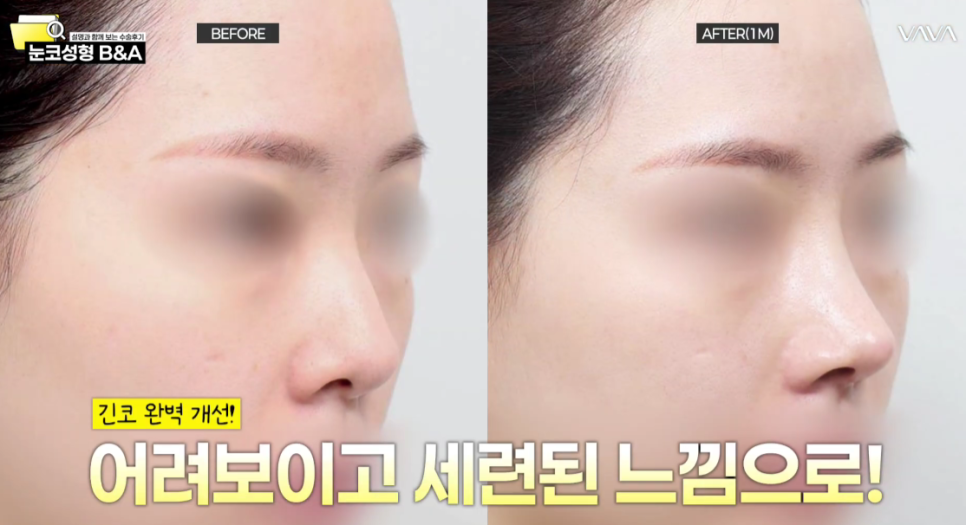
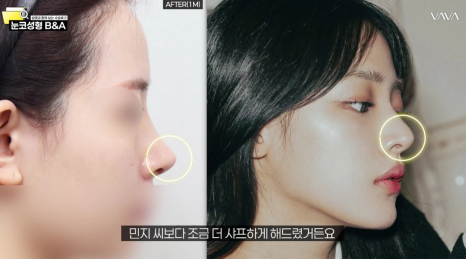
The patient was a woman in her 20s who visited our clinic. She did not have a specific line in mind, but she had always thought NJZ Minji’s nose looked pretty and hoped to choose a line through consultation. In the case of NJZ Minji, the tip of the nose has a rounded straight nose line. In general, a straight nose line is preferred by men, and a straight line without curves can create a masculine impression, so it is important to carry out the procedure with a plan and design tailored to each individual in order to achieve a satisfying final result.


For women, we usually recommend a straight-but-slightly-slanted bridge line to create a feminine or soft impression, and for the tip, we often recommend something slightly rounded yet sharp so it looks natural. This is also a shape that many patients prefer. However, if the tip looks too rounded here, it can backfire and create a masculine impression, so caution is needed.
First surgical plan
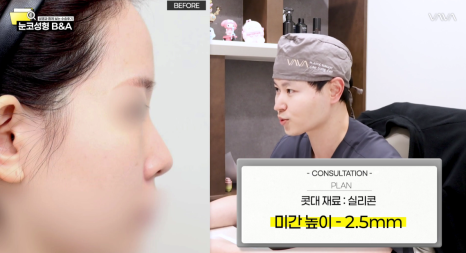
The surgical plan for this patient required slight hump correction and bulbous nose correction. Silicone was used for the bridge material, and cartilage was needed to raise the tip. Because the patient’s septal cartilage inside the nose was sufficiently large and the cartilage thickness was good, rib cartilage was not used. Instead, septal cartilage was used to create the basic support structure for the tip, and ear cartilage was used from the columella to the tip to establish the first plan for a straight-but-slightly-slanted rhinoplasty.
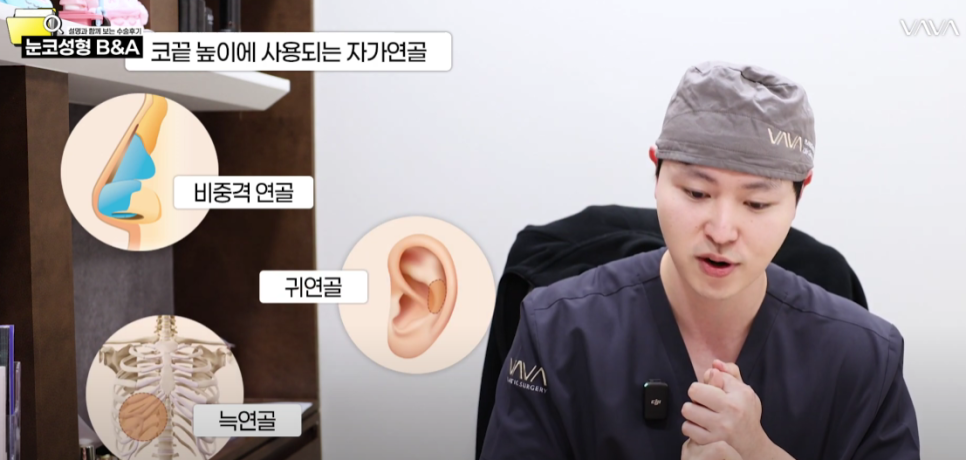
When performing rhinoplasty, silicone is usually inserted to raise the bridge, and cartilage is inserted into the tip. Cartilage can broadly be divided into three types: septal cartilage, ear cartilage, and rib cartilage. Material selection may vary depending on each person’s conditions or preferences, and we recommend deciding on the exact plan through consultation.
Before-and-after photo comparison
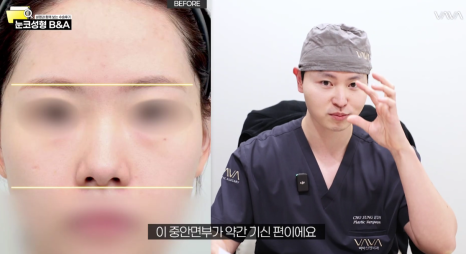
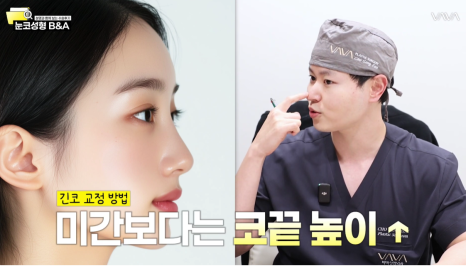
 When looking at the length from the eyebrow area to the tip of the nose, the midface length was somewhat long. To make the nose look a little shorter, the balance between the glabella height and the tip height from the side view can be adjusted so that the tip is positioned slightly higher than the glabella. This makes the nasal angle stand a little more, which can make the nose appear shorter.
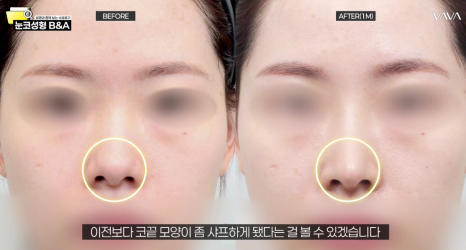
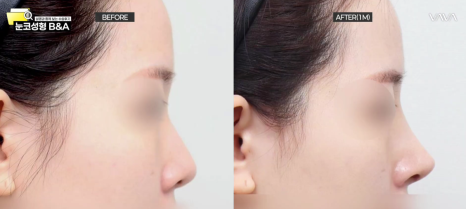
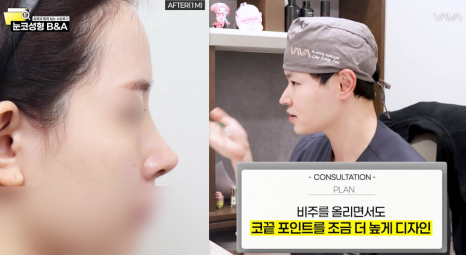
Accordingly, the silicone height used for the bridge—that is, the glabella height—was set to 2.5 mm, and for the tip, the height was increased to 4–5 mm using septal cartilage and ear cartilage. Through columella lowering, the columella between the alar rim and the nostril was made parallel. Compared with NJZ Minji, the tip was shaped a little sharper so that from the front the tip would look slightly slimmer and sharper.
Cautions
First
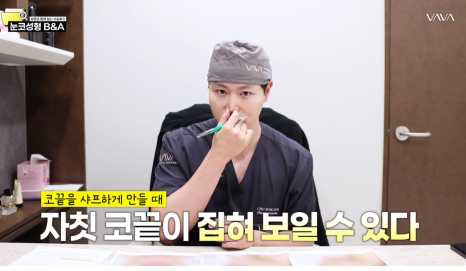
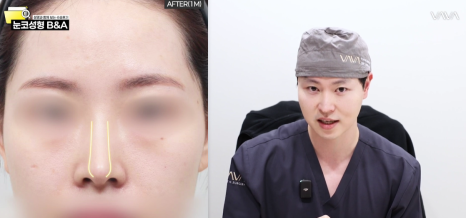
When making the tip sharp, it can accidentally look pinched and unnatural, so the nose should have a structure in which the nasal bridge line comes down thinly and then slightly widens at the outer edge of the nostrils to avoid an unnatural appearance.
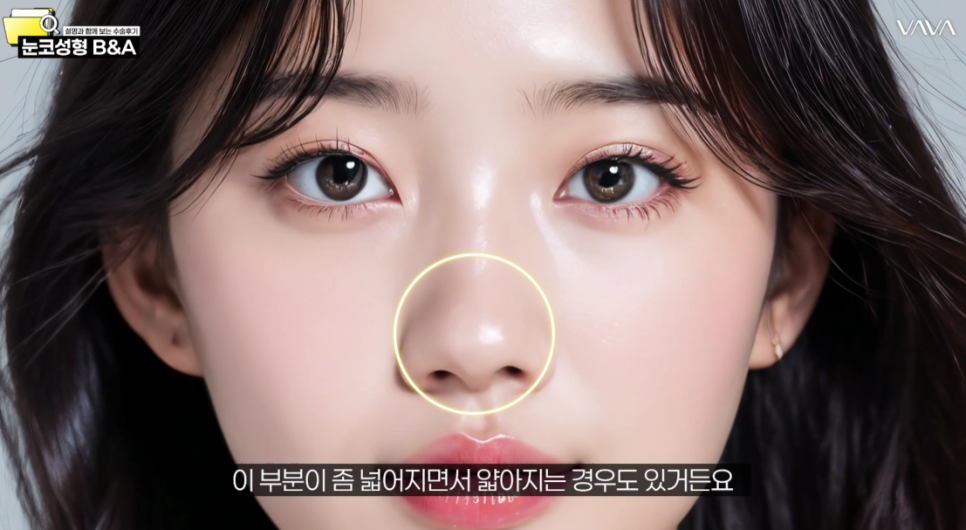
 Second
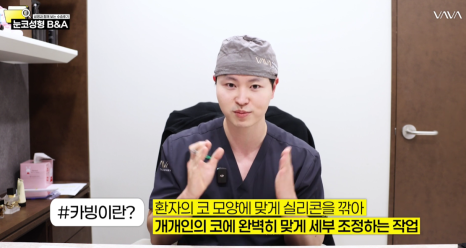
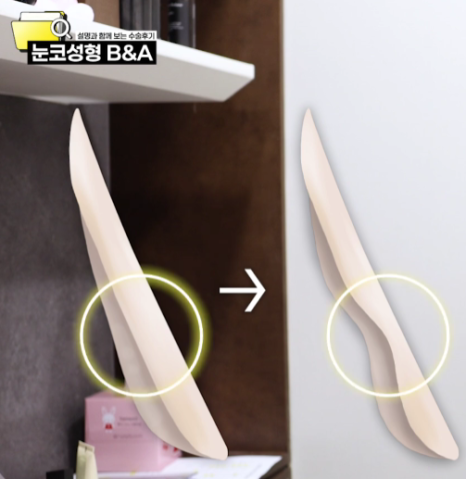
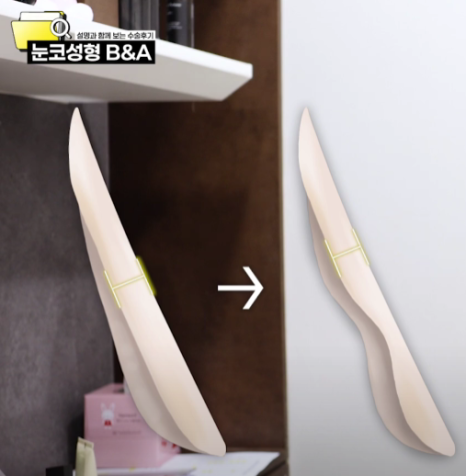
When raising the nasal bridge, if the alar base becomes wider and thinner, the bulbous nose may appear not to have been fully corrected. Therefore, by carving the silicone on the side (trimming the silicone to match the patient’s nose shape and fine-tuning it to fit each individual nose perfectly), the upper part of the silicone does not become too thick, allowing the bridge to look more feminine and slimmer.
Third
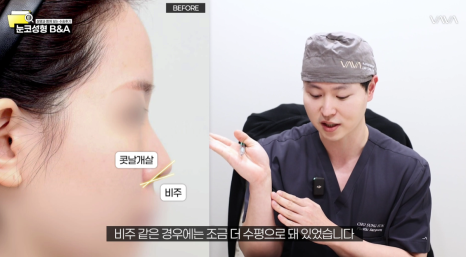
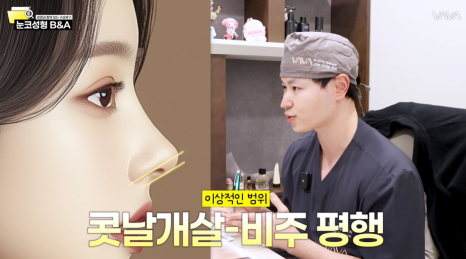
The ideal range for the columella between the lower border of the alar skin and the nostril is a parallel line.
Fourth
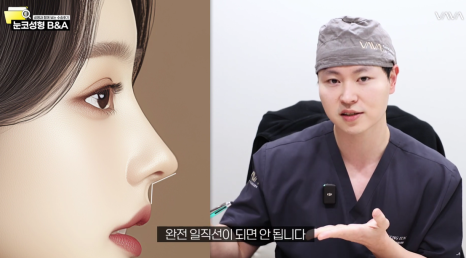
If the columella-lip angle and the tip where the columella meets the lip become perfectly aligned in a straight line, it can create an unnatural impression. By raising the columella while designing the tip point slightly higher, a lifted appearance can create a more natural result.

 Fifth
Fifth
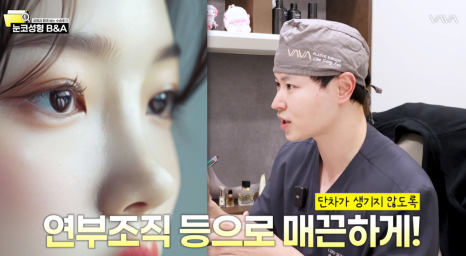
If silicone is not carved accurately, a silicone step-off or movement of the silicone may occur. During nose surgery, the silicone height that was planned may not match, so it is important to perform insertion and carving simultaneously during the procedure to create a smooth bridge and to smooth the area with soft tissue so that no step-off forms between the tip and the bridge.

Today, we looked at a case involving a bulbous nose, hump nose, and long nose. Was this helpful?
For successful rhinoplasty, an accurate plan must be established and carried out based on each individual’s structure and characteristics in order to achieve satisfying results. Therefore, if you are considering nose surgery, we recommend making a plan and proceeding through an accurate evaluation and consultation with a specialist. Next time, we’ll take a detailed look at another case.
This has been Baba Plastic Surgery. Thank you^^