
Hello, this is Baba Plastic Surgery.
These days, more and more people are looking for a nose that blends naturally with their face rather than an artificial-looking cosmetic surgery result. In particular, interest in 'non-implant rhinoplasty,' which can improve the nasal line without implants, is steadily increasing. However, this is not a surgery that everyone can undergo; whether it is suitable depends on each person's facial features and conditions.
So today, we will talk about the types of people for whom non-implant rhinoplasty is a good fit.
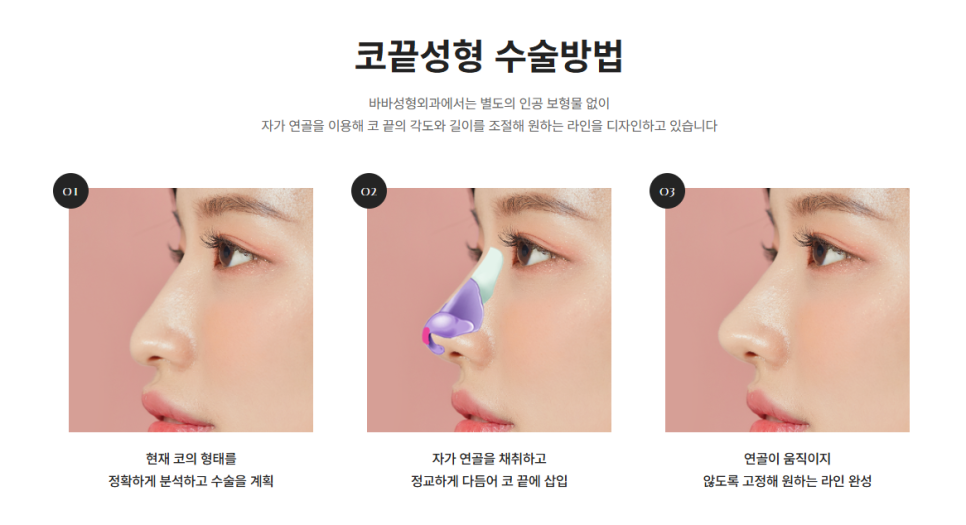 ✔ What is non-implant rhinoplasty?
As the term 'non-implant' suggests, this is a surgical method that improves the nasal line using only your own cartilage (such as ear cartilage and septal cartilage) without using any artificial implants like silicone or Gore-Tex at all.
Rather than simply raising the nose tip or shaping only the tip neatly, it refines the line naturally while considering the overall harmony and balance of the nose.
Who Is a Good Fit for Non-Implant Rhinoplasty?

- People who already have some degree of nasal bridge height
Non-implant rhinoplasty is not a surgery that creates a completely new nasal bridge height; it focuses mainly on the nose tip, so people who already have a certain amount of nasal bridge height may achieve a more natural and attractive line.
It is recommended for those whose nose bridge and forehead are not flat from the side, and who may only need a slight refinement of the bridge.
- People with thin or sensitive skin
For people with thin skin, if an implant is inserted,
the outline of the silicone may show through, or over time the skin may become thinner and cause problems.
For these individuals, non-implant rhinoplasty using only natural tissue can offer safer and more aesthetically pleasing results,
reduce the risk of inflammation or contracture, and is also more likely to allow for a faster recovery.
- When the main goal is to improve the nose tip shape
If you are satisfied with the height of the nasal bridge but are concerned that the nose tip looks especially blunt or droopy,
cartilage can be used to make the nose tip sharper and more refined.
Even without a nasal bridge implant, it can still create a significant change in the overall impression, and above all, it has the advantage of preserving a natural and soft look.
Who Is a Good Fit for Non-Implant Rhinoplasty?

- A nose that already has some degree of nasal bridge height
- People with a longer midface
- People whose nose tip droops like a hooked nose
- When correction of the lip line is needed
Non-Implant Nose Surgery Method
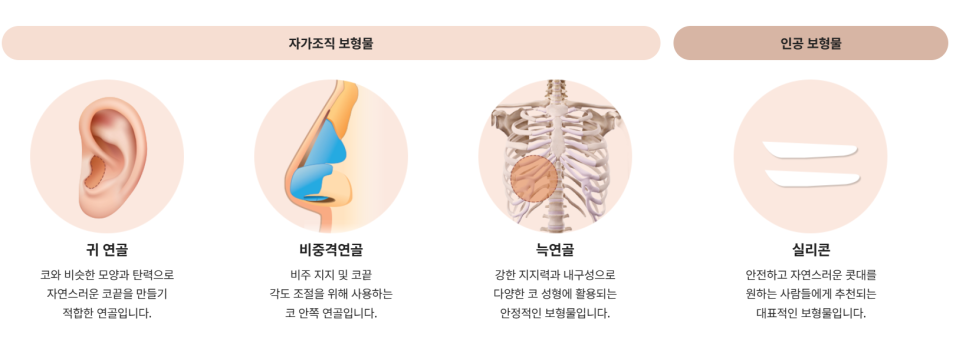
Non-implant rhinoplasty is mainly performed using ear cartilage, septal cartilage, and in some cases rib cartilage.
Instead of using implants, it creates a stable structure using only your own tissue,
so there are fewer side effects over time and the results are maintained well.
-
Refining the nose tip cartilage: gathering and smoothing blunt or separated cartilage
-
Inserting a septal cartilage strut: supporting the nose tip and fixing it at the desired angle
-
Using ear cartilage: adding a naturally soft feel to the nose tip
-
Creating a natural line connection: completing a seamless, streamlined line from the nasal bridge to the nose tip
Advantages and Disadvantages of Non-Implant Rhinoplasty



[Advantages ]
Natural-looking results
Minimized implant-related side effects
Relatively fast recovery
Greater stability by using only your body's own tissue
A natural, soft feel
[Disadvantages ]
If the nasal bridge is low, the effect may be limited
Ear cartilage or septal cartilage must be harvested to obtain materials
The surgery time and difficulty are generally higher than standard implant rhinoplasty
[Surgery before-and-after cases]
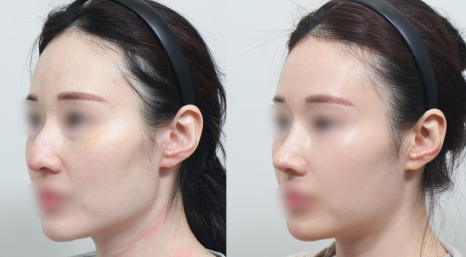
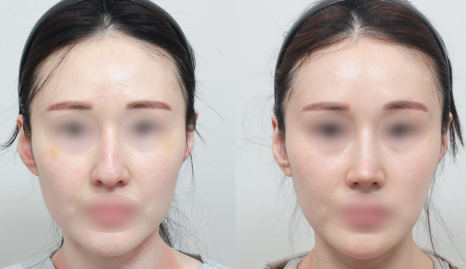 Real patient cases from Baba Plastic Surgery
Many people prefer non-implant rhinoplasty because it can produce results that do not look artificial and harmonize with the face.
However, since it is not a surgery that can be recommended unconditionally for everyone,
it is most important to carefully consider your own nasal condition, skin type, and desired look,
and then make a decision through consultation with an experienced specialist.
At Baba Plastic Surgery, we carefully analyze each individual's facial proportions, skin thickness, and cartilage structure before suggesting a customized procedure. If you are considering non-implant rhinoplasty, feel free to consult with us anytime :)


