
Hello, this is Baba Plastic Surgery.
When people think about nose surgery and come in for a consultation, they usually focus on the bridge line. But the nose is not a two-dimensional structure.
It is a three-dimensional, sculptural structure, and in everyday life, people usually see it from the front or at a 45-degree angle more often than from the side. That is why, when planning nose surgery, the front view of the nose line is more important than the side view.
So today, I will talk about the key secrets to successful nose surgery for creating a beautiful nose.
 The features of an ideal front-view nose
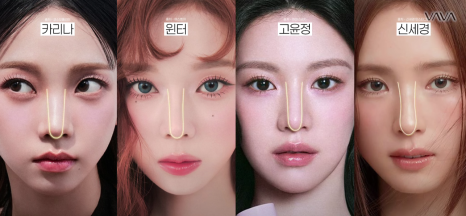

Let’s take the noses of current representative beauties Karina, Winter, Go Youn-jung, and Shin Se-kyung as examples.
What these four noses have in common is that even from the front, they look slim and refined, without any unnatural appearance on the side. In addition, the columella area descending toward the tip is also ideally positioned.
In conclusion, a nose that looks slim and refined from the front, with a well-balanced tip area, can be considered the most ideal front-view nasal line.
Nose surgery success conditions: 3 key points
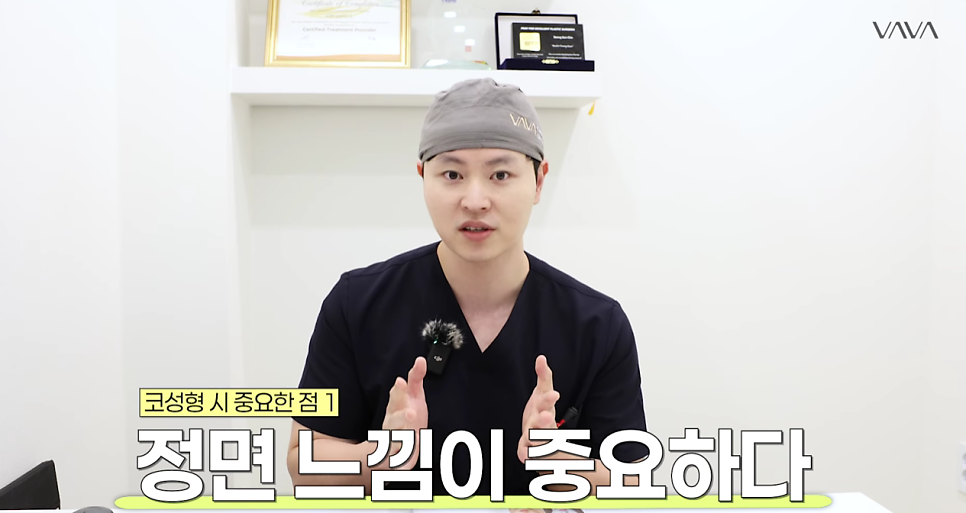
- Front-view appearance
<Examples of an unnatural front view>

 If, in the case of a bulbous nose, there is a visible boundary between the tip of the nose and the alar tissue
If the nostrils look angular rather than smooth from the front
If only the tip of the nose looks unnaturally sharp
If, in the case of a bulbous nose, there is a visible boundary between the tip of the nose and the alar tissue
If the nostrils look angular rather than smooth from the front
If only the tip of the nose looks unnaturally sharp
Examples of a bulbous nose from the front
<Examples of well-corrected bulbous nose surgery>
 When the bridge of the nose and the tip descend in a straight line, then become slimmer near the nostrils
<Examples of poorly corrected bulbous nose surgery>
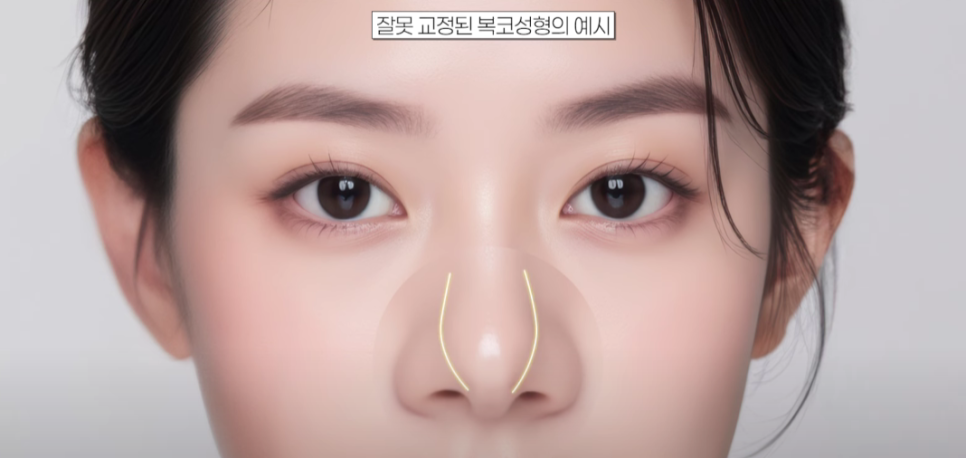
When the bridge comes down and the area just above the tip becomes slightly bulging, then narrows unnaturally near the tip

- The shape of the columella in the side view

 < Examples of poorly corrected columella correction > < Examples of well-corrected columella correction >
If the point where the tip of the nose meets the lip area falls in a straight line, it gives a very obvious surgical look.
That is why a slight curve needs to be created at the tip of the nose, the nasolabial angle area, and the point where the tip of the nose meets the lip (the columella) in order to achieve a natural and beautiful result.
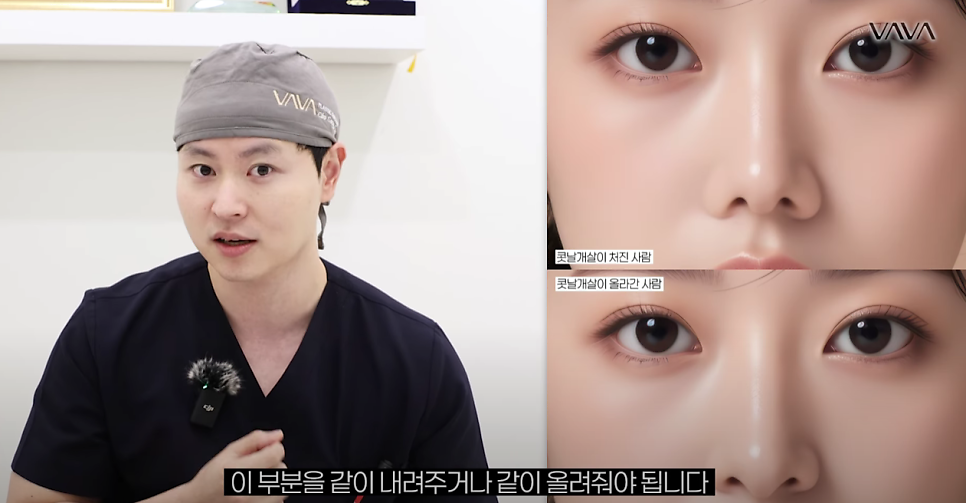
The angle of the alar tissue
The alar tissue can be divided into those that are drooping and those that are lifted. In this case, the hollow area in the middle between the tip of the nose and the lips, called the nasolabial angle, should be adjusted by lowering it or lifting it together.


- Surgical results maintained for more than 1 year
A nose that looks good at 2 weeks or 1 month after surgery is not enough, so it is important to look at whether the result can be maintained for about 1 year in the long term.

CASE 01. Front-view bulbous nose (pig nose)
Lowering the columella + correcting the bulbous nose
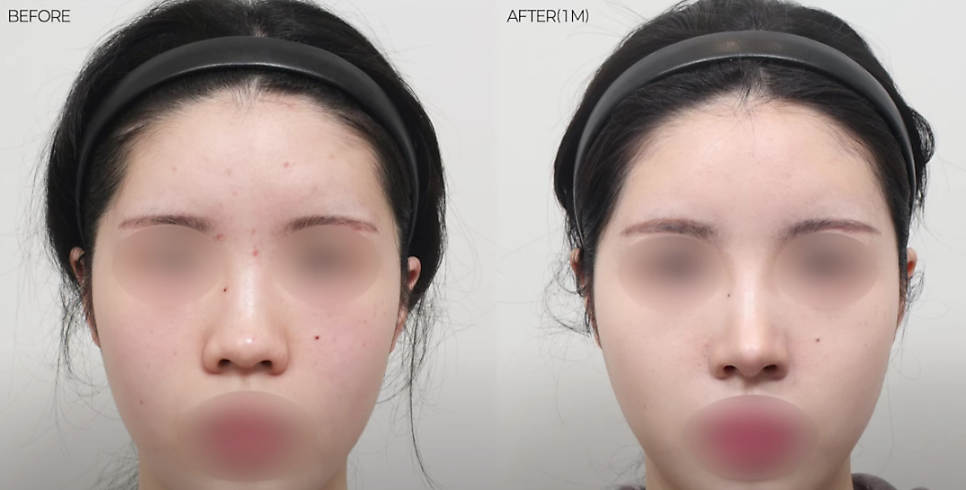
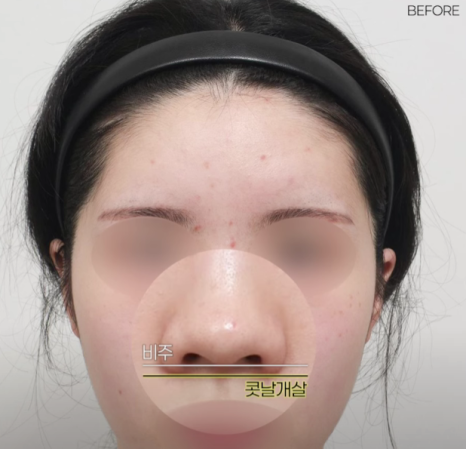
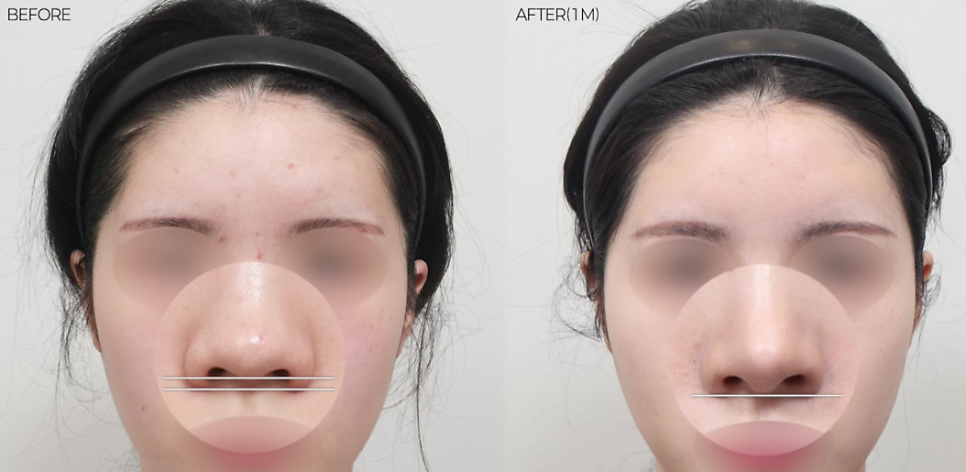
From the front, this was a case where the tip of the nose was round and the columella was short. Through lowering the columella and correcting the bulbous nose, we improved the front line so that there is no boundary between the tip of the nose and the alar tissue, the nostrils are not angular, and the columella can sit parallel to the alar tissue, creating an ideal front-view nasal line.
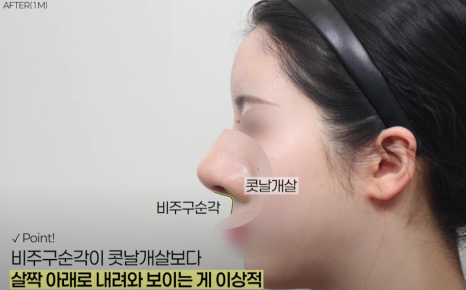
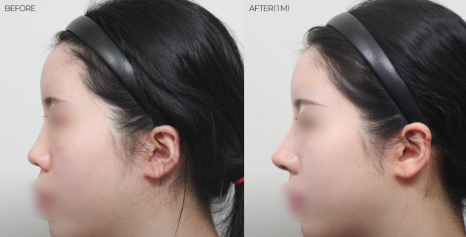 In addition, the side view was also corrected so that there is a curve in the line descending from the tip of the nose to the columella, and the nasolabial angle appears slightly lower than the alar tissue, creating an ideal line.
CASE 02. Revision nose surgery for a long nose
Bulbous nose correction + nostril lowering + columella lowering + contracture nose correction
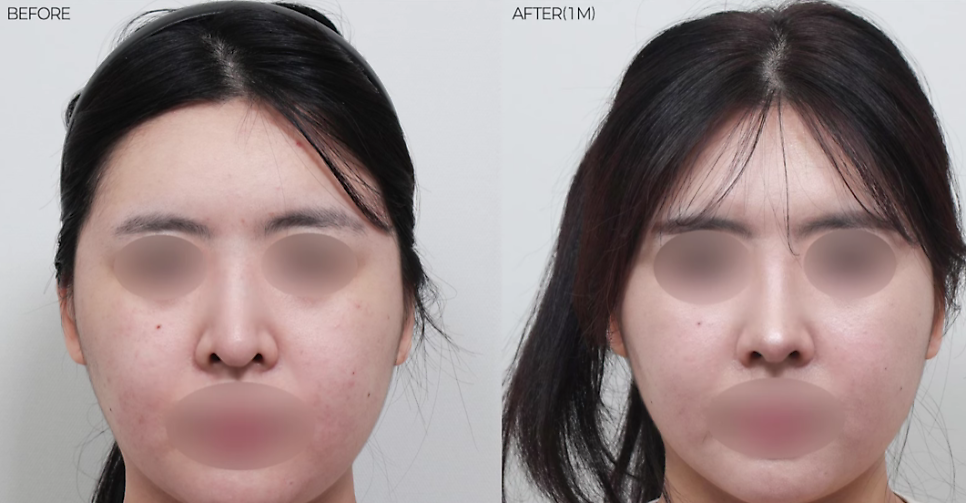
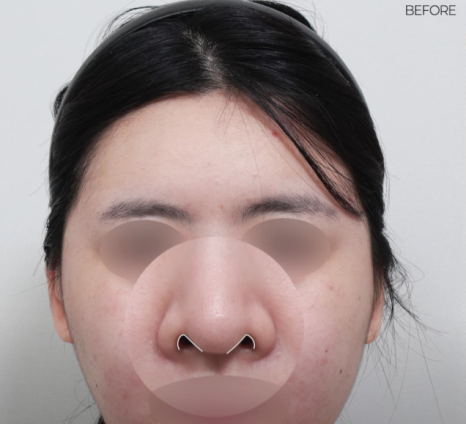
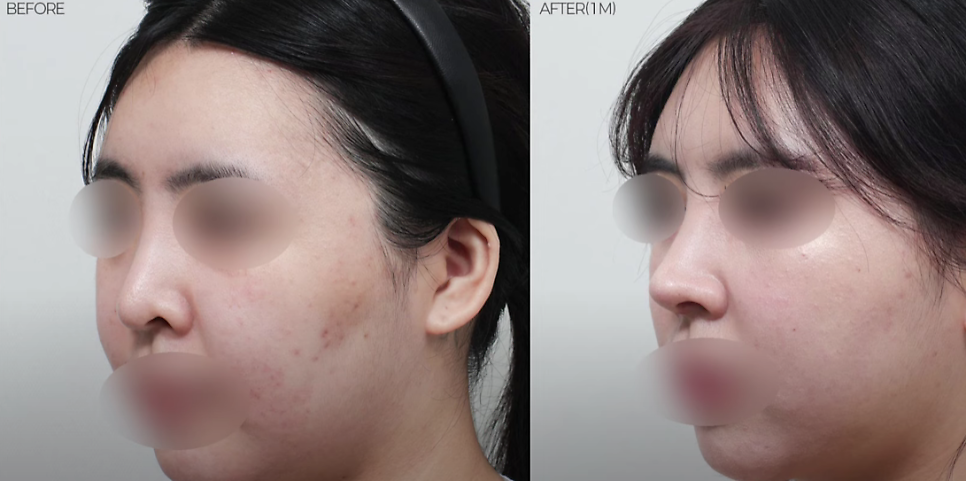
From the front, this was a case where the boundary between the tip of the nose and the alar tissue made the nostrils look lifted and pinched. The patient had previously undergone surgery once using autologous rib cartilage. We used donor rib cartilage to make the tip of the nose a little slimmer, and designed the nose so that the boundary between the tip and the alar tissue would disappear and the nostril shape would feel smoother, improving it into an ideal line.
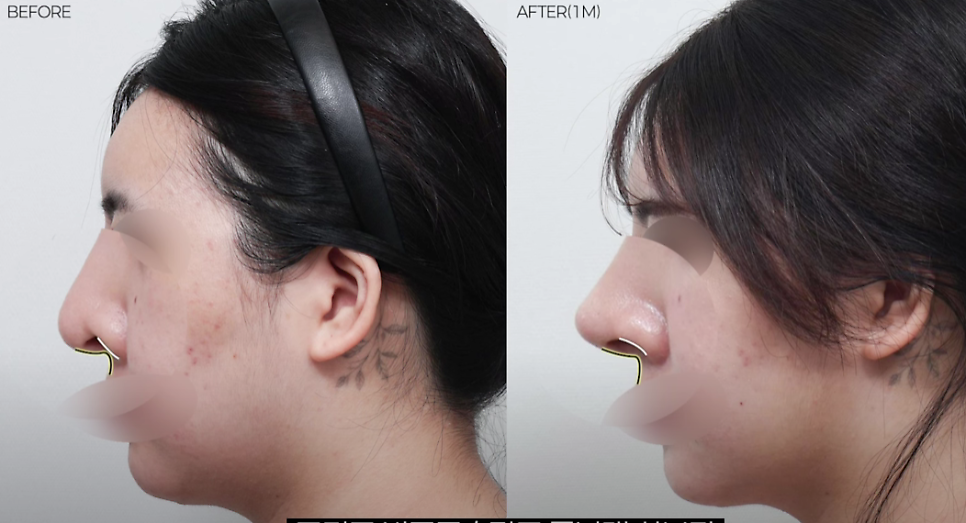
In addition, for the side view, because autologous rib cartilage had been used but the nose had drooped, the support structure had been set in a direction that could not bear force. By using donor rib cartilage, we secured the tip of the nose in a direction that would keep it from drooping, and also improved the nasolabial angle into a straight-but-slightly-upturned line where it could sit a little lower than the alar tissue.
Up to this point, I have explained what beautiful noses have in common, why the front-view line is important in nose surgery, and the conditions needed to create successful results through real cases.
Nose surgery is not simply a procedure that raises the nose and changes its shape.
It is a surgery where detail and experience are important to harmonize the three-dimensional balance of the entire face.
At Baba Plastic Surgery, we go beyond simple shape correction.
We perform customized nose surgery while considering front- and side-view balance, naturalness, and long-term durability.
If you have any questions, or if you would like a consultation to find a design that suits you, please feel free to contact us at any time.
Thank you.


