
When consulting about eye plastic surgery,
we get a lot of similar questions about lower lateral canthoplasty.
“Will lower lateral canthoplasty make my eyes much bigger?”
“Won’t they stick back together?”
“What’s the difference between epicanthoplasty or lower canthoplasty?”
Lower lateral canthoplasty may look simple,
but because the results clearly differ depending on eye structure,
it is important to check accurate information in advance.
What Is Lower Lateral Canthoplasty?

Lateral canthoplasty is
a procedure that naturally extends the outer corner of the eye.

The lower canthoplasty often performed together with lateral canthoplasty is a procedure that adjusts the outer corner of the eye by lowering it outward,
rather than changing the eye’s horizontal length.
It is performed when the eyes look tight or cramped,
or when the outer corners are raised and the expression looks too strong,
with the goal of creating a softer, more refreshed impression.
Who Is Recommended for Lower Lateral Canthoplasty?
At Baba Plastic Surgery, we use an AI program consultation
to measure the ratio of the white part of the eye and make recommendations.
*However, lateral canthoplasty does not produce the same effect for every eye.
It tends to be relatively satisfying in the following cases.
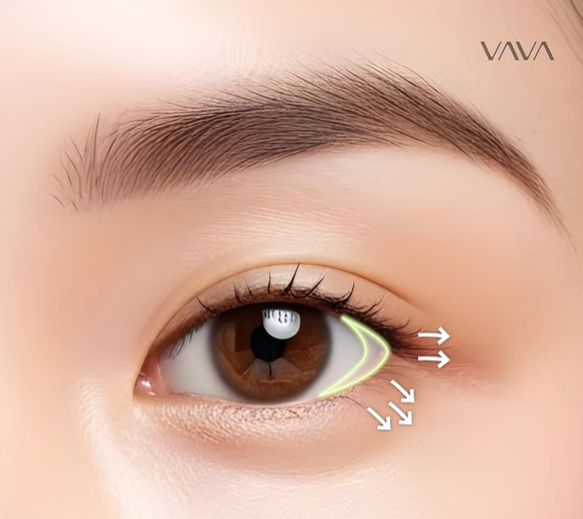
People whose outer white area shows less than average
Cases where the eyes look short horizontally and vertically
Cases where the outer corners are raised and the expression looks strong
Conversely, if the outer corner exposure is already sufficient,
excessive widening may look unnatural.
Age Limit for Lower Lateral Canthoplasty

For younger patients, since eye growth is about 80% complete by the middle and high school years,
we recommend surgery starting at age 19 or older.
Conversely, in older patients,
from the 50s onward the ligaments around the outer canthus weaken,
so if lower lateral canthoplasty is performed,
side effects such as
everted eyelid
dry eye syndrome
and tears flowing outward
may occur.
Difference Between Lower Lateral Canthoplasty and Epicanthoplasty
Epicanthoplasty
improves the inner epicanthal fold
to make the starting point of the eyes look clearer.
Lower lateral canthoplasty adjusts the end of the eye,
changing the length and direction of the eye line without altering the double eyelid line.
The two procedures differ in purpose and treatment area.
Difference Between Incisional and Non-incisional Lower Lateral Canthoplasty
Lower lateral canthoplasty is performed using either an incisional or non-incisional method,
depending on the condition of the eyes.
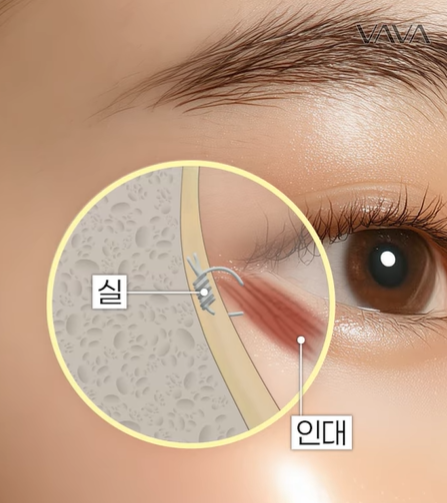

Incisional method: when fixation strength is important
Non-incisional method: when reducing scar concerns is important
Rather than saying one method is better,
it is important to choose the method that fits the eye structure.
Baba’s Own Lower Lateral Canthoplasty Know-How
The most important point in lower lateral canthoplasty
The key to lower lateral canthoplasty is
not how much it is widened, but how stably it is maintained.
At Baba Plastic Surgery, we secure the tissue to firm structures such as the fascia and periosteum,
using a method that lowers the recurrence rate.
In addition, to minimize signs of surgery,
we use careful technique to prevent step-offs.
If this part is not sufficiently considered,
it may lead to re-adhesion or unnatural results.
Self-Check Method for Whether Lower Lateral Canthoplasty Is Possible
In the case of lateral canthoplasty, there are anatomical limitations due to the orbital structure.
Self-check before consultation
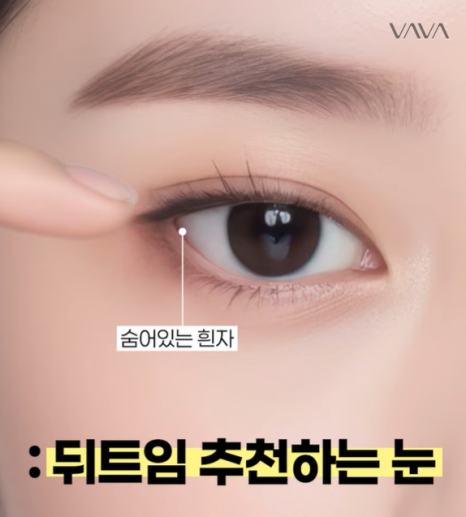
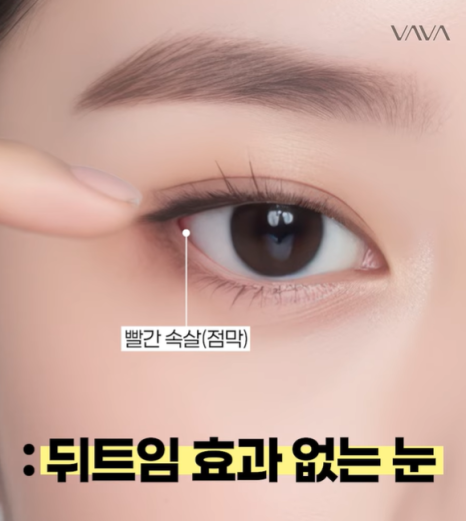
There is a simple way to check whether lower lateral canthoplasty is possible.
While looking in a mirror, gently lift the upper part of the eye and pull toward the outer corner.
If the white part of the eye is visible at the outer corner,
it can be seen as having some room left to widen.
On the other hand, if the red mucosa (inner tissue) is visible first,
then exposure is already sufficient,
so even if lower lateral canthoplasty is performed, the effect may not be significant.
Additional Eye Structure Points to Check
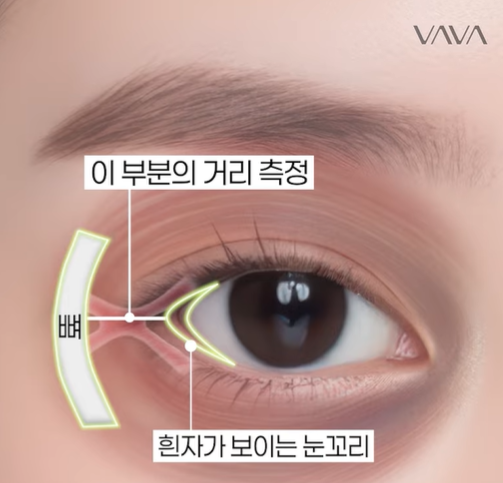
Lower lateral canthoplasty is performed by fixing the outer corner of the eye
to the periosteal area on the side of the eye.
Therefore, if the distance between the lateral bone you can feel at the outer corner and the outer corner where the white of the eye is visible is too short,
there may be little change even if widening is done.
As such, lower lateral canthoplasty is
not a procedure to judge by simply pulling and checking,
but one that requires consideration of the bone structure around the eyes and the fixation point as well.
Why Do Eyes Stick Back Together After Lower Lateral Canthoplasty? (Re-adhesion)
Re-adhesion after lower lateral canthoplasty
often occurs due to excessive widening or insufficient fixation strength.
Because the eyes naturally tend to adhere again during recovery,
surgical design and fixation must take this into account.
Why Lower Lateral Canthoplasty Should Not Be Overdone
Lower lateral canthoplasty
can actually disrupt the balance of the eyes if done too much.
The outer corners may be lowered too much,
or the expression may look awkward,
so it is important to set a natural range of change.
What Side Effects Can Lower Lateral Canthoplasty Cause?
After lower lateral canthoplasty,
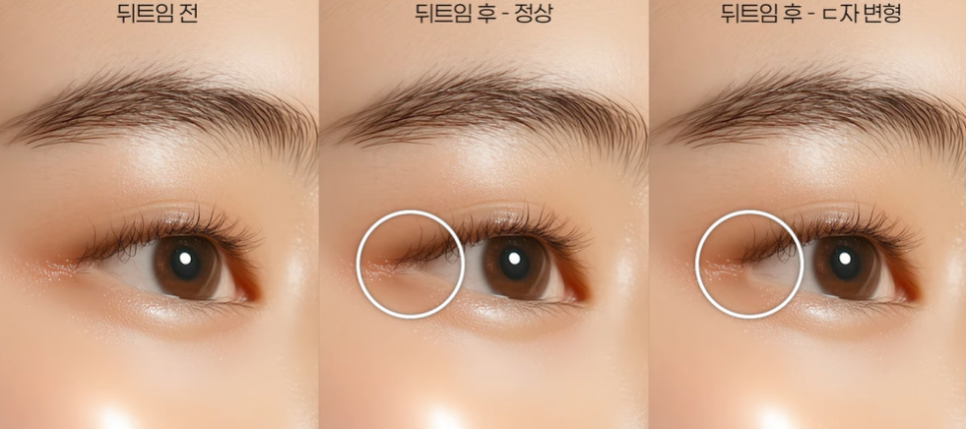
temporary C-shaped deformity or scar tissue side effects may appear.

These symptoms are side effects that can mostly appear with the incisional method,
and when the non-incisional method is used,
the likelihood is relatively low.
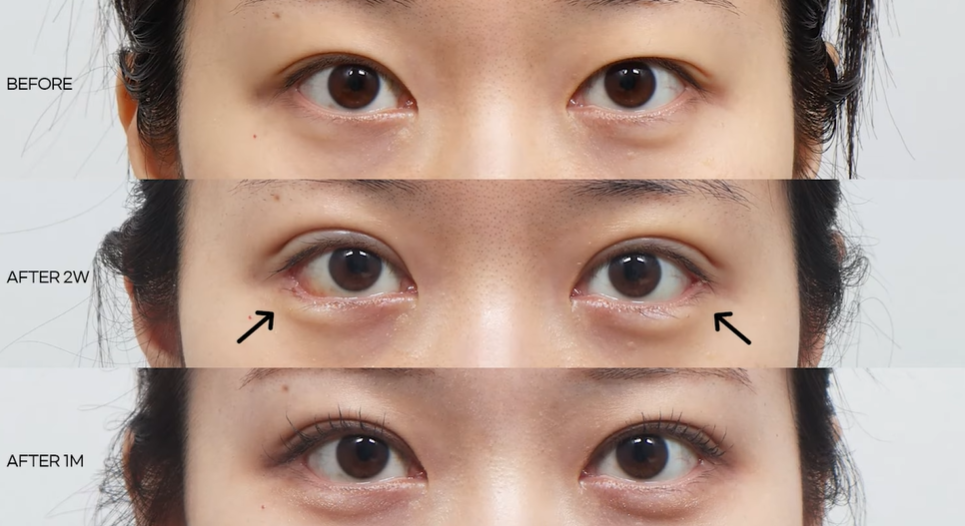
Also, in the case of lower canthoplasty,
because the degree to which new tissue fills in during recovery differs from person to person,
it may initially look somewhat overcorrected in consideration of re-adhesion.
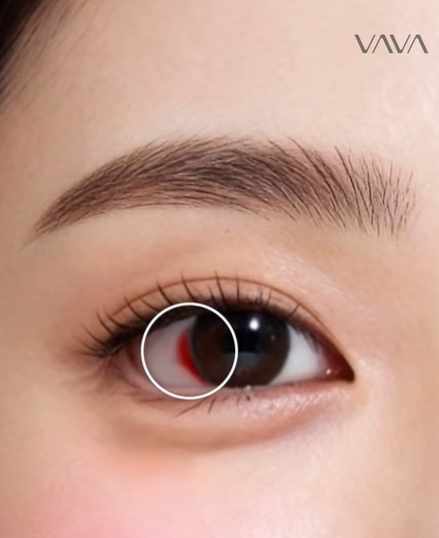
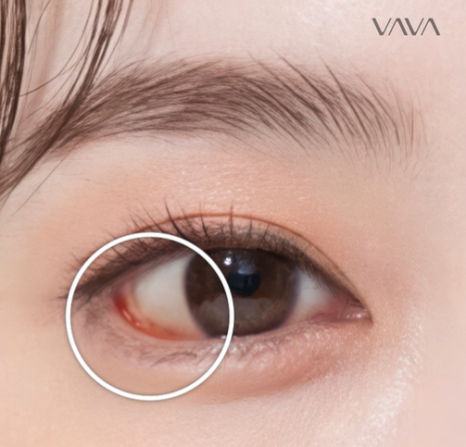
Scleral hemorrhage, conjunctival edema
Commonly seen after canthoplasty
Scleral hemorrhage: bleeding caused by broken blood vessels in the thin membrane (conjunctiva) covering the white of the eye (sclera)
Conjunctival hemorrhage: a condition in which the conjunctival tissue covering the white of the eye
swells and becomes puffy like a blister as lymph fluid or blood accumulates
may occur.
In most cases, these gradually improve during recovery,
and if excessive widening is avoided,
long-term problems are uncommon.
Do Lower Lateral Canthoplasty and Lower Canthoplasty Have to Be Done Together?
Lower lateral canthoplasty and lower canthoplasty
are sometimes performed together depending on the condition of the eyes,
but they do not have to be done at the same time.
Depending on the structure of each person’s eyes,
there are cases where lower lateral canthoplasty alone is sufficient,
so the most accurate way is to determine this through consultation.
In Closing
Lower lateral canthoplasty is
a procedure that is closer to refining a cramped impression
than making a dramatic change to the eyes.
Whether it is the right procedure for you,
and how much change would be natural,
should be confirmed through 충분한 consultation.
If you are considering eye plastic surgery,
we recommend prioritizing your own eye structure and harmony with your face
over trends.


