
If you look at the eyes and nose separately, you can miss something
During consultations,
many people worry about specific areas separately, saying things like, “My eyes seem lacking,” or “I want to raise my nose a little.”
However, what actually determines the impression of the face is not each individual feature, but the balance of the overall structure.
This case was also one where the difference in results between approaching only one area and looking at the whole face together was
clearly apparent.
Why the impression looked vague
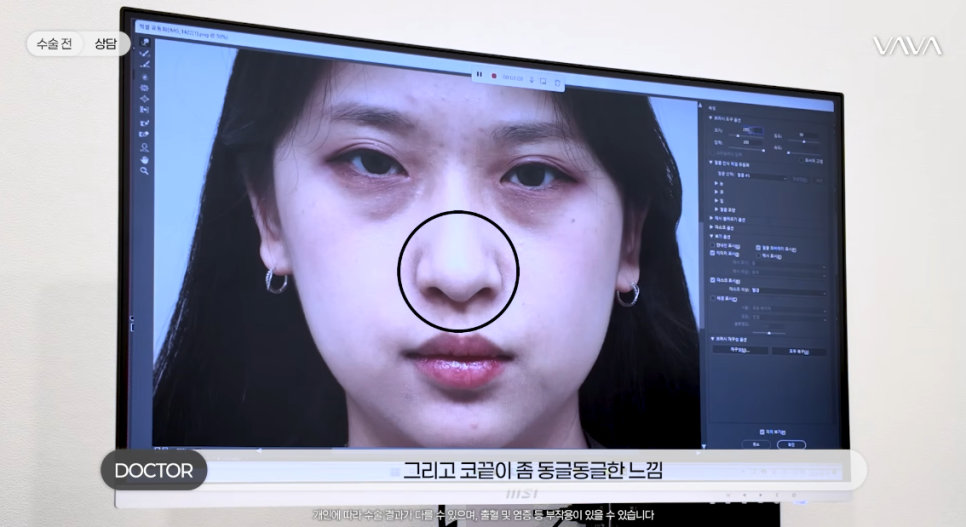
This patient did not have particularly small eyes or a very low nose.
However, from the front, the eyes lacked presence, so the impression was not clear,
and the nose also had no problem with height,
but lacked the three-dimensional definition needed to form a center from the front, making the middle of the face look spread out.
In this way, even if there are no major issues with each feature,
the overall impression can look vague if their roles do not work together.
What mattered in this case was not the “order,” but the “connection”
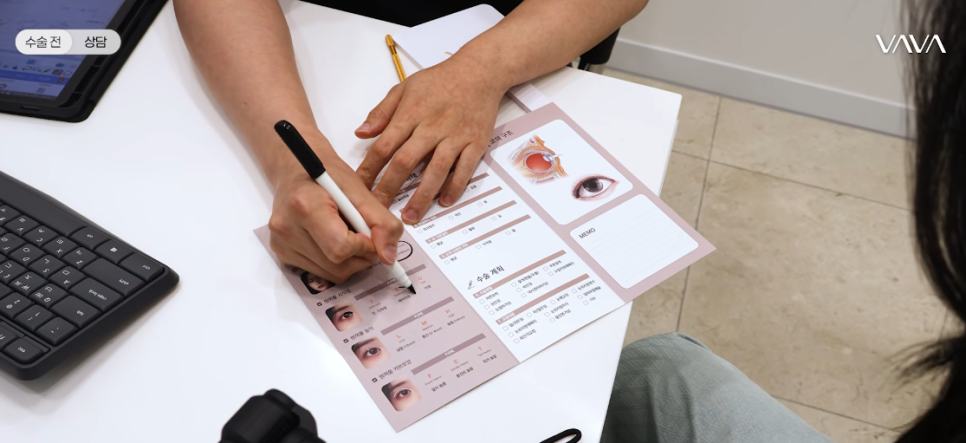
During the consultation, rather than focusing on how to improve the eyes and nose separately,
we first explained the following:
how much the eyes contribute to the overall impression, why the nose was not playing the role of the center,
and what kind of change in impression appears when both elements are weak at the same time.
This patient had an unclear eye line,
and the nose was also not providing enough support to establish the center,
so the structure made the gaze fail to gather in the front and the impression appear scattered.
For that reason, instead of simply separating the procedures by order,
we approached it by designing them together from the beginning.
The eyes create “clarity,” and the nose creates the “center”

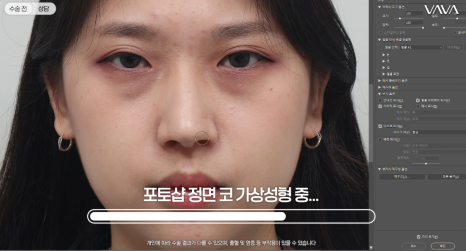
The 기준 for the design is clear.
For the eyes, rather than emphasizing them excessively,
we set a line that can make the impression clearer within the current structure,
and for the nose, rather than simply increasing the height,
we supplemented the three-dimensional shape so that the center would be established from the front as well.
Because these two elements need to be aligned at the same time for the overall impression to come together,
we do not look at them separately,
but instead proceed by balancing them within a connected structure.
The difference in change when designed together
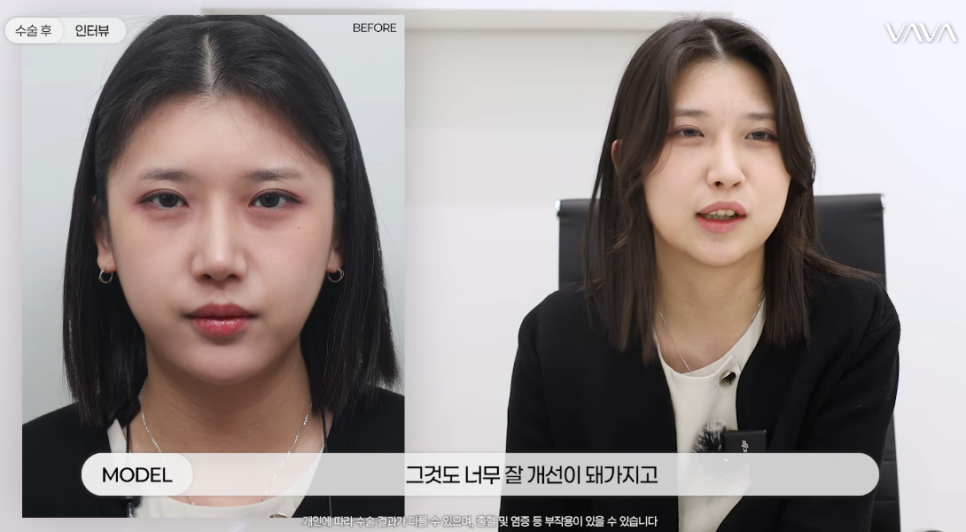
The change after surgery was not dramatic,
but rather a state in which the vague impression became clearer, a center was formed from the front,
and a naturally connected three-dimensional look was created from the side as well.
Such results are possible because the design was based on the overall structure.
The most important standard in consultation is not the size of the change,
but how naturally it fits.
In this case as well, only the necessary areas were adjusted precisely,
allowing the overall impression to be organized naturally.
What matters is not “how much,” but “how”

Looking at the eyes and nose together does not mean performing two surgeries at the same time,
but rather viewing the entire face as one structure
and deciding in what direction it should be refined.
The clearer this process is,
the more the result appears refined without being excessive.
If the case is like this one, where there are no major flaws but the impression still does not feel organized,
an approach based on the overall structure rather than a single area
can lead to a more natural and stable result.
Closing

When I see people with similar concerns,
most of them tend to stop at the question of “what should I do?”
But what is actually important is not dividing the areas,
but judging what direction is right for organizing the current state.
Once this standard is clarified,
the decision-making process often becomes much simpler than worrying about the surgery itself.