
Our teeth cannot regenerate once they are damaged, so it is important to use them well until old age. In particular, because cavities are a risk factor that can shorten the lifespan of natural teeth, it is best to manage oral health carefully so that cavities do not develop.
At first, cavities may look very small, but as they progress, they can penetrate the surface of the tooth and damage the inner nerve, causing severe pain and, in serious cases, leading to tooth extraction. The treatment used to protect teeth from such cavities is dental prosthetic treatment. Today, I looked into the meaning of dental prosthetic treatment and briefly summarized its types.
Meaning of Dental Prosthetic Treatment
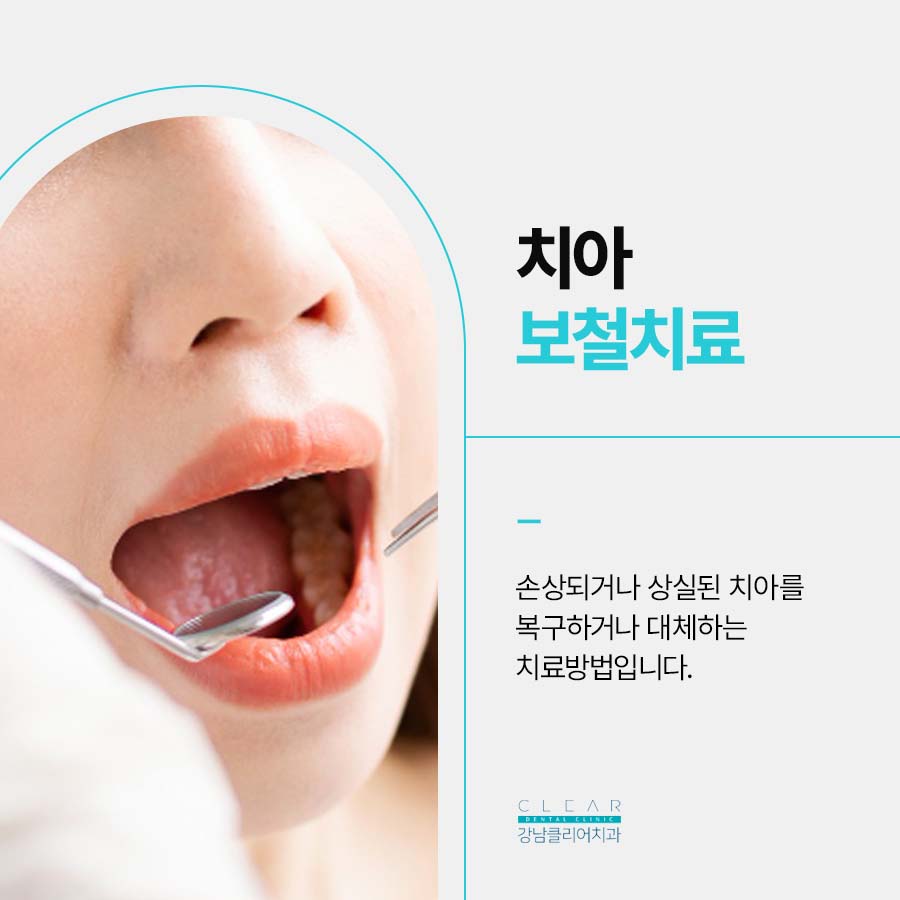
Dental prosthetic treatment is a treatment method used to restore or replace damaged or missing teeth, and it focuses on recovering both the function and aesthetics of the teeth. The treatment direction is set toward preserving natural teeth as much as possible, and it is an important dental treatment that helps maintain oral health.
Types of Dental Prosthetic Treatment
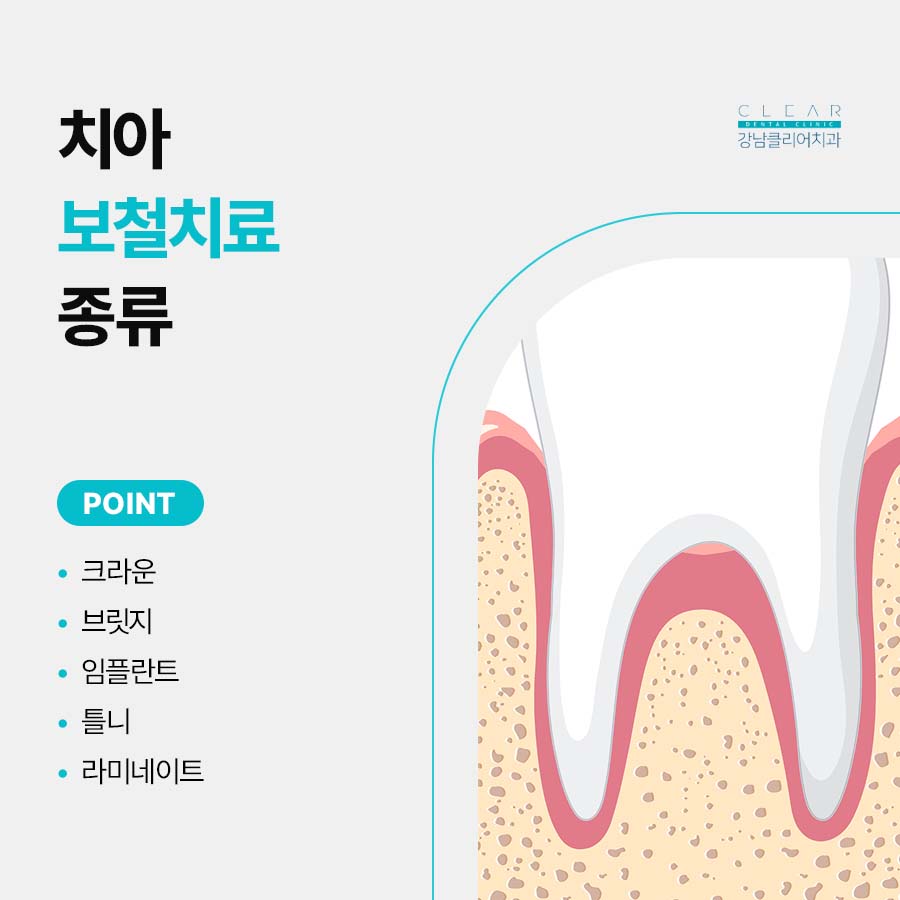
Crown
When the structure of a tooth has been severely damaged by cavities, this treatment is performed to protect the damaged tooth and restore its function. Depending on the material, there are various types, such as metal, ceramic, and zirconia.
Bridge
When one or more teeth are missing, this prosthetic treatment restores the missing area by using the teeth on both sides as support to recover tooth function. It can provide a natural appearance over a small area, but the drawback is that it is fixed and cannot be removed.
Implant
This is a treatment performed to replace missing teeth. An artificial root is placed in the jawbone to replace the tooth root, and an artificial tooth is then connected and attached on top of it. It offers aesthetics and function similar to natural teeth, and once placed, it can be used for a long time like a natural tooth.
Denture
This is one of the types of dental prosthetic treatment that can be used when multiple teeth are missing or when the mouth is completely edentulous. When replacing some teeth, a "partial denture" may be used, and when replacing all teeth, a "full denture" may be used.
Laminate
Lastly, there is the laminate type of dental prosthetic treatment. It is mainly used to improve the aesthetics of front teeth, and by attaching a thin ceramic shell to the tooth surface, aesthetic issues can be improved. It may be considered when improving tooth color or adjusting the shape or size of teeth.
Types of Dental Prosthetic Treatment by Stage

So far, we have looked at the types of dental prosthetic treatment. Among these treatment types, it is best to choose the one that suits your condition. In particular, for cavities, which shorten the lifespan of natural teeth, prosthetic treatment should be carried out appropriately according to the stage.
-
Early cavity stage: A simple prosthetic treatment is performed by removing the decayed area and filling it with a restorative material such as resin or amalgam.
-
Mid-stage cavity: After removing the decay, inlay or onlay treatment is performed to broadly cover the damaged area.
-
Severe cavity stage: After root canal treatment, crown prosthetic treatment is needed to protect the tooth.
-
Tooth loss stage: This is the most severe stage of a cavity and the stage at which the natural tooth can no longer be saved. After tooth extraction, an appropriate method among implants, bridges, or dentures is used.
How to Care for Teeth

So far, we have looked at the types of dental prosthetic treatment. Since teeth do not grow back or regenerate once they are replaced by permanent teeth, they must be well cared for so they can be used for a long time. I hope you can keep your natural teeth for as long as possible through proper dental care.
-
Brush your teeth 2 to 3 times a day, especially after meals and before bed.
-
Gently clean between the teeth and gums to thoroughly remove plaque.
-
For areas that are difficult to reach with a toothbrush, use dental floss and an oral irrigator to carefully remove food debris between the teeth.
-
Avoid sugary foods and drinks, and a healthy, balanced diet is also good for dental health.
-
Drink water frequently to keep your mouth from drying out and maintain moisture.
-
Mouthwash can help suppress bacteria and remove bad breath.
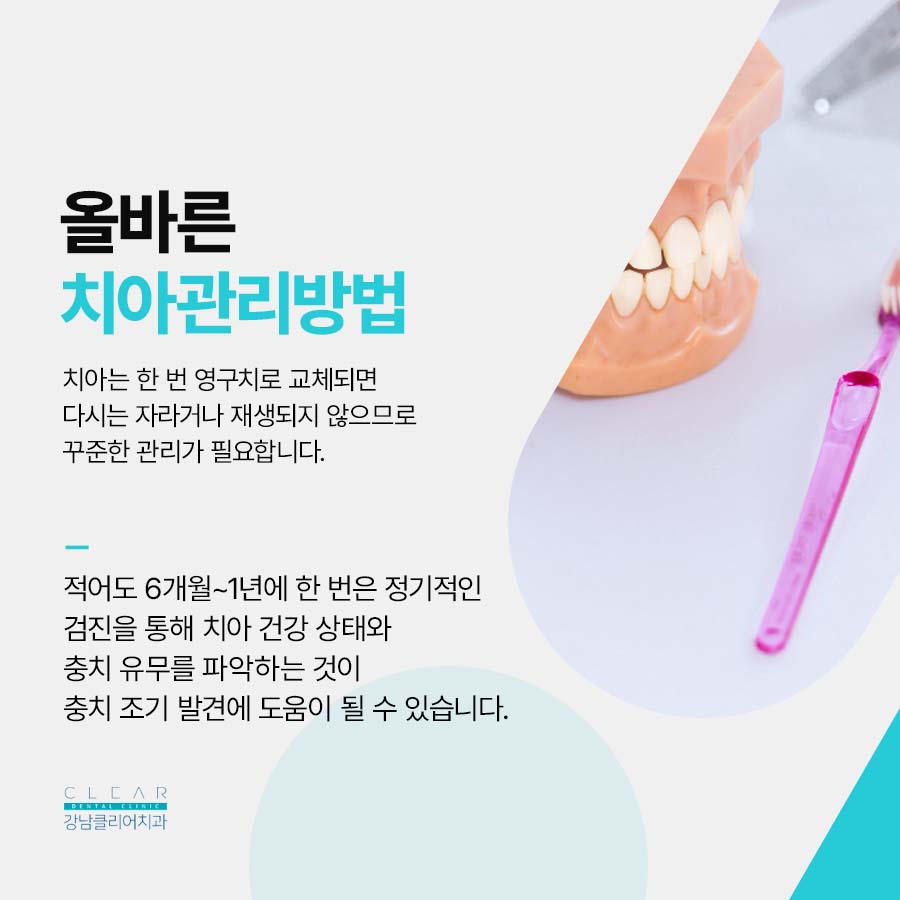
Having regular checkups at least once every 6 months to 1 year to understand your dental health and whether you have cavities can help with early detection of cavities. From today, I hope you will protect your precious natural teeth until old age by following the proper dental care methods.






 Previous image
Next image
Previous image
Next image