| This post complies with Article 56, Paragraph 1 of the Medical Advertising Act and was written directly by Smile D Dental Clinic to provide accurate medical information. Accordingly, please note in advance that this is a simple medical information article that does not require medical advertising review. |
When Is the Right Time for Orthodontic Treatment? Which Cases Need an Examination at Age 6 to 7?
Hello.
I’m Oh Su-hwan, the lead director of Smile D Dental Clinic and an orthodontic specialist with 18 years of experience.
'I’m thinking about when my child should start orthodontic treatment.'
'Some people say it should be done after all the permanent teeth come in, while others say it should be done early. Which one is right?'
When should our child start orthodontic treatment? When is the first orthodontic examination?
I’m sure many of you are wondering when the right time is.
Like a math problem, there isn’t one exact answer.
However, the Korean Association of Orthodontists recommends an orthodontic examination
around the time the permanent front teeth begin to erupt.
I’ve summarized when it may be good to start orthodontic treatment early,
and what benefits pediatric orthodontics can offer.
I hope you read to the end today and prepare for your child’s orthodontic treatment at the right time.
Is a pediatric orthodontic examination at ages 6 to 7 really necessary?
Orthodontic treatment timing
Every child is different in height, growth and development stage, growth speed, and the degree of dental arch development.
So it is not possible to say exactly at what age permanent teeth begin to erupt,
but it is generally around 6 to 7 years old.
If an orthodontic examination is done at this time, the development of the jawbone and the dental arch can be checked early,
so if there is a problem, an orthodontic plan can be established in advance.
Even if your child is younger than 6, if the permanent front teeth have erupted, it is a good idea to have an orthodontic consultation.
When you receive an orthodontic consultation,
-
You can check the likelihood of growth into an underbite or underdeveloped chin,
-
You can check whether an imbalance in the dental arch may cause facial asymmetry
or make the asymmetry worse.
-
In addition, you can check whether there is not enough space for permanent teeth to erupt after the baby teeth fall out,
-
and whether there are any abnormalities in the permanent teeth.
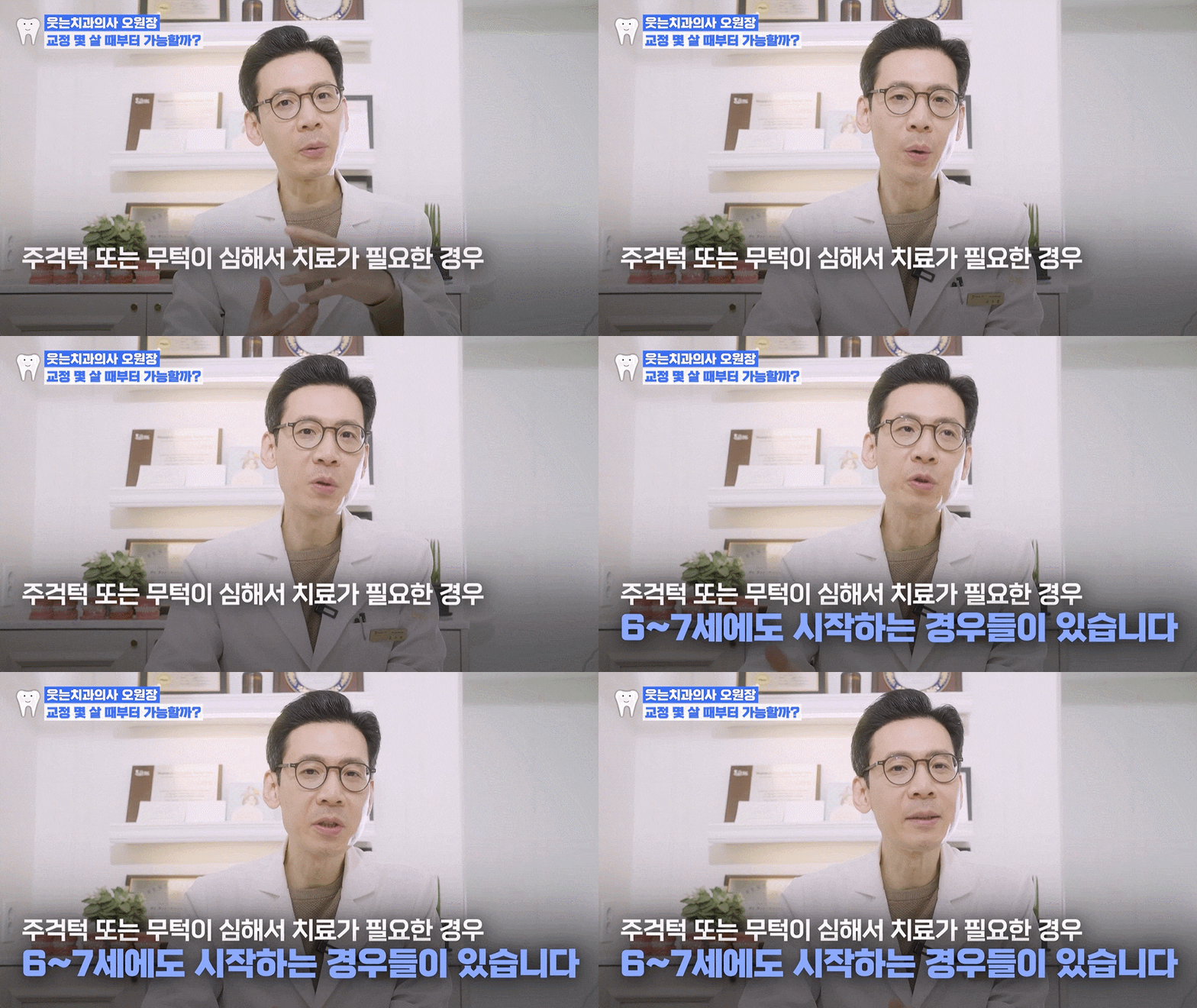
In particular, if the case is one of the following, an orthodontic examination at ages 6 to 7 may be even more effective.
An underbite refers to a case in which the lower jaw is too large and protrudes in front of the upper jaw.
A recessed chin often appears as if the lower front teeth are set back and not visible.
The front teeth may stick out, causing both an appearance concern and difficulty closing the mouth.
This occurs due to skeletal disharmony, and problems such as one molar biting in the opposite direction
or a severely deviated dental midline may appear.
- Open bite, where the front teeth do not meet
There may be a gap between the front teeth, making it difficult to bite food, or there may be speech issues.
If these problems are discovered early through a dental examination at ages 6 to 7,
orthodontic treatment can guide jaw growth or correct the dental arch,
aiding in the prevention of more complex orthodontic treatment later on (or surgery).
Benefits of pediatric orthodontics and whether extraction is needed
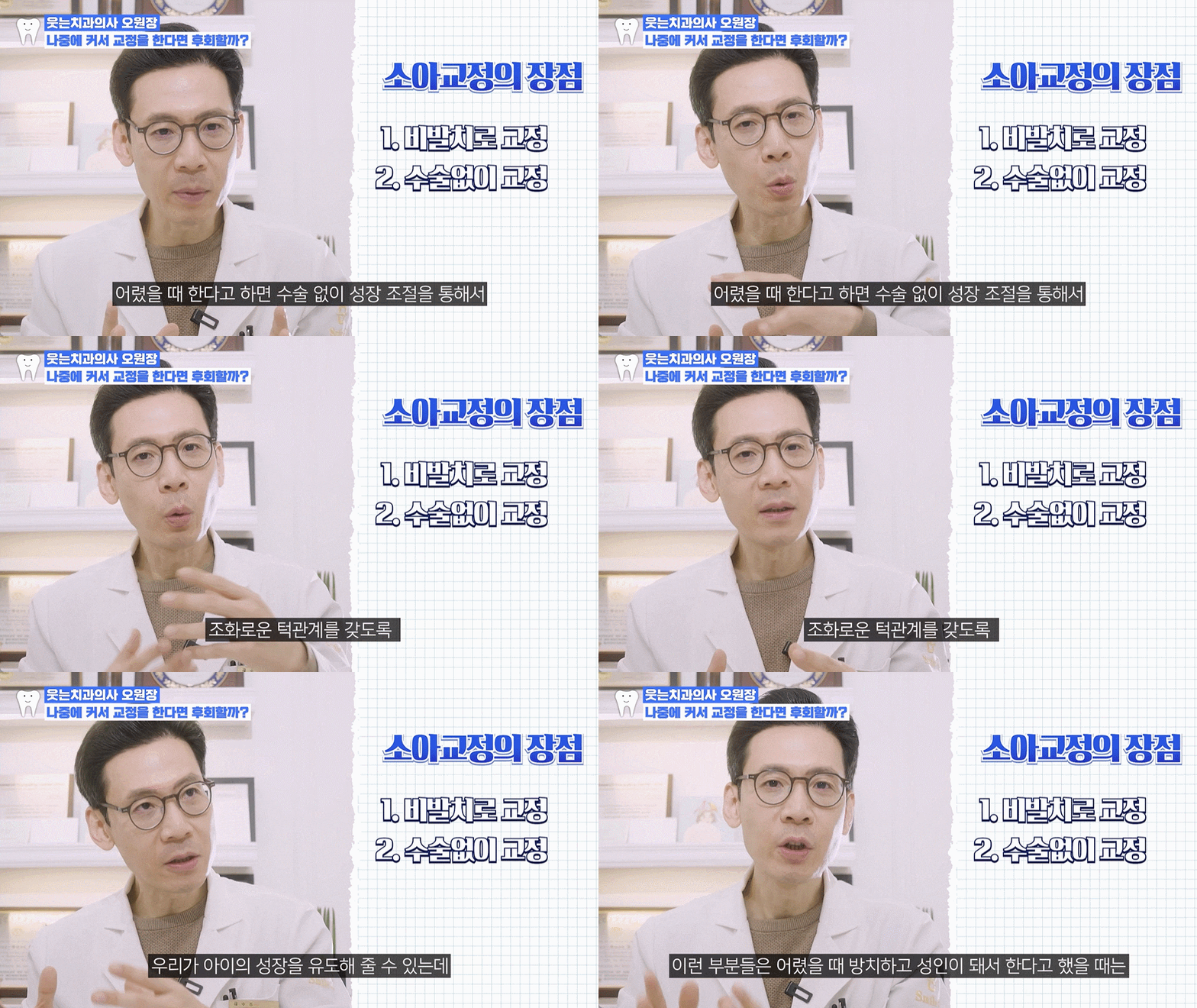
As mentioned earlier, the biggest advantage of early orthodontic treatment is that it can correct the skeletal structure during growth,
helping prevent complex orthodontic treatment in adulthood.
Because jaw growth is active at a young age,
orthodontic appliances can be used to guide jaw growth, making the treatment effect better than adult orthodontics.
It can help correct malocclusions such as underbite and recessed chin and guide the face toward a more natural shape.
Meanwhile, because space for permanent teeth is secured in advance,
it can also help prevent severe crowding or lack of space and reduce the chance of extraction.
In addition, early orthodontic treatment can significantly shorten the treatment period needed in adulthood.
It also has the effect of preventing malocclusion by correcting harmful oral habits such as thumb sucking or tongue thrusting.
On the other hand, extraction is performed only when truly necessary.
The decision is made by comprehensively considering the space needed for tooth alignment, jaw size, and tooth size,
and in many cases, if space can be secured through orthodontic treatment, correction is possible without extracting permanent teeth.
(However, if the difference between the size of the permanent teeth and the jawbone is large, extraction of some teeth may be necessary.)
One more thing I want to emphasize is that
pediatric orthodontics is not just about aligning teeth, but about treatment that also considers growth and development.
Only when there are advanced diagnostic tools and analysis capabilities,
and medical staff who can analyze growth patterns and determine the optimal time for orthodontic treatment,
can a precise treatment plan be established according to the child’s stage of growth.
Therefore, effective and safe orthodontic treatment is possible only when the child is treated directly by medical staff who have handled a variety of pediatric orthodontic cases.
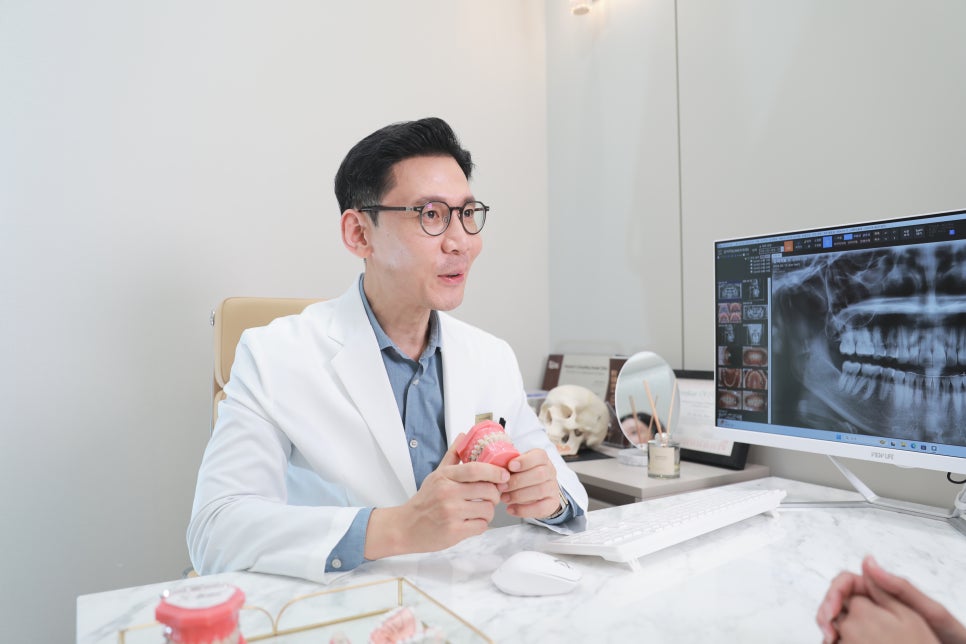
The appropriate time for a pediatric orthodontic examination is around the time the permanent front teeth begin to erupt.
In particular, if there is an underbite, recessed chin, protruding mouth, crowding, open bite, or oral habit issues,
early examination is even more recommended.
For your child’s healthy teeth and beautiful smile,
I hope you do not miss the orthodontic examination at ages 6 to 7.
Thank you for reading this long post.
| ※ All treatments may cause side effects depending on the individual, so please proceed after sufficient consultation. |