| This post complies with Article 56, Paragraph 1 of the Medical Advertising Act and was written directly by Smile D Dental Clinic to deliver accurate medical information. Accordingly, please note in advance that this is a simple medical information article that does not require medical advertising review. |
Invisalign Treatment Duration, Invisalign Pain, and Orthodontic Effectiveness
Hello.
I am Oh Su-hwan, the chief director of Smile D Dental Clinic and an orthodontic specialist with 18 years of experience.
Orthodontic treatment is a method used to correct tooth alignment and bite.
For those whose mouths protrude and make their overall impression look stiff,
for those who cannot close their lips properly and have some sounds escape when speaking,
for those whose upper and lower teeth do not fit together well, making it uncomfortable to chew,
these are the kinds of people who may have considered orthodontic treatment at least once.
However, people who are active in social life often worry about having to live with “railroad tracks” on their teeth during a long treatment period.
That is why some consider Invisalign, one of the clear aligners.
Many of you may be wondering whether Invisalign really works,
and you may also have questions about Invisalign treatment duration and Invisalign pain.
So in today’s article, I have organized the parts you are curious about regarding Invisalign clear aligner treatment.
How far can Invisalign go?
"Isn’t extraction orthodontics not possible with Invisalign?"
"Wouldn’t it be ineffective for complex orthodontic cases?"
Many people have these preconceived notions about Invisalign.
However, with technological advancements, a wide range of orthodontic treatments is now possible.
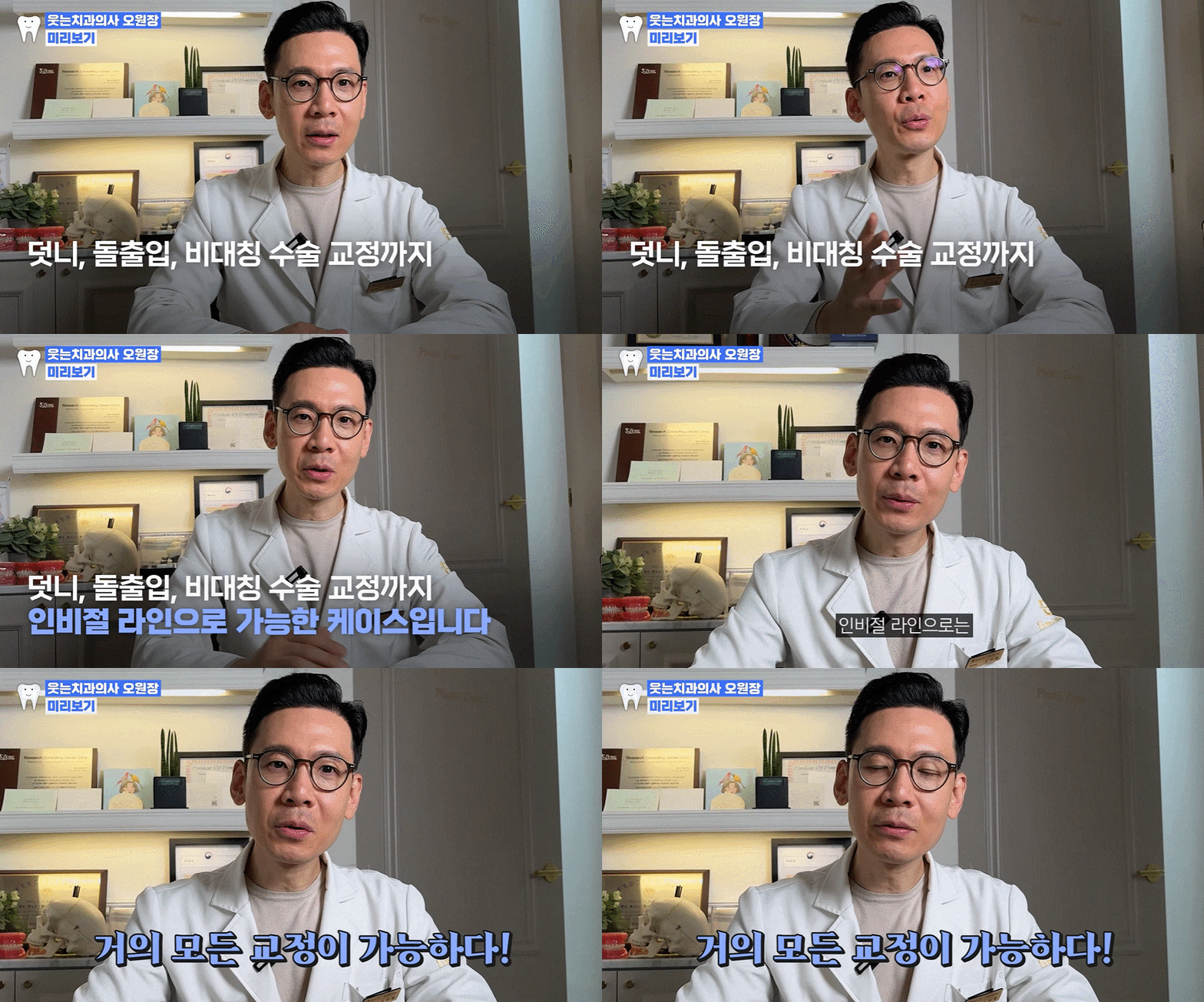
In particular, extraction orthodontics and severe crowded teeth correction, which were once considered difficult, are now well within the range that can be treated with Invisalign.
✅ Orthodontic cases possible with Invisalign
- Extraction orthodontics
In the past, it was thought to be difficult to move tooth roots in parallel when closing spaces after extraction,
but with recent advancements in orthodontic appliances and special materials, extraction orthodontic treatment can also be carried out successfully.
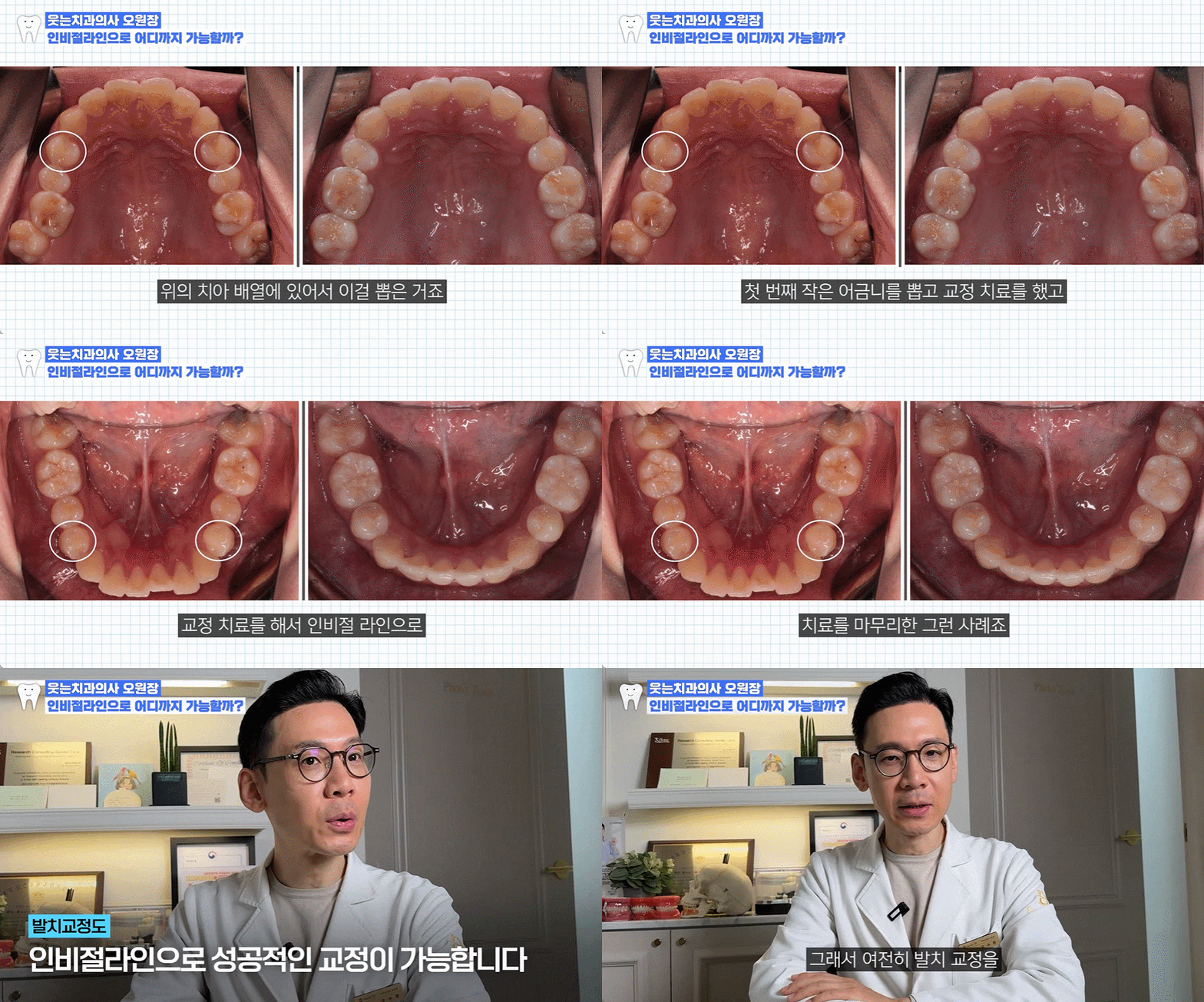
- Crowded teeth correction
Teeth can be aligned using special plastic materials attached to the tooth surface,
and compared with bracket orthodontics, there is not a major difference in treatment duration.
- Protruding mouth correction
By combining extraction, it is also possible to improve mouth protrusion.
Through a comprehensive orthodontic plan, Invisalign can also be used for various asymmetry and surgical adjunctive orthodontic cases.
The biggest advantage of Invisalign is its aesthetics.
As one of the clear aligners, it is not easily visible, so it places less burden on people during social life.
Also, since it can be removed when eating or brushing, it is more effective in terms of hygiene management,
and it has the advantage of making speech a little more comfortable than bracket orthodontics, which can cause the lips to be pulled inward.
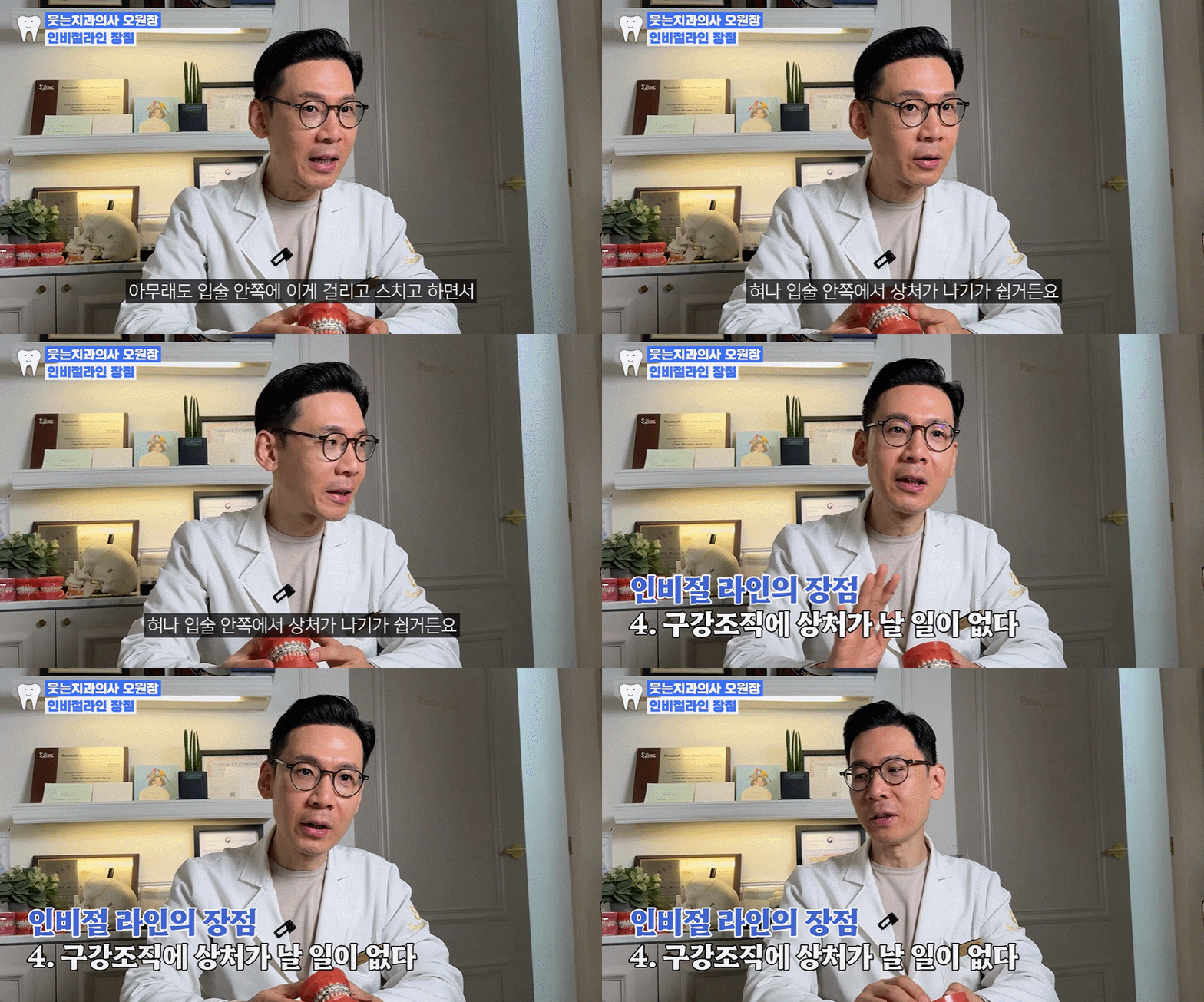
Because there are no wires or brackets, there is also less chance of oral sores.
Of course, it is not without drawbacks.
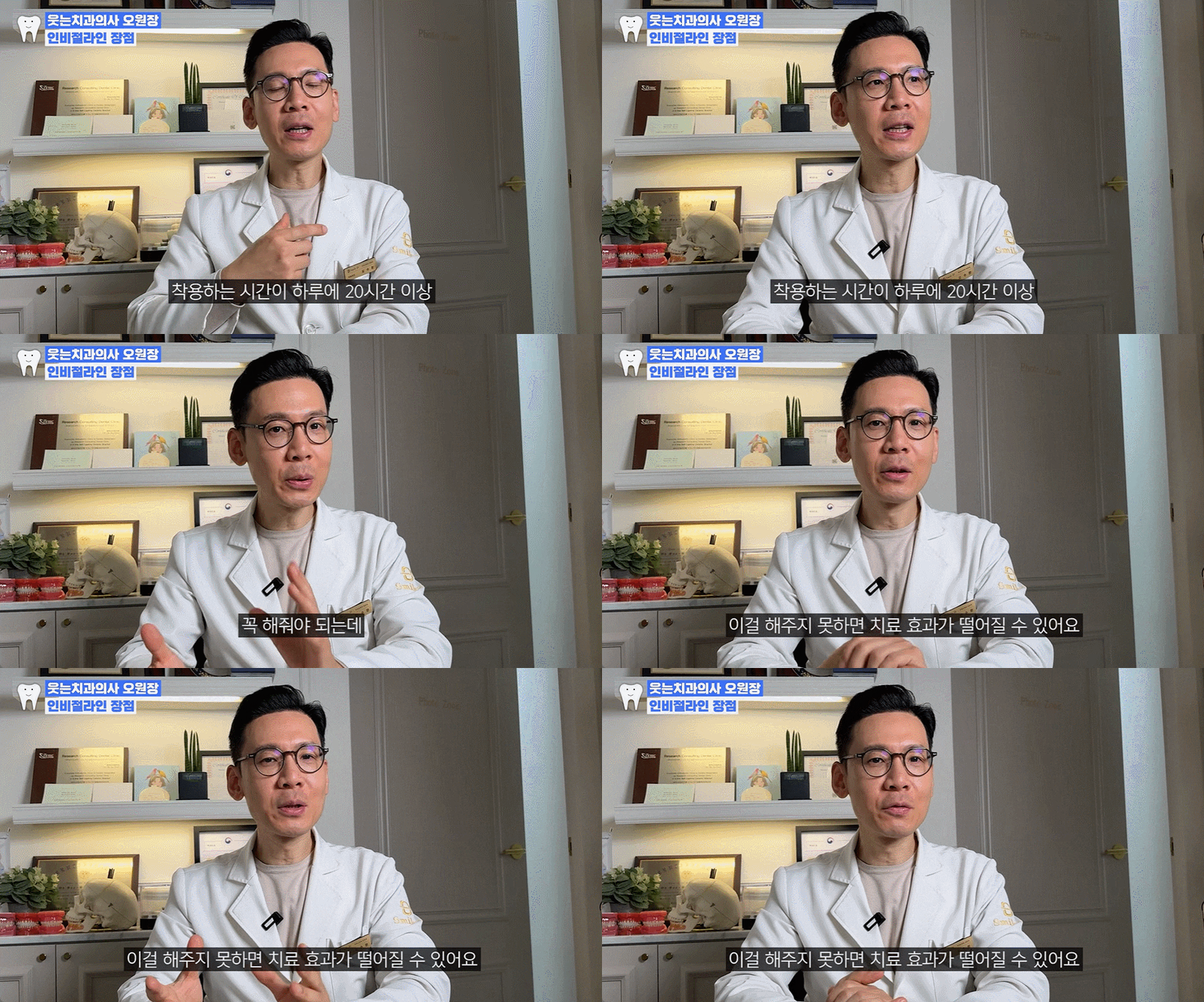
The downside is that the Invisalign treatment duration may become longer depending on the patient’s cooperation.
It must be worn for at least 20 hours a day for the treatment to be effective.
Also, compared with regular bracket orthodontics, it tends to be somewhat more expensive,
so the cost of orthodontic treatment may feel burdensome for students or young adults just starting out in their careers.
What about Invisalign treatment duration and Invisalign pain?
I would like to compare bracket orthodontics, which you are already familiar with, and Invisalign.
First, the Invisalign treatment duration is not significantly different from bracket orthodontics.
In fact, orthodontic treatment duration depends more on
a person’s dental condition and treatment goals than on the type of appliance.
Even with Invisalign, mild malocclusion can be treated within 6 months,
while complex malocclusion or severe bite problems may take more than 2 years.
One of the important differences from bracket orthodontics is the number of clinic visits.
If you receive general orthodontic treatment, you typically visit the dental clinic once every 4 weeks (about once a month)
to adjust the orthodontic wire tension or replace the elastic bands and orthodontic appliances.
However, with Invisalign, you usually visit the clinic every 6 to 8 weeks during treatment to check progress.
At that time, a doctor who has completed Invisalign training
will check whether the aligners fit properly and make any necessary adjustments.
You may be wondering why there is such a difference in the number of visits.
Invisalign is made in sequence to move the teeth according to the patient’s dental condition.
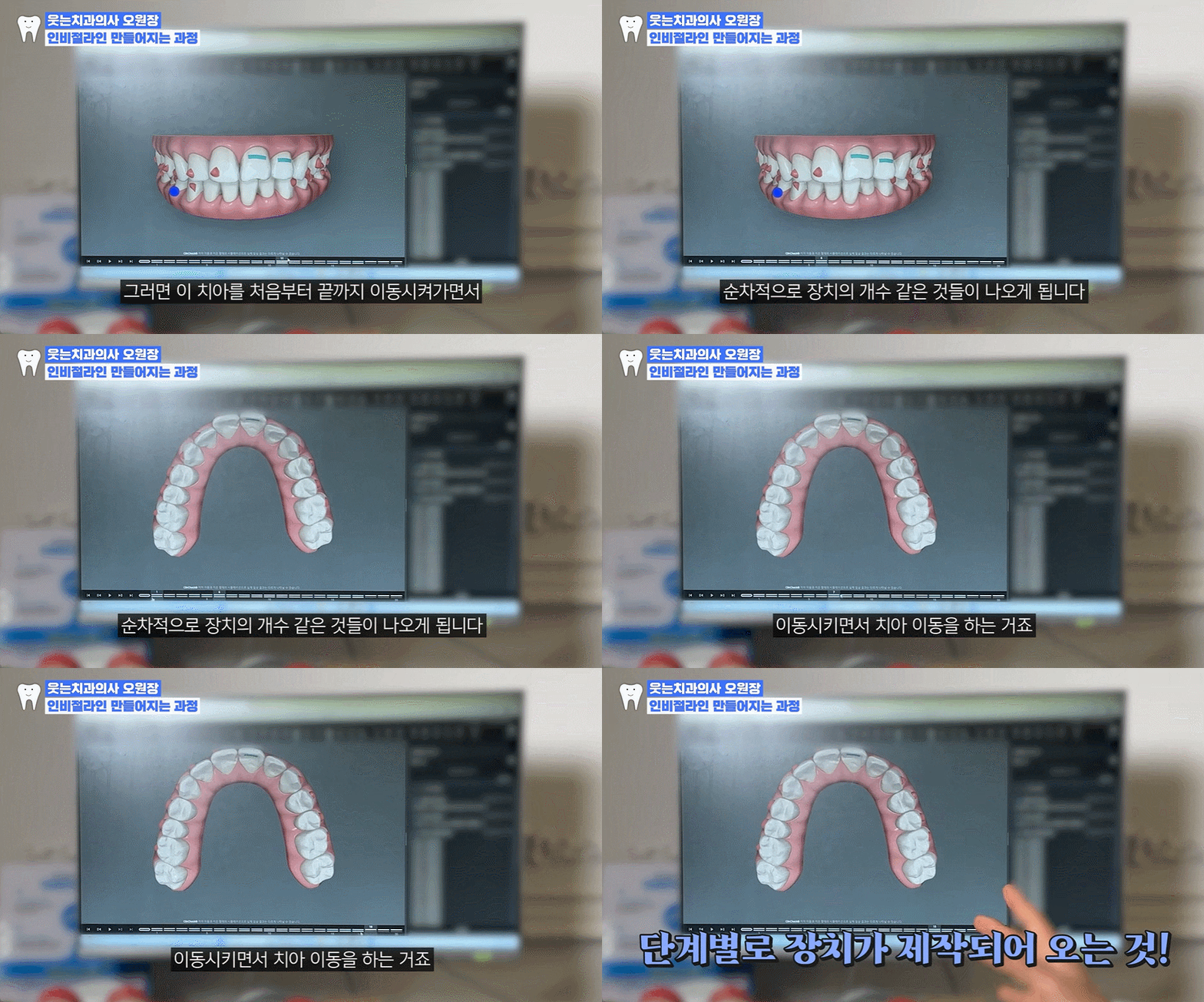
At a dental visit, patients usually receive 3 to 4 sets of aligners at once,
and then wear them while changing to the next sets over the course of one to two months.
(The replacement cycle for Invisalign aligners is usually 2 weeks,
but because each patient’s tooth movement speed differs, the replacement cycle may be adjusted.)
Therefore, there is necessarily a difference in the number of visits compared with bracket orthodontics,
and regular visits every 6 to 8 weeks allow treatment to proceed according to the plan.
However, one thing to keep in mind is that, as mentioned earlier,
the aligners must be worn for 20 to 22 hours a day for effective results.
The patient’s cooperation level (adherence to Invisalign wear time) greatly affects the treatment period.
Meanwhile, what about Invisalign pain?
Many people worry most about pain, with some saying that once orthodontic treatment starts, they cannot even eat properly because it hurts.
Invisalign and bracket orthodontics differ in the nature and intensity of pain.
With Invisalign, patients mainly feel mild pressure and discomfort for a few days after putting on a new tray.
It is rare for the tray to irritate the cheeks or tongue,
but minor oral ulcers may occasionally occur due to slight friction.
The pain intensity during tooth movement is generally milder than with bracket orthodontics, so there is rarely a need to take painkillers.
On the other hand, bracket orthodontics can cause strong pain for 3 to 5 days after the appliance is attached.
Pain also occurs periodically after wire adjustments,
and teeth may become very sensitive or it may be difficult to chew food.
Brackets or wires may also poke the cheeks or the inside of the lips, causing oral ulcers.
In short, the initial pain is generally stronger with bracket orthodontics than with Invisalign.
With bracket orthodontics, pain returns each month when adjustments are made,
while with Invisalign, mild pain is felt when new trays are replaced.
However, since there are differences depending on the patient’s oral condition,
please check the treatment effectiveness, Invisalign duration, and pain-related details through a direct consultation.
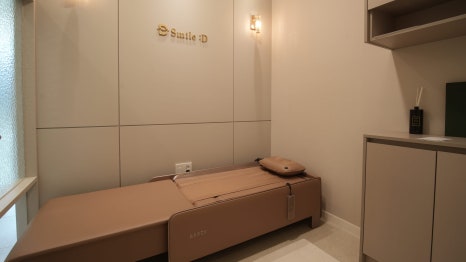

Invisalign and bracket orthodontics each have clear advantages and disadvantages.
Therefore, when choosing an orthodontic method, you should comprehensively consider the treatment purpose, lifestyle habits, pain sensitivity, aesthetics, and cost.
Please decide on the orthodontic method that is most suitable for you through a consultation with a dental specialist.
Thank you. This has been Smile D Dental Clinic.
| ※ Since all treatments may cause side effects depending on the individual, please proceed only after sufficient consultation. |