| This post was written directly by Smile D Dental Clinic in order to comply with Article 56, Paragraph 1 of the Medical Advertising Act and to provide accurate medical information. Accordingly, please note in advance that this is a simple medical information post that does not require medical advertising review. |
What Is Needed for Partial Correction of Protruding Canines? You Need to Check 2 Things
Hello.
I’m Oh Su-hwan, the head doctor of Smile D Dental Clinic and a specialist in orthodontics certified by the Ministry of Health and Welfare with 18 years of experience.
A protruding canine is one type of tooth alignment problem that occurs when the teeth grow in an uneven arrangement.
Since it cannot be said to be aesthetically pleasing, many people consider orthodontic treatment.
At this point, many people think about partial correction of protruding canines in order to reduce the treatment period or the cost burden.
For those who have wondered whether a protruding canine can be corrected partially rather than with full orthodontic treatment,
this post will look at the possibility and methods of partial correction for protruding canines.
Can partial correction of protruding canines be done?
Orthodontic treatment moves teeth to the desired position based on the principle of action and reaction.
In other words, not only the tooth being moved,
but also teeth that serve as an anchor, resisting that force as a reaction, are needed.
However, because partial correction is performed by attaching only the minimum number of appliances,
there is inevitably a shortage of teeth that can serve as anchors.
As a result, there are bound to be limitations in achieving proper tooth alignment or a proper bite.
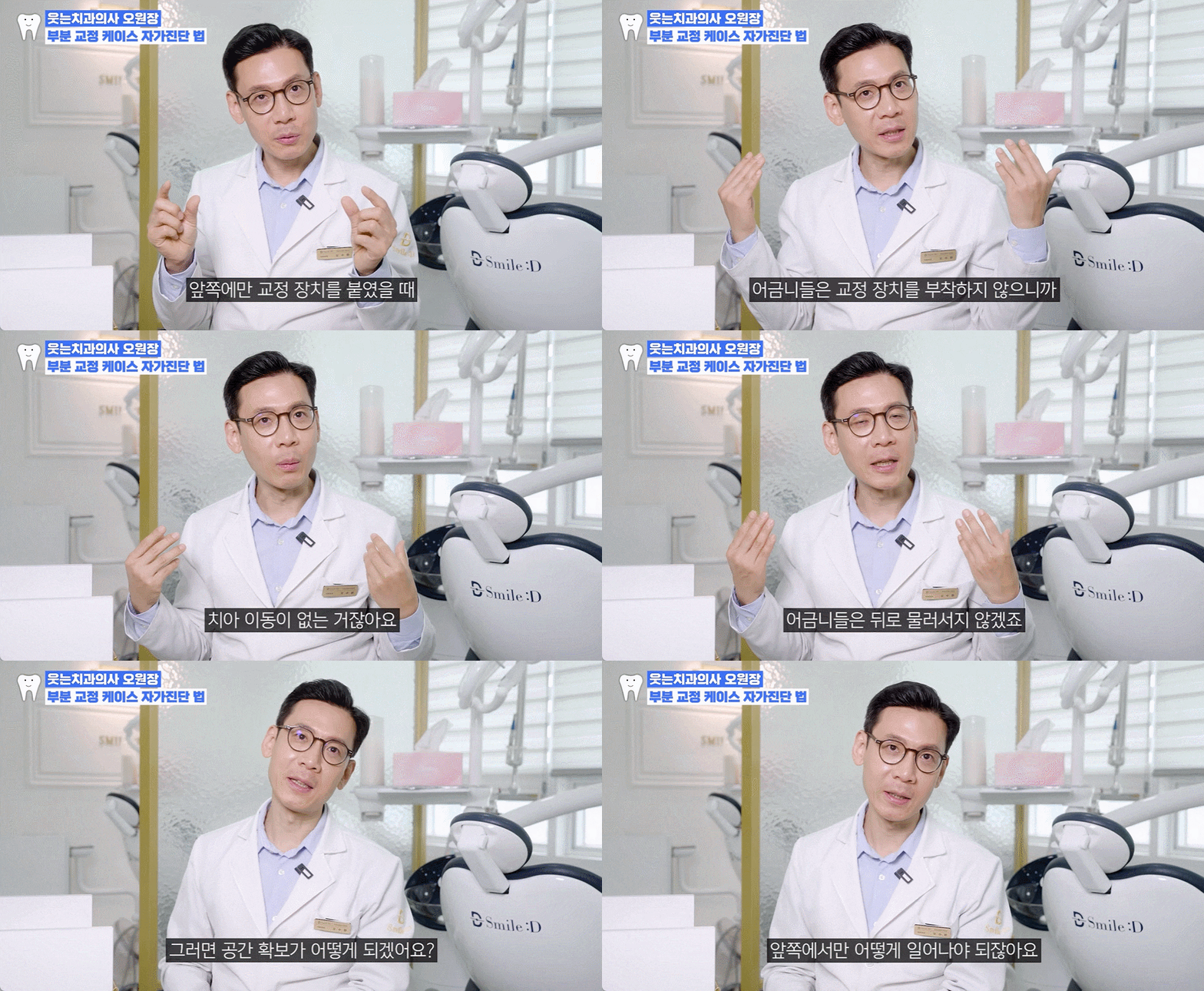
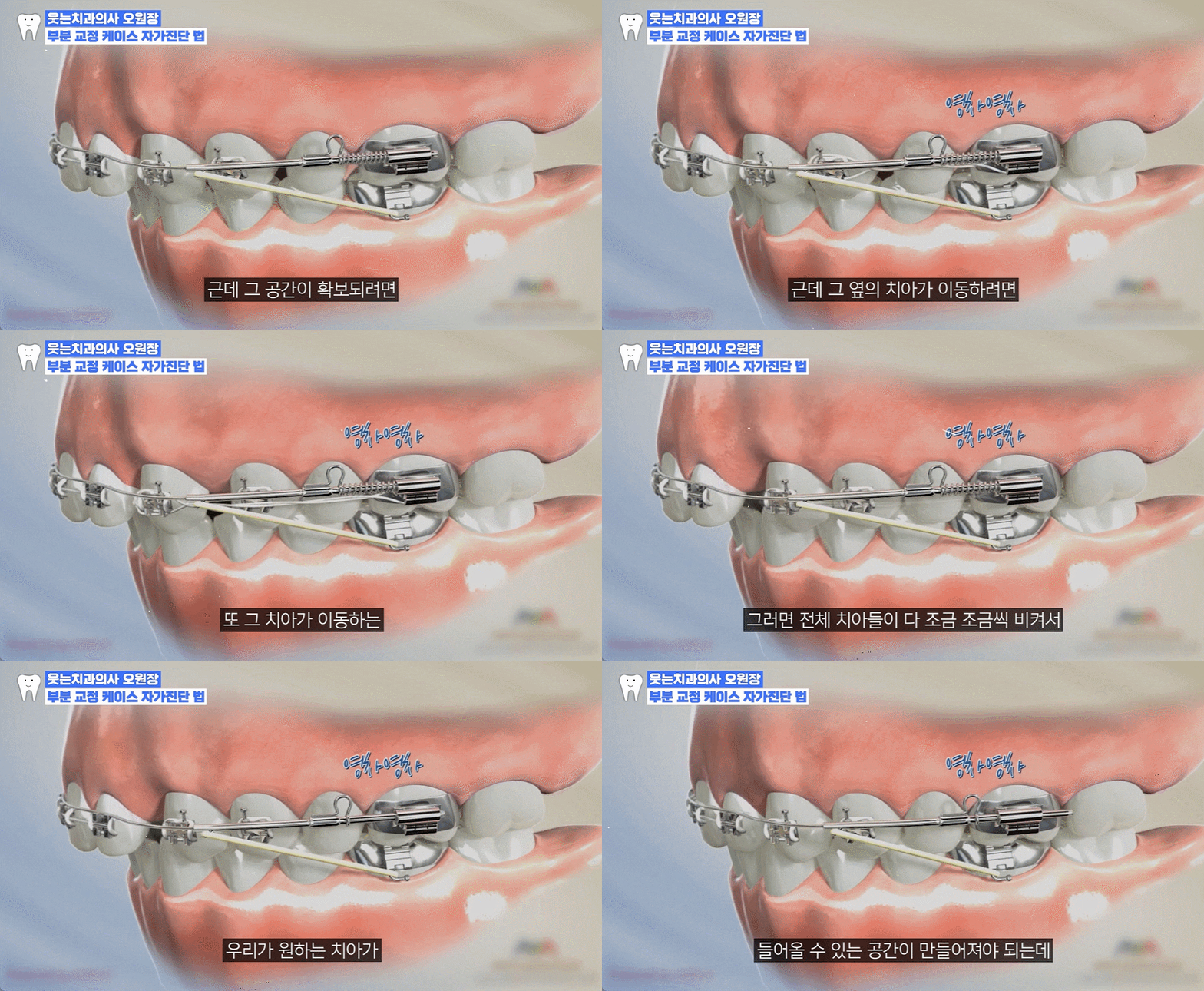
For example, let’s think about a case where a single protruding canine sticks out prominently to the front.
The fundamental reason this tooth has protruded forward is that there is not enough space for the tooth to be positioned properly.
To achieve a normal alignment, space must be secured for this tooth to fit into,
which means the adjacent teeth need to move.
And for those teeth to move, the surrounding teeth must make room as well.
In other words, overall tooth movement is required.
After reading this far, you may think, “So partial correction won’t work,” but
it can be possible in some cases.
It is mainly determined by the following two factors.
01 The position and severity of the protruding canine
In mild cases of protruding canines, the desired result may be achieved through partial correction.
However, if the canine protrudes severely or there is insufficient space, it may be difficult.
02 The occlusion (bite) condition
When performing partial correction, it is important that the upper and lower teeth fit together properly.
If the bite does not align properly, it can place strain on the temporomandibular joint, so full orthodontic treatment may be necessary.
How to secure space for partial correction
To summarize the above, the conclusion is that partial correction is possible in cases of “mild protruding canines, with proper tooth alignment and bite condition.”
However, even if the protruding canine is mild, there must be space for the teeth to be aligned neatly.
How is this possible with partial correction without full orthodontic treatment or tooth extraction?
There are two representative methods.
They are interproximal reduction and arch expansion.
Interproximal reduction is a method of securing space by very slightly filing down the enamel between teeth.
In partial correction of protruding canines, fine adjustments can be made by filing the front teeth,
but this requires the specialized skill of an orthodontics specialist so that it does not affect tooth health.
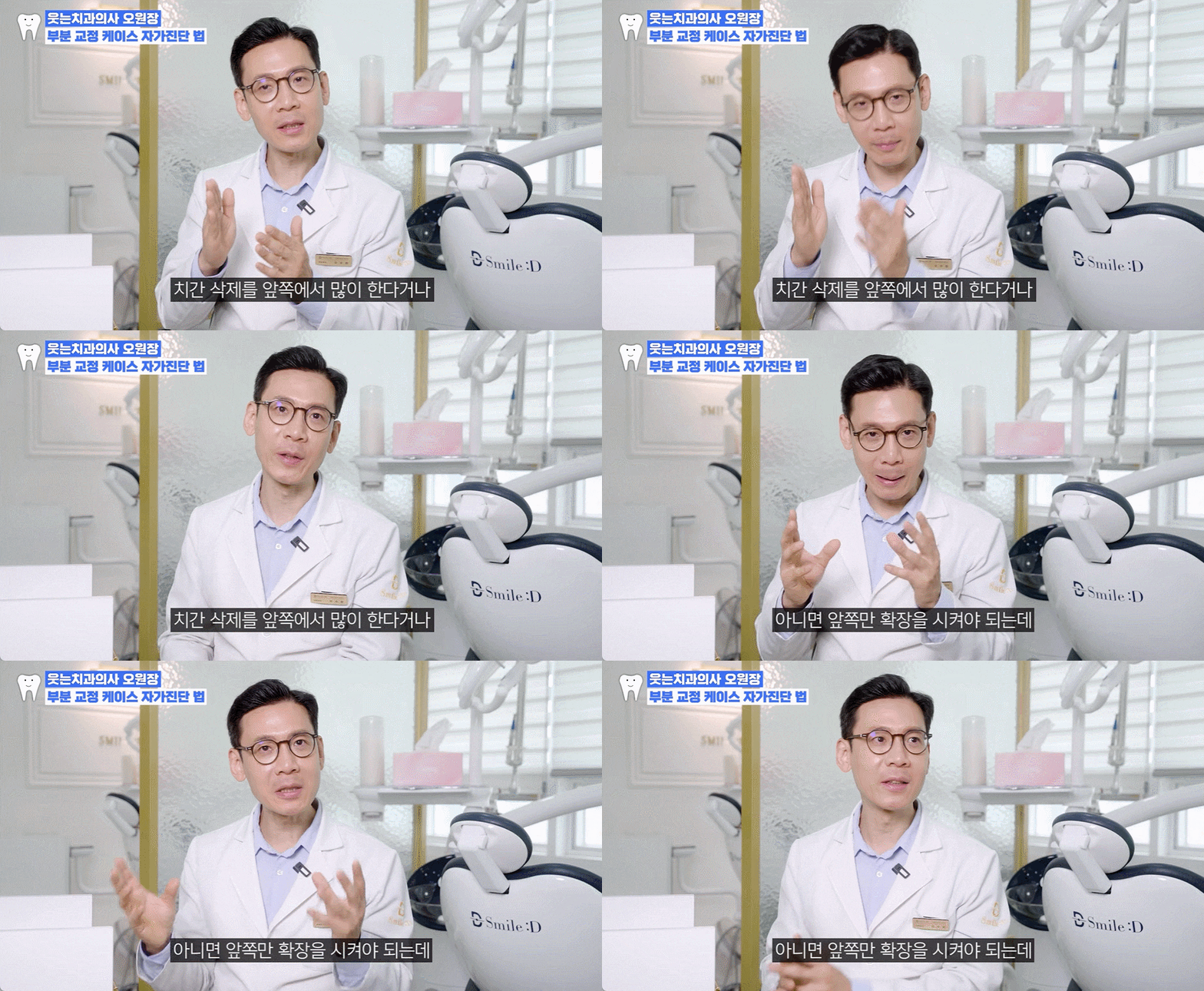
The second method is arch expansion.
This is a method of expanding the dental arch itself in order to secure space for the teeth.
It is carried out by using expansion devices to widen the upper or lower dental arch,
but it is not easy to expand only the front area.
As such, many factors must be considered for partial correction of protruding canines,
so after 충분히 consulting with an orthodontics specialist, please consider the treatment method that is right for you.
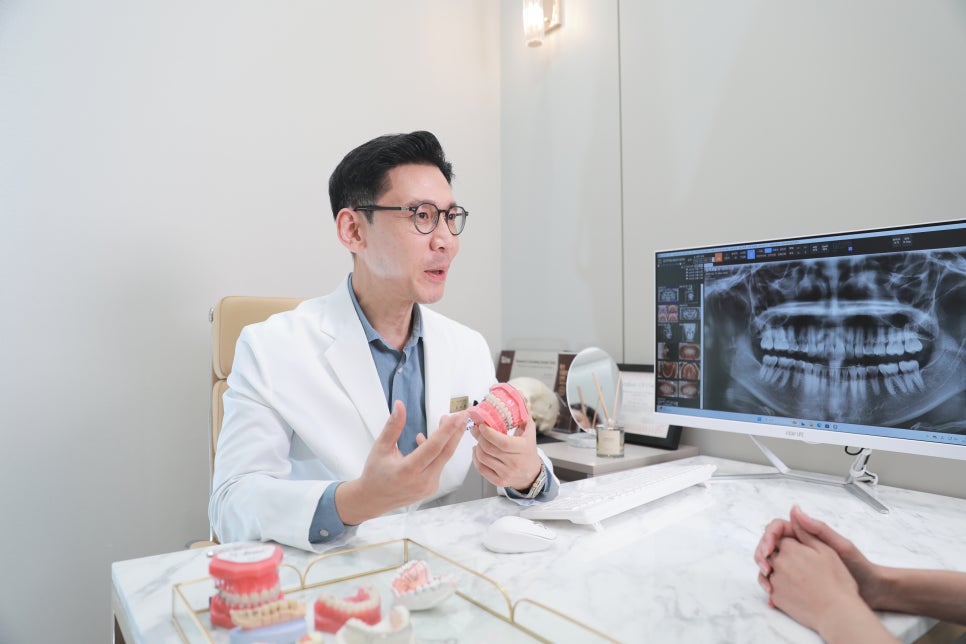
Partial correction of protruding canines can be performed effectively if certain conditions are met,
but it is not applicable in every case.
A careful analysis of the position of the protruding canine, the bite condition, and whether space can be secured is necessary before deciding.
Also, because partial correction may make it difficult to move teeth as much as desired when there are too few anchoring teeth,
if you are considering partial correction of protruding canines, it would be a good idea to receive a dental consultation.
This has been Smile D Dental Clinic. Thank you.
| ※ All treatments may cause side effects depending on the individual, so please proceed only after sufficient consultation. |