| This post complies with Article 56, Paragraph 1 of the Medical Advertising Act and was written directly by Smile D Dental Clinic to deliver accurate medical information. Accordingly, please note in advance that this is a simple medical information post that does not require medical advertising review. |
In What Cases Is Lower-Teeth Partial Orthodontic Treatment Possible?
Hello.
I am Oh Su-hwan, the chief director of Smile D Dental Clinic and a Ministry of Health and Welfare–certified orthodontic specialist with 18 years of experience.
'I want to go with lower-teeth partial orthodontic treatment because full orthodontic treatment takes a long time.'
Partial orthodontic treatment has a shorter treatment period than full orthodontic treatment and is relatively less expensive,
so many people are interested in it.
In many cases, treatment is completed in about 3 months to 1 year, making it advantageous for those who want faster orthodontic treatment.
However, whether lower-teeth partial orthodontic treatment is possible depends on the individual condition of the teeth.
Even if you think only the lower teeth are the problem, a real diagnosis often shows that
the overall dental arch is misaligned.
So in today’s post, we will take a broad look at cases where lower-teeth partial orthodontic treatment can be applied.
In What Cases Is Lower-Teeth Partial Orthodontic Treatment Possible?
Whether partial orthodontic treatment is possible depends on the individual condition of the teeth.
There are cases where full orthodontic treatment is necessary, so careful decision-making through consultation with a specialist is important.
In general, lower-teeth partial orthodontic treatment may be relatively possible in the following cases.
First, when there is a mild tooth alignment problem
If the lower teeth are only slightly crooked or have a small gap between them,
partial orthodontic treatment can be enough to improve the issue.
However, if the teeth are severely crowded or misaligned, overall dental alignment may be necessary.
Second, when there is not a significant bite problem with the upper teeth
Orthodontic treatment is not simply about aligning the teeth;
it also includes adjusting the upper and lower teeth so they fit together properly.
If correcting only the lower teeth would cause an imbalanced bite,
full orthodontic treatment may be needed instead of partial treatment.
Third, when deep bite is not severe
If the upper teeth cover the lower teeth too deeply,
correcting only the lower teeth may throw off the way the upper and lower teeth fit together.
Therefore, patients with severe deep bite are more likely to need an overall orthodontic treatment plan rather than partial treatment.
Fourth, when only some teeth have shifted after previous orthodontic treatment
If you had orthodontic treatment in the past but did not wear your retainer properly and some of the lower teeth shifted again,
partial orthodontic treatment may be able to straighten them.
In such cases, improvement can be made in a relatively short period.
As such, partial orthodontic treatment can be an effective method only in specific cases.
Rather than choosing partial orthodontic treatment simply to reduce costs,
it is important to make the decision after accurately analyzing your own dental condition.
How Do You Find a Place You Can Trust?
Even if partial orthodontic treatment is possible,
the results can vary greatly depending on where you receive treatment.
Because orthodontic treatment is a precise procedure that must take into account the balance of the entire dental arch and the bite,
choosing a place you can trust is more important than anything else.
To help with that, here are a few tips.
First, it is best to choose a place where an orthodontic specialist personally provides treatment.
Orthodontic treatment is not just about attaching appliances;
it requires a treatment plan that comprehensively considers the patient’s skeletal structure, dental alignment, and bite.
An experienced orthodontic specialist has seen a wide range of cases, making personalized treatment possible and
helping minimize side effects that may occur during the treatment process.
Second, pay close attention to the quality of the consultation.
If a clinic emphasizes only cost during the consultation process,
or explains the treatment period in an excessively shortened way, you should consider it carefully.
A trustworthy place will accurately analyze the patient’s condition during the consultation process and
provide specific explanations of possible treatment methods and expected results.
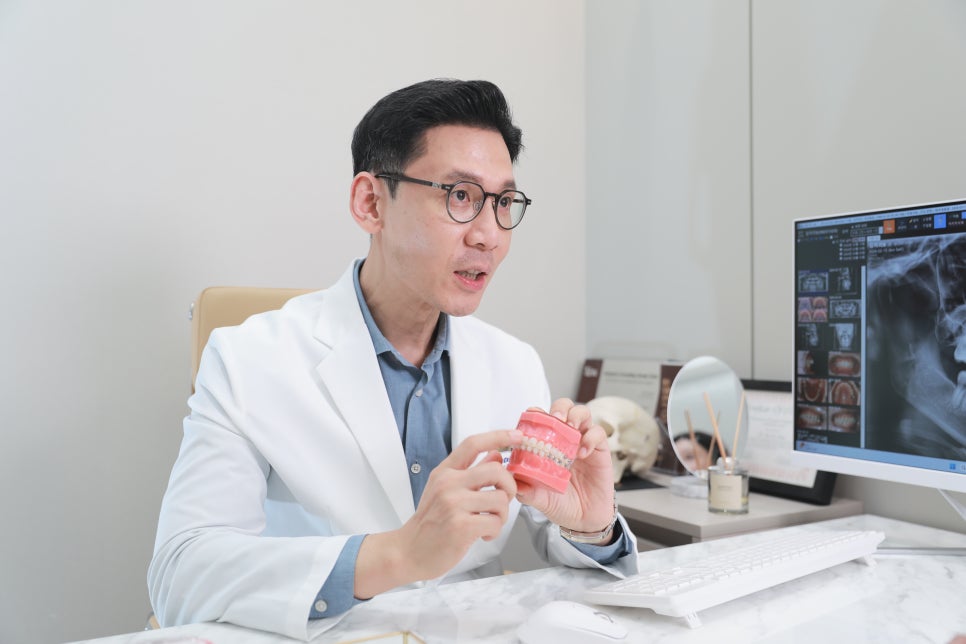
If treatment is recommended right away without sufficient diagnosis of whether partial orthodontic treatment is appropriate for your dental condition,
it is better to avoid it.
Third, it is a good idea to check whether retention management after orthodontic treatment is systematic.
Orthodontic treatment is not a short-term procedure; it is a long-term process that includes the retention period as well.
Therefore, even after treatment is finished, it is good to look into whether there is a system in place for management through retainer wear and regular checkups
to prevent the teeth from shifting again.
Fourth, referring to actual treatment cases or patient reviews is also a good approach.
These days, treatment cases can be easily checked on hospital websites, blogs, and online communities.
However, not all reviews are objective,
so it is important to consider a variety of information comprehensively.
 Lower-teeth partial orthodontic treatment can be an effective method in specific cases,
but it is not applicable in every situation.
Please analyze your dental condition accurately and decide only after 충분한 상담 with an orthodontic specialist about whether lower-teeth partial orthodontic treatment is appropriate.
This has been Smile D Dental Clinic. Thank you.
| ※ Since all treatments may cause side effects depending on the individual, please proceed only after sufficient consultation. |