
Clear Aligner Treatment Review? Key Takeaways from Its Effects to Its Side Effects
Hello.
I’m Oh Suhwan, an orthodontic specialist with 18 years of experience.
Many people may be considering clear aligners because they don’t want others to know they are undergoing orthodontic treatment.
They are aesthetically excellent, but you may also be wondering whether they are truly effective, or whether there are any side effects.

Since you may not want to make a hasty decision based only on clear aligner reviews, you are probably looking into various sources of information.
One thing I can say for sure is this..
Just because someone else got good results
does not guarantee that
you will get the exact same result.
What matters most is a customized treatment plan based on an accurate diagnosis.
In other words, even if someone got dramatic results with clear aligners,
I cannot guarantee that you will also get perfect results 100% of the time.
So in today’s post, I’ll go over the cases where clear aligners can be effective,
and then summarize the side effects as well.
Clear aligner effects? They can even do this
Clear aligner treatment review
At first glance, clear aligners just look like transparent plastic trays,
so you may wonder, “How can this possibly correct teeth?”
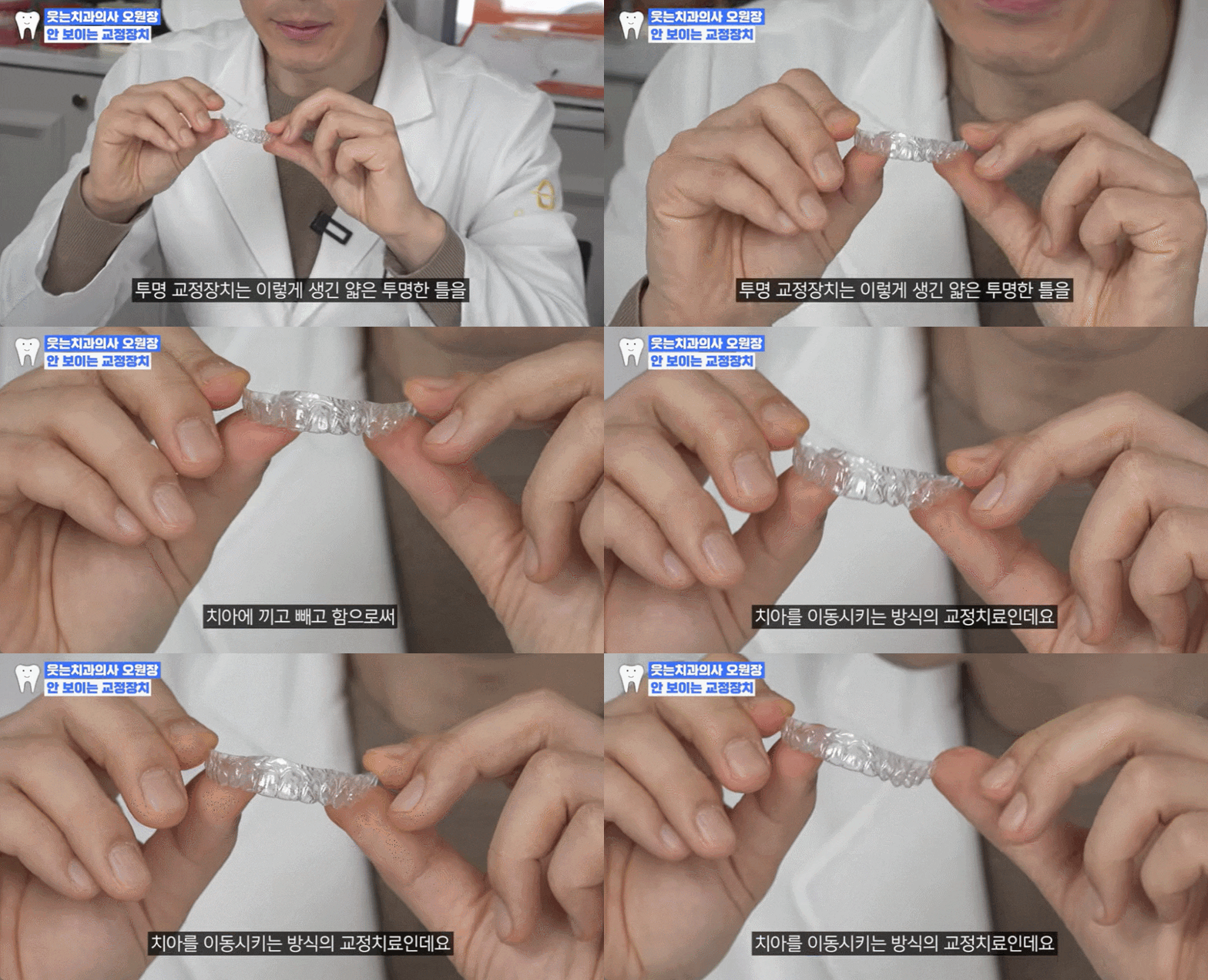
Let’s first look at the treatment process and principle.
First, step-by-step aligners (transparent plastic trays) are custom-made.
Based on the tooth movement plan, the individual patient’s oral structure is 3D scanned and analyzed,
and transparent orthodontic appliances are produced step by step.
Each aligner is designed to be slightly shifted from the previous tooth position,
and during treatment it gradually guides the teeth toward the desired position.
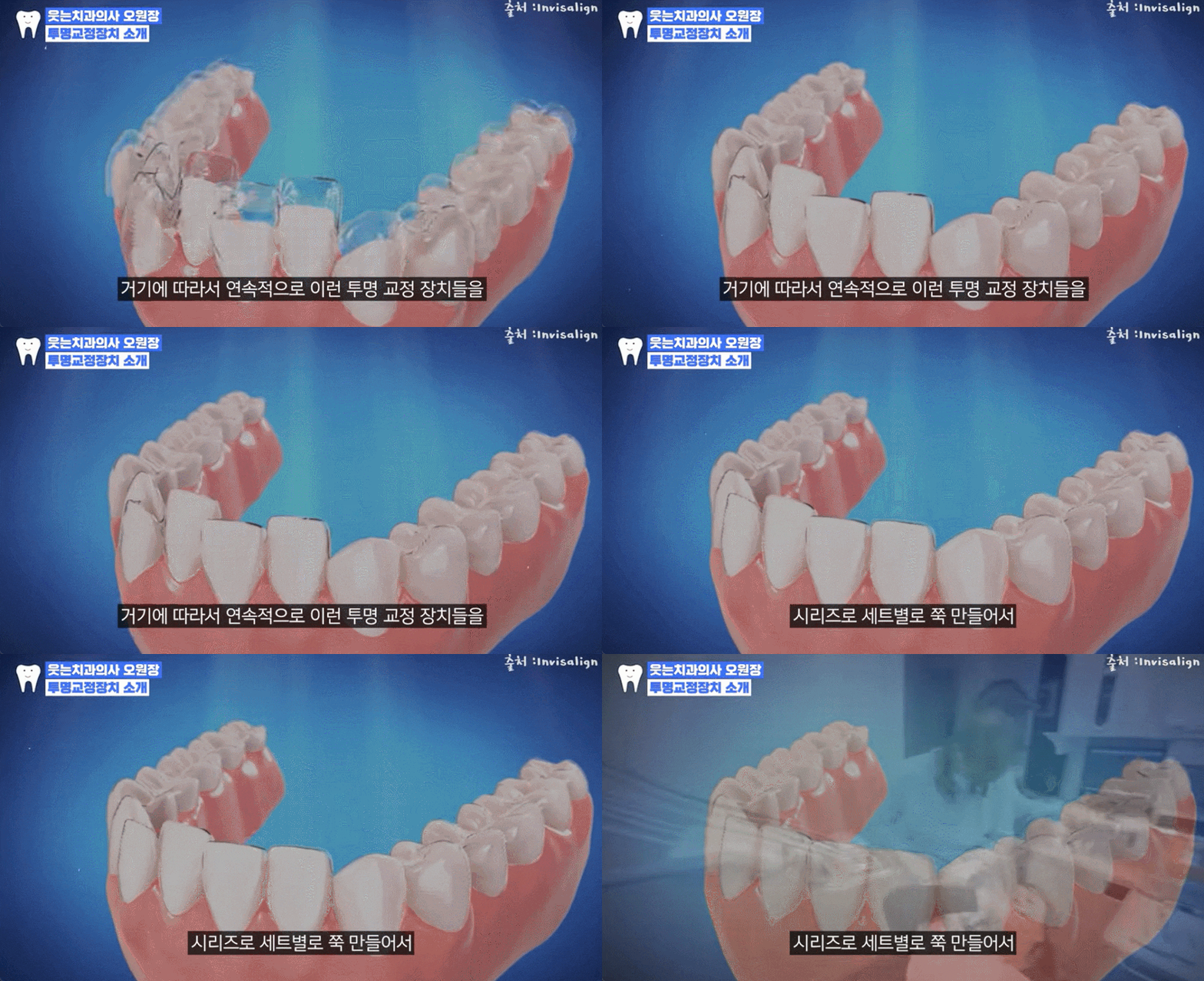
The patient replaces the aligner at regular intervals (for example, every 1 to 2 weeks),
and each appliance applies gentle pressure to gradually move the teeth.
Rather than making a large change all at once, it guides the teeth step by step
so that the teeth and alveolar bone are not overburdened.
In other words, this is a method in which systematic tooth movement is achieved through custom-made transparent appliances made in stages.
You may also be wondering what kinds of treatments are possible with clear aligners.
Many people think clear aligners can only solve simple tooth alignment issues,
but thanks to major technological advances over the past 10 years, they can actually address a wide range of dental problems.
They can handle not only mild crowding, where the teeth are slightly crooked,
but also protrusion correction caused by the upper and lower front teeth sticking out, and even cases involving extractions.

In some cases, they can also be used for deep bite cases (where the teeth overlap excessively)
and open bite cases (where the upper and lower teeth do not come together properly).
However, clear aligners are not suitable for every orthodontic case.
Although technological advances have made them applicable to a wider range of cases than before,
there are still limitations.
I’ll explain this part later in the side effects section.
You should also keep in mind the side effects of clear aligners
Clear aligner treatment review
Clear aligners have many advantages, but like any treatment, they also have limitations.
It is important to know the points explained below in advance and make a careful decision.
① “Fine adjustment of tooth occlusion may be difficult”
In the case of wire braces, if you think during treatment, “I’m not really happy with the tooth position,”
you can remove and reattach the appliance or bend the wire to make adjustments.
At the final stage of treatment, there is also something called the “seating process,” in which the bite is finely adjusted.
However, with clear aligners, the appliances are pre-made in stages from the beginning.
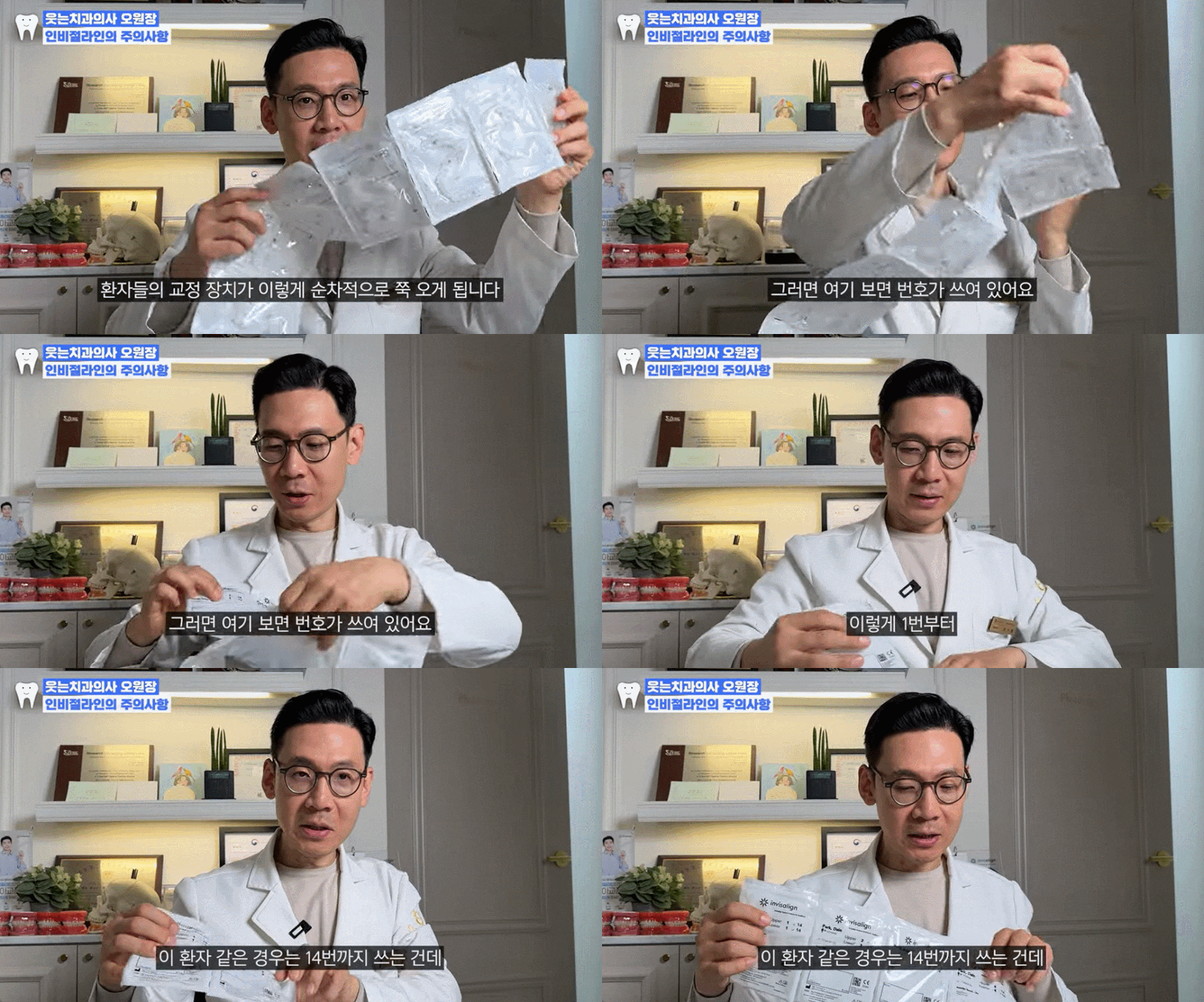
So there is not much room for the medical team to intervene in the middle.
As a result, fine detail adjustments can be relatively difficult.
If unexpected changes in tooth movement occur,
a new appliance may need to be made again.
② “It is also difficult to apply to every case”
Of course, they can now be used for a wider variety of cases than before, but there are still limitations.
Severe malocclusion, cases requiring excessive rotation,
or cases with large spaces after extraction may be difficult to resolve with clear aligners alone.
In such cases, conventional bracket braces or surgery may be necessary.
③ “You must wear them for more than 20 hours a day”
As with all treatments, patient cooperation is extremely important in clear aligner treatment.
Unlike conventional bracket braces, clear aligners are not fixed to the teeth;
they are worn and managed directly by the patient.
To see orthodontic results, they must be worn for at least 20 hours a day.
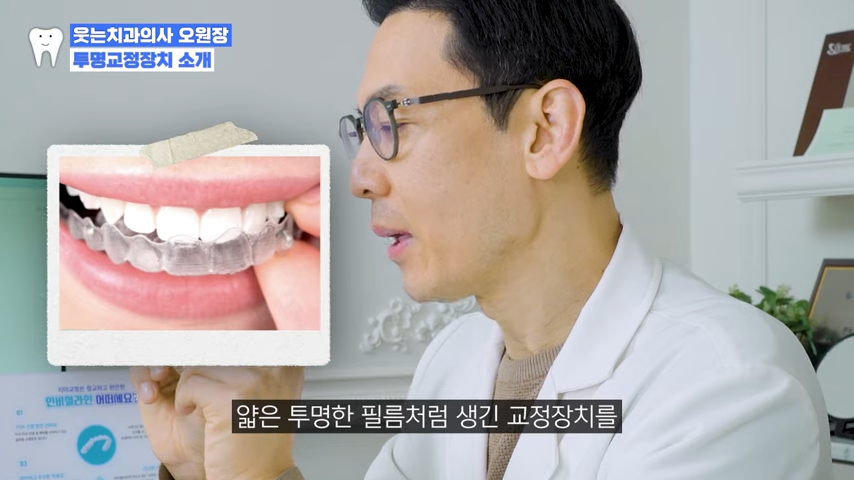
More than 20 hours means they should be worn at all times except during meals.
If the wearing time is insufficient,
the planned tooth movement may not occur properly,
and the treatment period is likely to be extended.
④ “There is also a high risk of loss”
Clear aligners have the advantage of being removable,
but that also means there is a greater risk of losing them.
A common situation is removing them during meals, wrapping them in a tissue, and then forgetting to take them with you.
If you lose the appliance, it must be remade, which can lead to additional costs.
 Clear aligners offer excellent aesthetics and are convenient to manage.
However, they are not suitable for every case,
and it is important to remember that patient cooperation is extremely important in this treatment.
When considering clear aligners, do not judge whether orthodontic treatment is suitable based only on clear aligner reviews.
Please receive an accurate diagnosis of your teeth from a trusted medical professional,
and choose the most appropriate orthodontic method.
This has been Oh Suhwan, the head orthodontic specialist with 18 years of experience.
Thank you.