Butterfly front teeth orthodontics: In what cases is “partial correction” possible?
Hello.
I’m Oh Suhwan, a specialist in orthodontics certified by the Ministry of Health and Welfare with 18 years of experience.
At the moment, you may be considering orthodontic treatment to improve butterfly teeth.
Butterfly teeth refer to a tooth alignment in which the two front teeth are arranged in a V-shape or S-shape,
making them look like the wings of a butterfly.
You are probably considering orthodontic treatment because of aesthetic concerns...
The most important question is likely, “Can my case be treated with partial correction?”
Or you may also be wondering, “Is there any method other than orthodontics?”
In today’s post, I’ll talk about butterfly front teeth orthodontics, so please pay a little attention. ^^
When correcting butterfly front teeth
Conditions for partial correction
Partial correction, as the name suggests, means correcting only a specific part.
It means attaching orthodontic appliances to only a few teeth and correcting only that area.
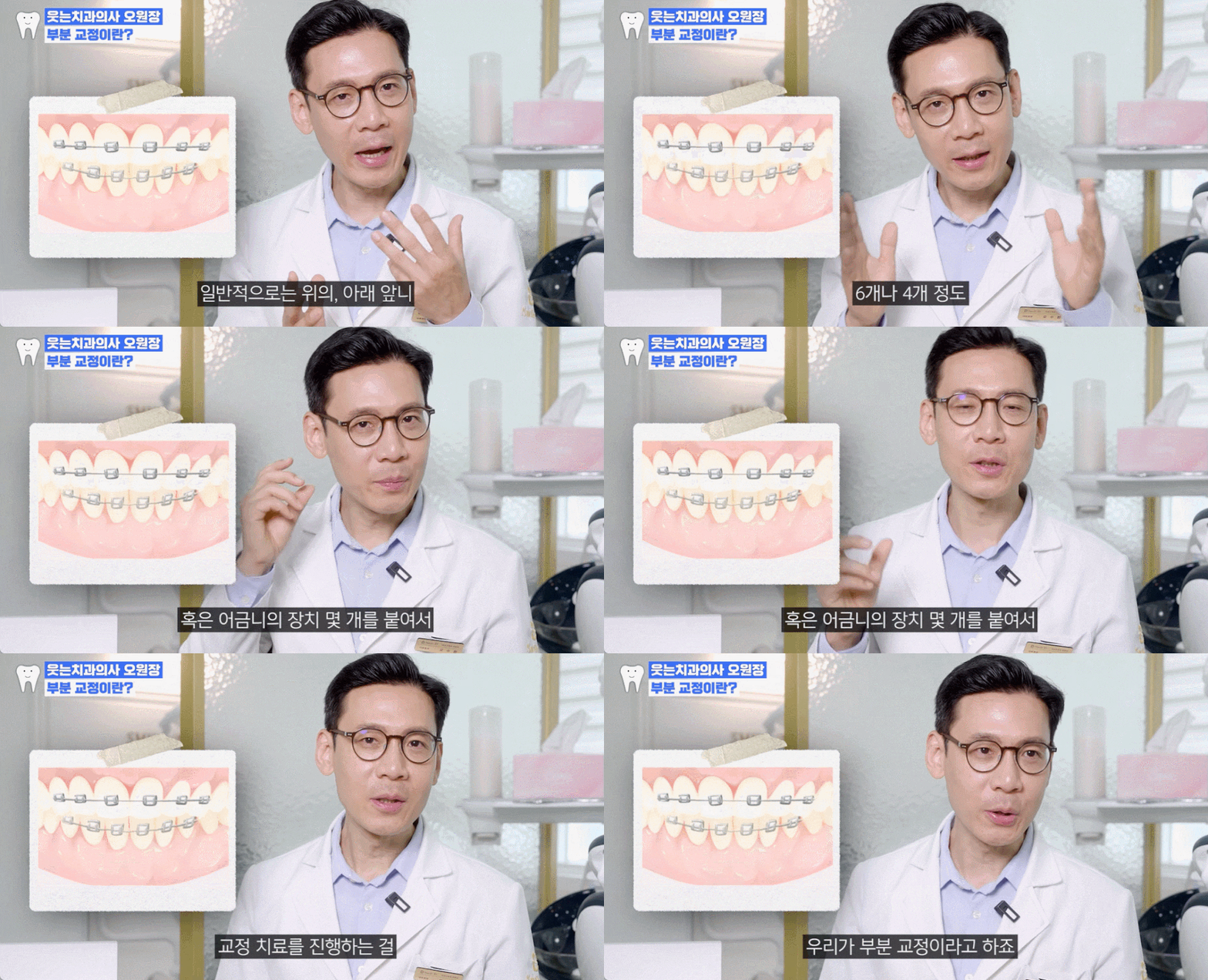
People who are worried about butterfly front teeth may probably think,
"The overall alignment of my teeth seems fine... only the front teeth are the problem, so wouldn’t partial correction be possible?"
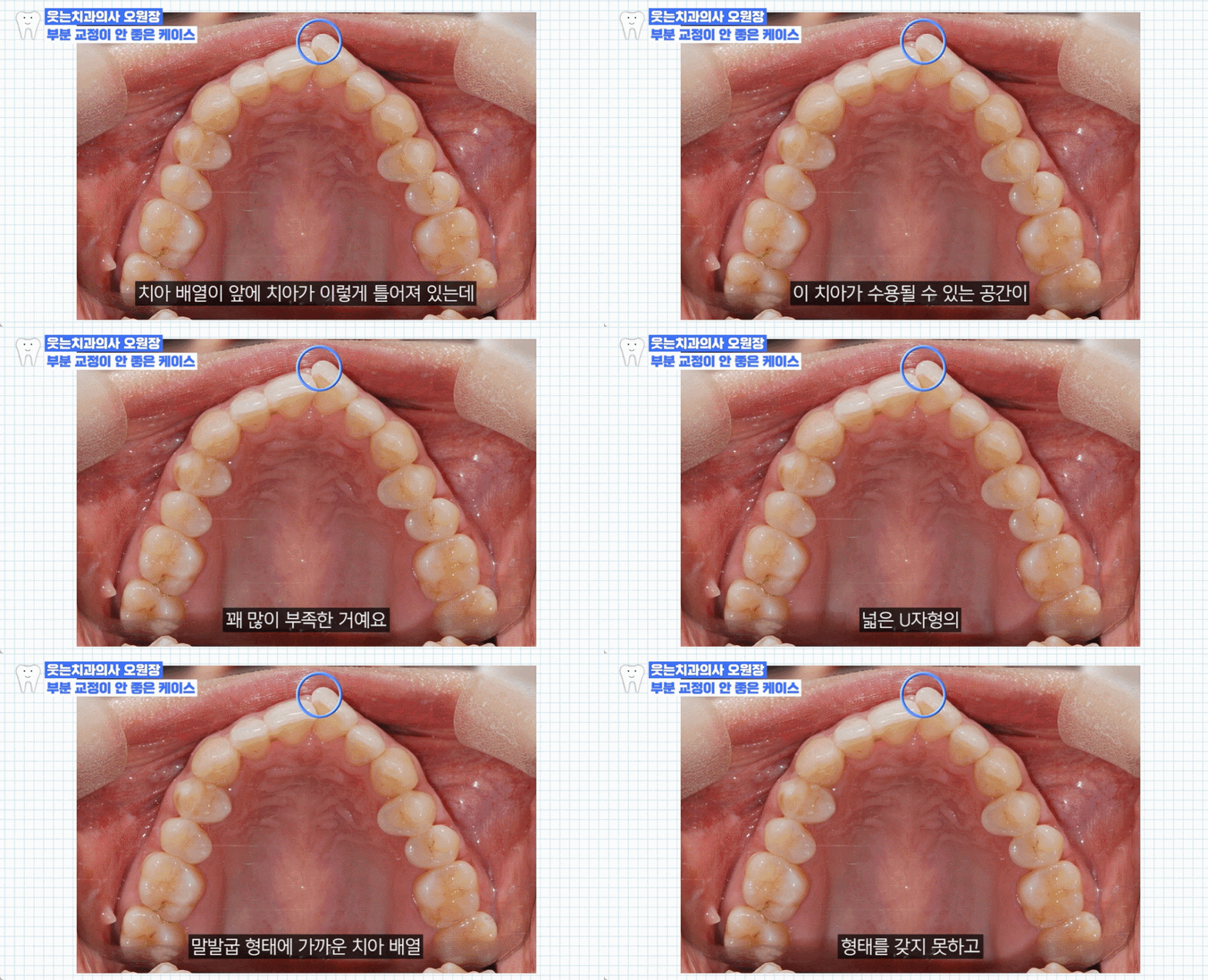
However, when a detailed diagnosis is performed, it is not always only one front tooth that is the problem.
As shown in the image below, the teeth may be crooked, and there may be quite a lack of space for those teeth to be accommodated,
and the overall dental arch may not be shaped like a U.
If partial correction is performed in this condition, there is no space for the crooked front teeth to move inward,
so other teeth may end up protruding forward.
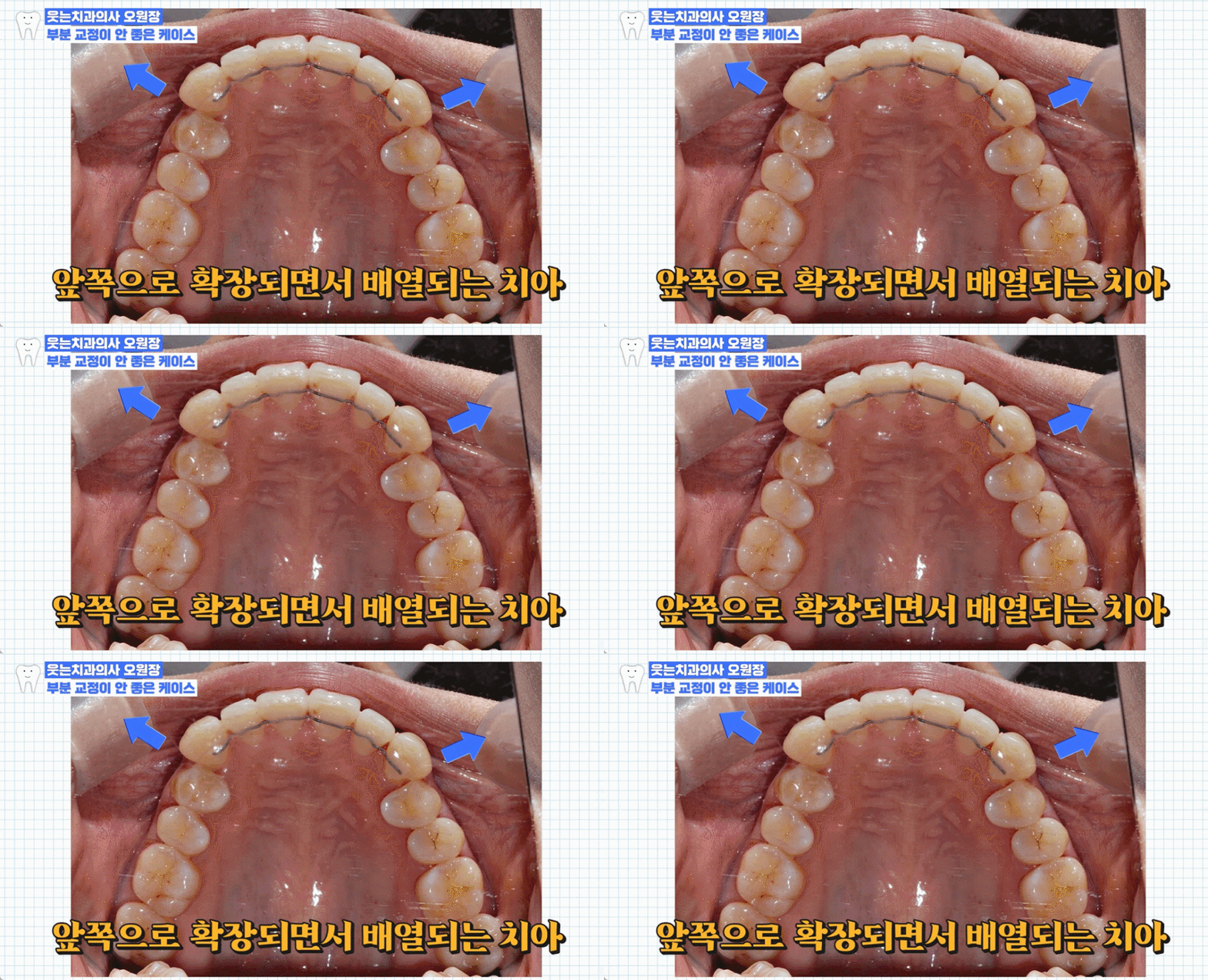
As a result, even after orthodontic treatment, balance between the front teeth and molars may be disrupted.
So, in what cases can butterfly front teeth be effectively improved with partial correction?
✔️ When the tooth alignment is mild
If only the two butterfly front teeth are slightly misaligned and there is no severe protrusion or excessive rotation,
partial correction can lead to effective improvement.
✔️ When aesthetic improvement is needed without bite problems
If there is no major problem with how the upper and lower teeth fit together,
partial correction can be used to straighten the front teeth.
✔️ When sufficient space can be secured with partial correction alone
If the gap between the front teeth is not large,
and only minimal tooth movement is needed, partial correction may also be possible.
However, as mentioned earlier, if the teeth are severely crowded or protruded due to lack of space,
it may be difficult to solve the problem with partial correction alone.
What are the advantages, limitations, and alternatives of partial correction?
Butterfly front teeth orthodontics
The main advantage of partial correction is that the treatment period is shorter than full orthodontic treatment.
In many cases, orthodontic treatment is completed in about 3–6 months, reducing the time and financial burden.
Also, because the appliances are attached locally, discomfort is less and the adjustment period tends to be shorter.
However, as you saw earlier, partial correction moves only specific teeth,
so it is difficult to solve overall bite problems.
There is also a risk that teeth may protrude if partial correction is forced.
In addition, severe butterfly teeth or protruded teeth can make even an attempt at partial correction difficult, so there are limitations.
Some people find orthodontic treatment itself burdensome,
and they also wonder whether there is a way to improve butterfly front teeth without orthodontics.
It is possible through prosthetic treatments such as laminates or crowns.
Laminates involve bonding thin ceramic veneers to the surface of the front teeth to fill the spaces between teeth,
and crowns involve covering the entire tooth to close the gap.
These methods can show results relatively quickly, but the issue is tooth reduction.
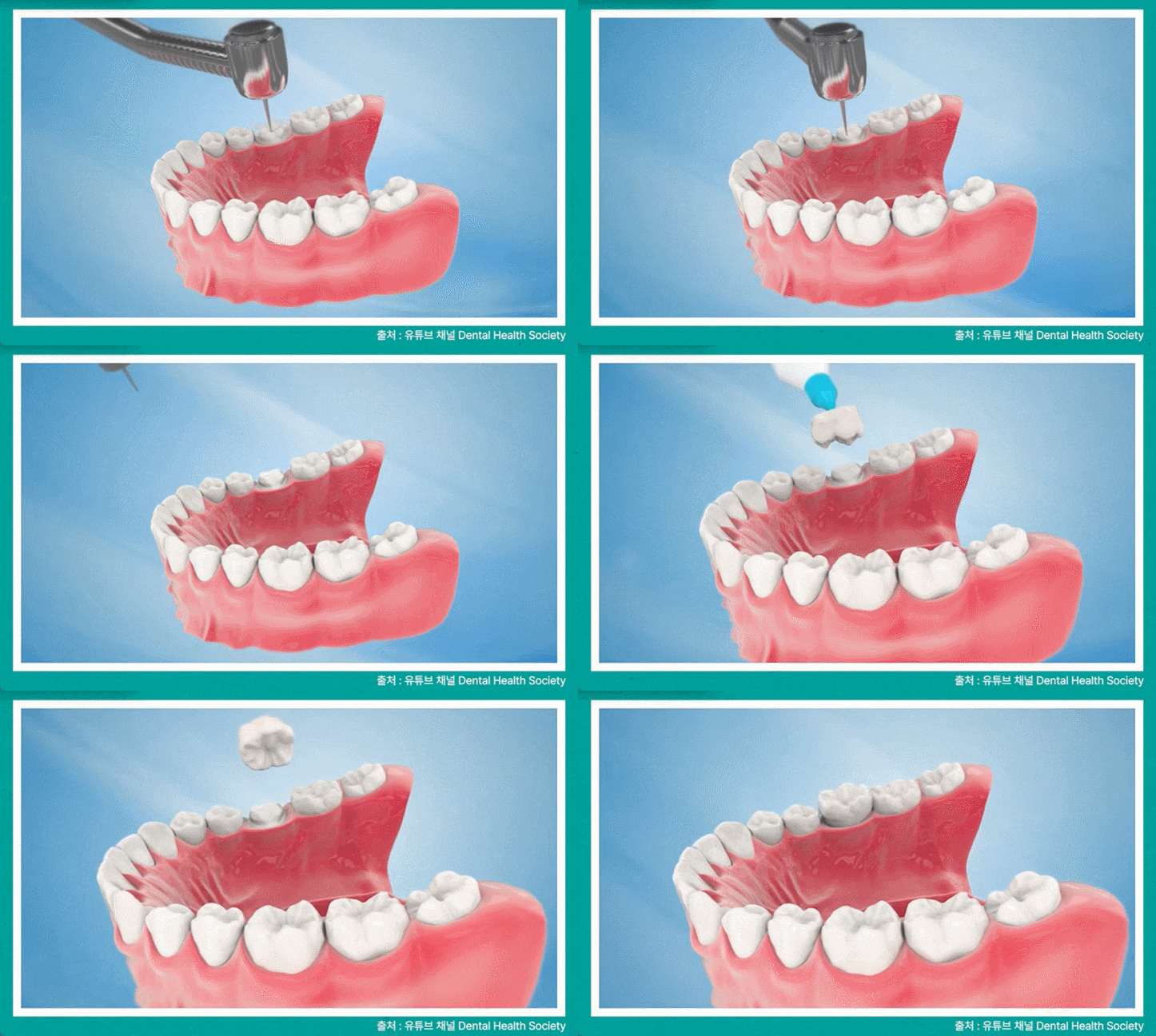
If the front teeth are excessively rotated and protruded, the amount of tooth reduction may be significant.
Also, replacement is usually needed about every 10–15 years on average.
So, rather than prosthetic treatment that involves grinding down the teeth and covering them,
choosing orthodontics may be more advantageous in terms of both tooth health and cost.
Because butterfly front teeth orthodontics should be decided by considering the degree of spacing, the condition of the teeth, and the budget,
you should decide what is the best option after consulting with a skilled specialist.
So far, I’ve summarized the points that would be helpful for you to know about butterfly front teeth orthodontics.
I hope today’s post was helpful to you, even if only a little, and I’ll wrap things up here.
Thank you.