Adult malocclusion correction? For some people, it actually isn’t necessary
Hello.
I’m Oh Suhwan, the chief director of Smile D Dental Clinic, a dental clinic with 18 years of accident-free practice.
Because I am a board-certified orthodontic specialist with 18 years of experience,
many people ask me about adult malocclusion correction.
Do I really need orthodontic treatment?
There are many different cases of malocclusion.
Some people have crowded teeth, an underbite, or a receding chin,
and others have misaligned teeth such as open bite or deep bite.
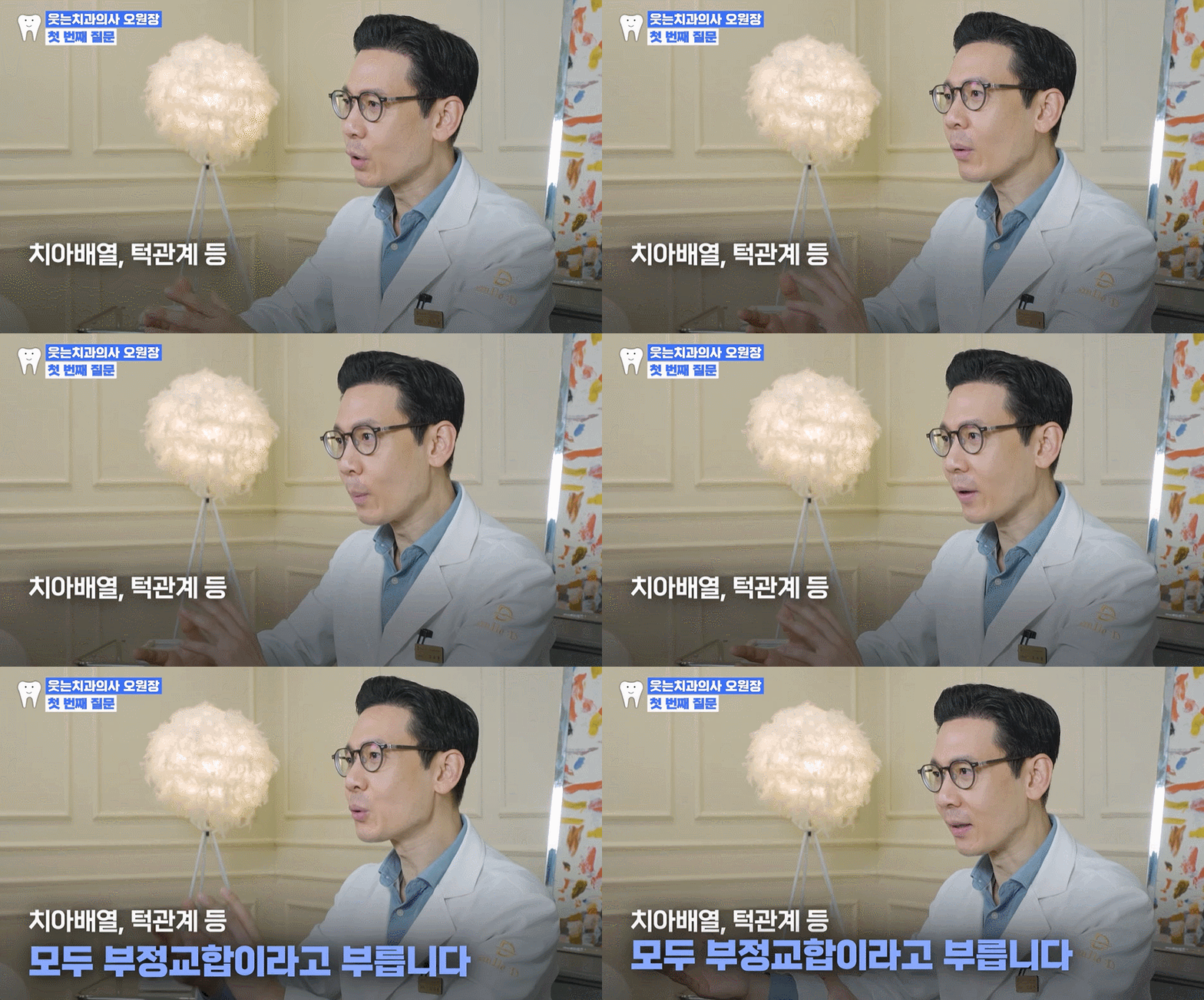
However, not every malocclusion necessarily requires orthodontic treatment.
In some cases, treatment is beneficial,
but in others, there may be no major problem even without orthodontics.
So when is adult malocclusion correction actually necessary?
Let me explain.
Adult malocclusion correction,
On what basis is it decided?
First of all, whether orthodontic treatment is needed is something the patient decides.
Not doing it usually does not cause serious harm to your health.
Most people consider adult malocclusion correction for aesthetic reasons,
but as a dentist, I judge the need for orthodontic treatment based on the following four criteria.
① Is there a functional problem?
"I can’t chew food properly."
"My pronunciation is unclear."
"Tooth wear or gum recession is appearing."
If malocclusion is causing problems with chewing function like this, orthodontic treatment is recommended.
② Is there a temporomandibular joint disorder?
"My jaw makes clicking sounds and hurts."
"It feels stuck when I open my mouth."
"I have headaches, and my face feels tight."
If malocclusion is causing TMJ problems like this, early orthodontic treatment may be needed.
③ Is there an aesthetic problem?
"My crowded teeth are very noticeable when I smile."
"My teeth are uneven, so I don’t make a good first impression."
"My facial asymmetry seems to be getting worse."
"My mouth protrudes, so my lips do not close naturally."
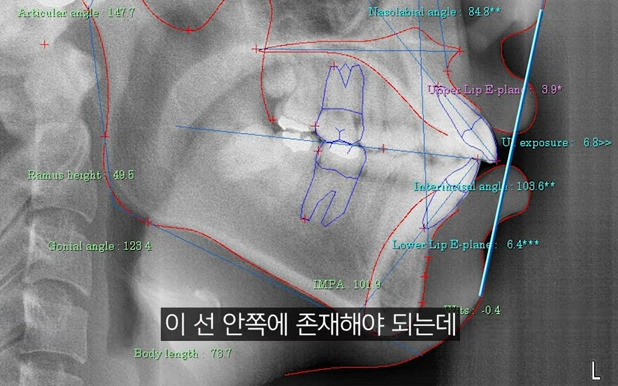
In adults, many people consider orthodontic treatment for aesthetic reasons.
As a dentist, I consider not only cosmetic improvement but also facial harmony and balance
when determining the need for adult malocclusion correction.
④ Is it difficult to maintain oral health?
"Even when I brush, I can’t clean every corner properly."
"I often get cavities or gum inflammation."
In severe cases of malocclusion, food frequently gets stuck between teeth and brushing becomes difficult,
which increases the likelihood of cavities and gum disease.
Through orthodontic treatment, the alignment of the teeth can be corrected to make oral hygiene management easier.
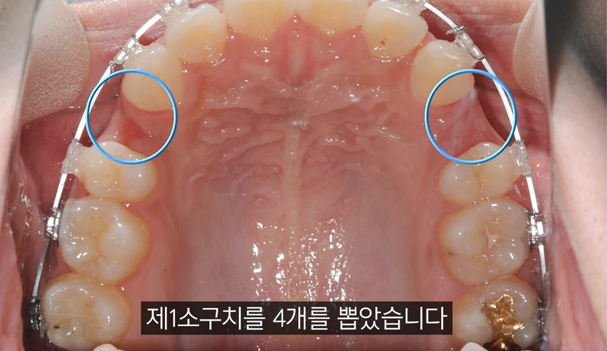
(If needed, extractions are also performed to move the teeth.)
But if you simply have crowded teeth,
or only a slight misalignment,
orthodontic treatment may not be necessary.
If there is no problem with chewing function and no strain on the jaw joint, there is no need to get orthodontic treatment.
Also, if there is no major visible issue and it does not bother you, then you do not need to undergo orthodontic treatment.
What I want to say in the end is this:
Except in severe cases of malocclusion, you can decide on orthodontic treatment according to your own choice.
However, if you want to improve things in the direction you prefer,
the quality of treatment can vary depending on where and from whom you receive adult malocclusion correction.
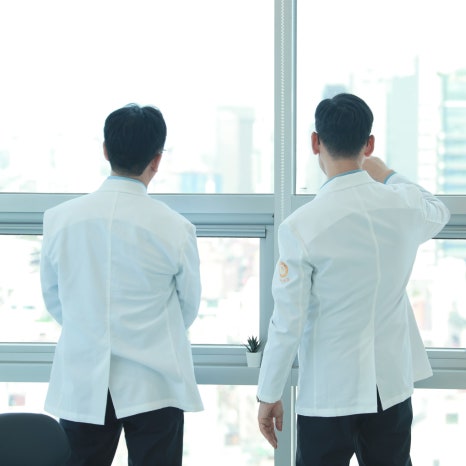
Adult malocclusion correction,
Who should you get it from?
Orthodontic treatment is not simply about straightening teeth,
but a specialized area that must consider overall function and aesthetics.
That is why it is a good idea to first look at the experience of an orthodontic specialist.
Because this is a long-term treatment, and the result of a procedure cannot be reversed once done,
it is important to find an orthodontic specialist with extensive experience in orthodontics.
At this point, the longer the clinic has been operating, the more experience it has likely accumulated from handling a wide range of cases,
which increases the likelihood of providing more accurate and effective treatment.
In addition, it is good to check whether an orthodontic specialist is permanently on site.
Orthodontic treatment can take as long as 2 to 3 years,
so if the medical staff changes in the middle, continuity and consistency of treatment may be reduced.
Because this can lead to differences in the treatment plan or method, which may also affect the outcome,
it is better to get treatment at a place where a specialist is present, rather than from a clinician working as a fee-based doctor.
(A fee-based doctor may be contracted on a yearly basis, so there is a high possibility that the medical staff may change midway.)
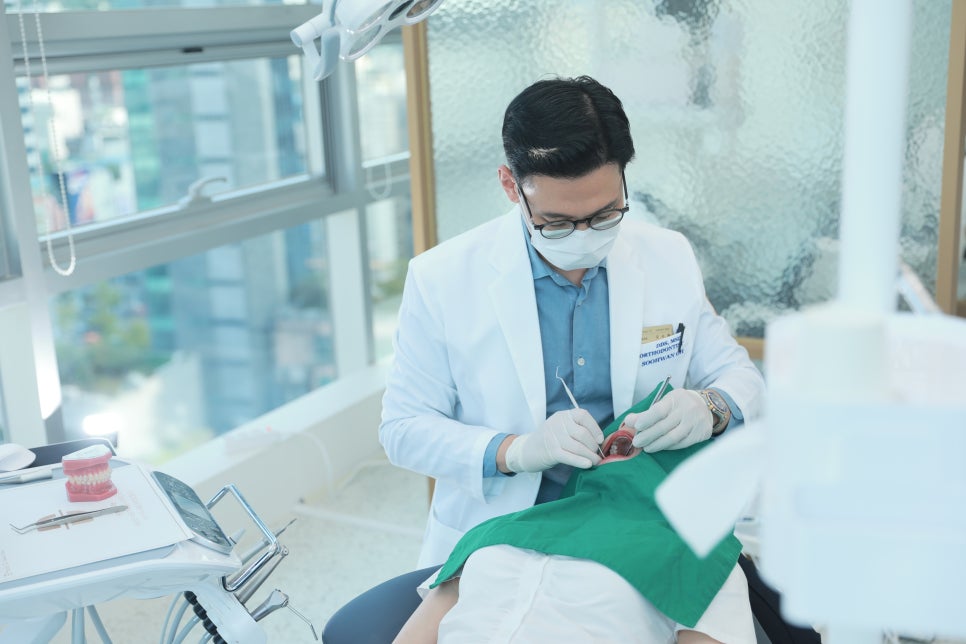
Also, a clinic that takes responsibility for thorough aftercare is a good choice.
Even after orthodontic treatment ends, you need to manage the results with retainers for at least 2 to 3 years,
so choosing a place with a systematic aftercare process may be the safer option.
All malocclusion cases do not require orthodontic treatment.
If you are considering orthodontics for purely aesthetic reasons,
you should definitely receive a professional consultation to determine whether treatment is actually needed.
Also, once you decide to undergo orthodontic treatment,
it is most important to find an experienced orthodontic specialist and choose the treatment method that suits you best.
I hope today’s post helps you achieve a healthier and more beautiful smile.
Thank you. This has been Director Oh from Smile D Dental Clinic.