Why Are Invisalign screws placed, and how much do they hurt?
Since I was doing Invisalign..
I thought it would be possible to correct my teeth without placing screws
These days, there is a lot of interest in clear aligners, especially Invisalign.
Many people start because they can straighten their teeth with just a clear appliance, without wires.
But partway through treatment,
when they hear, "You may need to have a mini screw placed," many people feel surprised.
They thought that because it is clear aligner treatment, screws would not be necessary.
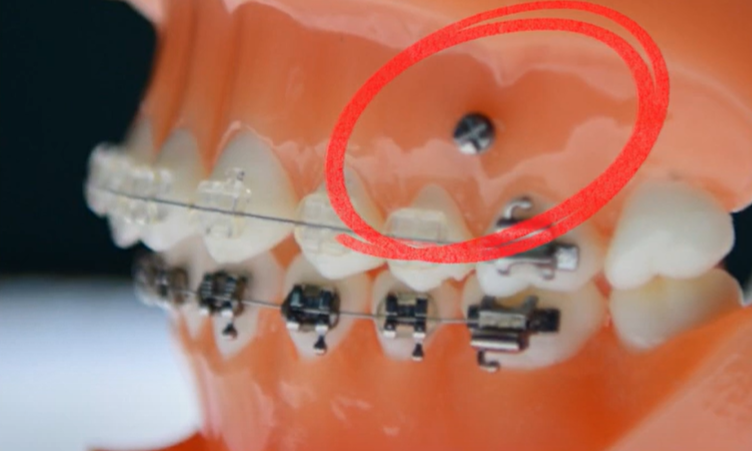
In fact, screws are not a device used only in wire braces.
They are sometimes essential even in Invisalign for precise tooth movement.
Today, I’ll explain why Invisalign screws are used,
and answer the questions many people ask, including how much they actually hurt.
Oh, I’m a little late with the introduction.
I’m Oh Su-hwan, the chief director of Smile D Dental Clinic,
and I have been providing orthodontic treatment for 18 years without any accidents at Sinsa Station in Gangnam.
I’ve written this post based on the same explanations I give patients during actual consultations,
so I think it will be helpful if you read it. ^^
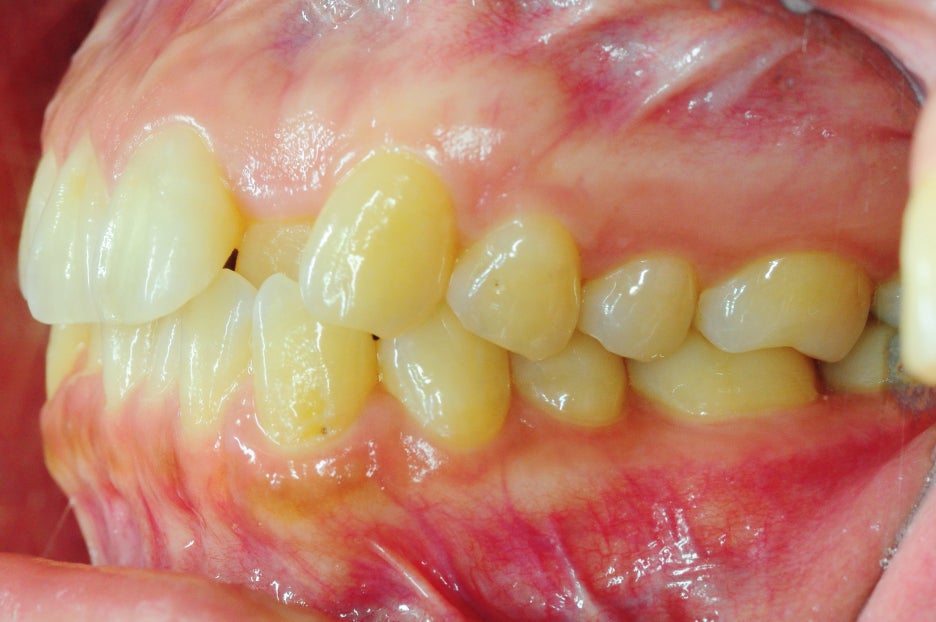
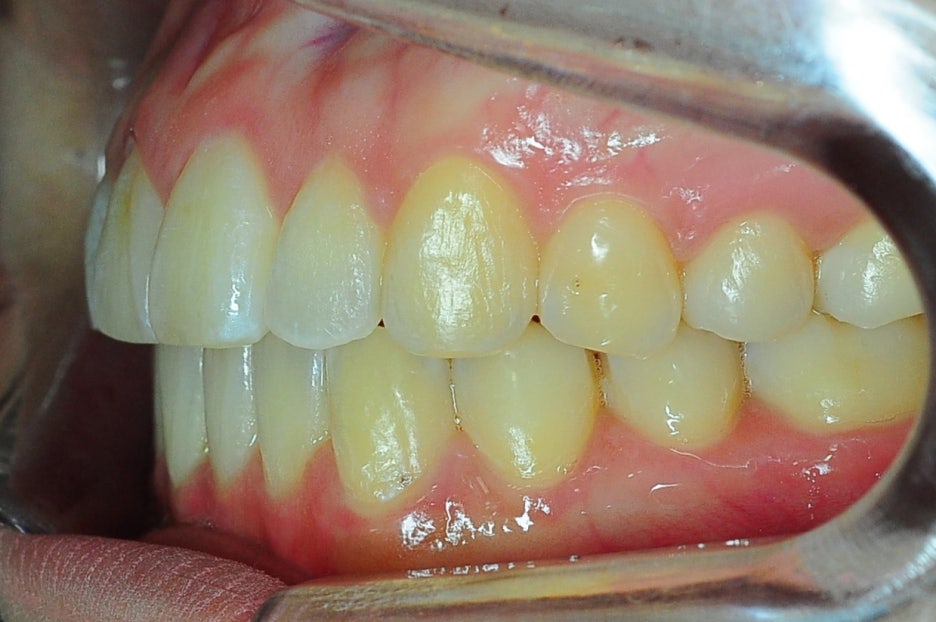
Before-and-after images of 8 months of Invisalign treatment
*Treatment period: 2024.04.21 - 2024.12.22
*The before-and-after photos were posted with the patient’s consent, and they were taken under the same environment and conditions.
*All treatments may involve side effects, so please make a decision after sufficient consultation with a doctor.
[Smile D Dental Clinic Information]
| ☎️ Smile D Dental Clinic phone number |
|---|
| 0507-1449-2087 |
| ℹ️ Smile D Dental Clinic website |
|---|
| Official website |
| 🎥 Smile D Dental Clinic YouTube |
|---|
| YouTube |
It’s Invisalign,
so why do I need to have screws placed?
Some people may not be familiar with orthodontic devices called screws at all.
Invisalign screws look like this.
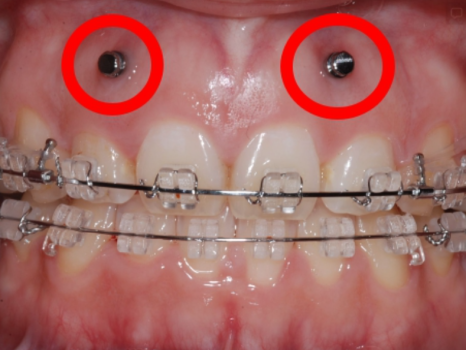
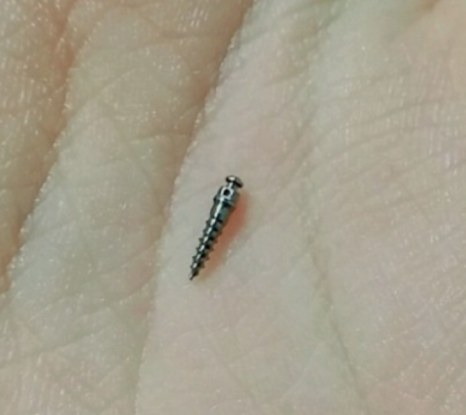
They are very small, thin screws about 5–8 mm in size, fixed into the jawbone,
and used to move teeth.
It would be nice if teeth could be moved with just a clear aligner,
but in actual clinical practice there are limitations, which is why Invisalign screws are used.
For example,
when a molar needs to be moved backward
when an upper molar needs to be pulled upward (intrusion)
when the front teeth need to be moved back but there is not enough space
when correcting left-right asymmetry
In these cases, the elasticity of the Invisalign appliance alone cannot provide force in the desired direction.
Because the teeth are exerting force against one another, one side needs a firm anchor point.
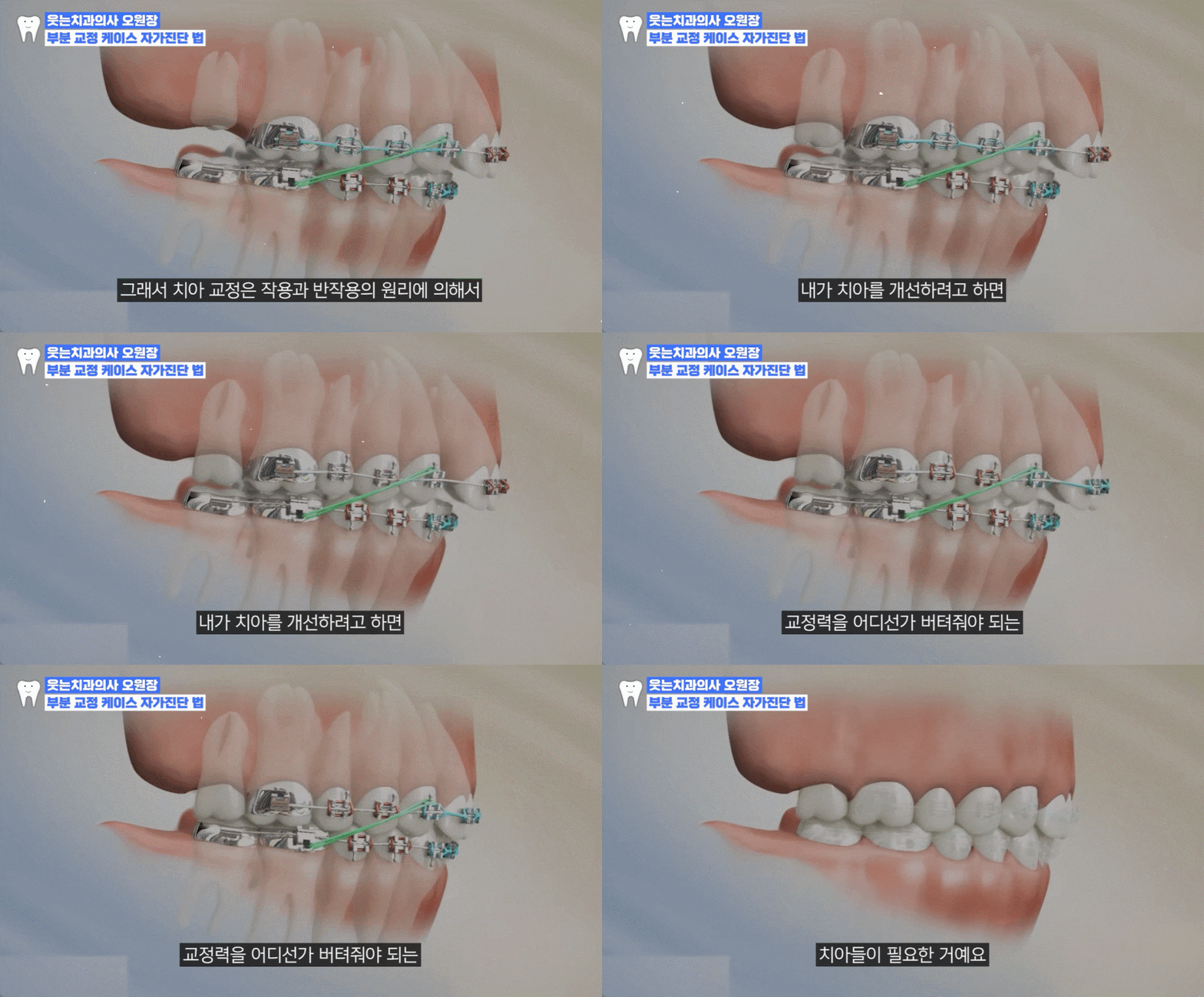
That anchor point is the mini screw.
Simply put, it is similar to the principle of driving a nail into a wall and pulling with a rubber band.
When the rubber band is attached to the wall (the screw),
you can pull or push a specific tooth in the desired direction.
This improves the precision of treatment.
Ultimately, a screw should be understood as an auxiliary device needed to achieve the treatment goal.
Are screws really very painful?
Frequently asked questions
The most common question I get about Invisalign screw placement is definitely, "Does it hurt a lot?" ^^;;
My answer is always the same.
Placement is done in 30 seconds,
and once the anesthetic injection is given,
there is almost no pain.
The pain is at the level of a slight prick from an injection,
but since the area is numbed during the procedure, you barely feel anything.
Of course, after the procedure there may be a little foreign-body sensation or mild soreness for a day or two,
but not to the extent that painkillers are needed.
(*The degree of pain varies from person to person.)
For most people, daily life is not affected.
I’ve also put together some other questions patients often ask.
Q. When is it removed?
It is removed when tooth movement is complete and there is no longer a need to apply force to that area.
It may be used for as short as a few months, or as long as 1–2 years,
but it is usually removed in the later stage of orthodontic treatment,
and even when it is removed, it is taken out after local anesthesia, so there is no particular pain.
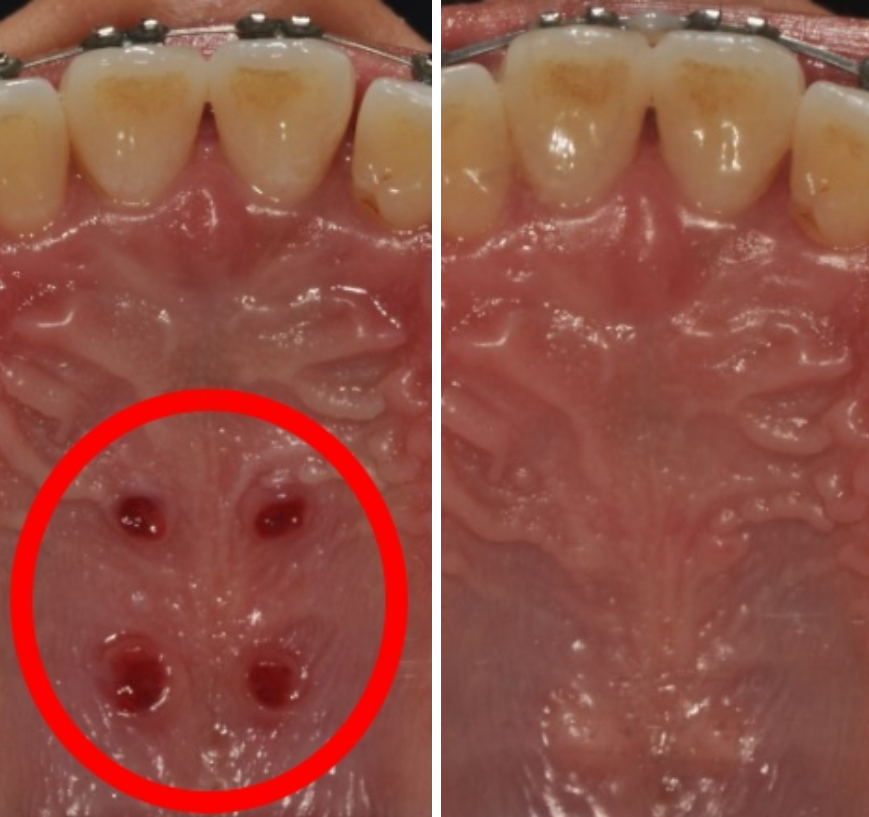
Q. What happens to the area where the screw was removed?
After the screw is removed, the gums heal naturally.
In about 3 months, the gums and jawbone fill in and return to their original state, so there is no need to worry too much.
Q. Can I have it done at any clinic?
The procedure itself is relatively simple,
but what matters is how precisely the placement location, angle, and the direction and amount of force are designed.
Rather than the technical act of placing the screw,
what is more important is the ability to plan how to use it for what purpose and in what location.
That is why it is very important for an experienced orthodontic specialist to make the diagnosis and plan directly before performing the procedure.
Q. Do I need several screws?
It depends on the case, but in most cases 1–2 are enough.
In complex cases, 3 or more may be used, but that is rare, and they are placed only when necessary.
Many people expect that Invisalign will not involve wires and will not hurt,
but if you want teeth to move precisely in the desired direction,
you need to use the necessary devices.
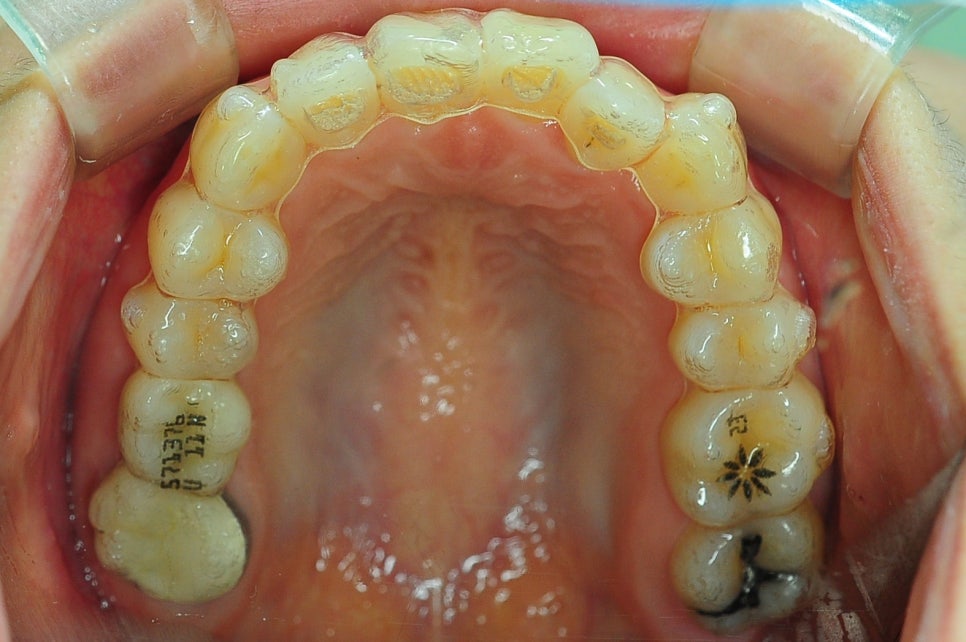
The screw is one of them.
If you hear about Invisalign screws,
rather than being too scared, I recommend consulting an orthodontic specialist who can clearly explain why they are being placed.
Our role is to create a plan tailored to each patient’s condition and goals.
If you have any questions, please feel free to ask anytime.
We will stay with you until the end so we can ease your worries and be a clinic you can trust. ^^