Hello.
We are Smile D Dental Clinic, with 18 years of accident-free practice.
Still in your 40s,
and you need an implant?
When people think of dental implants, they usually imagine treatment for those who are older and have significant tooth damage.
But that is not always the case these days.
Due to stress, irregular eating habits, teeth grinding, bite problems, accidents, and more,
an increasing number of people in their 30s and 40s are losing teeth and considering implants.
At times like this, the biggest concern is, “Will I have to remove it and get it replaced again when it wears out?”
On average, dental implants can last 10 years, and with good care, they can last 20 or even 30 years.
But the problem is that many cases require retreatment before they even reach 10 years.
Usually, this happens when the diagnosis at the time of initial placement was inaccurate, or when the implant was placed too aggressively.
So today, I’ve organized two things that anyone considering a 40s dental implant should definitely check.
< Some implant surgery cases >
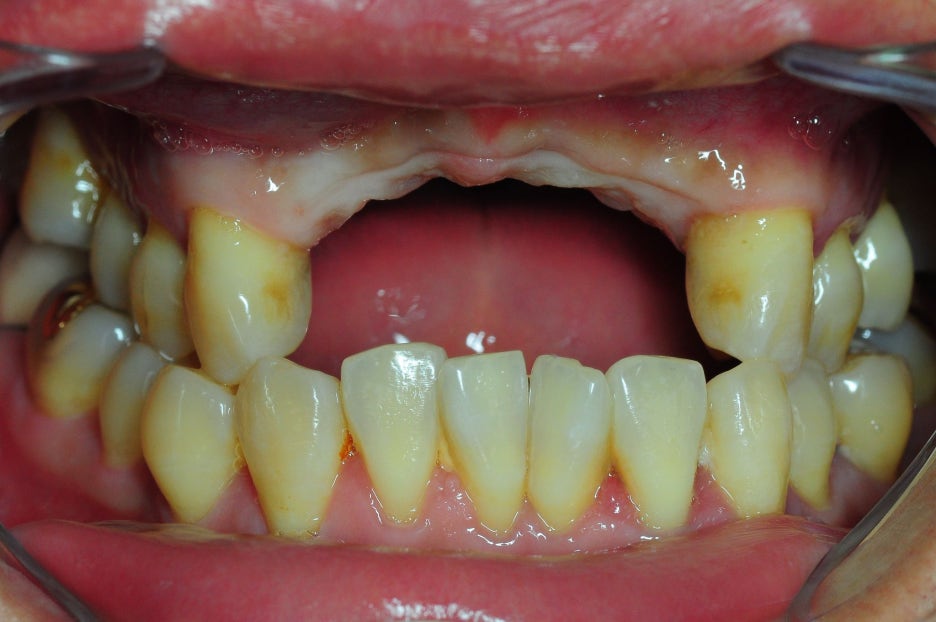
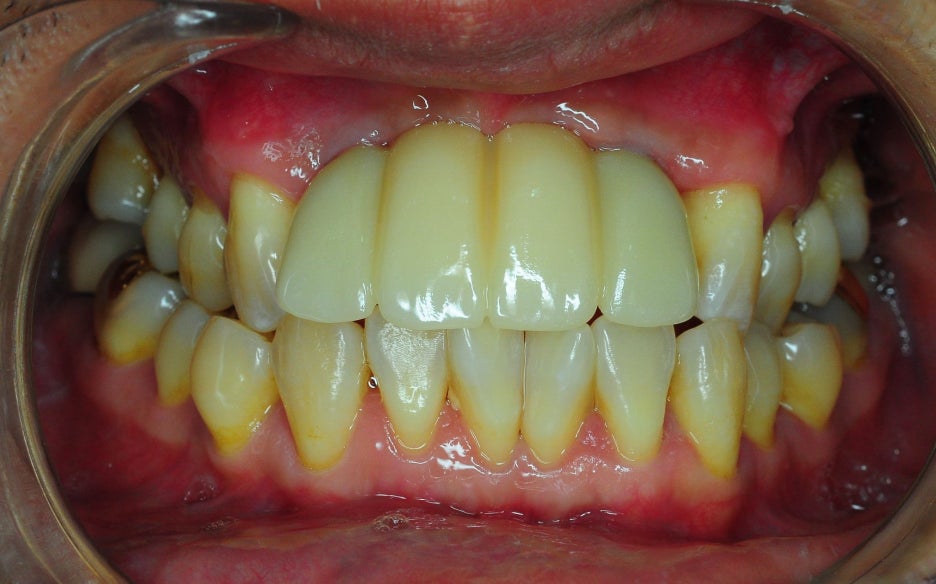
Treatment period: 23.12.25 - 24.6.28
Problem tooth location: Maxillary anterior region
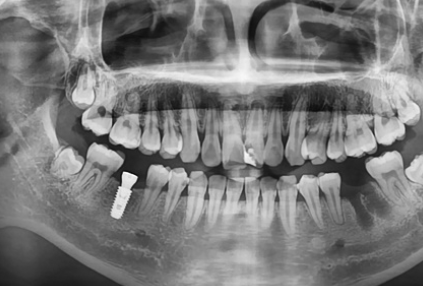
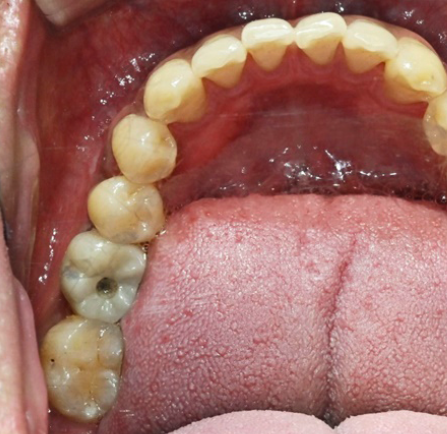
Treatment period: 24.11.3 - 24.12.3
Problem tooth location: Tooth No. 46
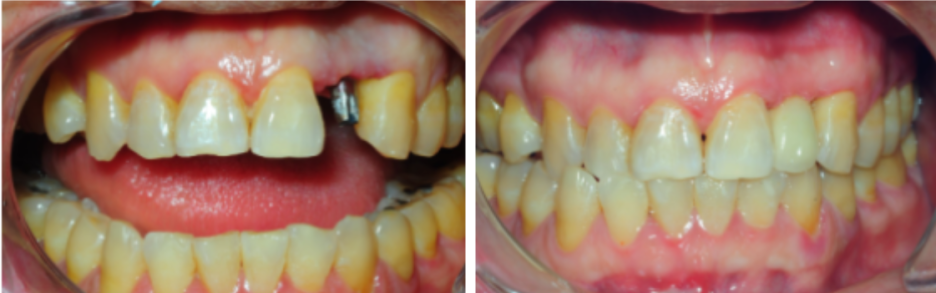
Treatment period: 22.5.27 - 23.2.14
Problem tooth location: Tooth No. 22
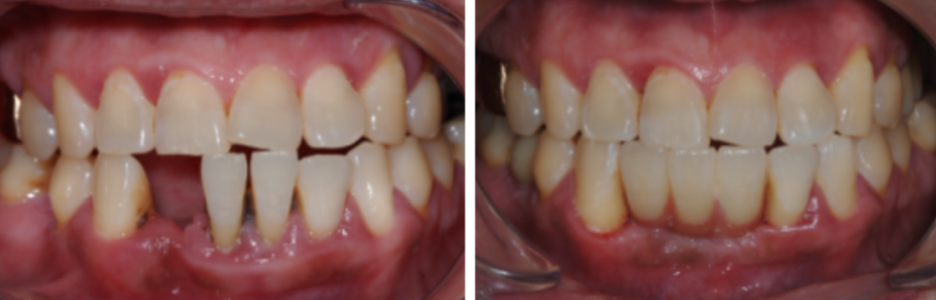
Treatment period: 21.6.23 - 22.4.8
Problem tooth location: Mandibular anterior region
[Smile D Dental Clinic Information]
| ☎️ Smile D Dental Clinic phone number |
|---|
| 0507-1449-2087 |
| ℹ️ Smile D Dental Clinic website |
|---|
| Official website |
| 🎥 Smile D Dental Clinic YouTube |
|---|
| YouTube |
First, accurately from the start,
careful diagnosis of the jawbone is essential
Before getting a dental implant in your 40s, the first thing you must check is the precision of the diagnosis.
An implant is not simply about placing a root and adding a post just because a tooth is missing.
To use an implant for a long time and without problems, the bone, gums, and bite condition around the area must provide sufficient support.
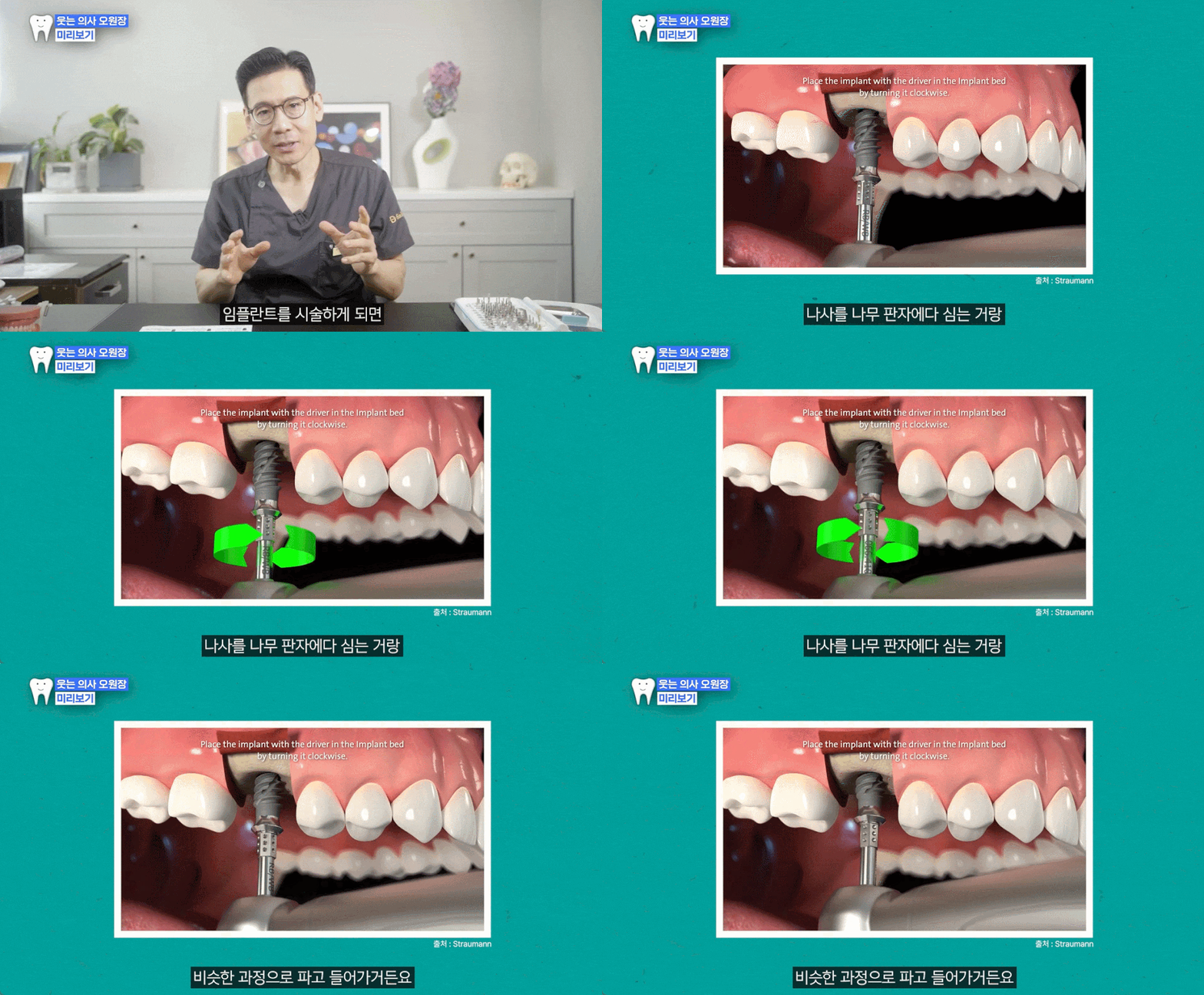
So if the alveolar bone in that area has weakened, bone grafting may be needed first.
If the upper and lower teeth do not fit together properly, excessive force is eventually transmitted to the implant, increasing the risk of early failure.
Also, if the implant is placed without checking whether there is teeth grinding or clenching happening out of sight,
it can end up breaking even if the root itself is fine.
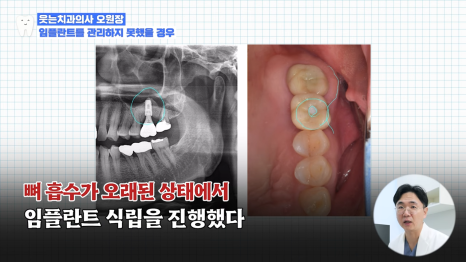
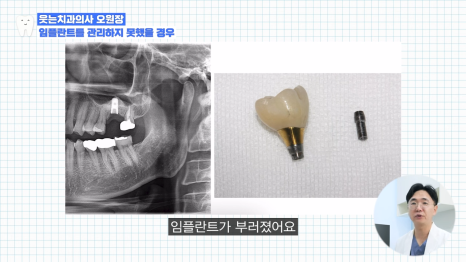
Some implant patients in their 40s come to us after receiving implant treatment at another dental clinic because
“it won’t stay fixed” or “it moves when I chew.”
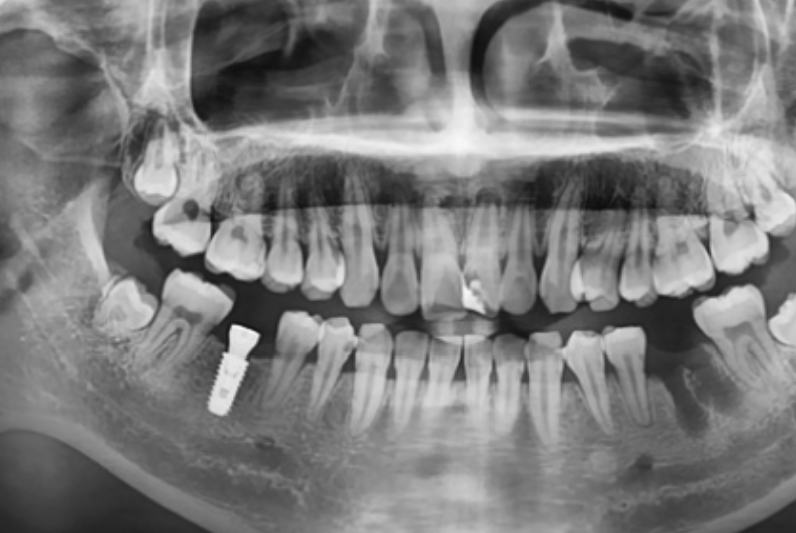
When we take a CT scan, we often see signs that the implant was forced into place despite insufficient jawbone.
In other words, for a dental implant in your 40s, how precisely the diagnosis is performed determines its lifespan.
That is why we analyze the bone, gums, and bite condition in three dimensions using CT and an intraoral scanner,
and then explain first whether it is suitable to place an implant in that area.
A detailed diagnosis from the beginning is what creates the foundation for using it for 10 or 20 years without strain.
Implants are not just placed carelessly
The second important point is who places it and how it is placed.
For patients in their 40s, the gums are often still healthy and the bone condition is relatively good,
but that makes the precision of the procedure even more important.
If you place it at the wrong angle by forcing it into a position that seems fine,
or if you do not consider the distance from neighboring teeth, it can actually fail faster.
That is why the navigation implant method using a digital guide is helpful.
A navigation implant is a method that uses a 3D-printed guide so the implant can be placed in the intended position with minimal error.
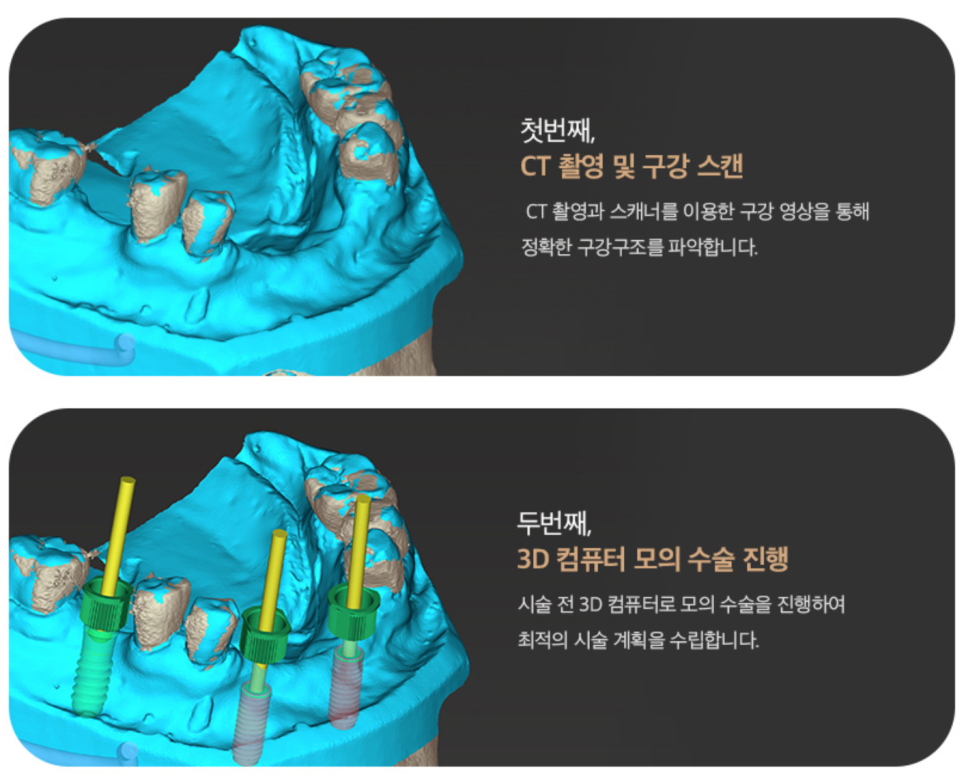
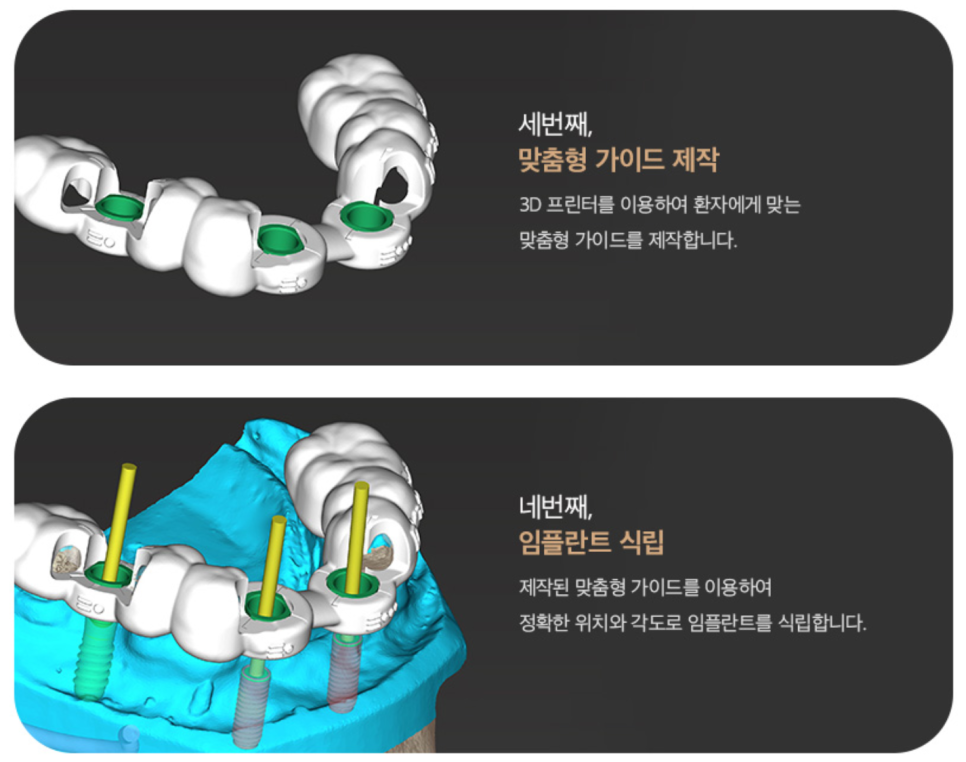
Because a simulated surgery can be performed on a computer, a customized guide can be made to fit the patient’s oral condition,
allowing the implant to be placed at the exact position and angle planned.
Also, because it is performed with minimal incision, swelling and bleeding are very slight and the risk of infection is lower,
and the overall treatment period is shortened, making it especially suitable for people in their 40s who are busy with daily life.
However, no matter how good the equipment and technology are, the one who actually places the implant is still a person.
In particular, with dental implants in your 40s, even if the bone seems sufficient,
there are many variables during actual placement due to differences in bone density and anatomical structure.
That is why the treatment should be diagnosed and the surgery performed directly by a clinician with extensive experience,
someone who can comprehensively assess the patient’s bone condition, gum thickness, and bite condition.
Only then can the results be stable and long-lasting.
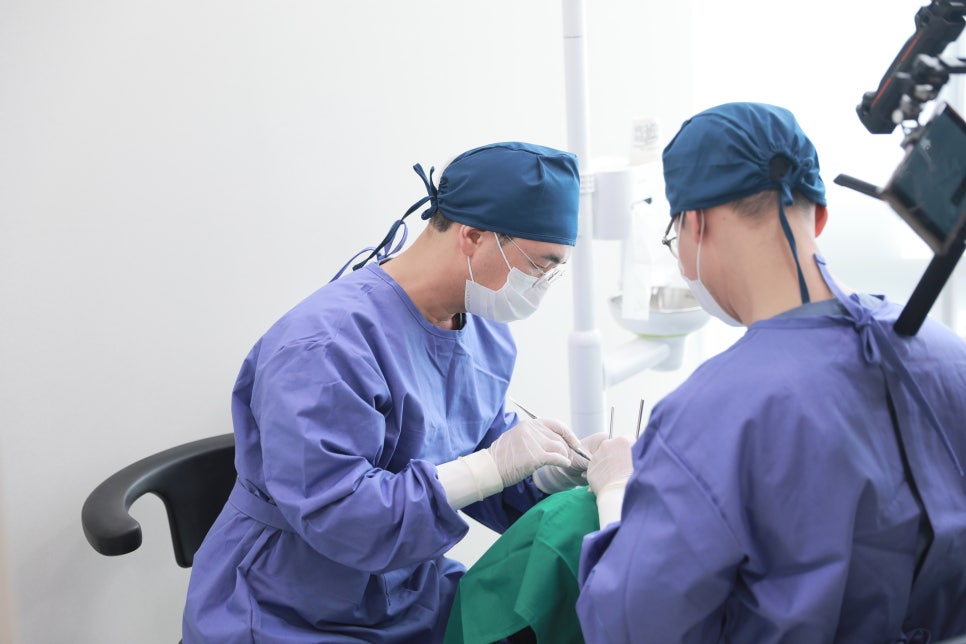
For reference, at our clinic, a highly experienced specialist with more than 10 years of experience,
who places over 1,500 implants a year,
personally takes responsibility for everything from diagnosis to surgery and post-treatment care.
If you are still in your 40s but already considering an implant, now is the time.
Because this is a treatment that should be used comfortably for 10 or 20 years after being placed just once,
you must check two things: getting the diagnosis right from the beginning, and having it placed with proven methods and equipment.
And yes, meeting an experienced medical team is also important.
A dental implant in your 40s is neither too early nor too late, and if approached carefully, it can be used for a long time.
If you have been worried about its lifespan, please take a close look from now on,
and if you have questions, you may also visit in person for a condition check and consultation.
This has been Smile D Dental Clinic. Thank you.