Dental Implants in Your 20s: If You Keep Debating, It Will Cost You Twice as Much in Money and Time
Implant
For those of you in your 20s reading this, it may have seemed like a word as distant as something from your parents’ generation.
But the moment you hear from the dentist, after an unexpected accident, tooth decay, or a congenital issue, that “you need an implant,” you may have experienced your mind going blank and everything turning dark.
“An implant in my 20s? Why is this happening to me?”
“I’m going to use it for the rest of my life, will it be okay?”
“I just started working, so what about the cost?”
We understand all too well the sadness and helplessness that you may not have been able to share with anyone easily. But it’s okay.
Many people in their 20s visit Smile D for similar reasons.
What really matters is that the longer you spend worrying, the greater the burden of money and time you may have to bear.
“It's okay, I’ll do it later” … Why you’ll regret it a year from now
Leaving a missing tooth untreated is like leaving the first block in a domino line that is quietly collapsing.
- The surrounding teeth collapse.
The healthy teeth on either side begin to lean into the empty space, and the upper and lower teeth that used to meet start to protrude, damaging the overall alignment.
Later, additional costs for partial orthodontic treatment may be needed to straighten the fallen teeth.
- The jawbone deteriorates.
Without a tooth, the jawbone is naturally resorbed and disappears. If there is not enough bone, an implant cannot be placed,
so an additional procedure called bone grafting becomes necessary. Naturally, both the cost and treatment period increase.
- The shape of your face can change.
If a molar is left missing for a long time, the cheek may look sunken, and if a front tooth is missing, your smile may look awkward, affecting your overall impression.
In the end, trying to save on the cost of a 20s implant today can mean receiving a much larger estimate a year later, with bone grafting and orthodontic costs added on.
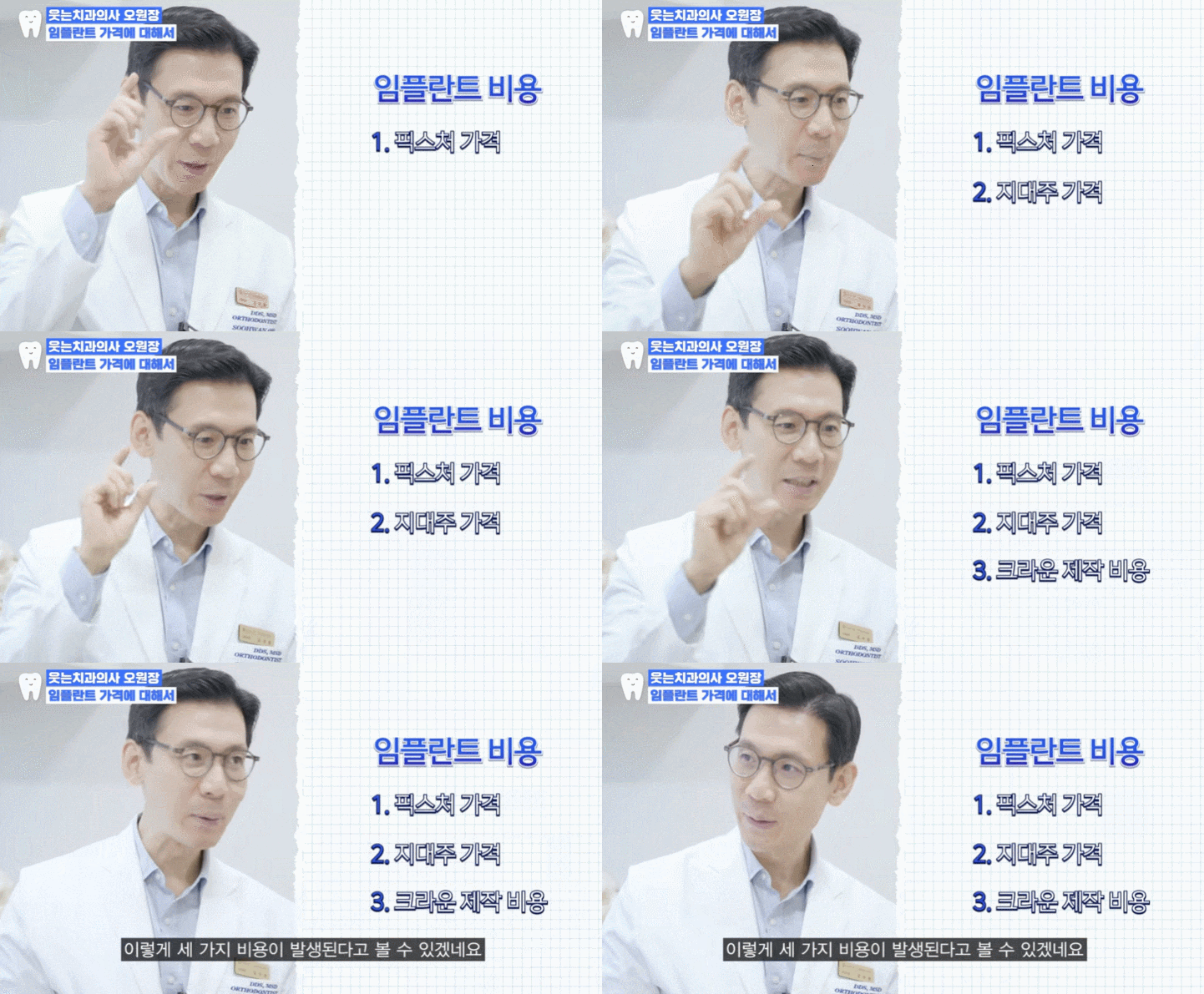
The cost burden is too high.
Some medical institutions operate a monthly installment system to ease the initial burden, so it may help to look into those options as well.
** The exact cost may vary depending on your oral condition and the scope of treatment, so it is advisable to confirm it through a consultation.
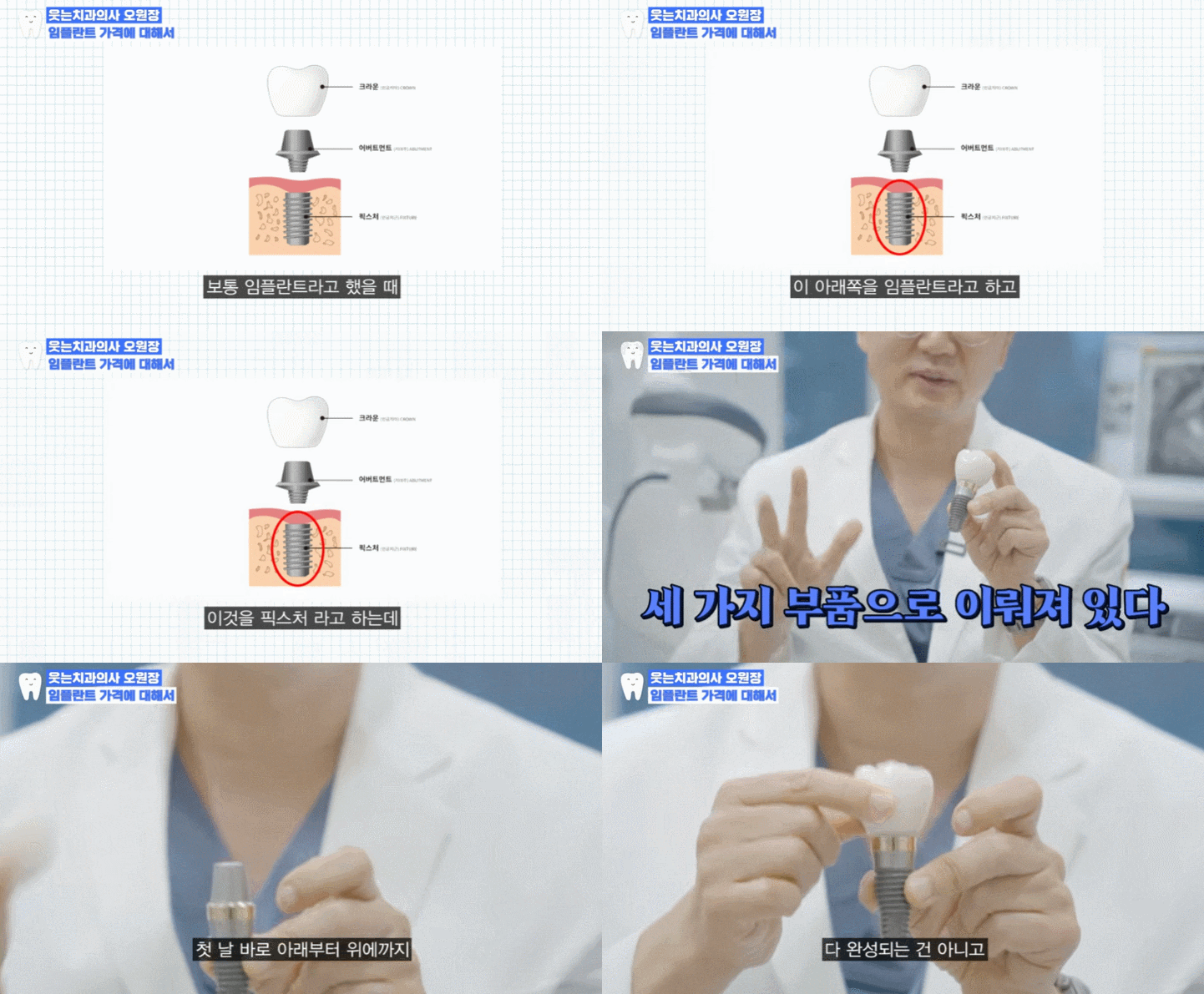
The surgery is too painful and scary.
Based on 3D-CT data, a navigation implant method, which finds the most ideal path on a computer before surgery, may also be worth considering.
This method reduces the incision area, so pain and swelling tend to be less, but individual differences may exist, so you must discuss it directly with the medical staff.
10 years? NO! What people in their 20s need to know to use implants for life
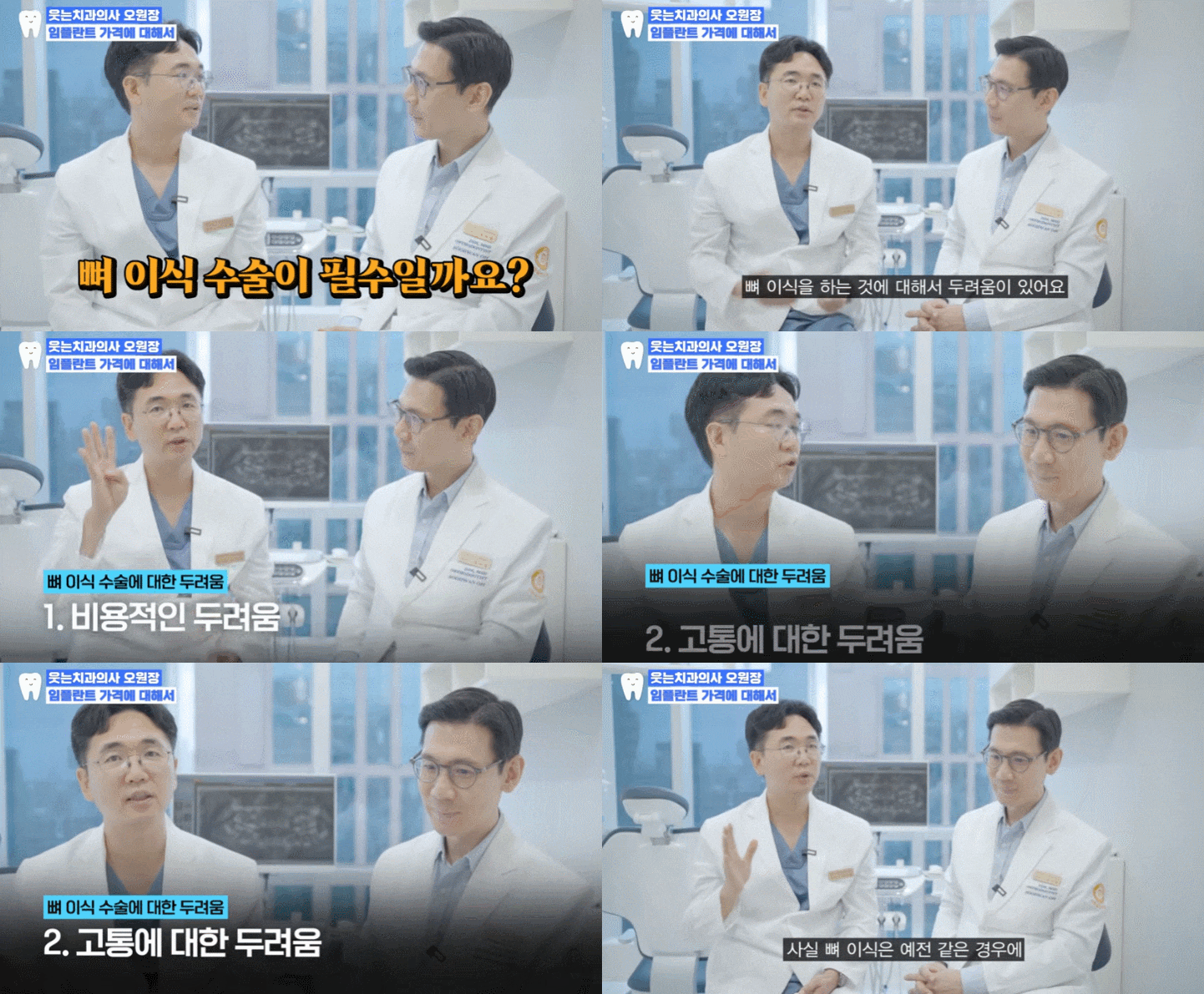
For those in their 20s who have just started working life, the idea of having to undergo implant surgery again after spending a large amount of money 10 to 15 years later would be horrifying even to imagine.
A 20s implant should not simply be a treatment used for 10 years, but a lifelong companion to stay with you for the rest of your life.
The saying “the average lifespan of an implant is 10 years” is half right and half wrong.
Depending on how it is managed, it may fail in just 5 years, or it may be used comfortably for more than 30 years.
Here are the three secrets that make the difference.
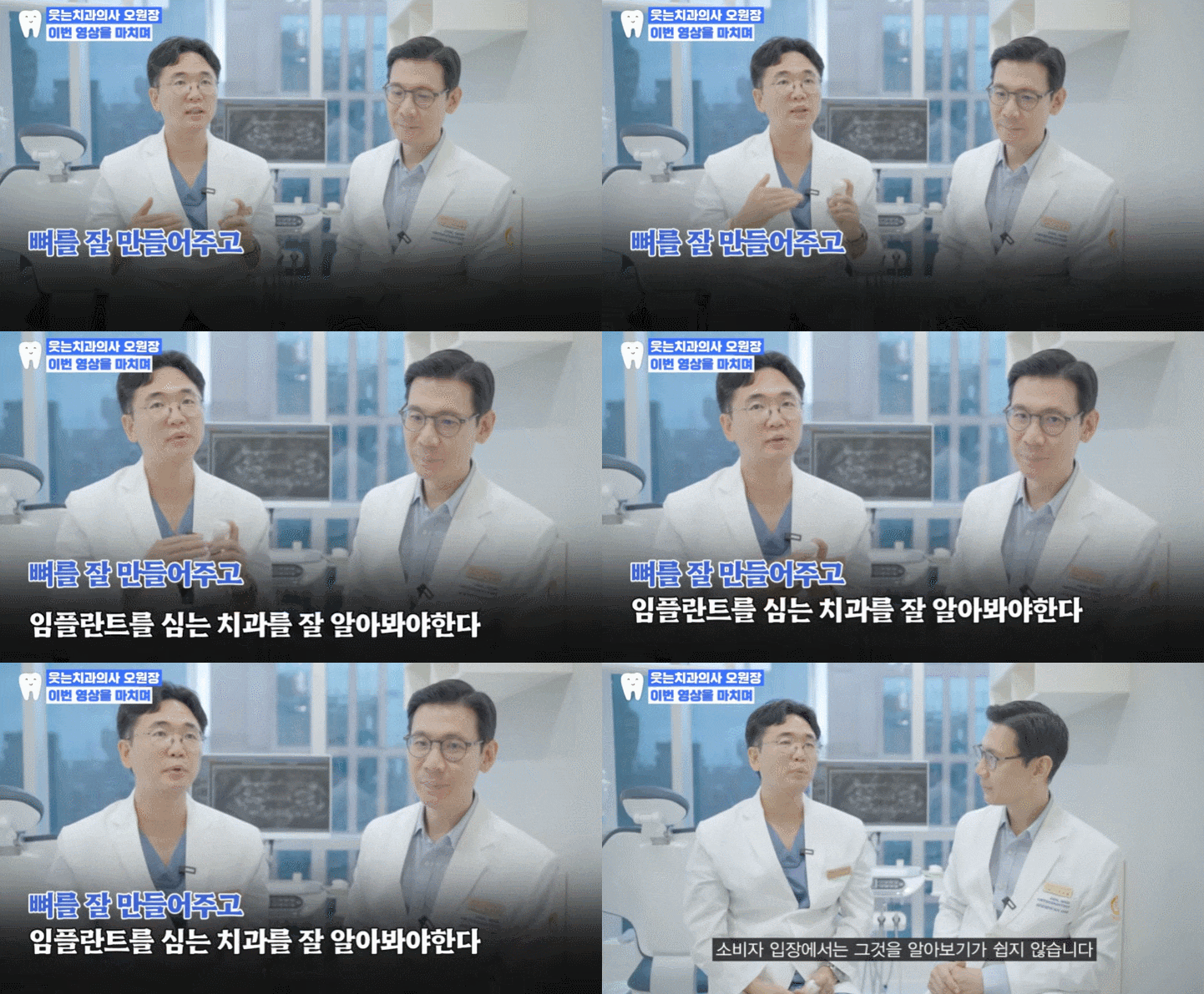
The first step by the medical team
More than 80% of an implant’s lifespan is determined on the day it is placed. The 0.1 mm placement angle,
the 0.5 mm difference in depth that the patient cannot see, determines the outcome 10 years later.
It is important to identify the location of the strongest and healthiest jawbone through 3D-CT,
and to calculate the bite force with the surrounding teeth perfectly so that the implant can be placed in the most ideal position in one attempt.
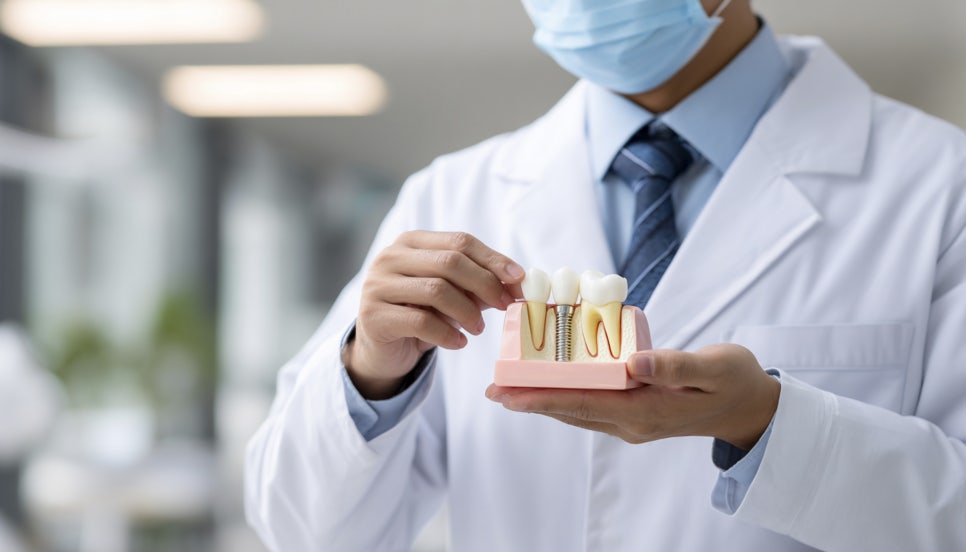
The patient’s own efforts
Implants do not get cavities.
But peri-implantitis, a more serious gum disease, can occur.
If food debris builds up around the implant and dissolves the jawbone, the carefully placed implant may become loose and fall out.
Thorough brushing is essential, and you must also make an effort to keep even the tiny gaps between the implant and gums clean every day by using interdental brushes or a Waterpik.
We promise to stay with you for life.
Patient effort alone has its limits. Visiting the dentist regularly to check for invisible changes
is the final puzzle piece for implant longevity.
Smile D is not a place that simply finishes treatment and ends there; through regular checkups once a year,
we carefully check and manage whether the implant screw has loosened, whether there have been changes in the bite, and whether the jawbone is healthy.
We are ready to be your lifelong dental doctor.
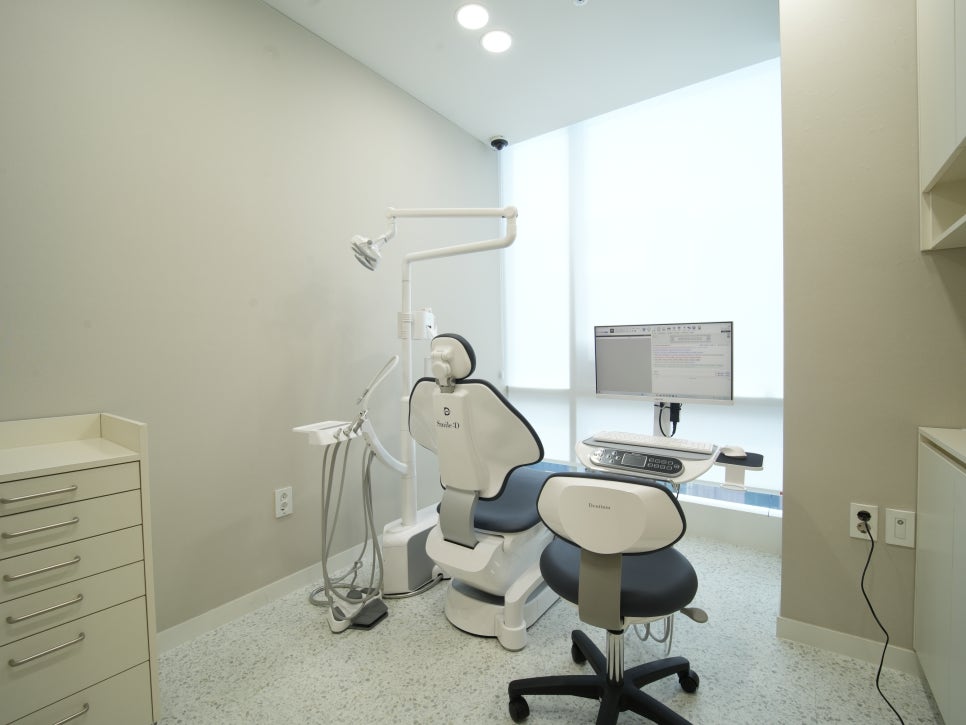
For your first important implant in life, we devote all our capabilities to achieving successful results for each and every patient.
< Smile D Dental Clinic >