Canine Partial Orthodontic Treatment, I absolutely do not recommend it unless you are in these cases.
"Everything else is fine, but this one canine really bothers me."
"Full orthodontic treatment feels burdensome, but can’t I just fix the canine quickly?"
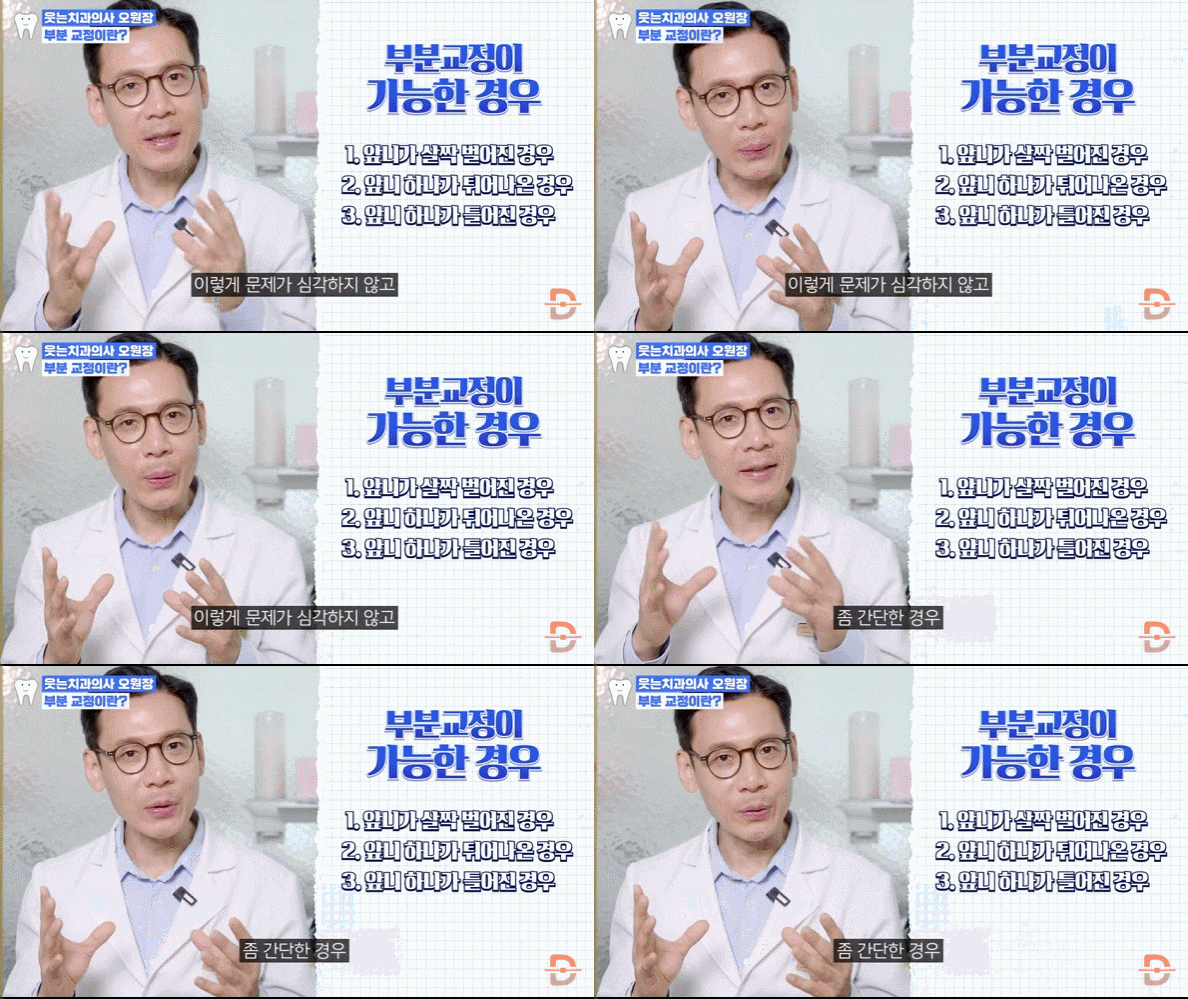
Many people are worried not about a crooked overall bite, but about just one or two protruding canines.
For people like this, partial orthodontic treatment for canines may seem like a very attractive solution.
It feels like a way to solve the complex with a much shorter treatment period and more reasonable cost than full orthodontic treatment.
But hasty expectations can lead to disappointment.
Partial orthodontic treatment is not a universal key for everyone,
but more like a shortcut allowed only for a small number of people who meet specific conditions.
Today, Smile D, with 18 years of extensive orthodontic cases,
will honestly explain which cases are suitable for partial orthodontic treatment and which cases are absolutely not recommended.
< Smile D Dental Clinic Information >
Canine Partial Orthodontic Treatment: Is it the right answer for everyone? (Possible cases vs. difficult cases)
Whether my canine is suitable for partial orthodontic treatment cannot be judged simply by looking at the one visible canine.
We need to look at the balance and harmony of the entire mouth.
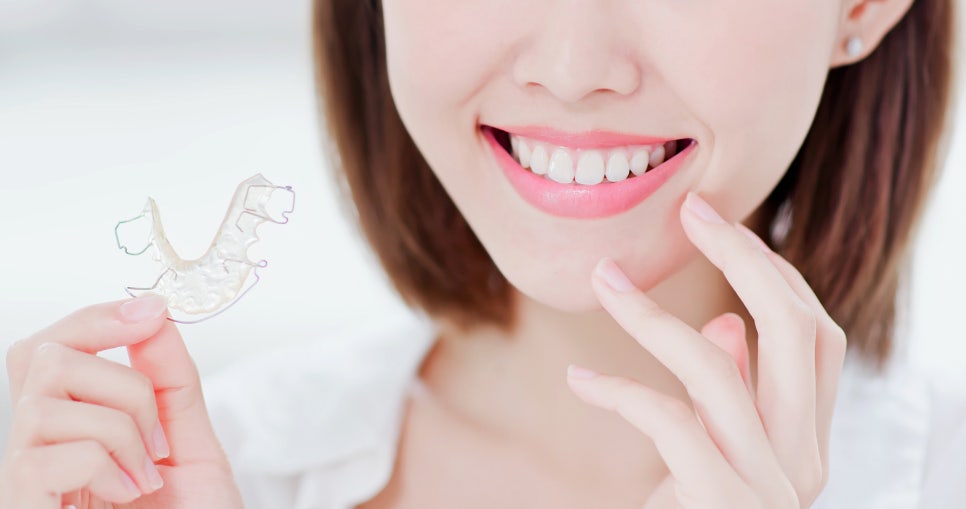
In these cases, partial orthodontic treatment is possible
▶ When the back tooth bite (occlusion) is already stable and in a good state
▶ When there is enough space for the teeth to align, or when space can be secured with only a small amount of interproximal reduction
▶ When the canine is not severely displaced and the dental midline is well aligned
▶ When the front teeth are not protruding and only the bite is slightly crooked
In these cases, partial orthodontic treatment can be risky
▶ When the molar occlusion itself is unstable and overall improvement is needed
▶ When there are skeletal imbalances such as protruding mouth or a weak chin, in addition to the canine issue
▶ When there is too little space and extraction is unavoidable to align the canine
▶ When the overall dental midline is significantly off
If canine partial orthodontic treatment is pushed too far, the canine may look aligned at first,
but because the back teeth do not fit together properly, chewing can become difficult,
or the jaw joint may be strained, leading to bigger problems.
For successful orthodontic treatment
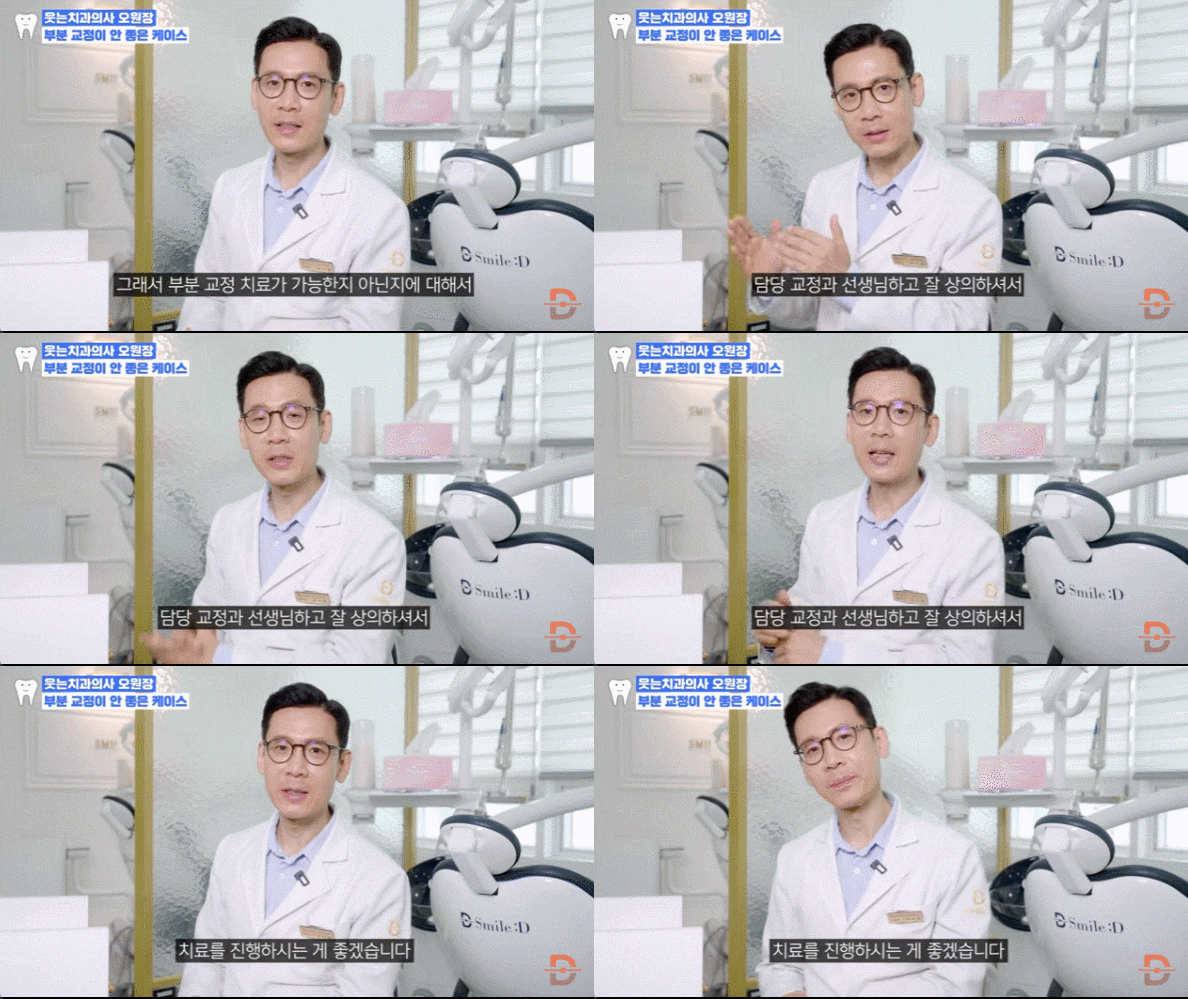
Even if it looks like a simple canine partial orthodontic case on the surface,
we perform a detailed diagnosis from multiple angles to check whether there are hidden problems
and thoroughly verify whether stable results can truly be achieved with partial orthodontic treatment alone.
This is why we consistently maintain a high satisfaction rate of 96.4%.
Of course, it is true that partial orthodontic treatment is much more efficient in terms of time and cost.
But as mentioned earlier, that only applies when the conditions for partial orthodontic treatment are met.
If you choose partial orthodontic treatment based on an incorrect diagnosis and the result is unsatisfactory,
leading to full retreatment, you will ultimately waste far more time and money than if you had started with full orthodontic treatment from the beginning.
** The exact cost may vary depending on your oral condition and the scope of treatment, so it is safest to confirm through an individual consultation
Smile D, responsible for the results to the very end
Even when orthodontic treatment is over, our responsibility does not end.
After treatment, we continue to check through regular examinations whether the teeth are being maintained stably
and whether there are any issues with the retainer.
To become a true primary dentist who will protect that smile together with you for a lifetime,
even after treatment is complete.
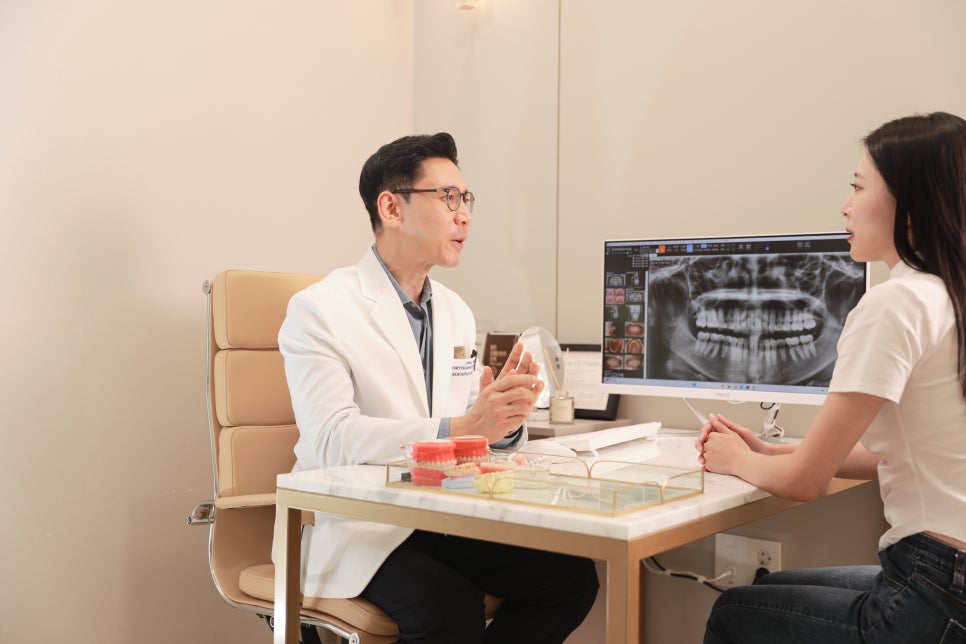
That is Smile D’s final, and most important, promise to our patients.
Whether my canine can be corrected with partial orthodontic treatment,
it is most important to receive an accurate diagnosis of that possibility.
Most orthodontic failures are determined by the depth of the initial diagnosis.
Not simply looking at one crooked tooth,
but what if someone had comprehensively examined the cause, including the structure of the jawbone,
the aesthetics of the final smile line, and the stability of the overall occlusion?
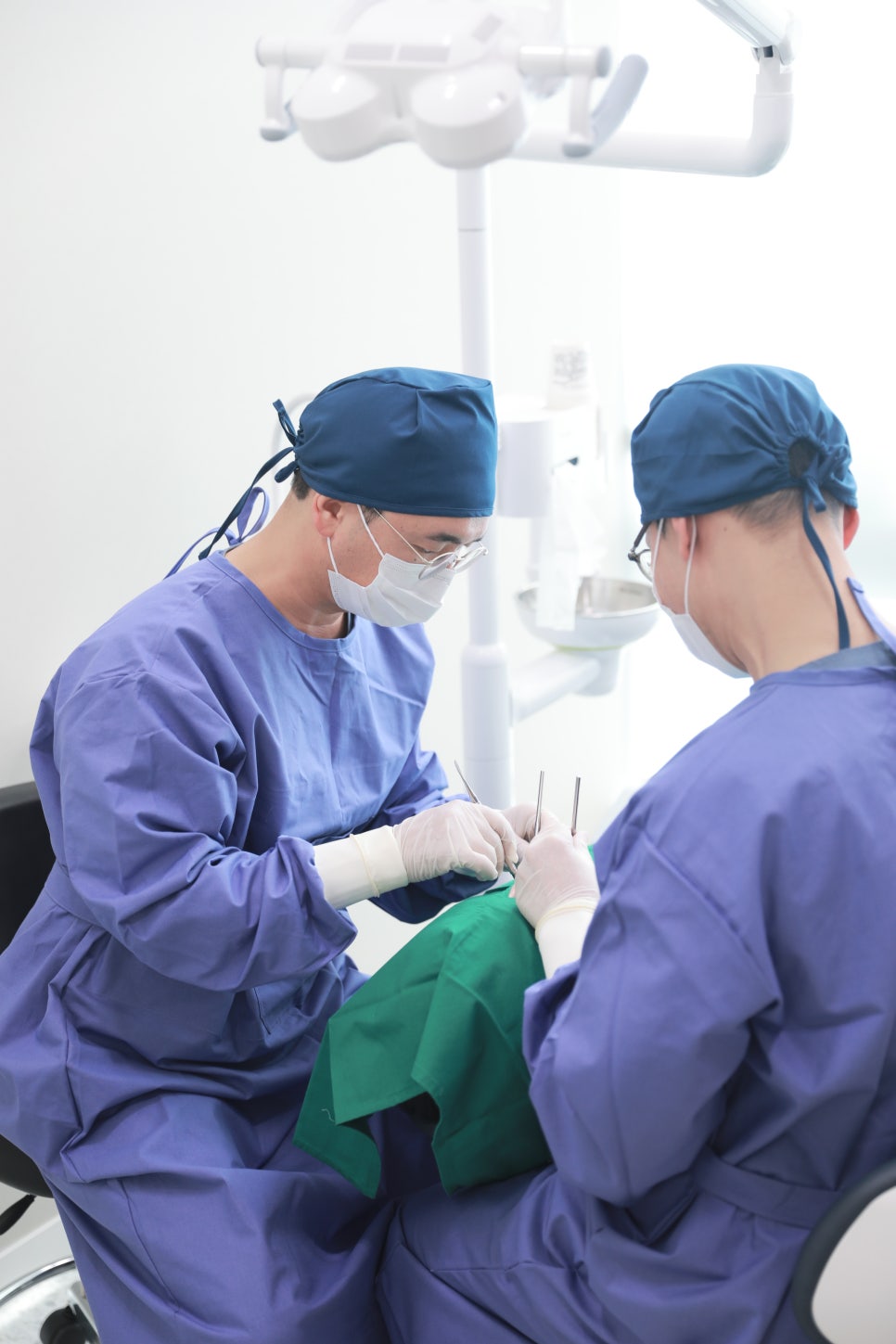
Smile D’s three-specialist collaboration is our promise for this integrated diagnosis without missing anything.
A system in which orthodontics, prosthodontics, and oral surgery specialists work together to analyze and take responsibility for the patient’s entire face.
This is the only reason we have been able to be the last orthodontic clinic for our patients over the past 18 years.
< Smile D Dental Clinic Information >