
Are you still thinking it over?
What are the related procedure costs?
�. Navigation implant placement process, the changes that begin sooner than expected
When you lose one tooth, it is easy at first to think, “One tooth should be fine.”
But as time passes, chewing tends to shift to one side,
and it can’t help but make your jaw feel easily fatigued.
If the missing tooth space is left alone, the gum bone begins to be gradually resorbed.
If it is left untreated like this, when you later place an implant,
the likelihood of needing bone grafting can only increase.
As chewing becomes concentrated on one side, the burden on the jaw joint increases,
and the efficiency of chewing drops, which can also make digestion feel slower.
In the case of a missing front tooth, some people even experience slurred pronunciation
or a change in the way their voice sounds.
That is why planning “as soon as possible” rather than “someday”
often helps reduce the overall treatment period and burden.

This post was written in compliance with the Medical Service Act.
- What is the structure of the navigation implant placement process?
An implant consists of a fixture that serves as the root,
a abutment that connects above it,
and a crown that is placed last.
While this three-step structure is the same,
the planning and procedure methods are much more digitalized.
The basic process is to wait for recovery after extraction,
check the condition of the gum bone, and then place the fixture.
After that, following a period of osseointegration, the prosthesis (crown) is connected,
helping restore function similar to that of a natural tooth.
Because it stands independently without grinding down the surrounding teeth,
it can fill the space without damaging existing teeth.
It was a treatment designed to approach natural teeth as closely as possible
in terms of chewing force, aesthetics, and durability,
but the results inevitably vary depending on each person’s bone condition.
Costs vary greatly from person to person
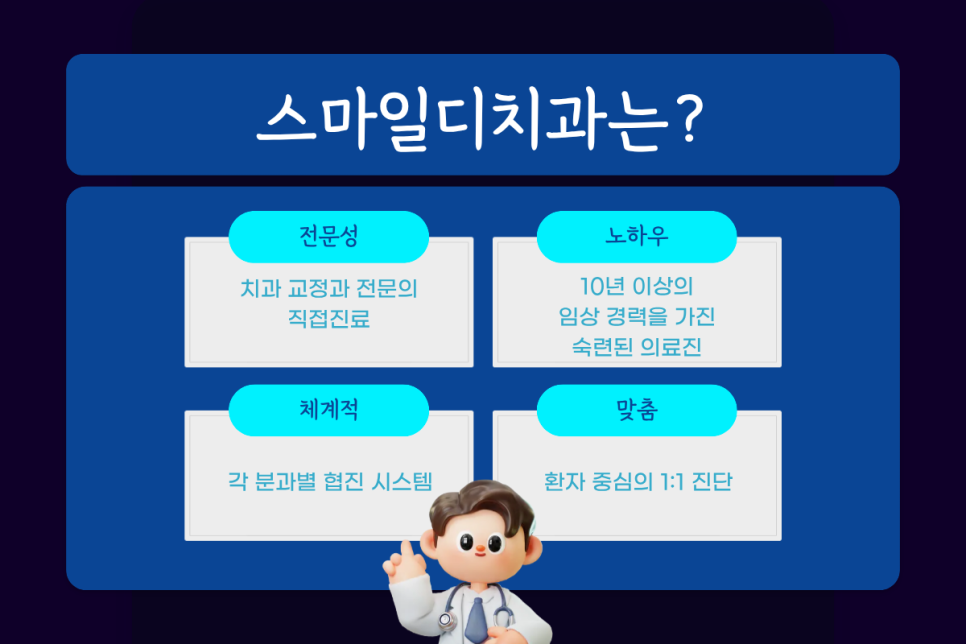
Clinic introduction image
- Why was a digital navigation system needed?
In the past, many procedures relied heavily on the dentist’s experience and sense of touch.
Because the visible field was limited,
there was also room for slight errors in depth or angle.
First, the inside of the mouth and the bone condition were analyzed three-dimensionally using 3D CT and an oral scan.
Based on that data, a simulated placement was performed on a computer in advance,
allowing detailed planning of the angle, depth, and direction.
Using this digital plan, a navigation guide was made,
and the actual placement was carried out following that guide.
As a result, it often helped reduce the extent of incision and unnecessary damage.
When the incision is smaller, bleeding and swelling can be relatively less,
and pain tends to be concentrated in the first few days.
Because recovery is relatively quick, many people felt that returning to daily life
was a little easier.
Above all, thanks to 3D planning, it was advantageous for avoiding anatomical risk structures
such as nerves, blood vessels, and the maxillary sinus.
Even when multiple implants had to be placed at once,
it was easier to systematically arrange the direction and position.
We receive many inquiries
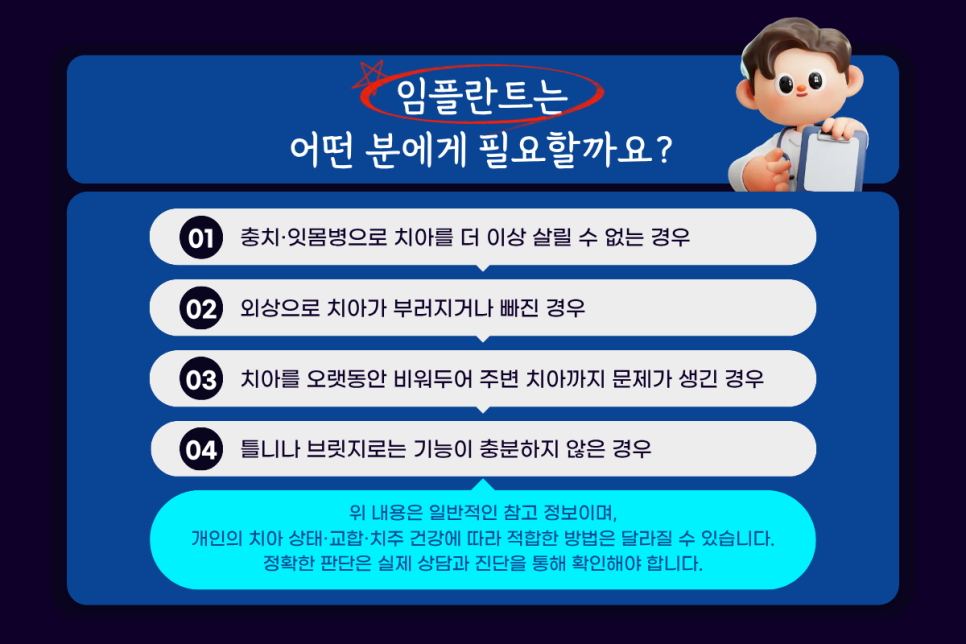
It is needed for people like this
- Who could benefit from sleep sedation?
For people with a strong fear of treatment, even sitting in the chair can cause extreme tension.
When sleep sedation is added to the navigation implant placement process,
it can help reduce this anxiety in some cases.
It was a method that used sedative medication
to create a drowsy, half-asleep state.
The eyes are closed and time feels like it passes quickly,
but spontaneous breathing is maintained and the patient can respond to simple instructions from the medical staff.
It was especially considered in cases with a heavy procedural burden, such as multiple long implant procedures,
sinus-related surgery, or cases requiring bone grafting.
Of course, because medication is used, a thorough pre-procedure consultation and check of overall health must be performed.
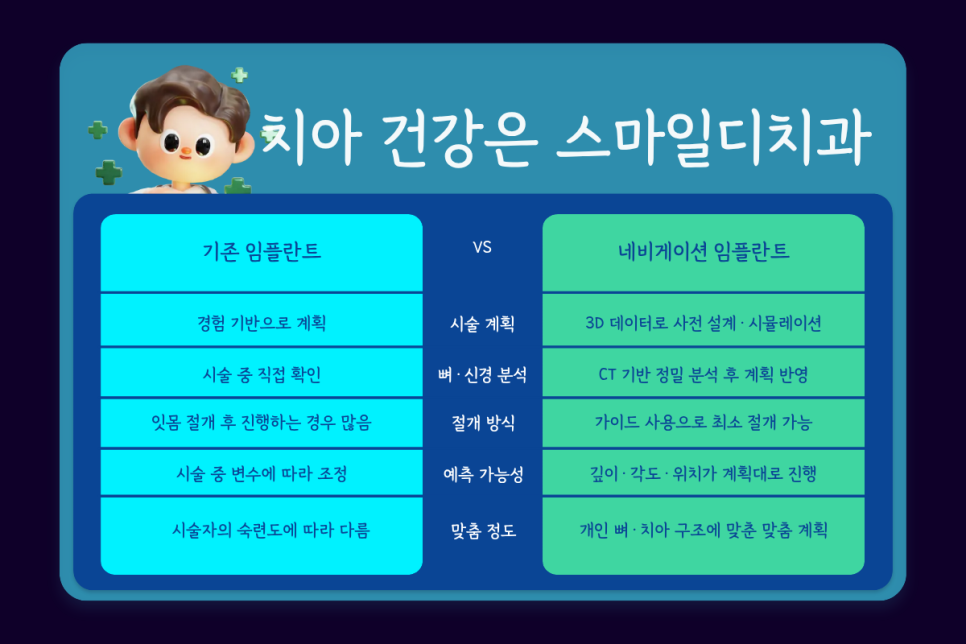
Comparison with the previous method image
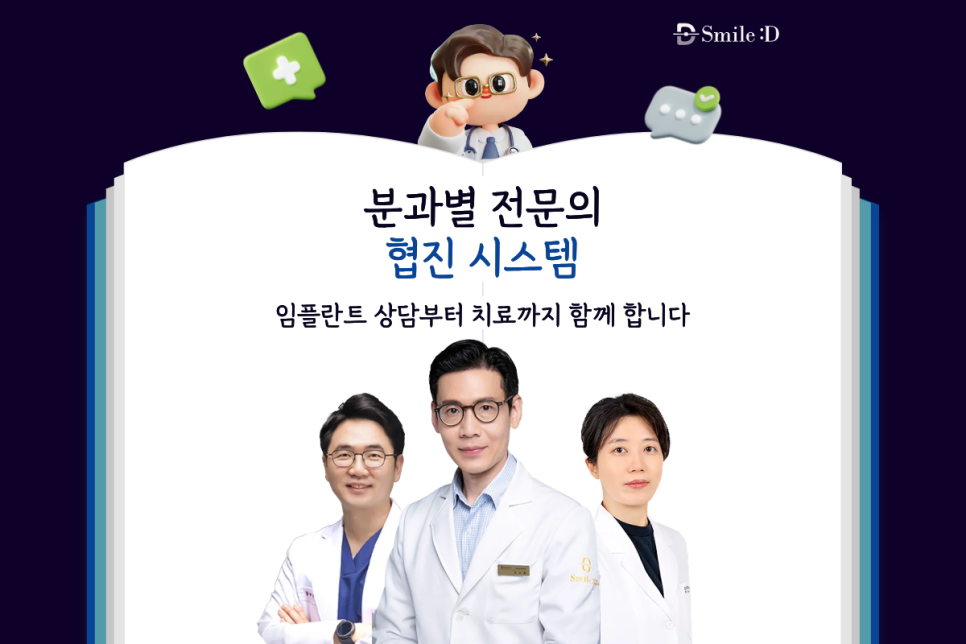
We support you from consultation to treatment
- Why post-surgery management must be emphasized
No matter how precisely the procedure is performed, if follow-up care is lacking,
the risk of peri-implantitis inevitably increases.
Especially before osseointegration stabilizes,
patients are often told to avoid hard foods, excessive drinking, and smoking.
The area around the implant may not be sufficiently cleaned with a regular toothbrush alone.
So it was necessary to build the habit of reducing plaque by appropriately using interdental brushes and oral irrigators.
Usually, regular checkups were done every 3 to 6 months,
and the gum condition, screw loosening, and prosthetic condition were checked together.
If early signs of inflammation are detected during this process,
they can often be managed stably with relatively simple measures.
Rather than a simple comparison of “which method is better,”
a plan that fits my gum-bone condition, overall health, and lifestyle pattern was more important.
Even for the same treatment, the approach inevitably differs depending on bone density, gum thickness, and occlusion.
So rather than asking, “Where is it cheaper?” it was better to choose based on “Where fully understands and explains my condition?”
There was less regret when making that kind of choice.
Being able to ask questions comfortably and hear the pros, cons, and expected treatment period honestly
was more important than anything else in a consultation.
If you are still considering it, it would be good to
check your current condition accurately before it gets too late.
Through regular checkups and consultations, comparing the process that suits you
slowly may be helpful.










Previous image
Next image










Previous image
Next image










Previous image
Next image
�