




- Reviewing the Factors Behind Early Changes
Small inconveniences felt in daily life may seem insignificant at first,
but if they repeat over a certain period of time, you may eventually face moments when the flow of various activities changes.
For example, when chewing certain foods, the balance may feel awkward,
or tiny differences may appear during speech.
When such seemingly minor changes continue, they can affect overall usage patterns as well.
If these changes accumulate, they become difficult to explain with only a few isolated factors,
and the need to examine various aspects together becomes greater.

For this reason, a method that considers the structure as a whole may be suggested,
and in this process, full implant is often mentioned as a concept that helps understand multiple factors together.
Because many changes that appear during use may be part of the overall flow,
it is important to organize the situation from a broader perspective.
Carefully observing the changes that appear in the early stages can also help with setting the direction later.
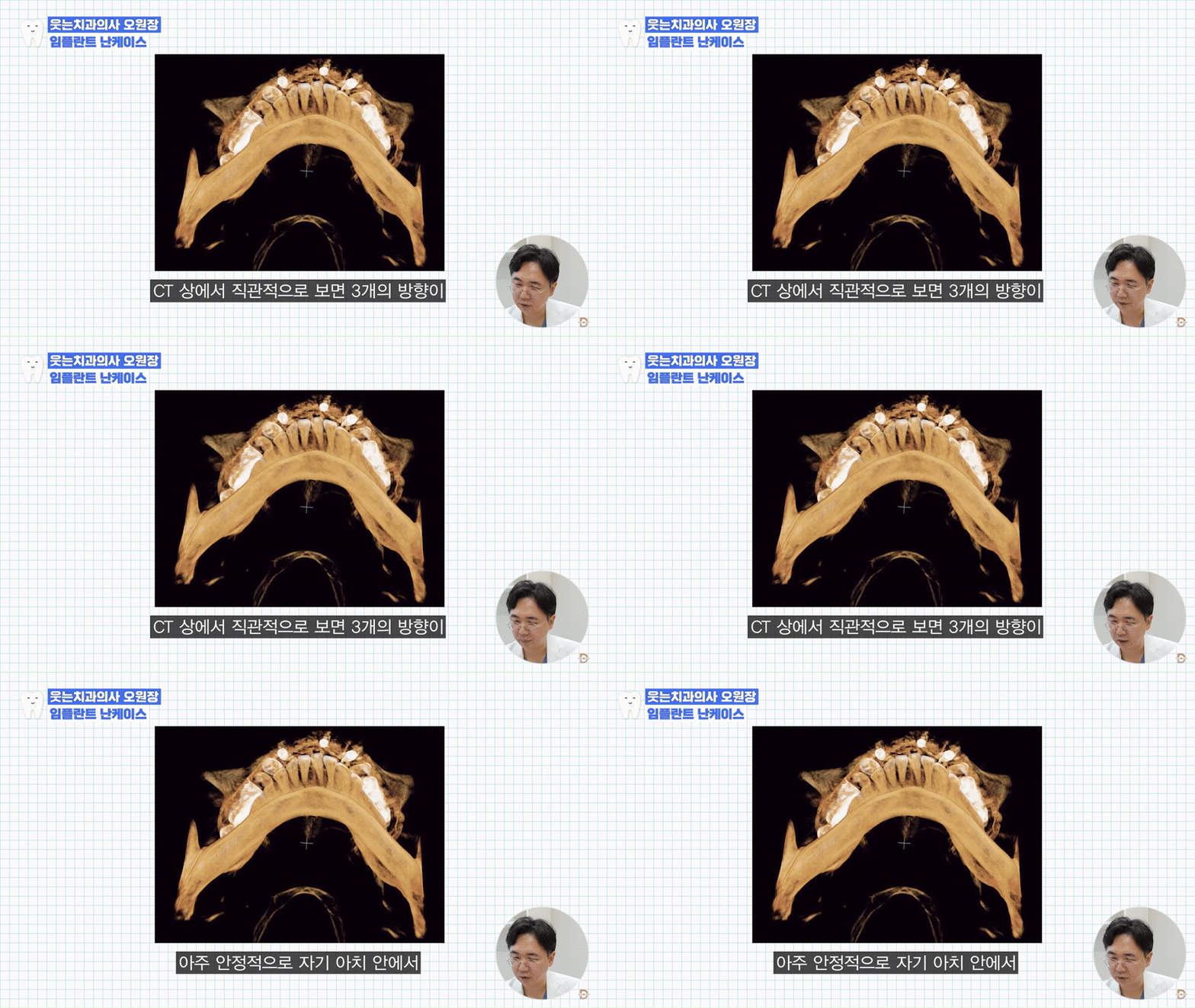

- Understanding Structural Flow Diagnosis
The structure inside the mouth has the characteristic of being maintained through the interaction of various elements.
If stress becomes concentrated in a certain area, the surrounding flow may change,
and if this situation repeats, a process of balance shifting may appear.
Even small changes in alignment or contact patterns can affect the usage process,
and if they continue for a period of time, a different feeling from before may take hold.
These changes are often connected to discomfort felt in everyday life.
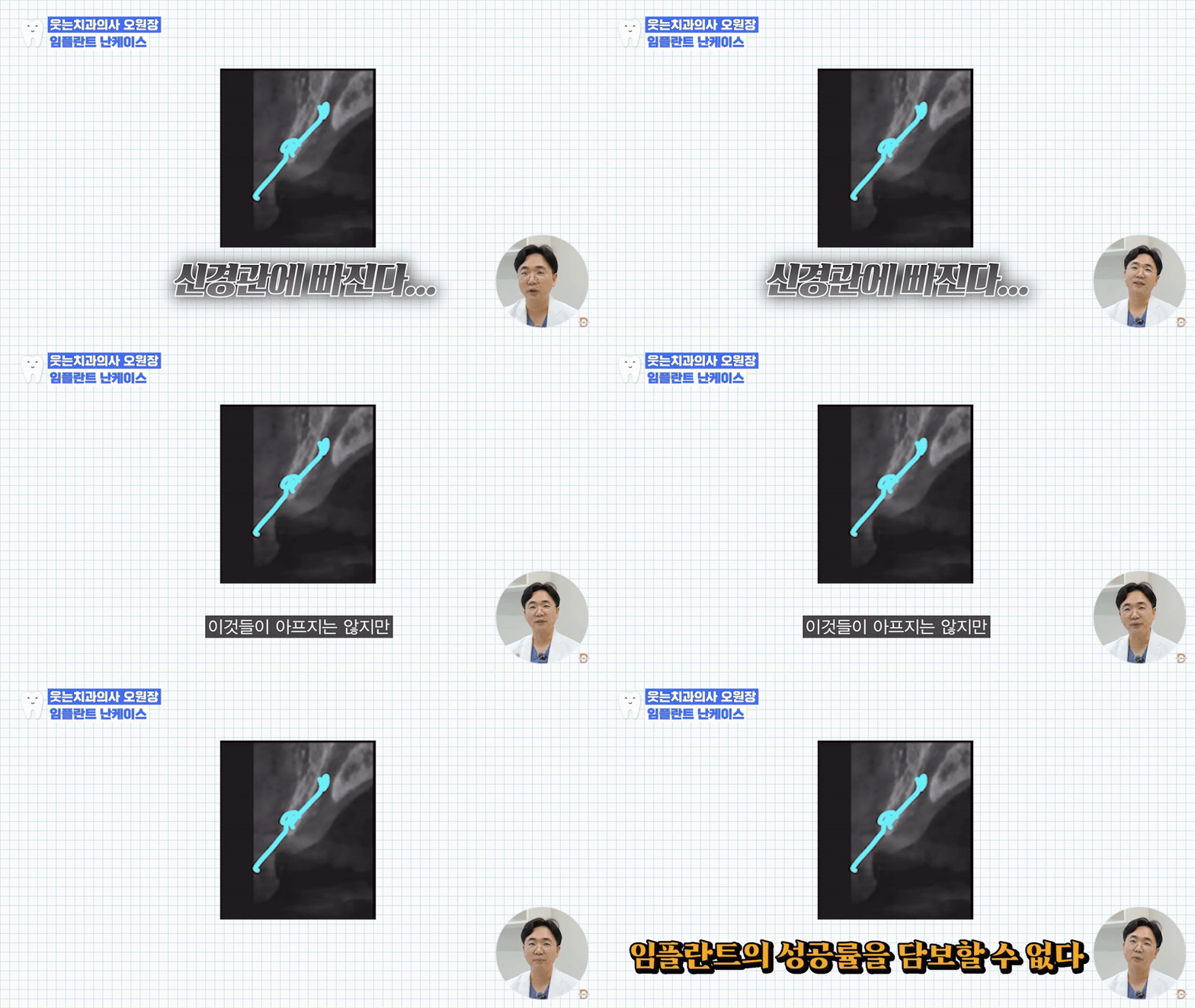
Depending on usage habits or lifestyle, the response can also vary,
so it may not always maintain the same form at every moment.
Because this flow is difficult to judge based on an individual area alone,
a method that looks at the overall structure together is needed.
In the process of explaining such situations,
full implant is sometimes mentioned as a concept that helps with structural interpretation.
Understanding the flow of the structure makes it easier to see the cause of changes more clearly.
- Understanding the Condition Analysis System
When multiple factors act at the same time within a structure,
it is important to separate and organize each value.
Certain areas play a role in dispersing force,
while other areas contribute to maintaining balance, so their characteristics differ.
When changes occur, these elements move together,
so a method of observing various conditions individually and then making a comprehensive judgment is needed.

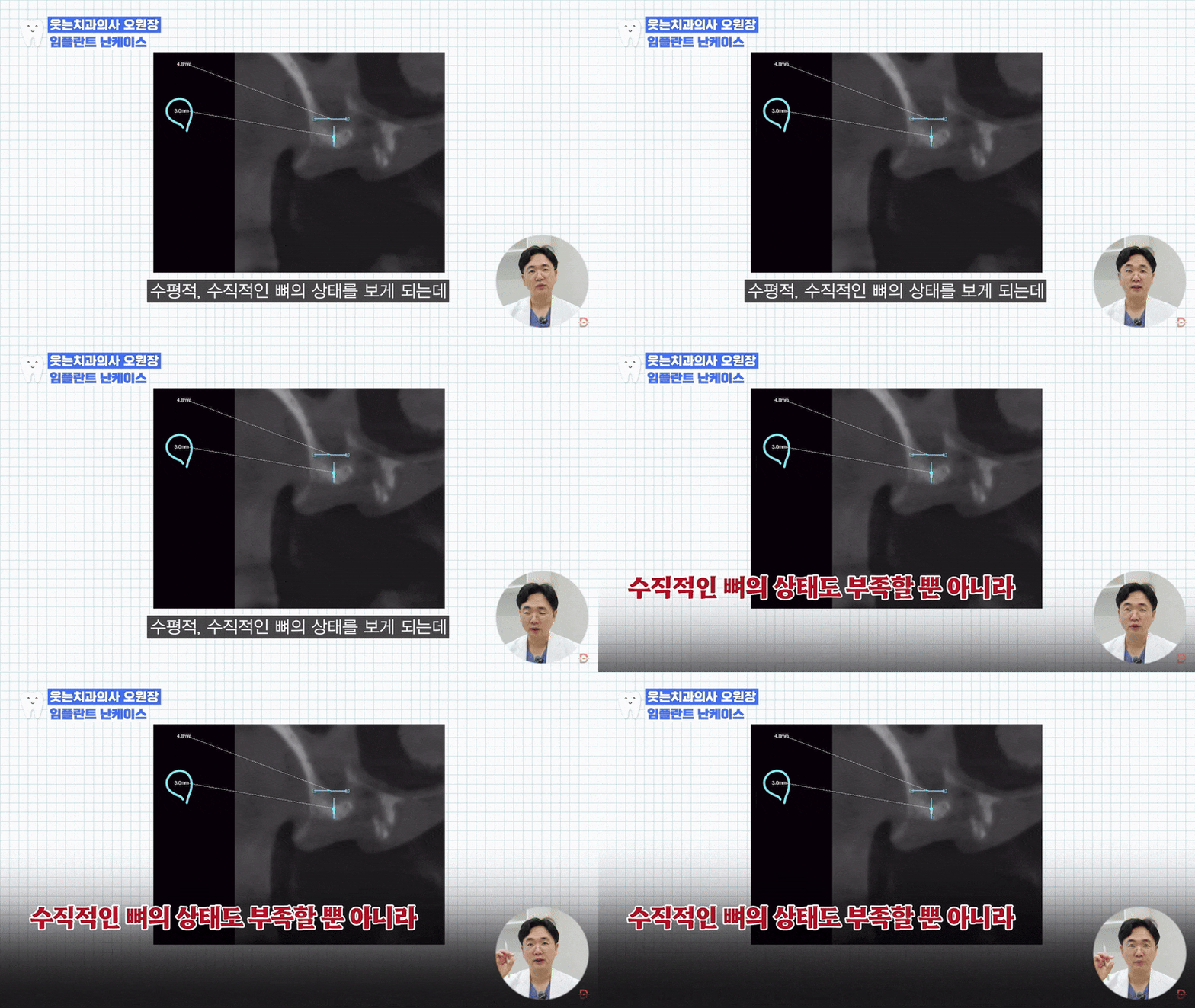
In this process, various aspects such as the flow of force transmission, pattern changes, and the response of surrounding tissues are reviewed,
and through this, a direction for overall harmony is organized.
It may feel complicated, but dividing it into stages makes it much easier to understand.
This kind of analysis framework is also used when explaining full implant,
and it helps in understanding the structural perspective.
- Reading Imaging-Based Factors
Imaging materials are often used to obtain accurate information.
Because images show internal flow that is difficult to confirm with the eyes,
they play an important role in understanding structural conditions.
Bone thickness, surrounding boundaries, alignment characteristics, and other
various elements can be examined at once, which helps in the later judgment process as well.
If an unexpected feature is discovered, it may need to be checked separately,
and depending on the situation, additional inspection may be necessary.
This procedure is an important step in organizing the overall flow and setting the direction in a stable way.
When the internal condition is understood accurately, the criteria needed for later stages also become clearer.
Imaging materials are often used as a reference tool in explanations about full implant.

- Setting the Direction of the Design Procedure
When the basic information has been organized, the design flow is built by sequentially combining several elements.
Position setting and space inspection are carried out with the overall balance in mind,
and each element is organized step by step so that they harmonize appropriately.
In this process, lifestyle patterns, usage habits, and the flow of surrounding structures are considered together,
and any necessary parts are adjusted through additional review.
Although this design procedure may seem complicated,
in practice it proceeds according to certain standards,
so it helps in understanding the overall flow.
When the direction is set based on organized information,
the later process can continue in a stable way.
For this reason, full implant is
described as a process made up of multiple stages in a systematic way.

- Guidance on Long-Term Maintenance Strategies
As time passes, the environment around the structure or
usage methods may change, so periodic checkups are necessary.
Sometimes you may be advised on care methods that reduce certain stimuli
or on points to be careful about in daily life,
and these are general steps for keeping the structural flow consistent.
Basic guidelines, such as avoiding excessive force during cleaning,
also help.
Regular checkups lead to a process of checking for changes and confirming stability.
Since even small differences can accumulate and affect the overall flow,
the procedure of making adjustments when necessary is important.
This management flow is meaningful in setting a basic direction for long-term use.
In this way, full implant is explained not as a concept considered only for the short term,
but as a process that looks broadly at the entire structure.
[ Smile D Dental Clinic Information ]
[ Smile D Dental Clinic Introduction ]
| 📞 Smile D Dental Clinic Phone Number |
|---|
| 0507-1449-2087 |










 Previous image
Next image
Previous image
Next image









 Previous image
Next image
Previous image
Next image









 Previous image
Next image
Previous image
Next image