
Hello, this is Smile:D Dental Clinic located near Sinsa Station.
After a dental checkup,
and being told, “You have malocclusion,”
have you ever found yourself wondering
how severe it actually is,
or whether orthodontic treatment is needed right away?
From the outside, it may look different, such as crowded teeth, a protrusive mouth, or an underbite,
but when you hear terms like Class 1, Class 2, and Class 3 at the clinic,
it can become even more confusing to tell whether these mean the same thing or different criteria.
So today,
what 기준 are used to classify malocclusion?
And what do Class 1, 2, and 3 each mean?
Let’s organize it all at once.
The main 기준 for classifying malocclusion
Dental malocclusion vs skeletal malocclusion
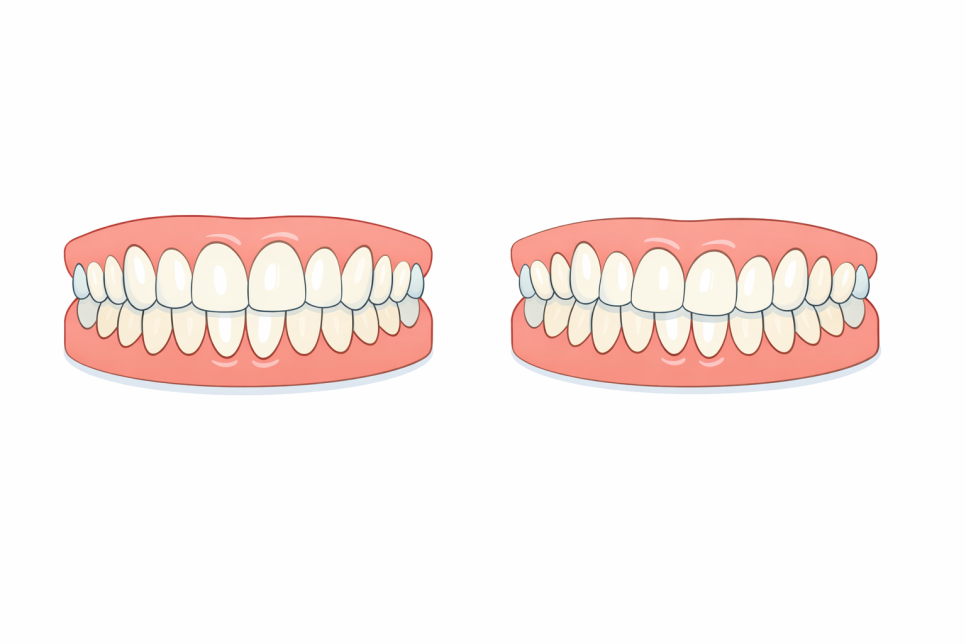
Malocclusion is broadly divided into two types depending on the cause.
Dental malocclusion refers to cases caused mainly by issues with the teeth themselves, such as tooth alignment or lack of space.
Skeletal malocclusion centers on problems related to the jawbone structure, such as differences in the position or growth of the upper and lower jaws.
However, in actual clinical practice,
dental and skeletal factors often appear together,
so it is difficult to make a definite judgment based on only one criterion.
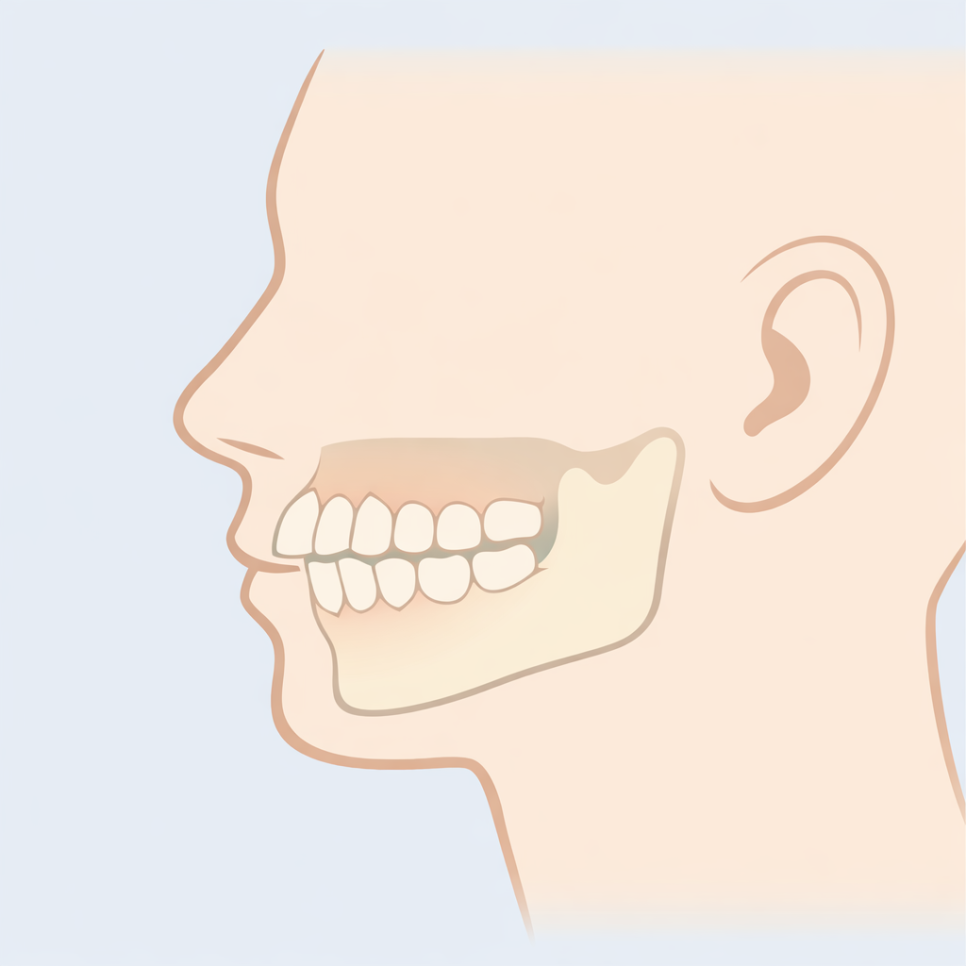
What is the difference between Class 1, 2, and 3 malocclusion?
Class 1 malocclusion
In many cases, there may not appear to be any major problem at first glance.
However, crowded teeth or irregular alignment may be present,
and the force of chewing may not be distributed evenly.
Even if discomfort is not significant in the early stages,
changes may occur depending on the condition,
so regular checkups are important.
Class 2 malocclusion
This is often recognized as an appearance that seems like a protrusive mouth or a receded chin.
You may feel discomfort when closing your mouth,
or an imbalance may appear in chewing function.
In particular, whether the person is in a growth period or is an adult
can change the treatment approach.
Class 3 malocclusion
This is often referred to as an underbite or an anterior crossbite (a condition in which the lower teeth protrude in front of the upper teeth and bite in a reversed position),
and functional discomfort may feel relatively greater.
Depending on the condition,
surgical treatment may be considered in some cases,
but this does not apply to all cases,
and there is a wide individual variation.

Are Class 1, 2, and 3 the same as Angle classification?
Malocclusion is not judged based on a single classification alone,
and in actual diagnosis, tooth alignment, jaw relationship, and functional factors
are considered comprehensively.
So
even if you receive the same diagnosis of “Class 2,”
the treatment approach may differ from person to person.
“Do I need treatment now?” Criteria that can help determine this
Just because malocclusion is present
does not mean treatment is immediately necessary in every case.
However, the following points
are worth checking at least once.
· Is there discomfort when chewing or speaking?
· Do you notice changes over time?
· Is the person in a growth period or an adult?
· Does it affect daily life or oral care?
Using these criteria,
you can determine whether this is the time to check your current condition.
To conclude
Rather than simply knowing the types of malocclusion,
it is more important to understand your own condition accurately.
Even with the same Class 1, 2, or 3,
the approach can differ depending on an individual's tooth condition and jaw structure.
Therefore, an accurate judgment
should ideally be made through a detailed diagnosis.
<If you are also curious about how to address black triangles that appear after orthodontic treatment, be sure to read this>
[ Learn more about Smile:D ]
[ Smile:D directions and parking information ]