




Previous image
Next image


- Criteria and key considerations that help with a wise choice of Gangnam implant dentistry
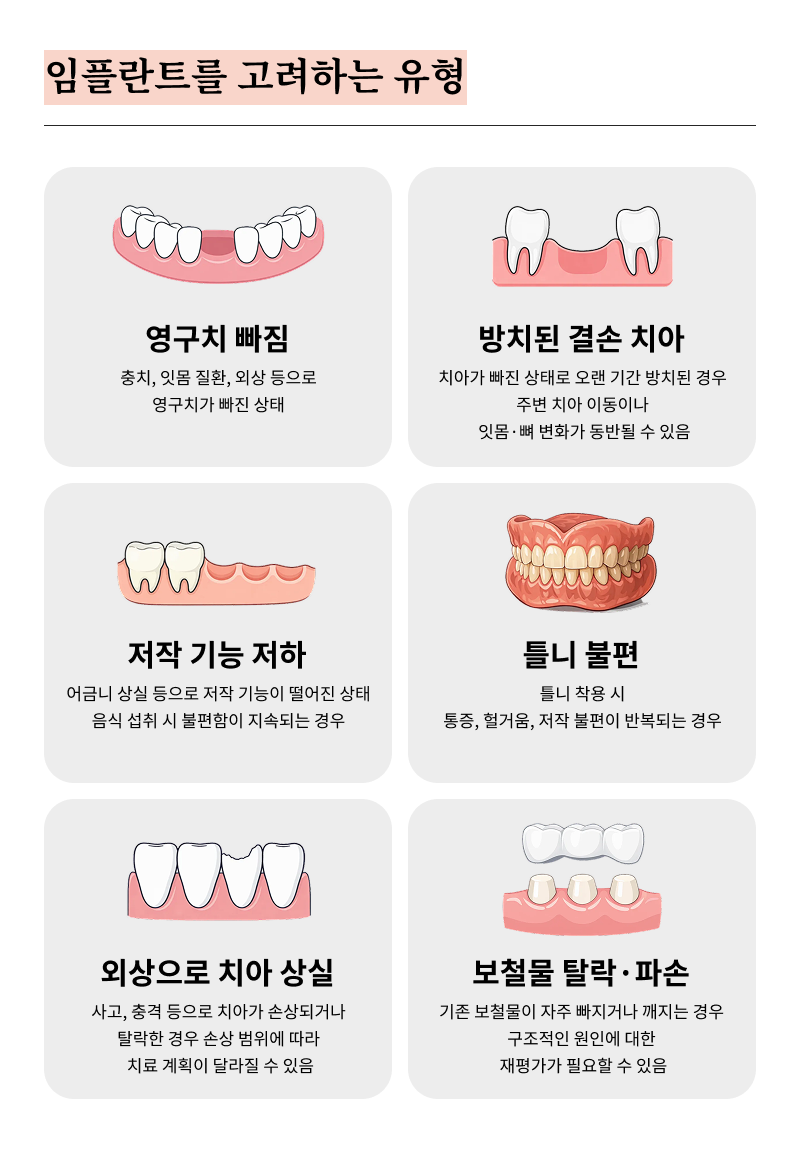
Tooth loss is more than simply creating an empty space in the mouth; it brings overall changes to daily life. At first, it may only feel like slight discomfort while eating, but over time the chewing force becomes concentrated in certain areas, increasing the burden on the temporomandibular joint and surrounding tissues. Changes in pronunciation and structural changes in which adjacent teeth tilt toward the empty space may also occur. If this functional decline is left unaddressed, the balance of overall oral health may be disrupted, so it is necessary to review information about Gangnam implant dentistry and establish an appropriate response plan.


- The importance of diagnostic equipment and analysis systems in Gangnam implant dentistry
For precise placement, a diagnostic system that objectively assesses the current oral condition must be in place. A procedure is needed to accurately analyze the internal bone density and the location of the nerve canal, which are difficult to identify with visual inspection alone. Computed tomography equipment three-dimensionally shows the thickness and height of the alveolar bone and is used as a reference for setting the placement angle and depth. The more detailed the analysis data, the more it becomes possible to predict variables and establish a stable path. Therefore, it is necessary to check whether systematic examination items are included.




- Understanding the characteristics of materials used in Gangnam implant dentistry
An artificial tooth consists of an implant fixture fixed in the jawbone, an abutment, and an upper prosthesis, and the result varies depending on the material combination of each component. Prostheses are divided into types such as zirconia or metal-ceramic depending on strength and translucency, and they are selected according to the area of use. Molars require durability that can withstand strong pressure, while front teeth are judged mainly on how naturally they can be reproduced in appearance. Whether the parts system is standardized and whether long-term parts supply is possible are also points to check. Understanding the characteristics of the components is helpful in establishing a plan suited to an individual condition.
[ Smile D location ]
[ Learn more about Smile D ]
| 📞 Smile D direct line |
|---|
| 0507-1449-2087 |


- Review of additional procedures according to bone volume in Gangnam implant dentistry
If the amount of alveolar bone is insufficient or bone loss has progressed due to inflammation, a compensatory process must come first. Sinus lift procedures and bone grafting are advanced procedures that secure the missing support base while taking anatomical structures into account. Recovery time and the overall schedule vary depending on the type and extent of the graft material, so it is essential to clearly confirm your own bone density. Rather than pushing ahead aggressively, a step-by-step approach that firmly establishes the foundation has a positive effect on long-term maintenance. It is important to check whether detailed explanations are provided based on each person’s bone condition.


- Whether a post-treatment management system is in operation in Gangnam implant dentistry
Even after the placement process is completed, continuous checkups and hygiene management are core principles for maintaining stability. Because artificial teeth have no nerves, pain cannot easily be felt even if inflammation occurs, so regular examinations are needed to prevent peri-implantitis. Establishing a management cycle that includes bite checks and scaling is a factor that determines the lifespan of the device. It is also reasonable to understand administrative details such as the scope of insurance coverage by age and the conditions for warranty guidance in advance. Checking whether a systematic management program is in place is stable from a long-term perspective.


- Decision-making that considers individual differences in Gangnam implant dentistry
In the end, successful functional recovery depends less on numerical data and more on how deeply each person’s oral environment is reflected in the plan. The treatment approach may be adjusted depending on whether there is an underlying systemic disease or what medications are being taken, and recovery speed also varies from person to person. Rather than simply preferring a faster process, it is recommended to fully understand the principles and mechanisms and seek the optimal path for your own situation. Only when a careful decision is made based on accurate diagnostic results can one move closer to the goal of restoring a healthy oral structure. Monitoring through regular consultations and examinations must come first.











Previous image
Next image








Previous image
Next image