Hello.
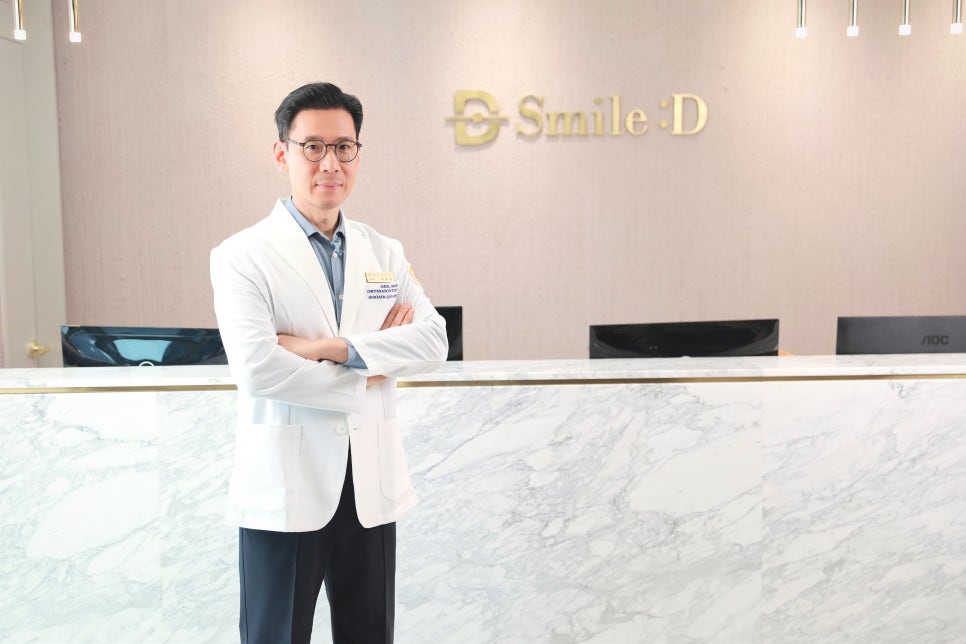
I’m Oh Soo-hwan, chief director of SmileD Dental Clinic.
“Does orthodontic treatment also change your face shape?”
This is a question I hear very often in the clinic.
People usually ask it with equal parts hope and worry.
“I just want my mouth to be a little less protrusive..."
“Can it become slimmer like a V-line?”
“What if I do it for nothing and my cheeks sink in, making me look older?”
If you search online, the answers are all different.
Some say it’s a change on the level of plastic surgery,
while others say they spent money only to end up with a longer face.
So today, I’ll organize it clearly.
✔ Cases where orthodontics can change the face shape dramatically
✔ Cases where it barely changes
✔ The truth about the sunken cheeks and nasolabial folds people worry about
If you read to the end, you’ll have a standard to rely on when you go in for a consultation.
1️⃣ First, let’s clear up a misconception
Orthodontics is not plastic surgery!
Orthodontic treatment is not surgery that shaves down the jawbone.
It is not a treatment that makes the cheekbones recede or shortens the jawbone length either.
Then why do some people look as if they had cosmetic surgery?
The key is the change in the position of the soft tissues (the lips and cheeks).
Let’s compare the face to a tent.
- Teeth and jawbone = poles
- Lips and cheeks = fabric
If the poles stick out forward, the fabric also comes forward tightly.
If those poles are moved backward, the fabric naturally follows inward.
This process is exactly the principle behind what we call
orthodontic face-shape changes.
On the other hand,
if the teeth are not moved significantly forward or backward,
and the treatment is only about aligning them,
then there is almost no change in the lips or cheeks.
👉 Orthodontic treatment does not reduce the size of the jawbone itself.
The change is closer to “refining the line.”
2️⃣ Cases where orthodontics changes the face shape
① Dental protrusion
This is when the front teeth stick out a lot
and the lips are pushed forward and look thick.
These patients usually have:
Difficulty closing the mouth naturally
A “wrinkled chin” from tension in the chin area
The mouth looking more prominent from the side
With extraction orthodontics or full-arch retraction,
if the front teeth are moved backward,
Tension in the chin muscles is relieved
Wrinkled chin decreases
The E-line (esthetic line) is improved
The side profile looks better
The nose has not actually become higher,
but as the mouth moves inward, the nose may appear more prominent by comparison.
② Receded chin + protrusive mouth tendency
This is when the chin is small and set back,
while the mouth appears protruded.
If the bite is corrected and the mouth is aligned,
the previously hidden chin line may become visible,
making the side profile look clearer.
👉 The more a case involved difficulty closing the mouth naturally,
the greater the sense of face-shape change tends to be.
3️⃣ Cases where face-shape changes are minimal even with orthodontics
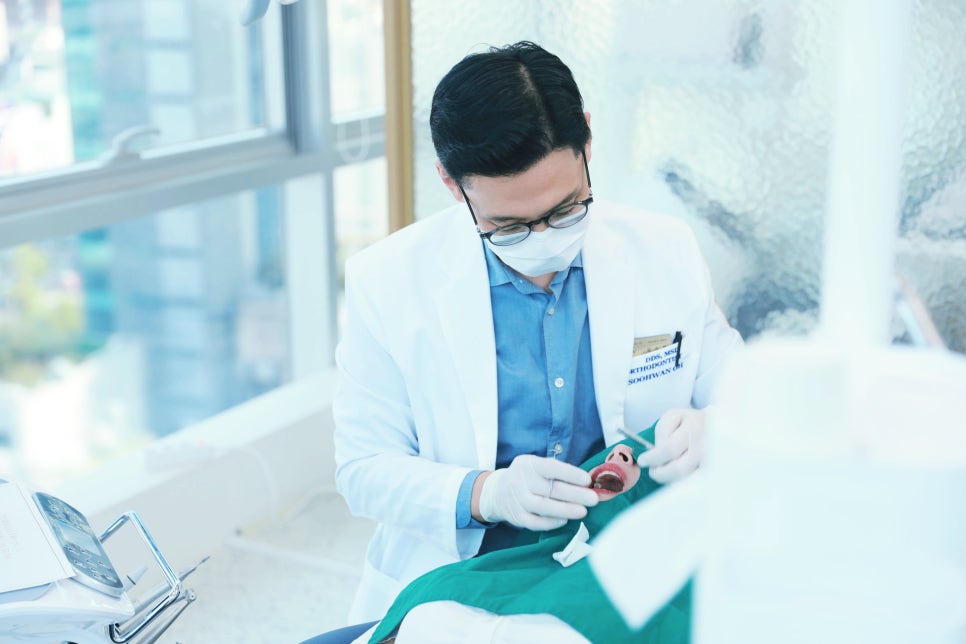
① Simple crowding / mild misalignment
The teeth are crooked,
but the lip line is already natural.
In this case, orthodontics is
less about moving the teeth significantly forward or backward
and more about “arranging the positions.”
So:
Almost no change in lip thickness
Almost no change in cheek volume
Almost no change in jawline
Instead, the smile looks much neater
and the overall impression becomes more organized.
② Skeletal underbite / severe asymmetry
This is a problem with bone structure, not just teeth.
With orthodontics alone:
The chin length cannot be shortened
No change in cheekbone size
Complete correction of left-right facial length differences is difficult
Bite improvement is possible,
but dramatic face-shape change is limited.
In these cases, a diagnosis that accurately explains the limits of orthodontic treatment alone is important.
[ When you visit SmileD ]
[ If you want to know more about SmileD’s latest updates ]
| 📞 If you want to contact SmileD |
|---|
| 0507-1449-2087 |
4️⃣ The most common question: Will orthodontics make my cheeks sink in?
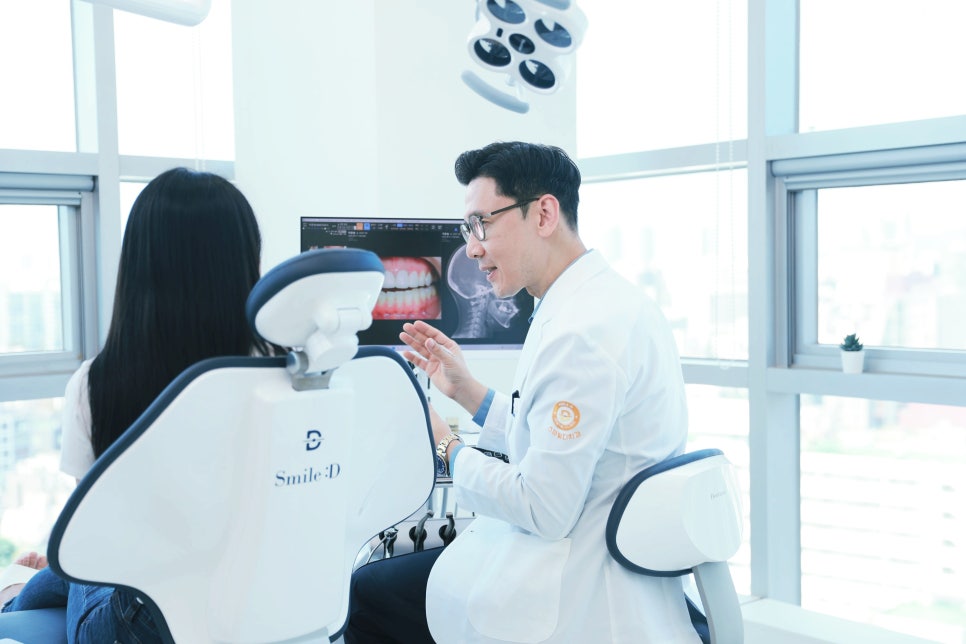
✔ Sunken cheeks
In most cases, this is temporary.
At the beginning of orthodontic treatment:
Difficulty chewing
Reduced food intake
Reduced use of the chewing muscles
👉 The muscles shrink, making the area below the cheekbones look sunken.
But once chewing function recovers,
the muscles often return as well.
However,
if the cheekbones are originally prominent,
if the person has little facial fat,
or if they are older,
then if this overlaps with natural aging during treatment,
recovery may be less likely.
✔ Nasolabial folds
This can vary by person.
In some cases, protrusion correction → the mouth moves inward and the nasolabial folds become less noticeable
With excessive retraction → the lips may become thinner and make the person look older
So,
it is not about “moving things in a lot,”
but about “where to stop” that matters more.
Lip thickness, philtrum length, and overall facial proportions must be considered together.
5️⃣ Conclusion: The first step is understanding the range of what orthodontics can do
Orthodontic face-shape changes
are not magic.
If the mouth is protrusive → change is possible
If the teeth are only slightly crooked → face-shape change is minimal
If it is a skeletal issue → orthodontics alone has limits
The most important question is this.
“How far can orthodontics change my face?”
What matters more than online reviews
is my bone structure, my tooth position, and my soft tissue thickness.
You cannot judge this with a mirror.
The most accurate way is to hear an explanation of the movement range and limitations through precise X-rays, bite analysis, and side-view analysis.
Orthodontic treatment requires time and cost.
Rather than vague expectations,
it is more important to start with a realistic understanding of the range of change.
Are you thinking about it now?
"Do I have protrusive mouth?"
"Is it just simple crowding?"
"Is it a skeletal problem?"
A proper judgment
is possible through diagnosis and consultation, including the necessary examinations at a medical institution.
Since it is my face and my teeth,
I hope you set your 기준 carefully before starting.
Thank you.
I was Oh Soo-hwan, chief director of SmileD Dental Clinic.